معرفی
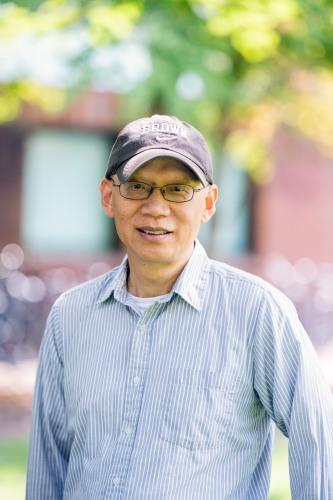
Chenguang Sun is an Assistant Professor in the Department of Earth and Planetary Sciences at the Jackson School of Geosciences, University of Texas at Austin. His research focuses on understanding the thermal and chemical evolution of Earth and other rocky planets, emphasizing volatile cycling, magma dynamics, and planetary habitability. He employs experimental petrology, thermobarometry, and geochemical modeling to decode planetary processes.
Key research areas include deep volatile cycling, magmatic differentiation, and planetary differentiation mechanisms. He has pioneered methods such as Mg-REE coupled geospeedometry to study crustal formation rates and mantle dynamics. His work bridges laboratory experiments with field observations to address questions about Earth’s interior-surface interactions and planetary habitability.
- Education: Doctorate in Geochemistry/Petrology (not explicitly stated, inferred from career trajectory)
- Affiliations: Jackson School of Geosciences; Mineralogical Society of America Fellow (2021)
Dr. Sun’s recent publications explore topics like CO2-rich melt thermobarometry, nitrogen delivery via giant impacts, and kimberlite magmatism. His awards include the MSA Award (2021) and AGU Outstanding Student Paper Award (2012). He advises graduate student Lucia G. Bellino and teaches advanced courses in thermodynamics of geological processes and solid Earth dynamics.
His lab develops novel petrological tools for interpreting magmatic and metamorphic processes, with a focus on volatile cycling’s impact on planetary evolution. Ongoing projects include studying mantle-derived melt systems and their role in Earth’s carbon budget.