Ching Crumley is a Senior Lecturer in the Economics Department at Bentley University, joining in summer 2024. Previously, they taught at Grinnell College (liberal arts college) and Texas Tech University across courses including Time Series Econometrics and Intermediate Macroeconomics. Education: Ph.D. in Economics from Texas Tech University (2023) International Business from Zhongnan University of Economics and Law (2018) Research focuses on Macroeconomics—specifically monetary policy mechanisms—and Energy Economics, with deep analysis of oil market volatilities and comparative studies between developed and developing economies. Their work directly supports UN Sustainable Development Goals related to economic growth and sustainable energy systems. Recent publications (2023-2024) reveal an interdisciplinary trajectory connecting business cycle modeling, zero lower bound monetary policy, BRICS trade integration, pandemic-era oil price asymmetries, and high-skill labor market dynamics. These works demonstrate rigorous application of econometric models like GTAP-E across macroeconomic and energy sectors. Teaching experience has cultivated strong advising capabilities for both coursework and research projects, though no formal advisees or grants are specified. No scientific awards or laboratory affiliations are documented in the available materials.
Sally Gibson is a researcher at the Department of Earth Sciences, University of Cambridge, specializing in mantle geodynamics and volatile cycling processes. Her work integrates field observations, geochemical analysis, and numerical modeling to investigate how deep Earth processes influence surface environments over 3.5 billion years of planetary evolution. Research focuses on volatile cycling (CO₂, H₂O, F, Cl, S) in mantle systems Key projects include mantle plume-ridge interactions with collaborators in the US and Ecuador Operates a LA-ICP-MS laboratory for high-resolution geochemical analyses Supervises PhD students in petrology, geochemistry, and numerical modeling Her research addresses fundamental questions about Earth's habitability through studies of mantle-derived volatiles critical for climate regulation and energy transition metal deposits. Fieldwork in remote regions like Antarctica, Lesotho, and the Galápagos Islands provides empirical data for her interdisciplinary approach. Recent publications highlight her expertise in mantle xenolith analysis, plume dynamics, and volatile quantification in large igneous provinces. Her group's work combines 3He/4He isotopic analysis with seismic tomography to constrain lithospheric evolution and mineral deposit formation. Students under her supervision develop expertise in petrology and geochemical modeling while engaging with environmental and societal impacts of geological research. She actively promotes scientific outreach and community engagement, fostering connections between academia and broader society.
Dr. Alfred Chong is an Associate Professor in the Department of Actuarial Mathematics and Statistics at Heriot-Watt University (HWU). Previously, he served as an Assistant Professor at the University of Illinois at Urbana-Champaign (UIUC) and co-founded the Illinois Risk Lab. His research focuses on Actuarial Science, Financial Mathematics, and Quantitative Risk Management, addressing emerging risks like cyber, pandemic, and climate risks, leveraging machine learning, optimization, and stochastic control. He holds a PhD from The University of Hong Kong and King's College London, and is an Associate of the Society of Actuaries. Chong actively contributes to academic governance, including roles in the EPSRC Mathematical Sciences Early Career Forum and the Maxwell Institute's Data and Decisions research theme. Education: PhD in Actuarial Science, University of Hong Kong & King's College London Research Interests: Chong explores risk sharing mechanisms, forward preferences in insurance, and mitigation strategies for large-scale risks. His work integrates data analytics and machine learning to solve decision-making challenges, such as cybersecurity risk assessment, pandemic resource allocation, and climate risk modeling. Recent projects include incident-specific cyber insurance design and delegated investment strategies for retirement savings. Awards: Michael V. Colla Prize for Mathematics Related to Medicine (2022) Best of 2020 in the Annual Meeting of the Casualty Actuarial Society (2021) Advising & Grants: Chong supervises PhD students in holistic risk management, forward preferences, and reinforcement learning applications. He has secured grants supporting interdisciplinary research in risk modeling and insurance innovation. Labs & Teams: Co-founder of the Illinois Risk Lab (UIUC), now leading research at HWU's Actuarial Mathematics & Statistics department. Engaged with the International Centre for Mathematical Sciences for knowledge exchange initiatives.
Ramana Nanda is a Professor of Entrepreneurial Finance at Imperial College London's Business School and Academic Lead at the Institute for Deep Tech Entrepreneurship. He is also a Research Fellow at CEPR and Visiting Scholar at Harvard Business School. His research focuses on financing mechanisms for new ventures, venture capital dynamics, and innovation policy. Education: PhD from MIT Sloan School of Management, BA/MA in Economics from Trinity College, Cambridge. Prior to academia, he worked at Oliver Wyman in capital markets and small-business banking. Research Interests: Financing frictions in entrepreneurship, venture capital syndicates, innovation ecosystems, and policy interventions for high-potential ventures. His work bridges theory and practice, advising startups and investors in deep tech sectors addressing global challenges. Notable Awards: 2020 ERC Consolidator Grant for groundbreaking research, 2015 Kauffman Prize Medal for contributions to entrepreneurship literature. Formerly Sarofim-Rock Professor at Harvard Business School (2007-2020). Grants & Projects: Co-director of Harvard's Private Capital Project, recipient of major research grants. Advises on venture capital strategies and deep tech investments. Labs/Initiatives: Leads Imperial's Deep Tech Entrepreneurship Institute, collaborating with industry and policymakers to scale breakthrough technologies.
Klaus Wallmann is a Professor and Head of the Research Unit Marine Geosystems at GEOMAR Helmholtz Centre for Ocean Research Kiel and the Christian-Albrechts-University (CAU) Kiel. His research focuses on marine biogeochemistry, particularly gas hydrates, fluid flow, nutrient cycling, and the geochemical evolution of oceans and atmosphere. He leads major research initiatives including the Cluster of Excellence 'The Future Ocean' and coordinates EU projects such as MIGRATE and GEOSTOR. Dipl. Chemistry, Philipps University of Marburg (1986) Dr. Ing., TU Hamburg-Harburg (1990) PD Dr. habil (Geosciences), CAU Kiel (1999) His research interests center on marine biogeochemical processes, including the microbial degradation of organic matter, gas hydrate formation, nutrient recycling, isotopic trends in marine carbonates, and numerical modeling of ocean-atmosphere evolution. He investigates cold seeps, mud volcanoes, and subduction zones to understand volatile cycling and seafloor dynamics. His recent publications reveal a strong focus on carbon cycling and climate mitigation, particularly through sub-seabed CO₂ storage, seafloor alkalinity enhancement, and the impact of anthropogenic activities on marine carbon storage. His work combines field observations, experimental data, and advanced numerical models to explore long-term geochemical trends and modern environmental challenges. Scholarship from the Evangelical Study Foundation, Haus Villigst (1982–1986) Wallmann has supervised numerous students and collaborators, contributing to major discoveries in marine methane dynamics, gas hydrate systems, and ocean deoxygenation. His research is supported by extensive fieldwork, ocean expeditions, and leadership in collaborative programs such as SFB 574 and SFB 754. He has played a central role in assessing the environmental impacts of CO₂ storage and natural gas hydrate exploitation. He leads research in marine geosystems at GEOMAR, focusing on biogeochemical feedbacks, fluid-sediment interactions, and climate-relevant gas cycling. His team integrates geochemical data, isotopic analyses, and modeling to study processes from molecular to global scales.
Dr. Sami Mikhail is a Reader in Earth Sciences at the University of St Andrews, School of Earth and Environmental Sciences. His research focuses on understanding the interplay between planetary interiors and surface composition, particularly how volcanic degassing influences long-term habitability. He holds roles such as Treasurer of the Volcanic and Magmatic Studies Group and Board Member of the St Andrews Centre for Exoplanet Science. He completed his PhD at University College London (2011) and has held positions including Postdoctoral Researcher at the Carnegie Institution of Washington (2011–2013). His expertise spans geochemistry, petrology, and planetary science, contributing to UN Sustainable Development Goals related to climate action and sustainable cities. Key research interests include the deep carbon and nitrogen cycles, mantle metasomatism, diamond formation, and planetary habitability. His work has been recognized with awards such as the Distinguished Lecturer from the Mineralogical Society (2020) and the Murchison Fund (2017). Dr. Mikhail supervises PhD students (e.g., Fawn Holland, Frederik Märker) and has led major grants like the NERC-funded project on Earth’s nitrogen flux. His lab focuses on experimental and theoretical approaches to trace volatile elements in Earth’s history.
Chenguang Sun is an Assistant Professor in the Department of Earth and Planetary Sciences at the Jackson School of Geosciences, University of Texas at Austin. His research focuses on understanding the thermal and chemical evolution of Earth and other rocky planets, emphasizing volatile cycling, magma dynamics, and planetary habitability. He employs experimental petrology, thermobarometry, and geochemical modeling to decode planetary processes. Key research areas include deep volatile cycling, magmatic differentiation, and planetary differentiation mechanisms. He has pioneered methods such as Mg-REE coupled geospeedometry to study crustal formation rates and mantle dynamics. His work bridges laboratory experiments with field observations to address questions about Earth’s interior-surface interactions and planetary habitability. Education: Doctorate in Geochemistry/Petrology (not explicitly stated, inferred from career trajectory) Affiliations: Jackson School of Geosciences; Mineralogical Society of America Fellow (2021) Dr. Sun’s recent publications explore topics like CO2-rich melt thermobarometry, nitrogen delivery via giant impacts, and kimberlite magmatism. His awards include the MSA Award (2021) and AGU Outstanding Student Paper Award (2012). He advises graduate student Lucia G. Bellino and teaches advanced courses in thermodynamics of geological processes and solid Earth dynamics. His lab develops novel petrological tools for interpreting magmatic and metamorphic processes, with a focus on volatile cycling’s impact on planetary evolution. Ongoing projects include studying mantle-derived melt systems and their role in Earth’s carbon budget.
Rebecca Lange is the Alexander N Halliday Collegiate Professor of Earth and Environmental Sciences at the University of Michigan, affiliated with the College of Literature, Science, and the Arts. She holds roles in the International Institute and Center for Latin American and Caribbean Studies. Her research focuses on magmatic processes, including olivine-melt thermometry, Martian magmas, carbonate melt behavior, and volcanic system dynamics. Lange earned a PhD in Geology from UC Berkeley (1989). Her work bridges experimental geochemistry and field-based studies, addressing questions about magma ascent rates, crust-mantle interactions, and volatile transport. Notable contributions include refining olivine-melt thermometers/hygrometers and elucidating mechanisms of high-silica rhyolite formation. She investigates planetary-scale processes, such as deep Earth carbon cycles and early ocean oxygenation, using multi-analytical approaches (e.g., Mössbauer spectroscopy, XANES). Research Themes : Magmatic volatile budgets, crystallization kinetics, crustal melt generation, planetary geochemistry. Key Techniques : Experimental petrology, high-pressure melting experiments, microanalytical methods, numerical modeling. Lange's recent studies highlight rapid phenocryst growth during magma ascent, degassing-induced oxidation in magmas, and the role of basalt emplacement in forming silicic melts. Her interdisciplinary approach spans terrestrial and extraterrestrial systems, with active projects on Martian magmas and alkaline lake geochemistry. Professional service includes roles in academic administration and steering committees. Her lab contributes to the International Institute's interdisciplinary initiatives, fostering collaborations between geosciences and global studies.
Dacheng Xiu is the Joseph Sondheimer Professor of Econometrics and Statistics at the Booth School of Business , University of Chicago, and an Affiliated Faculty in the Department of Statistics. He serves as a Research Associate at the National Bureau of Economic Research and holds editorial roles at journals like Journal of Business & Economic Statistics and Journal of Financial Econometrics . PhD and MA in Applied Mathematics from Princeton University BS in Mathematics from University of Science and Technology of China His research focuses on statistical methodologies for financial data , including risk measurement , portfolio management , and empirical asset pricing using high-frequency data and machine learning . Recent work analyzes text data and large language models for economic forecasting. Editorial leadership includes Co-Editor and Associate Editor roles at top journals like Journal of Finance and Annals of Statistics . His lab ( Risk Lab ) specializes in systemic risk assessment through transaction-level data analysis. 2024 Dimensional Fund Advisors Prize 2023 GSU-RFS FinTech Conference Best Paper Award 2022 Society for Financial Econometrics Fellow 2018 Swiss Finance Institute Outstanding Paper Award
Sara Mana serves as Chairperson of the Department of Geological Sciences at Salem State University, where she teaches courses spanning Dynamic Earth (GLS 100), Volcanology (GLS 346), Field Geology II (GLS 485), and specialized topics like Geology in the Movies (GLS 108) and Forensic Microscopy (GLS 256). Her research integrates field geology with advanced analytical techniques to investigate active tectonic systems. Dr. Mana's research focuses on active tectonics and quantitative analysis in rift environments, particularly the East African Rift. She employs radiogenic isotope geochemistry , incompatible trace element analysis , and high-precision 40 Ar/ 39 Ar geochronology to study magma evolution, basin development, and deformation processes. Her work connects climate-tectonics interactions with ecosystem evolution, utilizing gas geochemistry and remote sensing for regional-scale analysis. Recent publications reveal persistent focus on East African Rift dynamics, with recurring themes of tephrochronology , rift-related magmatism , and paleoanthropological site correlation . Collaborative work spans Costa Rican volcanism, Appalachian metamorphism, and nuclear forensics, demonstrating interdisciplinary reach across geophysics, archaeology, and critical zone science. Dr. Mana has secured significant National Science Foundation funding: PI on $80,157 NSF award (2018-2021, extended to 2023 with $25,712 supplement) for the East African Rift Tephra Database project PI on $12,885 NSF sub-award for Miocene ecosystem research in Kenya External collaborator on $2,671,455 NSF Frontier Research project examining climate-tectonics interactions in the East African Rift She mentors undergraduates through senior research courses (GLS 500/501) and forensic geoscience internships (GLS 499), emphasizing field-based learning and analytical skill development.
Dr. Stephanie Lansing is a Professor in the Department of Environmental Science & Technology at the University of Maryland's College of Agriculture and Natural Resources. She directs the Bioenergy and Biotechnology Lab, focusing on renewable energy systems, waste treatment, and the Food-Energy-Water Nexus. Her work spans ecological engineering, antimicrobial resistance mitigation, and sustainable bioplastic production from organic waste. College of Agriculture and Natural Resources Environmental Science & Technology Bioenergy and Biotechnology Lab Her research integrates anaerobic digestion , microbial fuel cells , and nutrient recovery to address global sustainability challenges. Recent projects examine bioplastic formation from food waste and AMR dynamics in manure systems , with fieldwork in the US, Africa, and Latin America. She co-developed the NourishNet platform combining real-time surplus food distribution ( FoodLoops ) with spoilage detection ( Quantum Nose ). Active grants exceed $6 million, including two major DOE awards for biofuel and bioplastic production from food waste. Her lab collaborates with institutions like Virginia Tech, Idaho National Laboratory, and international partners. Current team members include PhD candidates Maureen Nabulime and Adanyro Atilago, MS student Rafian Aziz, and undergrad researchers exploring waste-to-energy systems.
Virgiliu Midrigan serves as the William R. Berkley Term Professor of Economics and Business within the Department of Economics at New York University's Faculty of Arts and Science. His academic profile reflects deep expertise in macroeconomic theory and empirical analysis, with significant contributions to understanding price stickiness, business cycle dynamics, and the distributional effects of market imperfections. Midrigan's research program investigates critical questions at the intersection of micro and macroeconomics. He has conducted influential work on menu costs and nonlinear inflation dynamics, demonstrating how micro-level price rigidities translate into aggregate fluctuations. His studies on markups examine their role in economic efficiency and inequality, while research on financial frictions analyzes credit constraints in housing and labor markets during recessions. Additional interests include international trade, taxation policy, and development economics, evidenced by field experiments in Uganda. Analysis of his 2018-2024 publications reveals sustained focus on refining business cycle models to incorporate realistic financial and pricing frictions. His work addresses Great Recession puzzles such as unemployment volatility and trade collapse by integrating micro-level evidence into macroeconomic frameworks. This approach has yielded insights into monetary policy transmission, welfare costs of market power, and efficient redistribution policies, consistently combining theoretical innovation with empirical validation. No scientific awards are documented in available sources. Information regarding graduate student advising, research grants, or laboratory affiliations is not provided in current materials.
Professor Roy Harrison OBE FRS is the Queen Elizabeth II Birmingham Centenary Professor of Environmental Health at the University of Birmingham and holds an Adjunct Professor position at King Abdulaziz University, Saudi Arabia. With a 45-year academic career, he specializes in air pollution , focusing on emissions, atmospheric transformations, and health impacts of particulate matter. B.Sc. (Chemistry, 1969) Ph.D. (Organic Chemistry, 1972) D.Sc. (Environmental Chemistry, 1989) His research spans airborne particle characterization , chemical aging of aerosols, traffic emission mitigation technologies, and environmental policy development . Recent publications emphasize source apportionment , oxidative potential measurement , and machine learning applications in pollution modeling. Scientific recognition : Officer of the Order of the British Empire (2004) Fellow of the Royal Society (2017) Web of Science Highly Cited Researcher Professor Harrison has supervised 30+ doctoral researchers and serves on numerous advisory boards including DEFRA's Air Quality Expert Group and WHO air quality guidelines committees. He is Editor-in-Chief of Climate and Atmospheric Science (Nature) and maintains active roles in multiple editorial boards.
Irena Vodenska is Professor of Finance and Director of Finance Programs at Boston University’s Metropolitan College, Department of Administrative Sciences. She holds a PhD in statistical finance and an MA in economics from Boston University, an MBA from Vanderbilt University, and a BS in computer information systems from the University of Belgrade. She is also a Chartered Financial Analyst (CFA) charter holder. Her research is at the intersection of finance, complexity science, and artificial intelligence, focusing on systemic risk modeling, ESG investments, and financial network dynamics. She has led major interdisciplinary research projects funded by the National Science Foundation, the European Commission, and the U.S. Army Research Office. PhD, Statistical Finance – Boston University MA, Economics – Boston University MBA – Owen Graduate School of Management, Vanderbilt University BS, Computer Information Systems – University of Belgrade Dr. Vodenska’s research interests include network theory in finance, systemic risk propagation, AI-powered ESG analysis, cryptocurrency price forecasting, and financial regulation. She employs big data, machine learning, and natural language processing to analyze financial news, market dynamics, and corporate sustainability. Her work investigates how climate disinformation spreads via social networks and influences public policy and governance. The recent articles highlight a consistent focus on modeling financial and economic systems using network science and AI. Trends include systemic stress testing, sentiment analysis in financial markets, cascading failures, and the interplay between macroeconomic indicators and financial networks. Her work spans econophysics, behavioral finance, public health economics, and ethical AI in fintech. National Science Foundation (NSF) research grant (2023) NSF EAGER Award (2014–2015) European Commission FET Open Grant (2012–2014) U.S. Army Research Office (ARO) Grant (2020–2021) MEXT Post-K Computer Grant, Japan (2016–2019) Alexander Hamilton Fulbright Fellowship (1994) Owen Graduate School Fellowship (1995–1996) Dr. Vodenska teaches core finance courses such as Investment Analysis and Portfolio Management, Derivatives Securities, and Financial Regulation and Ethics. She co-developed the MET AD 678 course with Professor Tamar Frankel from BU Law, emphasizing real-world case studies and ethical decision-making. Her research grants have supported innovative work in systemic risk modeling, AI for ESG, and financial network stability. She is actively involved in mentoring, conference organization, and editorial roles in leading journals. She is a key organizer of the International School and Conference on Network Science (NetSci) and the Big Data in Economics, Science, and Technology (BEST) Conference. Her lab and research team focus on complexity in financial systems, bringing together economists, physicists, computer scientists, and data analysts to study global financial stability and sustainability.
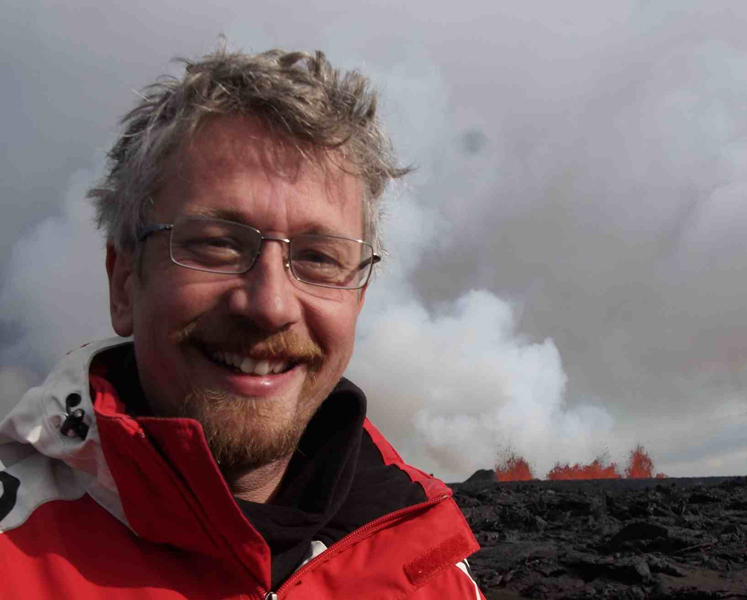
Mike Burton is the Chair in Volcanology at the School of Earth and Environmental Sciences, University of Manchester . Since 2015, he has led the Geoscience Group, comprising 13 permanent academic staff, and directs a research team of 3 postdoctoral researchers, 3 PhD students, and a senior research fellow. He also serves on the School Senior Leadership Team, shaping institutional strategy and research direction. He earned a BSc in Chemical Physics from the University of Sussex in 1993 and a PhD in Atmospheric Chemistry from the University of Cambridge in 1999. His early career included postdoctoral research at Cambridge and research roles at INGV in Catania and Pisa, Italy, before returning to the UK in 2015. His research integrates volcanology , petrology , remote sensing , and gas geochemistry to improve eruption forecasting and volcanic hazard management. He uses ground-based and satellite observations, numerical modeling, and field experiments to study volcanic degassing, magma ascent, and volatile cycling. He has pioneered the use of SO2 cameras and open-path FTIR systems for real-time volcanic gas monitoring. His recent publications span mafic eruption dynamics , CO2 flux quantification , tephra microstructure , and remote sensing of volcanic plumes , often in collaboration with volcano observatories and international partners. These works reflect a consistent focus on integrating observational data with modeling to understand volcanic behavior and its environmental impact. Scientific Recognition: ERC Consolidator Grant (CO2Volc, €1.72M) NERC Large Grant (DisEqm, £3.5M) University of Manchester Researcher of the Year (2017) President, GMPV Division, European Geosciences Union (2015–2018) Fellow of the Geological Society (2016–present) Invited/keynote speaker at AGU, EGU, and other major conferences Leadership & Advisory Roles: Member, Foreign Office Scientific Advisory Committee (UK volcanism hazards) Former Chief Scientist, Stromboli Volcano Observatory (2002/03 crisis) Led INGV Catania gas monitoring team (2002–2008) External PhD examiner for Cambridge and Montreal Reviewer for Nature, Science, EPSL, JVGR, and funding agencies (NERC, NSF, EU) Research Platforms & Collaborations: He is affiliated with the Manchester Environmental Research Institute , Sustainable Futures , and Digital Futures research platforms. He maintains active collaborations with INGV (Italy), NSF (USA), and multiple European institutions, and has co-supervised joint PhD students.