معرفی
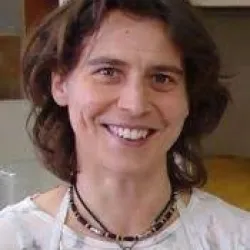
Dr. Christian Liebske is a Lecturer at the Department of Earth and Planetary Sciences, ETH Zurich, affiliated with the Institute of Geochemistry and Petrology. His professional journey includes a postdoctoral stint at ETH Zurich, followed by four years in industry at Tata Steel Europe (Netherlands), and since 2011, he has held roles as Lab Manager and Senior Researcher at his current institution.
Education:
- Ph.D. (Dr. rer. nat.) in Experimental Petrology, Bavarian Research Institute of Experimental Geochemistry and Geophysics (Bayerisches Geoinstitut, University of Bayreuth), 2005
- Diploma (Dipl. Min.) in Mineralogy, University of Hannover, 2001
Research Interests: Liebske’s work focuses on the state and evolution of Earth’s and planetary interiors. He specializes in high-pressure experimental studies of phase relations in sulfide systems, melt dynamics in deep mantle environments, and the structural behavior of silicate melts under extreme conditions. His research bridges fundamental geochemistry with planetary-scale processes, including magma ocean differentiation, core formation, and the role of volatiles (e.g., sulfur, carbon) in planetary evolution. Key topics include redox equilibria, metal-silicate partitioning, and the application of experimental data to model planetary interiors.
Publications & Trends: His recent articles emphasize interdisciplinary approaches to planetary geochemistry, combining thermodynamic modeling with high-pressure experiments. Work on FeS-MgS-CaS systems (2025) highlights contributions to both industrial applications (steelmaking) and natural reduced systems. Studies on mantle oxygen fugacity (2024) and basaltic melt elasticity (2024) reflect his expertise in linking experimental data with planetary-scale processes.
Grants & Funding:
- Swiss National Science Foundation (SNF) Grant 215222: Redox melting and alkaline magmatism
- SNF Grant 178948: Volatile Transfer in the Deep Earth
Labs & Teams: As Lab Manager, Liebske oversees advanced experimental facilities at ETH Zurich’s Institute of Geochemistry and Petrology, particularly in high-pressure and geochemical analysis. His team collaborates on projects involving multianvil experimentation, thermodynamic modeling, and in-situ viscometry/brillouin spectroscopy.