معرفی
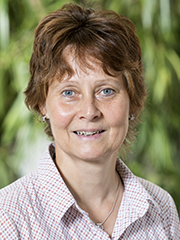
Dr. Barbara Andrews is a researcher in the Department of Chemical Engineering at the Faculty of Chemical and Pharmaceutical Sciences, Universidad de Chile. Her work focuses on the microbiology of extreme environments, particularly the Atacama Desert, and biochemical separation techniques. She has maintained a consistent research output for over two decades with recent publications extending into 2024.
Her primary research interests center on the study of actinomycetes and other extremophiles from the Atacama Desert, one of Earth's most arid environments. Dr. Andrews investigates their taxonomic classification, metabolic capabilities, and biotechnological potential. She also maintains a strong research program in protein separation technologies, particularly aqueous two-phase systems, which has produced influential review articles in the field. Her work bridges fundamental microbiology with practical biotechnological applications, including antibiotic discovery, enzyme production, and microbial contributions to plant growth.
Analysis of her recent publication trends shows a clear focus on the microbial ecology of the Atacama Desert, with particular attention to actinomycetes and their unique adaptations to extreme aridity. Her research spans taxonomic studies, metabolic modeling, and the bioprospecting of novel compounds with potential pharmaceutical applications. The interdisciplinary nature of her work connects microbiology, chemical engineering, and environmental science.
Dr. Andrews has maintained a productive research program through consistent collaborations, particularly with Dr. Juan Asenjo and other researchers at Universidad de Chile. Her work demonstrates sustained funding support, though specific grant details are not provided in the available publications. She has contributed to special journal issues focused on Atacama Desert microbiology, indicating her recognized expertise in this niche field.
Her laboratory appears to focus on the isolation and characterization of extremophilic microorganisms from the Atacama Desert, with particular emphasis on their metabolic capabilities and potential biotechnological applications. The research team likely maintains culture collections of desert microorganisms and employs both traditional microbiological techniques and modern genomic approaches in their investigations.