معرفی
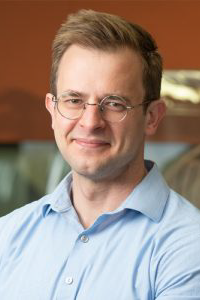
Andrew Hryckowian serves as an Assistant Professor in the Department of Medical Microbiology and Immunology at the University of Wisconsin–Madison School of Medicine and Public Health. His research program investigates the molecular and genetic foundations of gut microbiome community dynamics, with direct clinical translation through collaborations at UW Hospitals and Clinics. The laboratory employs gnotobiotic mouse models, molecular genetics, and in vivo approaches to dissect host-microbe interactions in gastrointestinal infectious diseases.
Education:
- BS, University of Pittsburgh, 2009
- PhD, University of Wisconsin-Madison, 2014
- Postdoctoral Fellowship, Stanford University, 2014-2020
Research Focus: Dr. Hryckowian's work centers on Bacterial Pathogenesis and Microbiome Science, specifically examining how butyrate metabolism, bacteriophage dynamics, and insertion sequence-driven evolution influence Clostridioides difficile infection and Group B Streptococcus colonization. His lab integrates metagenomics, molecular genetics, and clinical specimens to identify therapeutic targets for microbiome-related disorders, with emphasis on metabolite-mediated virulence regulation and phage-bacteria coevolution.
Publication Trends: Recent publications (2021-2025) reveal a concentrated focus on C. difficile pathogenesis mechanisms, gut-resident pathobionts, and microbiome evolution. Key themes include the dual role of butyrate in infection dynamics, insertion sequence-mediated genomic plasticity in microbiota, and bacteriophage-host coadaptation. His work consistently bridges basic microbiology with clinical applications, particularly in developing diagnostic tools and probiotic interventions for infectious diseases.
Scientific Awards:
- No awards documented in source materials
Research Infrastructure: The laboratory operates within the Microbial Sciences Building, utilizing advanced gnotobiotic facilities and collaborating with clinical teams at UW Hospitals. Current efforts focus on translating molecular insights into microbiome management strategies, with ongoing projects examining phage therapy applications and metabolite-based therapeutics for gastrointestinal infections.