
Kolbjørn Kallesten Brønnick is a Professor and Dean at the Faculty of Social Sciences, University of Stavanger. His research spans neuroscience, healthcare technology, and digitalization impacts in academia. He has contributed to studies on EEG-based disease classification, digital stressors in academic environments, and telemedicine efficacy. His work emphasizes cross-disciplinary approaches, integrating clinical neuroscience with public health challenges. Key research interests include neurodegenerative disorders, olfactory dysfunction assessment, and healthcare practitioner resilience. His recent publications explore EEG biomarkers for Parkinson’s disease, validation of digital consultation tools, and pandemic-related communication strategies. Brønnick collaborates internationally on projects addressing neuropsychiatric symptoms in dementia and multisite EEG data harmonization. His work is published in high-impact journals like Clinical Neurophysiology and Frontiers in Psychology. Notable contributions include developing the Digital Stressors Scale and the PARPHAIT olfactory assessment tool. Brønnick’s academic leadership role underscores his commitment to advancing social science and health research methodologies.
Find Academic Supervisors
Find and connect with academic supervisors, professors, and scholars for your research journey.
Showing 721-735 of 12,126 supervisors
Profile data may be stale. It is sourced from public faculty pages.
Carlos CastilloView profile
Research Professor
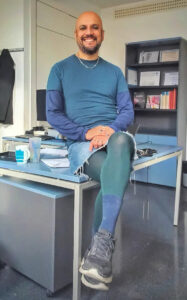
Carlos Castillo is an ICREA Research Professor at Universitat Pompeu Fabra, leading the Social and Responsible Computing Research Group. Their work focuses on algorithmic fairness, social computing, and mitigating bias in AI systems across criminal justice, education, healthcare, and hiring. Key projects include the Horizon Europe FINDHR initiative to detect discrimination in algorithmic hiring, causal inference studies on recidivism risk prediction, and analyzing gender biases in student evaluations. Research Interests: Algorithmic fairness, bias mitigation in AI systems, social data ethics, criminal justice analytics, education technology, and health informatics. Notable contributions include the FA*IR fair ranking algorithm and foundational work on auditing algorithms in digital health. Recent Trends in Articles: Recent work emphasizes interdisciplinary applications of algorithmic fairness—e.g., improving representativeness in hiring datasets, analyzing disparities in medical AI models, and addressing bias in student satisfaction surveys. Publications also explore radicalization pathways via recommendation systems and the societal impact of algorithmic decision-making. Awards: Best Paper Awards in CIKM 2022 (Francesco Fabbri), ICAIL 2019 (Marius Miron), and ISCRAM 2013 (Muhammad Imran). Grants: Leads the Horizon Europe FINDHR project and collaborates with the European Commission on algorithmic discrimination research. Labs/Teams: Directs the Social and Responsible Computing Group, focusing on interdisciplinary projects with PhD students and industry partnerships.

Davide MenozziView profile
Associate Professor
Davide Menozzi is an Associate Professor at the Department of Food and Drug of the University of Parma, specializing in Agri-food Economics. He teaches courses such as Agri-Food Economics and Consumer Behavior across undergraduate and graduate programs in Food Science, Gastronomic Science, and Quality Procurement. His research focuses on sustainability of agri-food systems, consumer behavior regarding novel foods (e.g., edible insects, GMOs), and Mediterranean diet adherence. Education: Bachelor's in Economics (University of Parma, 1999) MSc in Sustainable Development of Agri-Environmental Systems (University of Bologna, 2001) PhD in Agri-food Economics (University of Parma, 2006) Research highlights include EU projects like ALTERNATIVA (alternative proteins), BALANCE (aquaculture sustainability), and STRENGTH2FOOD (sustainable procurement). He has also led national projects ONFOODS and AGRITECH under Italy’s National Recovery Plan. Scientific Awards: Fellow of the European Association of Agricultural Economists (EAAE) Fellow of the Italian Association of Agricultural and Applied Economics (AIEAA) He is Deputy Chairman for the Gastronomic Science and Quality Procurement degree programs and has served on committees for UNESCO’s Parma Creative City of Gastronomy. His lab focuses on consumer-driven innovations in sustainable food systems.

Reuben NgView profile
Assistant Professor
Dr. Reuben Ng is an Assistant Professor at the Lee Kuan Yew School of Public Policy, National University of Singapore, and Lead Scientist at the Lloyd’s Register Foundation Institute for the Public Understanding of Risk. He holds a PhD in Public Health from Yale University, an MSc in Management Research from the University of Oxford, and degrees from NUS and NTU in Psychology. His research focuses on ageism, social gerontology, and quantitative social science, with a particular emphasis on leveraging behavioral insights and data analytics for evidence-based policymaking. He has contributed to Singapore’s Smart Nation initiatives and advised on risk communication strategies. Over $3.2M in research grants as PI and $4M as PI/Co-PI/Co-I. 50+ peer-reviewed publications and 85 conference presentations globally. Awards include the International Fulbright Science and Technology Award and the Harkness Fellowship. Dr. Ng serves on advisory boards in finance, defense, education, and sustainability. He leads workshops blending data analytics, behavioral insights, and design thinking. His work has been featured in major media outlets like The New York Times, The Guardian, and CNN, and he is ranked in the top 2% of global scientists by Stanford University.

Eugene ChanView profile
Associate Professor
Eugene Chan is an Associate Professor in the Department of Marketing Management at the Ted Rogers School of Management, Toronto Metropolitan University. He holds a PhD in Marketing from the University of Toronto, a MA in Social Psychology from the University of Chicago, and an AB in Honors Psychology from the University of Michigan, along with an ARCT (Hons) in Piano Performance from the Royal Conservatory of Music, reflecting a multidisciplinary background. His research lies at the intersection of consumer psychology, political ideology, health communication, and sustainability. He employs experimental and survey methods grounded in social science theories to understand how individuals make judgments and decisions in marketplaces and society. Key themes include the influence of political ideology on consumer behavior, strategies for effective marketing and health communication, and promoting environmentally sustainable choices. His work often explores how emotional, moral, and cognitive factors shape consumer decisions. His recent publications span top journals such as Journal of Consumer Psychology , Global Environmental Change , Computers in Human Behavior , and Personality and Social Psychology Bulletin . These studies reveal consistent focus on behavioral interventions, ideological divides, health compliance, and environmental sustainability. Trends indicate a strong emphasis on moral psychology, emotional triggers, and real-world applications in public policy and marketing strategy. Scientific Awards: Emerging Researcher Award, Australian and New Zealand Marketing Academy (2018) Dean’s Award for Excellence in Research by an Early Career Researcher, Monash Business School (2018) He has secured research funding from diverse sources including the National Natural Science Foundation of China, ACR Transformative Consumer Research Grant, IHS Hayek Fund, and the Indiana Commission for Higher Education, supporting projects on fake news mitigation, brand revitalization, moral foundations, and pandemic behavior. He has taught at institutions worldwide, including the University of Toronto, Monash University, and Purdue University, demonstrating international academic engagement. Eugene Chan serves in editorial roles for several journals, including as Associate Editor for Australasian Marketing Journal and International Journal of Consumer Studies , and as Special Issue Editor for Frontiers in Psychology . He also co-authored the 2nd Asia-Pacific edition of the textbook Consumer Behavior , contributing to marketing education. He advises students in consumer behavior and marketing research, though specific advisees are not listed.
Giuseppe Alessandro Veltri is a Full Professor at the University of Trento's Department of Sociology and Social Research. His expertise spans Behavioral Economics, Big Data, Computational Social Science, and Social Psychology. He currently teaches courses such as 'Big Data' and 'Social Dynamics Lab' within the Data Science and Previsione Sociale programs. His research focuses on understanding human behavior through digital methodologies, including studies on vaccine hesitancy, darknet markets, and the psychological aspects of pandemics. Veltri is also actively involved in designing computational tools like TextualLLMap to analyze societal biases in AI systems. His work bridges theoretical frameworks with empirical data, emphasizing interdisciplinary approaches to social science challenges. Research interests include the application of computational methods to study risk perception, online behavior, and policy design. Recent studies explore how behavioral insights can improve public health strategies during crises and how transparency in digital platforms influences consumer decisions. Veltri's contributions also extend to methodological innovations, such as optimizing online experiments and addressing gaps in cognitive sociology.
Brian HarmanView profile
Senior Lecturer
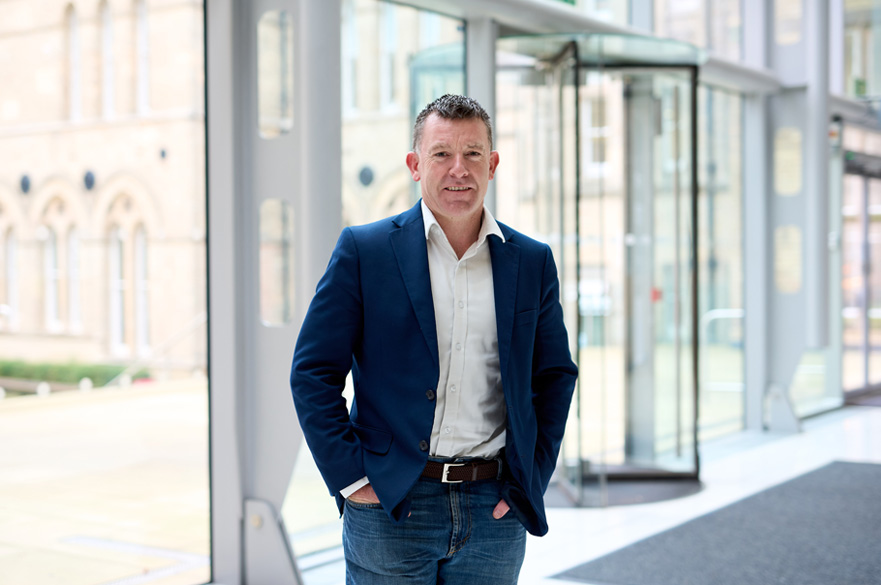
Brian Harman is a Senior Lecturer in the Department of Marketing at Nottingham Business School, Nottingham Trent University. With extensive experience teaching at UK and Irish higher education institutions, including the University of Reading, De Montfort University, University of Limerick, and the National University of Ireland, Brian is a Fellow of the Higher Education Academy and has served as External Examiner for Postgraduate Marketing programs at Bournemouth University (2020-2024). His pedagogical approach integrates research insights, earning recognition for innovative teaching practices. Consumer behavior Consumer psychology Persuasion techniques Behavioral science applications Brian’s research explores how consumers can achieve happier, healthier, and more sustainable lives through adaptive marketplace strategies. His work spans diverse contexts, including endurance athletics, social marketing for road safety, and psychological principles for consumer decision-making. He actively participates in the Marketing and Consumer Studies Research Centre and welcomes PhD applications focused on consumer behavior themes. Recent publications highlight his interdisciplinary approach, combining psychology with marketing in areas such as pandemic resilience among athletes, fear appeals for public safety campaigns, and behavioral insights for everyday consumer decisions. Brian’s industry background as a market researcher enriches his academic contributions.
Brent LagesseView profile
Associate Professor
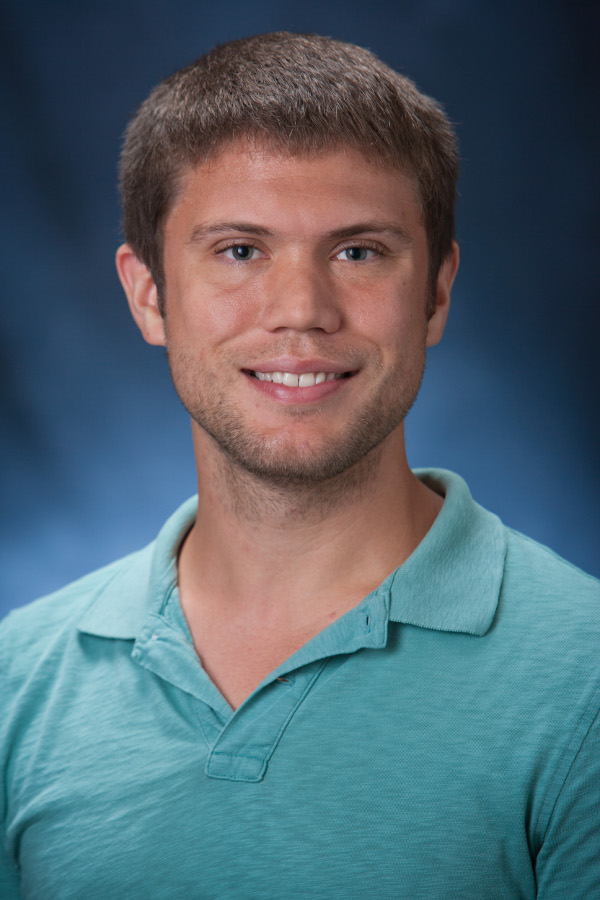
Brent Lagesse is an Associate Professor at the University of Washington - Bothell , affiliated with the Division of Computing & Software Systems under the School of Science, Technology, Engineering & Mathematics . His research focuses on security in emerging environments , particularly secure machine learning and privacy in sensor-rich systems . Ph.D. in Computer Science from the University of Texas at Arlington (2009) Research Interests include: Detecting and locating hidden webcams Scalable AI/ML defense mechanisms Privacy-preserving video sharing AI systems for air quality prediction Automated yeast cell analysis CRISPR/CAS9 guide-donor libraries Article Trends : Recent publications emphasize secure machine learning for smart city applications, privacy-preserving technologies , and resource-constrained security in crowdsensing environments . Collaborative work spans cybersecurity education , environmental monitoring , and context-aware systems . Scientific Awards : Cybersecurity Fulbright Scholar (University of Cambridge, 2018) Johann-von-Spix International Guest Professorship (University of Bamberg, 2019-20) Advising & Grants : Advises current research students Neil Prakasam and Nicholas Handaja NSA grant ($96k) for GenCyber curriculum development (2022) NSF grant ($300k) for AI-enhanced cybersecurity workforce studies (2021) T-Mobile grants for ML security metrics and dataset anonymization (2020-2022) Laboratory : Leads the Security of Emerging Environments (SEE) Lab , developing practical and theoretical frameworks for smart city security and privacy-preserving technologies .
Umar RuhiView profile
Professor
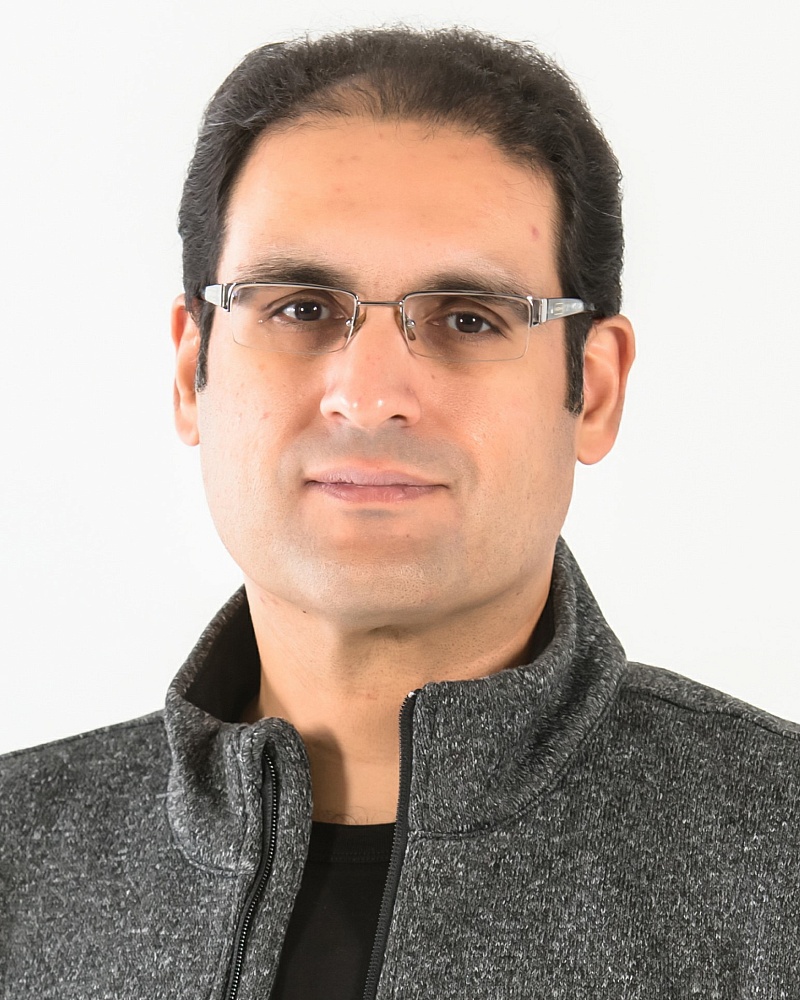
Dr. Umar Ruhi is a Full Professor and Ian Telfer Teaching Fellow at the Telfer School of Management, University of Ottawa, where he also serves as Vice-Dean of Undergraduate Programs. He holds a B.Sc. in Computer Science from the University of Toronto, an MBA from McMaster University, and a Ph.D. in Information Systems and Management Science from McMaster's DeGroote School of Business. His teaching spans undergraduate and graduate programs, covering information systems, cybersecurity management, and interdisciplinary courses in digital transformation. Research Focus: Professor Ruhi's work intersects information systems and knowledge management, with current emphasis on: Consumer health informatics and personal health records Digital misinformation countermeasures and tool usability Human-AI collaboration frameworks and governance Learning analytics and adaptive gamification in education Social computing and enterprise applications His research has resulted in commercial patents and practical implementations across industries. Research Recognition & Funding: Professor Ruhi has secured significant research funding, including: Canadian Heritage grant ($68,160) for disinformation research Multiple MITACS grants ($30,000 each) for AI, blockchain, and health tech projects Telfer Education Excellence Fellowship ($45,000) for learning analytics Noteworthy recognitions include the 2012 Best Dissertation Award from the German Society for Online Research and conference best paper awards. Academic Leadership: Beyond research, Professor Ruhi leads pedagogical innovation through his Ian Telfer Teaching Fellowship, exploring generative AI applications in education. His extensive consulting portfolio includes e-government portals, UX design, and knowledge management systems. As Vice-Dean, he oversees undergraduate program development and strategic initiatives.

Katarzyna Grunt-MejerView profile
Assistant Professor
Dr. Katarzyna Grunt-Mejer is an academic at SWPS University of Social Sciences and Humanities, based at the Poznań campus. She is affiliated with the Faculty of Psychology and Law and works within the Department of Clinical and Health Psychology at the Institute of Psychology. Holding a Doctor of Humanities in Psychology degree with additional training in sexology, philosophy, and bioethics, she serves as an Assistant Professor teaching sexology, basic psychology, and research methods in clinical psychology. She also directs the postgraduate studies in practical sexology. Dr. Grunt-Mejer's research focuses on sexual ethics, psychological support, the functioning of close relationships, and sexology. She has made significant contributions to understanding consensual non-monogamy, having led an international project from 2013 to 2015 examining attitudes toward non-mononormative relationships. Her work spans multiple disciplines including psychology, bioethics, and social sciences, with particular emphasis on the ethical implications of sexual health practices and the social construction of sexual norms. Her publication record shows consistent output across multiple domains, with her most recent work addressing contemporary issues in sexology, relationship structures, and sexual health. The articles demonstrate a clear progression from foundational research on relationship types to more nuanced examinations of ethical considerations in sexual health and the medicalization of sexual desire. Member of the scientific committee for the "Conference on the Future of Monogamy and Non-monogamy" Recipient of National Science Centre funding (SONATA competition) for her project "The concept of norm in sexology" (2017-2020) Contributor to significant research on road aggression and transportation psychology Dr. Grunt-Mejer actively engages in both academic and public discourse, participating in conferences like the Impact 2024 congress and contributing to public understanding of human sexuality. She leads the Sexology Scientific Club at the university and has been involved in numerous research projects examining the intersection of psychology, ethics, and sexual health. Her work demonstrates a commitment to bridging academic research with practical applications in clinical settings and public education.
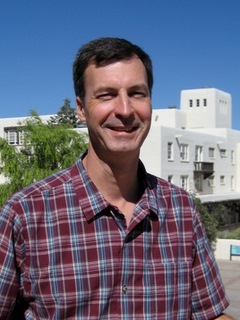
Kerry J. HoweView profile
Professor
Kerry J. Howe serves as Professor and Director of the Center for Water and the Environment within the Department of Civil Engineering at the University of New Mexico's School of Engineering. A registered Professional Engineer (P.E.) and Board Certified Environmental Engineer (BCEE), he brings over 12 years of industry consulting experience to his academic leadership, focusing on advancing water treatment technologies and environmental engineering solutions. Dr. Howe's educational foundation includes: BS in Civil and Environmental Engineering, University of Wisconsin-Madison (1984) MS in Environmental Health Engineering, University of Texas at Austin (1986) PhD in Environmental Engineering, University of Illinois at Urbana-Champaign (2001) His research expertise spans environmental engineering with emphasis on physical/chemical water treatment processes, membrane technologies (microfiltration to reverse osmosis), desalination, and water chemistry. Current investigations address membrane fouling in wastewater reuse, mineral recovery from desalination concentrate, fluoride removal, and pharmaceutical contaminant elimination through innovative process design. Recent publications (2020-2025) demonstrate a strategic focus on the Mineral Recovery Enhanced Desalination (MRED) process, trace organic contaminant removal in potable reuse systems, and microplastic-heavy metal interactions. These works collectively advance sustainable water management through improved treatment efficiency, resource recovery, and emerging contaminant mitigation. Dr. Howe's accolades include: Harrison Faculty Recognition Award, UNM (2015) Stamm Outstanding Faculty Award, UNM (2014) Golden Spigot Award, AWWA (2007) Junior Faculty Teaching Excellence Award, UNM School of Engineering (2006) As Center Director, he oversees $2.6M+ in annual research expenditures, directing projects that bridge academic research with practical engineering applications. His textbooks MWH's Water Treatment: Principles and Design and Principles of Water Treatment serve as foundational resources in the field. Under his leadership, the Center for Water and the Environment functions as a critical hub for interdisciplinary water research, collaborating with industry and government agencies to address global water challenges through technology development and sustainable engineering practices.
Matthias BertschView profile
Professor
Matthias Bertsch is a faculty member with expertise spanning musical acoustics, medical acoustics, and ethnomusicology. His work bridges musicology, biomedical engineering, and clinical applications. Academic leadership in structured doctoral programs Research on brass instrument mechanics and NICU sound environments Interdisciplinary focus on music-physiology and psychoacoustics Research Interests: Specializing in the acoustic properties of musical instruments, therapeutic sound applications for premature infants, and physiological analysis of brass players. His work combines empirical measurement with clinical and cultural implications. Article Trends: Publications emphasize brass instrument biomechanics , incubator sound optimization , and music's physiological effects , with recurring themes in virtual acoustics and interdisciplinary methodologies.
Ahmet SongurView profile
Assistant Professor
Dr. Ahmet Songur is an Assistant Professor at the Faculty of Economics and Administrative Sciences of Suleyman Demirel University , specializing in Business Administration . With a career spanning over a decade, he teaches courses like Services Marketing, Brand Management, and Consumer Behavior. Education: PhD in Business Administration (2015), Master's (2009), and Bachelor's (2006) from Suleyman Demirel University. Research focuses on export marketing, customer engagement, gender representation in advertising, and resource-based competitive strategies. Published extensively in Turkish journals (TR DİZİN) and international books, with recent works addressing digital addiction, femvertising, and pandemic impacts on aviation. His 2023–2024 publications examine brand value mediation, gender in advertisements, and export strategies. He has supervised PhD student Duygu Yaman and maintains an ORCID ID (0000-0002-9869-5394) for academic transparency.

Gabriele BernardiniView profile
Researcher
Gabriele Bernardini is a Researcher at the Department of Civil, Building and Architectural Engineering within the Faculty of Engineering at Università Politecnica delle Marche (UNIVPM) in Ancona, Italy. His office is located at via brecce bianche 12, Ancona in the DICEA, Construction Section (quota 150), where he holds office hours on Wednesdays from 9-11 AM. His work focuses on the intersection of built environment safety, risk assessment, and innovative technological applications for urban resilience. Dr. Bernardini's research interests center on multi-risk assessment and mitigation in urban built environments, particularly addressing flood risks, terrorist threats, and heatwave vulnerabilities in historical contexts. His work employs innovative methodologies including virtual reality simulations, behavioral design approaches, and data-driven predictive models. He has developed frameworks for measuring user exposure and vulnerability, optimizing evacuation paths, and creating integrated wayfinding systems for emergency situations. His research bridges the gap between theoretical risk assessment and practical implementation in real-world urban settings, with a special focus on preserving historical character while enhancing safety. Analysis of his recent publications (2021-2025) reveals a consistent focus on multi-risk scenarios in urban environments, particularly examining how different hazards interact in historical settings. His work demonstrates increasing sophistication in methodology, moving from basic risk assessment to integrated multi-risk frameworks that consider user behavior, environmental factors, and technological solutions. A significant portion of his research applies virtual reality and extended reality technologies to safety training and evacuation planning, showing the evolution from theoretical models to practical applications with real-world testing. His research has practical applications across multiple domains including urban planning, emergency management, and building maintenance. Through his work on automatic detection systems using maintenance requests and predictive management approaches, he's contributing to more responsive building management practices. His case studies on specific locations like Matera demonstrate the translation of theoretical frameworks into context-specific solutions for historic urban environments.

Abhishek DwivediView profile
Associate Professor
Abhishek 'Abbey' Dwivedi is an Associate Professor in Marketing at the School of Business, Charles Sturt University (CSU). He holds a PhD in Marketing from Griffith University, a Master's in Marketing Management (First Class Honours), and a PGDM in Marketing. His teaching experience spans over seven years across Griffith University, University of Queensland, and Central Queensland University, covering courses like Marketing Strategy, Global Marketing, and Services Marketing. PhD in Marketing, Griffith University (2006-2010) Masters in Marketing Management (First Class Honours), Griffith University (2004-2005) PGDM (Marketing), Central Queensland University (Brisbane) Abbey's research focuses on brand extensions , customer equity , celebrity endorsements , and marketing capabilities , with publications in journals like the Journal of Brand Management and European Journal of Marketing . His recent work explores social entrepreneurship and mental health impacts on frontline workers , aligning with his involvement in the Aspro Workforce Wellness Research Unit and Marketing Research Group . His 15 most recent publications (2005-2025) span brand management , social media engagement , cybersecurity in agriculture , and mental health during crises . Key trends include interdisciplinary work on industrial buyers , consumer-brand relationships , and marketing innovation in SMEs . Scientific Awards & Grants: Best Paper Award (2015) Best Reviewer in Track Award (2015) Better Mental Health Program Evaluation Project (2020) Certificate of Appreciation, Society for Marketing Advances (USA) (2014) Abbey supervises higher-degree research students and serves as a peer reviewer for journals like the Journal of Retailing and Consumer Services . He is also part of the Regional Entrepreneurship Research Group and Regional Work and Organisational Resilience Sturt Group .