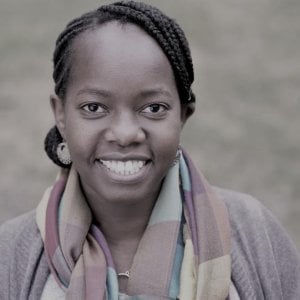
Dr Peninah Murage is an Assistant Professor at the London School of Hygiene & Tropical Medicine in the Department of Public Health, Environments and Society under the Faculty of Public Health and Policy. She specializes in environmental epidemiology with a PhD in Health Geography and focuses on health impacts of environmental changes, particularly climate change mitigation and adaptation strategies. Affiliation: Centre on Climate Change and Planetary Health Her research explores climate change effects on health outcomes like heat-related mortality, cardiovascular diseases, and cognitive development in children. She integrates GIS/spatial analysis with public health and policy frameworks to identify nature-based solutions for sustainable development. Current work examines systemic inequalities in heat risk exposure and interventions such as tree-based strategies in low-income settings. Key grants include: Health Protection Research Unit on Climate Change and Health Security (2025-2030, NIHR) Climate Change and Non-Communicable Diseases in Senegal (2024-2027) Pathfinder 2: Accelerating Climate Action for Health (2023-2026) She actively contributes to the Lancet Pathfinder Commission and serves on the Executive Committee of the International Society of Environmental Epidemiology (African Chapter).
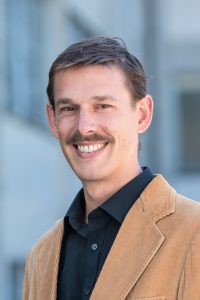
Dr. Alex Bigazzi is an Associate Professor and Associate Head (Undergraduate Program) in the Department of Civil Engineering at the University of British Columbia (UBC), with a joint appointment in the School of Community and Regional Planning. He leads the REACT Lab, focusing on active transportation, micromobility, and sustainable infrastructure design. His research emphasizes the intersection of physics, physiology, and behavior in active travel, particularly for pedestrians and cyclists, and addresses emissions reduction and equitable urban mobility. Bigazzi holds a B.M. in Jazz Saxophone from the University of Miami and a Ph.D. in Civil Engineering from Portland State University. His career includes academic and practical contributions, such as founding the REACT Lab and leading projects on e-bike incentives, air pollution exposure, and infrastructure design. His work has earned awards like the 2024 Wall Legacy Award for inclusive transport design and the 2023 Climate Action Award. He teaches courses on pedestrian/bicycle facility design and capstone projects, mentoring students through UBC’s Civil Engineering programs.
Dr. Elaine T. Jurkowski serves as Professor in Social Work at Southern Illinois University's College of Health and Human Sciences, holding multiple leadership roles including Graduate Program Director (2021-present) and Program Director for Gerontology Programs (2020-present). She maintains cross-appointments as Adjunct Professor in the School of Medicine's Family Practice Residency Program and Professor in the Department of Health Education, demonstrating her interdisciplinary impact. B.S.W. (Industrial Social Work), University of Manitoba, Canada M.S.W. (Policy and Administration), University of Manitoba, Canada Ph.D., Public Health, University of Illinois at Chicago M.B.A., Southern Illinois University Carbondale (2022) Dr. Jurkowski's research program centers on health disparities, access to mental health services, aging, and disability issues, with particular focus on rural populations. Her work bridges public health, social work, and gerontology through innovative approaches to program evaluation, technology-enhanced teaching, and culture change in long-term care settings. She has developed expertise in international health planning and inter-professional collaboration across diverse cultural contexts. Her publication portfolio shows consistent thematic development across decades, with recent work focusing on medical tourism during the pandemic, rural-urban health disparities, and technology applications in gerontology education. These publications reflect her commitment to addressing healthcare access challenges for vulnerable populations through both scholarly inquiry and practical interventions. Great Cities Research Fellow in Health Provost Faculty Fellow (2018) Provost Assessment Fellow (2016) Student Hotspotting certification (2018-present) A.P.M. Assessment Academy certification (2016, 2017) Dr. Jurkowski has successfully secured over $1 million in research funding from agencies including Health Resources and Services Administration, The Hartford Foundation, and Administration on Aging. Her grant portfolio demonstrates sustained commitment to improving services for older adults and people with disabilities, particularly in rural settings. She has served as Graduate Program Director twice (2003-2014, 2021-present), mentoring numerous social work students through their academic and professional development. Her professional activities extend beyond campus through international consulting in West Africa, Hong Kong, India, China, Russia, and Egypt, and community engagement via the "Dare to Care" radio show and board service with Caring Counseling Ministries, Supporting People in Need, and UNA/USA Southern Illinois Chapter.
Brendan Russo serves as an Associate Professor in the Department of Civil Engineering, Construction Management, and Environmental Engineering at Northern Arizona University, where he conducts influential research in transportation safety and traffic engineering. His work focuses on improving safety outcomes for vulnerable road users through rigorous analysis of crash data, traffic operations, and emerging mobility technologies, with significant contributions to Arizona-specific transportation challenges and national safety practices. Russo's research program centers on bicycle and pedestrian safety, crash severity analysis, and the integration of autonomous systems into transportation networks. He employs advanced methodologies including spatial analysis, statistical modeling (e.g., random parameters bivariate probit models), and observational studies to investigate traffic stress levels, intersection safety, and the impacts of infrastructure treatments. His work consistently bridges theoretical transportation engineering with practical applications for safer community design. Analysis of Russo's recent publications reveals a strong emphasis on emerging transportation technologies and their safety implications, particularly regarding autonomous delivery robots and vehicle-pedestrian interactions, while maintaining core focus on traditional safety concerns like bicycle crash frequency and severity. His research demonstrates increasing integration of spatiotemporal analysis and scenario-based testing methodologies, with a clear geographic concentration on Arizona metropolitan regions that provides valuable localized insights applicable to broader transportation contexts. No scientific awards were mentioned in the provided text. No specific information about advising responsibilities or grant funding was provided in the text, though his extensive publication record and dataset contributions indicate active research leadership. Russo collaborates within a robust research network centered on transportation safety, frequently partnering with colleagues including Gehrke, Smaglik, and Holliday on projects involving field data collection, bicycle infrastructure evaluation, and safety performance metrics. His work leverages both observational studies and simulation approaches to develop data-driven guidance for transportation practitioners, with particular attention to Arizona's unique transportation environment and metropolitan planning challenges.
Diane E. Austin is a Professor and Director of the School of Anthropology at the University of Arizona. She also serves as a Research Anthropologist at the Bureau of Applied Research in Anthropology (BARA). Her work focuses on environmental anthropology, particularly community dynamics in industrial and environmental contexts, with a strong emphasis on social justice and collaborative research. She has over 25 years of experience leading interdisciplinary projects in the U.S., Mexico, and Gulf Coast regions. Austin's research spans diverse areas including Native American communities, U.S.-Mexico border sustainability, Gulf Coast oil industry impacts, and urban food systems in arid regions. She has pioneered long-term partnerships with tribal organizations, federal agencies, and community groups, earning recognition such as the University Distinguished Outreach Professor (2008) and Distinguished Director (2023). Her recent work highlights longitudinal studies on the Deepwater Horizon oil spill's social effects, binational environmental initiatives in Nogales, and community-based approaches to disaster resilience. She coordinates BARA's internship and post-baccalaureate programs, supporting hundreds of students in applied anthropological research. Awards: Partners in Conservation Award (2010), Border Research Partnership Award Finalist (2012) Leadership Roles: Chair of the Good Neighbor Environmental Board, Member of the Gulf Research Program Advisory Board Key Projects: Southern Paiute cultural preservation, Gulf Coast oil industry studies, Nogales reforestation initiatives Austin’s teaching includes courses on ethnographic methods, data analysis, and mixed-methods research. She actively engages in policy advocacy, contributing expert testimony in legal proceedings related to environmental disasters and labor rights.
Liping Liu is a Professor in the Department of Management at The University of Akron's College of Business. He holds a Ph.D. in Business from the University of Kansas (1995), Master of Engineering in Systems Engineering (1991), and dual bachelor's degrees in Applied Mathematics (1986) and River Dynamics (1987). Ph.D., University of Kansas MS, Huazhong University of Science and Technology B.E., Wuhan University BS, Huazhong University of Science and Technology His research spans Artificial Intelligence , Electronic Business , Systems Analysis , Data Quality , and Belief Function Theory . He pioneered coarse utility theory and linear belief functions , now taught in top Ph.D. programs across multiple disciplines. Key trends in his publications include Belief Function Applications (2012-2024), Medical Data Systems (2003-2015), and Decision Theory (2004-2014). Recent works focus on Gamma Belief Functions (2024) and computational improvements in linear belief function operations (2019-2016). Scientific contributions recognized via: Microsoft Azure Educator Grant (2014-2016) Inclusion in Who's Who in America (2010-2013) and Who's Who in the World (2011-2013) As an editor and committee member for major conferences (INFORMS, AMCIS, Belief Functions conferences), he bridges academic research with practical systems implementation in e-business and healthcare domains.
Shauna Brail is Professor and Director at the Institute for Management & Innovation, University of Toronto Mississauga, with cross-appointments at the Munk School of Global Affairs & Public Policy. As an economic geographer and urban planner, her research examines urban transformation through economic, social, and technological change, particularly focusing on platform economy impacts, mobility innovation, and governance shifts in 21st-century cities. Education: PhD in Geography (University of Toronto), MA in Urban Planning (University of British Columbia), BA in Urban Studies/Geography (University of Toronto). Leadership Roles: Former Associate Director of Mobility Network, Director of Urban Studies Program, Associate Director of Partnerships & Outreach at School of Cities, and Interim Director of Master of Urban Innovation. Her work appears in top journals across geography, urban planning, and urban studies . Recent publications analyze pandemic impacts on cities, platform economy regulation, public housing finance models, and autonomous vehicle governance. She advises governments and civic organizations on housing, transportation, and digital platform policy while serving on editorial boards for Applied Geography , Progress in Economic Geography , and Canadian Geographies . Academic partnerships include collaborations with researchers like Tara Vinodrai, Ben Donald, and international scholars. Her current projects examine post-pandemic urban recovery, mobility-as-a-service business models, and equitable transportation technology implementation across Canadian cities.
Dr. Jacinta Edebeli serves as a Researcher and Group Lead at the Zurich University of Applied Sciences (ZHAW), School of Engineering, within the Meteorology, Environment and Aviation Research Unit. Her work focuses on aviation environmental impacts, air quality monitoring, and sustainable aviation solutions through advanced measurement systems and policy-relevant research. Her research expertise spans: Aviation emissions (gaseous and particulate matter) Urban air quality monitoring using lung-deposited surface area (LDSA) metrics Sustainable aviation fuels (SAF) impact assessment Aviation meteorology and environmental regulation Real-time emission monitoring networks for urban environments Recent publications demonstrate concentrated work on non-volatile particulate matter (nvPM) characterization from aircraft engines, SAF emission comparisons, and ultrafine particle microphysics. Her research bridges technical aviation engineering with public health outcomes through advanced aerosol measurement techniques. She actively leads and contributes to critical projects: Net4Cities : Deputy project leader developing real-time monitoring networks for European zero-pollution action plans Renewable Fuels and Chemicals for Switzerland : Project leader advancing SAF implementation EASA SAMPLE IV : Completed project leader for aircraft emissions certification Multiple AGEAIR projects investigating in-service engine emissions and aging effects As SAE E-31 network member and ORCID-registered researcher (0000-0003-2465-1783), she operates at the forefront of aviation environmental regulation with state-of-the-art facilities at ZHAW's Winterthur campus.
Dr. Jonathan Bright is a Senior Research Fellow and Associate Professor at the Oxford Internet Institute, University of Oxford , specializing in computational approaches to the social and political sciences. His research explores how digital technologies reshape political participation and how new data sources enhance governmental decision-making. Research Interests: Focused on social media, political behavior, computational social science, and big data , Bright’s work addresses digital governance, algorithmic bureaucracy, and the dynamics of political fragmentation online. His empirical studies span open government data usage, crowdsourced geographical information, and the impact of neighborhood effects on data completeness. Scientific Contributions: Leading studies on algorithmic governance in UK local authorities (2020) Investigating geodemographic biases in crowdsourced platforms like OpenStreetMap (2018) Mapping political fragmentation in social media ecosystems (2018) Grants & Collaborations: Funded by UK taxpayers, ESRC, and Google, his work intersects with projects on vaccine misinformation, hate speech monitoring, and digital economies. Formerly held positions as Research Fellow and Research Associate at OII from 2013 to present.
Professor Andrew Hudson-Smith is the Director of the Bartlett Centre for Advanced Spatial Analysis (CASA) at University College London (UCL), where he holds the title of Professor of Digital Urban Systems. He leads UCL's academic and applied research in smart cities, digital twins, and urban informatics. His roles include Editor-in-Chief of the Future Internet Journal and academic lead for the Smart Queen Elizabeth Park project. He contributes to strategic initiatives such as the Greater London Authority Smart London Board and EPSRC Digital Economy Programme Advisory Board. Education: PhD (2003), MSc (1996) from UCL; BSc in Geography from the University of Plymouth (1992). Research focuses on digital urban systems, IoT applications, sustainable urban planning, and cyberphysical systems. Notable projects include urban heat island monitoring, participatory planning platforms, and metaverse-driven urban design. His work bridges technology, art, and public engagement, exemplified by initiatives like Tales of Things and the Haggle-O-Tron. Recent publications emphasize digital twins, metaverse urbanism, and IoT integration in urban environments. Awards include a Fellowship of the Royal Society of Arts. His work addresses SDGs 3 (Good Health) and 11 (Sustainable Cities), with a focus on equitable smart city development and public space innovation.
Nadia E. Brown is a Professor of Government and Director of the Women's and Gender Studies Program at Georgetown University's College of Arts and Sciences. She holds a Ph.D. in Political Science from Rutgers University and specializes in intersectional analyses of Black women’s politics, legislative studies, and identity politics. Her work emphasizes holistic approaches to understanding race, gender, and their intersections in political systems. Dr. Brown leads the #MeTooPoliSci Collective, focusing on eradicating sexual harassment in political science, and co-PIs a million-dollar NSF grant addressing systemic issues in the discipline. She is editor of Politics, Groups and Identities and contributes to The Monkey Cage blog. Her research spans Black women’s legislative representation, digital activism, and feminist methodologies, with award-winning books including Sisters in the Statehouse and Sister Style . Education: Ph.D. in Political Science, Rutgers University Key Affiliations: African American Studies Program, #MeTooPoliSci Collective Research Methods: Case studies, ethnography, interviews Her advocacy extends beyond academia, influencing public discourse on racial justice and gender equity through media engagement and policy-focused scholarship.
Professor Knut Reinert is a leading figure in algorithmic bioinformatics at the Free University of Berlin, where he holds a professorship in the Department of Mathematics and Computer Science. He also maintains a significant affiliation with the Max Planck Institute for Molecular Genetics in Berlin, where he leads the Efficient Algorithms for Omics Data group. His research spans both institutions through the Reinert Lab, which focuses on developing novel computational approaches for biological data analysis. Reinert's educational background includes a Diploma in Computer Science (1994) and a Doctorate (Dr. Ing./Ph.D., 1999, with honors) from the Max-Planck-Institut for Computer Science and Universität des Saarlandes in Saarbrücken. Prior to his professorship, he worked as a computer scientist under Prof. Gene Myers at Celera Genomics in Rockville, USA (1999-2002). His primary research interests center on algorithmic bioinformatics with specific focus on developing novel algorithms and data structures for biomedical mass data analysis. This includes creating mathematical models for genomic sequence analysis and algorithms for mass spectrometry data to detect differential protein expression between normal and diseased samples. His work bridges the gap between computational tool development and practical biological applications, with particular emphasis on NGS and proteomics data. The publications and projects led by Prof. Reinert demonstrate a consistent focus on advancing computational methods in bioinformatics. His research spans genomic sequence analysis, RNA research (particularly long non-coding RNAs), parallel computing applications, and GPU acceleration for biological data processing. The work shows increasing sophistication in handling large-scale biological datasets through innovative algorithmic approaches. Intel® Parallel Computing Center designation for his lab CUDA Research Center status DFG funding of 530 thousand Euros for RNA research de.NBI funding of 2 million Euros BMBF funded projects 'LIVE-DREAM' and 'EssBar' Prof. Reinert leads multiple significant research projects and has established strong collaborations with international partners including Texas A&M, Kings College London, Eberhardt-Karls Universität Tübingen, Robert-Koch-Institute, and various Turkish institutions. His lab receives funding from major organizations including DFG, BMBF, and Intel. The Reinert Lab maintains active teaching responsibilities at FU Berlin, offering courses at BSc, MSc, and PhD levels using both traditional and innovative learning concepts like e-learning and inverted classrooms. The Reinert Lab consists of two interconnected research groups that work closely with experimental biologists and medical researchers to develop practical computational solutions for real-world biological problems. The lab has established itself as a key player in the German and international bioinformatics community through its development of the widely-used SeqAn library and participation in national infrastructure initiatives.
Jan G. Voelkel is an Assistant Professor at the Jeb E. Brooks School of Public Policy and the Department of Sociology at Cornell University. His research explores how micro-level preferences for equality and unity translate into macro-level political decisions, focusing on democratic attitudes, partisan dynamics, and moral framing. Ph.D. and M.A. in Sociology, Stanford University M.S. in Social and Behavioral Sciences, Tilburg University B.S. in Social Sciences, University of Cologne Voelkel’s work spans political psychology, metascience, and social policy, with a focus on interventions to reduce anti-democratic attitudes, partisan animosity, and gender bias in political leadership. His recent articles emphasize large-scale collaborations, reproducibility, and cross-partisan empathy. Scientific awards include: New Investigator Award (Behavioral Science & Policy Association) Public Sociology Award (American Sociological Association) Open Science Innovator Award (Stanford) Centennial Teaching Assistant Award (Stanford)
Gail E. Joseph is a Professor in the College of Education at the University of Washington, with affiliations in Early Childhood & Family Studies and Learning Sciences & Human Development. She teaches courses, advises students, and conducts research on early care and education, focusing on child care quality, social-emotional learning, teacher education, and technology integration. Ph.D., University of Washington Her research projects include statewide surveys on early childhood workforce conditions, studies on digital professional learning tools like Circle Time Magazine, and evaluations of coaching interventions (e.g., FIND in Childcare) to improve teacher-child interactions. She co-created resources such as Teacher Time and the EarlyEdU Alliance, which aims to enhance early childhood education through accessible bachelor’s degrees. Her publications span topics like social-emotional curricula, behavioral interventions, and inclusive education frameworks. She has held leadership roles as Principal Investigator (PI) of the Head Start Center for Inclusion and Co-PI of the National Center for Quality Teaching and Learning (NCQTL). 2018 David R. Thorud Leadership Award (University of Washington) She currently serves as Executive Director of Cultivate Learning at the University of Washington, advancing professional development and quality improvement initiatives nationwide.
Tan Chuan Hoo is an Associate Professor (tenured) and Deputy Head of the Department of Information Systems and Analytics at the National University of Singapore's School of Computing. With a distinguished academic career spanning multiple continents, he brings expertise in digital transformation, healthcare informatics, and enterprise systems to his teaching and research. His educational background includes: B.Sc. (1st Class Honours, National University of Singapore) M.Sc. (Accelerated, National University of Singapore) Ph.D. (National University of Singapore) Professor Tan's research focuses on digital transformation, particularly designing, deploying, and evaluating technological innovations. His work centers on two critical areas: digital commerce (provision of digital services such as online shopping aids) and digital organization (ensuring operational efficiency and performance). His research has significant implications for healthcare institutions, corporations, and crisis preparedness and response organizations. He conducts comprehensive analyses using various scientific methodologies including field experiments and mixed methods to understand how digital technologies reshape business operations and enhance societal well-being. His publication record shows a consistent focus on information systems, with recent articles (2020-2025) emphasizing healthcare informatics, digital transformation, and open innovation. His work demonstrates a clear trajectory toward understanding how technology intersects with organizational effectiveness and societal implications, with increasing attention to healthcare applications and digital crisis management. Professor Tan has received numerous prestigious awards for his contributions to the field: Faculty Teaching Excellence Award, NUS (2024, 2017) Information Management Research Award, China Information Economics Society (2023) Reviewer Hall of Fame, Journal of AIS (2020) Outstanding Associate Editor Award, MIS Quarterly (2016) Best Reviewer Award, Journal of AIS (2016) INFORMS ISS Design Science Award (2013) Honorable Mention, Journal of AIS (2015) He has successfully advised PhD students and collaborated with public and private entities on research projects. His editorial service as Associate Editor for Information Systems Research and MIS Quarterly, along with board memberships at other leading journals, demonstrates his significant influence in the field. Professor Tan has secured research grants supporting projects on digital crisis preparedness, disaster response technology, and healthcare digitalization. His research group focuses on understanding how technology can be designed and implemented to support organizations in crisis situations, enhance healthcare services, and improve digital commerce. Current projects include examining digital crisis management, technology for disaster response, and the digital transformation of healthcare services.