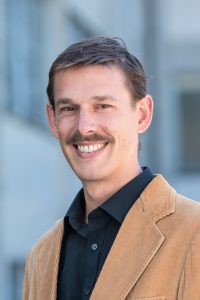
Dr. Alex Bigazzi is an Associate Professor and Associate Head (Undergraduate Program) in the Department of Civil Engineering at the University of British Columbia (UBC), with a joint appointment in the School of Community and Regional Planning. He leads the REACT Lab, focusing on active transportation, micromobility, and sustainable infrastructure design. His research emphasizes the intersection of physics, physiology, and behavior in active travel, particularly for pedestrians and cyclists, and addresses emissions reduction and equitable urban mobility. Bigazzi holds a B.M. in Jazz Saxophone from the University of Miami and a Ph.D. in Civil Engineering from Portland State University. His career includes academic and practical contributions, such as founding the REACT Lab and leading projects on e-bike incentives, air pollution exposure, and infrastructure design. His work has earned awards like the 2024 Wall Legacy Award for inclusive transport design and the 2023 Climate Action Award. He teaches courses on pedestrian/bicycle facility design and capstone projects, mentoring students through UBC’s Civil Engineering programs.
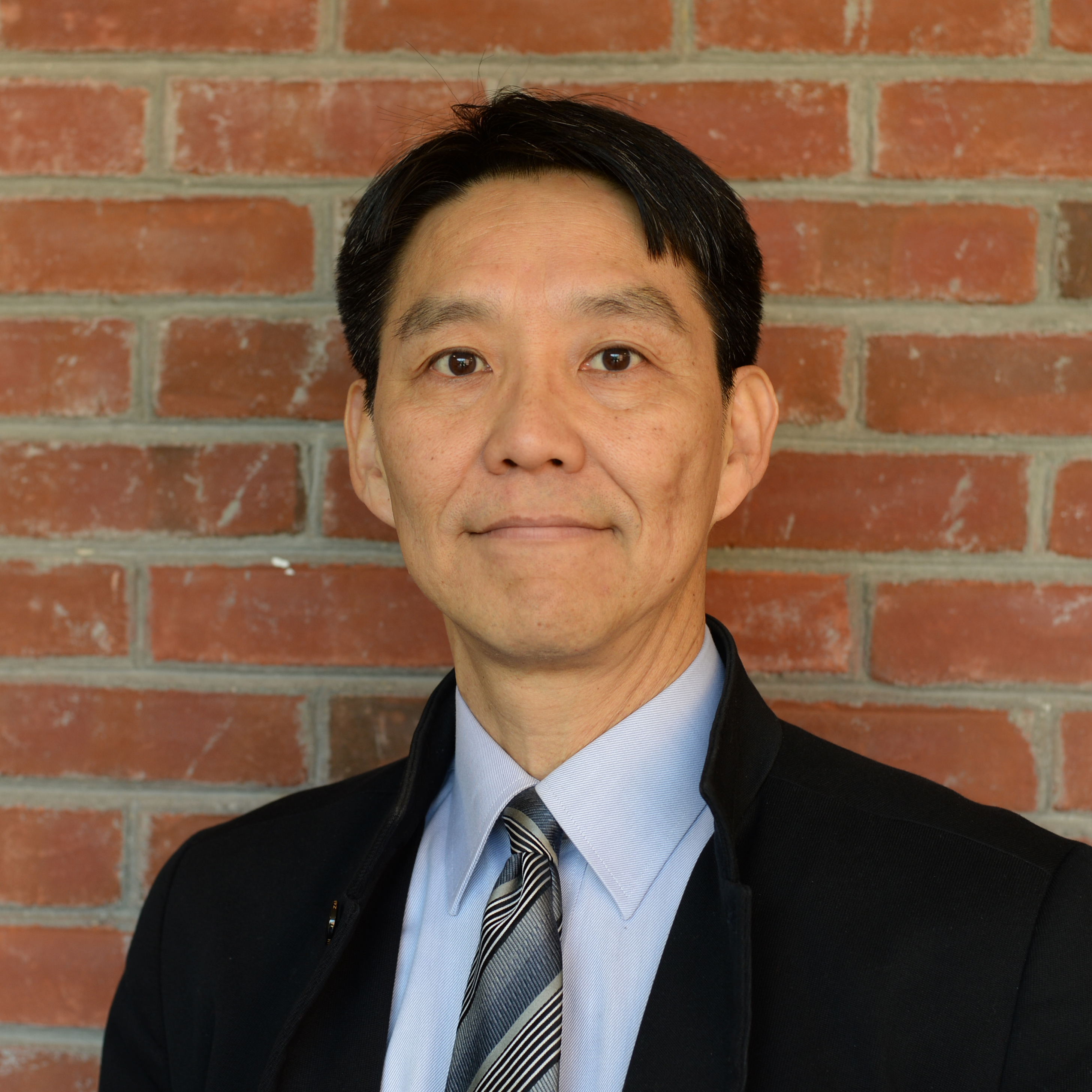
Hiroyuki Iseki is Associate Professor of Urban Studies and Planning at University of Maryland's School of Architecture, Planning and Preservation, and Research Affiliate with the National Center for Smart Growth. His work examines interactions between transportation, land use, equity, and environmental sustainability. Research focuses on: Transit-oriented development impacts on firm location Equity in public transit finance Climate policy implementation in urban planning Active transportation infrastructure analysis Recent publications analyze post-pandemic transit demand shifts, campus multimodal conflicts, and bicycle accessibility modeling. Methodological strengths include spatial econometrics, GIS analysis, and longitudinal data approaches. Work increasingly addresses climate adaptation in transportation planning and EV charging grid impacts. Research contributes to urban policy through WMATA collaborations and Japanese municipal climate planning studies. Current PhD program directorship advances urban planning analytics training.
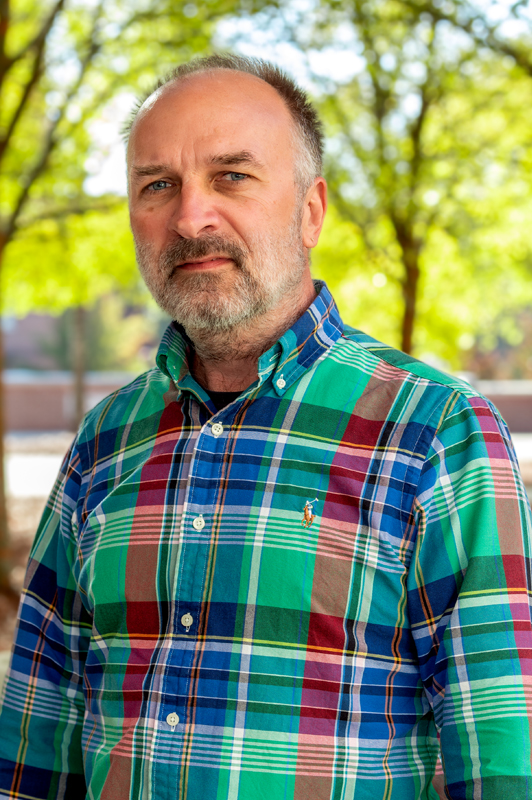
Rod Turochy is the James Madison Hunnicutt Professor in Traffic Engineering and Associate Director for Outreach at the Auburn University Transportation Research Institute (AUTRI). He holds a Ph.D. from the University of Virginia and degrees from Virginia Tech. His work focuses on traffic engineering, highway safety, and pedestrian infrastructure, with a strong emphasis on community-based solutions. Education: Ph.D., Civil Engineering, University of Virginia M.S., Civil Engineering, Virginia Tech B.S., Civil Engineering, Virginia Tech Research interests include improving transportation safety through innovative roadway design, bicycle/pedestrian facility planning, and advancing engineering education. He co-led a $1.3M grant to enhance pedestrian safety in Alabama’s Black Belt region and contributed to studies on wrong-way driving prevention. He plays a key role in Auburn’s Transportation Research Institute, organizing major conferences like the Alabama Transportation Conference and collaborating with municipalities (e.g., Selma) on traffic safety initiatives. His outreach efforts bridge academic research with real-world transportation challenges.
Dr. Alexander Bigazzi is an Associate Professor in UBC's Department of Civil Engineering and Associate Member of the School of Community and Regional Planning. His work focuses on sustainable transportation systems, active travel behavior, and environmental impacts of mobility. He leads the REACT Lab, advancing research on pedestrian/cycling infrastructure, e-bike integration, and equitable urban design. Education: PhD in Civil Engineering (Portland State University, 2014), B.M. in Jazz Saxophone (University of Miami, 2001). Current roles include Associate Head of the Undergraduate Program in Civil Engineering. Teaching includes courses on transportation engineering, bicycle facility design, and urban systems. Research Highlights: Wall Legacy Award-winning project on inclusive transport design Climate Action Award-winning e-bike rebate program in Saanich Pioneering studies on air pollution exposure during active travel Collaborations: Interdisciplinary teams with psychology, kinesiology, and urban planning experts Key Focus Areas: Sustainable mobility transitions, human-centric infrastructure, and equity in transportation access Grants & Awards: Wall Research Award (2024), Community Energy Association Climate Action Award (2023), UBC Tenure & Promotion (2020). Current projects address BC's 2030 sustainability targets through participatory design methods. Labs/Teams: REACT Lab (Research on Active Transportation), collaborating with local governments and NGOs on applied transportation solutions.
Raktim Mitra is a Professor and Director of the School of Urban and Regional Planning at Toronto Metropolitan University, co-directing the TransForm Research Laboratory. His expertise spans the built environment, travel behavior, and health linkages, with a focus on active transportation, micromobility, and healthy communities. Mitra teaches courses in Transportation Planning, Healthy Communities, and Research Methods. His research explores how urban planning impacts physical activity and wellbeing, particularly for pedestrians, cyclists, and micromobility users. Current projects include pandemic-era travel behavior shifts, cycling infrastructure impacts, and children’s outdoor play. He has led studies on post-pandemic active transportation policies, equity in street reallocation, and mobility for students with disabilities. Key funded research areas include cycling facility efficacy, post-pandemic active transportation, student travel wellbeing, and e-scooter policy. Mitra’s work bridges academic inquiry with practical solutions, emphasizing equity and sustainability in urban environments. His laboratory focuses on interdisciplinary approaches to transportation-land use-health interactions. Publications highlight pandemic mobility shifts, gendered cycling behavior, and the role of neighborhood environments in child health. Mitra collaborates on community science initiatives like Canada’s Pedal Poll, analyzing cycling demographics and infrastructure use patterns.
Norwegian University of Science and TechnologyNorway
Yngve Karl Frøyen is a Professor at the Department of Architecture and Planning within the Faculty of Architecture and Design at the Norwegian University of Science and Technology (NTNU). Since 2010, he has taught and coordinated spatial and transport planning in the master's program in physical planning, while also leading GIS and geodata activities across academic programs. His research focuses on sustainable urban transport , emphasizing walking, cycling, and public transit as tools to enhance urban systems. He investigates how urban form —including land use, density, and functional mix—affects travel behavior, with specific projects on retail location transport impacts, cycling infrastructure modeling, and park-and-ride solutions in urban peripheries. Key trends in his recent publications include urban ecology , smart city geospatial analysis , and pedestrian/cycling mobility . His work integrates GIS, accessibility metrics, and land use-transportation interdependencies, reflecting collaborations with institutions like SINTEF and Asplan Viak. Doctoral training in transport economics and impact analysis 9-year research at the Norwegian Institute of Urban and Regional Research (NIBR) Consulting and project management in transport modeling, electronic ticketing, and GIS applications Contributions to Norwegian transport policy frameworks
Jordanka Kovaceva is a Researcher at Chalmers University of Technology's Division of Vehicle Safety within the Mechanics and Maritime Sciences school. She has been with the institution since 2015 and is also affiliated with the SAFER Vehicle and Traffic Safety Centre, where she leads a project focused on active safety for vulnerable road users. Her work connects with numerous EU-funded initiatives including SAFE-UP, PROSPECT, and MeBeSafe. Her research centers on traffic safety analysis using naturalistic driving data from major international datasets including euroFOT, UDrive, and SHRP2. She specializes in developing methodologies to analyze real-world crash data with particular emphasis on vulnerable road users such as cyclists and pedestrians. Her work bridges engineering, data science, and human factors to improve active and passive safety systems. Recent efforts focus on micromobility safety, automated emergency braking systems, and the impact of infrastructure design on pedestrian safety in winter conditions. Analysis of her publication trends shows consistent focus on vulnerable road user protection, with increasing attention to micromobility vehicles (e-scooters) in recent years. Her work combines naturalistic driving studies, simulation modeling, and real-world crash data analysis to inform safety system development. She frequently collaborates with international partners across EU projects, demonstrating strong integration of research with practical safety applications. As a project leader within SAFER, she oversees research initiatives addressing active safety for vulnerable road users. Her funding portfolio includes multiple European Commission grants and Swedish Transport Administration projects, reflecting her prominence in traffic safety research. She actively contributes to the development of safety assessment methodologies that bridge academic research and automotive industry applications. Her laboratory work centers around the Vehicle Safety division's facilities at Chalmers, utilizing naturalistic driving data analysis platforms and collaborating with the SAFER research center. She works within interdisciplinary teams that include engineers, data scientists, and human factors specialists to address complex traffic safety challenges through both fundamental and applied research approaches.
Shuchi Deb is an Associate Professor of Industrial, Manufacturing, and Systems Engineering at the University of Texas at Arlington, where she has served since 2019 and was promoted to Associate Professor in September 2024. She directs an active, grant-funded research program that blends human-factors engineering, virtual & augmented reality, and transportation safety to improve human-system interaction across manufacturing, education, and public-safety domains. Education: Ph.D. in Industrial & Systems Engineering, Mississippi State University, 2017 M.S. in Industrial and Management Engineering, Montana State University, 2014 B.Sc. in Industrial and Production Engineering, Shahjalal University of Science & Technology (Bangladesh), 2006 Research & Innovation: Deb’s scholarship focuses on human-centred design of complex socio-technical systems. She exploits immersive technologies—virtual, augmented and mixed reality—to study and enhance safety, training transfer, and user experience in contexts ranging from automated-vehicle interactions and cyclist–infrastructure compatibility to additive-manufacturing education and police reality-based training. Her work repeatedly integrates psychophysiological sensing (EEG, eye-tracking, facial-expression analysis) with usability engineering to create adaptive, trustworthy human-machine interfaces. Recent federally supported projects include an NSF grant to build a bilingual VR platform for additive-manufacturing education ($837 k), a USDOT project developing a driver-readiness monitor for prolonged automated driving, and a Department of Justice award with the Fort Worth Police Department to create VR-based reality training scenarios ($269 k). These grants exemplify her translational approach: coupling rigorous human-factors experimentation with deployable technological solutions. Scientific Recognition: Outstanding Contribution & Mentorship Award, UT Arlington (2024) Best Graduate Student Paper, Mississippi State University (2017) IIE/FlexSim Simulation Competition Winner (2016) SEMS Best Student Paper, IISE (2016) Annual Ergonomics Design Competition, Auburn University (2015) Advising & Grant Leadership: Deb has chaired or served on more than a dozen Ph.D. and M.S. thesis committees and mentored over twenty undergraduate researchers. Since 2019 she has attracted > US $2.3 million in external funding as PI or Co-PI, supporting a broad cohort of graduate researchers who disseminate their work annually at ASEE, IISE, HFES, TRB, and AHFE conferences. Labs & Teams: She founded and advises the Human Factors Lab at UT Arlington, a shared facility equipped with VR headsets, motion-capture systems, driving and cycling simulators, and psychophysiological recording suites. The lab collaborates with industry (Fort Worth Police, local manufacturers) and across campus (Computer Science, Mechanical & Aerospace Engineering) to provide interdisciplinary training to students.
Kelly J. Clifton is a Hans Fischer Senior Fellow at the Institute for Advanced Study (TUM-IAS) , affiliated with the Department of Civil and Environmental Engineering at Portland University. Hosted by Prof. Rolf Moeckel, her research focuses on Modeling Spatial Mobility , integrating land use, transportation systems, environmental impact, and health outcomes. She investigates travel behavior, spatial analysis of household/firm location choices, and the interplay between urban design and mobility patterns. Her work emphasizes data-driven approaches to infrastructure planning, including pedestrian and bicycle facility design, and the implications of spatial resolution in transport models. Collaborations with institutions like TUM-IAS and co-authors such as Cat Silva and Qin Zhang highlight her contributions to sustainable urban development.
Wrocław University of Science and TechnologyPoland
Krzysztof Gasz, PhD, is an academic staff member at the Faculty of Civil Engineering, Wrocław University of Science and Technology, affiliated with the Department of Roads, Bridges, Railways and Airports. He is actively engaged in teaching and research in the domain of transportation engineering, with a focus on traffic systems and infrastructure design. Research Interests: His work spans key areas including traffic engineering, urban transport, traffic modeling, road and intersection capacity, traffic microsimulation, pedestrian and bicycle traffic, and motorway signage. His research addresses practical challenges in traffic management and safety, particularly in urban and highway environments. The recent publications reflect a consistent focus on traffic operations, signage effectiveness, and simulation-based analysis of congestion. Key themes include the impact of traffic signals on unsignalized intersections, motorway lane usage influenced by signage, and the design of junction guidance systems. His studies often combine empirical observation with simulation techniques to evaluate traffic behavior and infrastructure performance. Scientific Awards: No awards or honors mentioned in the provided text. Advising and Grants: No information available regarding student advising, research grants, or funded projects. Labs and Teams: No mention of specific laboratories, research groups, or collaborative teams.
Molly O'Neill Robinson is a career-line Lecturer in the Department of City & Metropolitan Planning at the University of Utah's College of Architecture and Planning, where she has served since July 2024 after previously working as an Adjunct Instructor from 2016 to 2024. As founder of MOR Design & Planning, she brings nine years of leadership in Salt Lake City's urban design initiatives, including directing the transformative Downtown Plan that prioritized marginalized communities and sustainable development. Her educational foundation includes a Master of Science in Planning (Urban Design concentration) from the University of British Columbia (2005) and a Bachelor of Science in Natural Resource Studies with a Marine Science minor from the University of Massachusetts Amherst (1998). Robinson's research centers on urban design, regional planning, and community engagement, emphasizing sustainable and inclusive design principles to create livable neighborhoods. She examines how design details shape human behavior and advocates for interdisciplinary approaches that integrate policy with physical form. Her work bridges academic theory and professional practice through real-world urban challenges. Her recent publications, including the 2025 Routledge Handbook of Urban Design Practice and 2024 Vision Zero Cities article, reveal critical trends: the evolution of urban design toward climate-responsive strategies, data-driven livability metrics, and policy frameworks that transform streetscapes. These works highlight growing emphasis on community co-creation and equitable implementation in urban development. Vanguard Fellowship, Houston (2016) Urban Open Space Award Finalist: Washington Canal Park (2015) AIA Honor Award: Master Plan for the Central Delaware (2012) Governor’s Award: Camana Bay Town Centre (2010) CNU Honor Award: Innovista Master Plan (2007) Through courses like Urban Design Studio and Visual Communication, Robinson mentors students in community-engaged projects including Salt Lake City's Green Loop and Main Street Pedestrian Mall proposals. Her teaching integrates fieldwork, digital modeling, and policy analysis to prepare students for professional practice, emphasizing portfolio development and interdisciplinary collaboration with practitioners. Robinson actively shapes urban discourse through her Urban Design Utah Committee leadership, tactical urbanism workshops like Price's intersection transformation project, and consultation for MappsLab's K-12 curriculum. Her MOR Design & Planning practice exemplifies her commitment to translating academic insights into actionable community solutions.
Niloufar Shirani is an Assistant Research Professor in the Department of Civil and Environmental Engineering at the University of Connecticut's College of Engineering. Her research focuses on intelligent transportation systems, traffic safety, and sustainable transportation, with expertise in crash modeling, connected/automated vehicles, and transportation-public health intersections. Dr. Shirani earned her Ph.D. from the University of Alabama in 2020. Her educational background emphasizes transportation engineering methodologies and statistical analysis applied to real-world infrastructure challenges. Her primary research areas include Intelligent Transportation Systems (ITS), Driving Simulator Studies for connected and automated vehicles, Highway Traffic Safety, Crash Modeling and Analysis, Transportation and Public Health, and Sustainable Transportation. She employs advanced data-driven techniques like mixed logit modeling, unsupervised classification, and spatial analysis to investigate driver behavior, infrastructure safety, and policy impacts. Analysis of her recent publications reveals a dominant focus on traffic safety analytics, particularly distracted driving, automated vehicle interactions, and infrastructure-related crash risks. Her work frequently leverages Connecticut and Alabama case studies, demonstrating strong state transportation department collaborations. She also explores critical intersections between transportation systems and public health outcomes, including accessibility services and environmental sustainability. Dr. Shirani actively contributes to advancing behavioral safety tools for the Connecticut Department of Transportation and utilizes driving simulator facilities to evaluate human factors in emerging vehicle technologies. Her research directly informs transportation policy and infrastructure design through evidence-based safety performance functions and risk assessment frameworks.
James Sullivan is a Senior Research Analyst at the University of Vermont's Transportation Research Center (TRC), affiliated with the College of Engineering and Mathematical Sciences. He holds a professional engineering license and is pursuing a Ph.D. Previously, he worked as a consulting engineer in the private sector for 15 years. His expertise includes network disruption analysis, transportation energy efficiency, winter maintenance strategies, and infrastructure resilience. Education: M.S., University of Vermont B.S., Cornell University Research Focus: Sullivan's work centers on land-use and transportation modeling, critical infrastructure assessment under severe weather, and maintaining statewide travel-demand models for Vermont. He develops methodologies to evaluate network performance, emergency service accessibility, and winter maintenance optimization, with a focus on integrating risk-based approaches and climate adaptation strategies. Teaching: Sullivan instructs CE 295: Transportation Planning and Modeling (covering travel-demand modeling and statistical methods) and CE 133: Transportation Systems (focusing on traffic analysis, safety, and design). Key Contributions: Sullivan has authored over 15 peer-reviewed articles addressing transportation system robustness, snow/ice control algorithms, and infrastructure vulnerability. His work often bridges theoretical modeling with practical applications, such as optimizing salt facility locations and enhancing emergency response networks. Labs/Teams: Active collaborator within the UVM TRC, contributing to interdisciplinary projects with faculty and state agencies like the Vermont Agency of Transportation.
Michael Duncan is a Professor and Department Chair in the Department of City and Regional Planning at Florida State University. He holds a PhD from the University of California-Berkeley (2007), an MCP from UC-Berkeley (2000), and a BS in Geography from the University of Utah (1997). His research focuses on sustainable transportation systems, particularly reducing automobile dependence through transit-oriented development, bike/pedestrian infrastructure, and aging populations' mobility needs. Key research areas: Transportation planning policy, land use-transportation interaction, station area development, and aging mobility solutions Methodological expertise: Quantitative analysis, travel demand modeling, and GIS spatial analysis Dr. Duncan's work emphasizes empirical evaluation of transportation investments' impacts, including property values, tax revenues, and user behavior. Recent studies explore pandemic effects on elderly cycling trends, transit-oriented development efficacy for seniors, and park-and-ride facility optimizations. His research consistently bridges academic inquiry with practical policy recommendations for sustainable urban systems. Notable contributions include analyzing rail transit's economic impacts, evaluating pedestrian infrastructure effectiveness, and developing methodologies to measure transportation accessibility for aging populations. His interdisciplinary approach combines urban planning theory with rigorous data analysis to inform equitable infrastructure strategies. His advising and grant activities include leading multidisciplinary teams on federally-funded transportation research projects, though specific student names are not listed here. Current research directions aim to advance inclusive mobility solutions for aging demographics and refine metrics for sustainable transportation system performance.
Muhammed Ziya Paköz is an Associate Professor in the Department of Urban and Regional Planning at Istanbul Technical University (ITU), serving concurrently as Deputy Dean. With over 15 years of academic and professional experience, he specializes in urban planning, transportation systems, and post-pandemic urban adaptation. His research focuses on spatial accessibility, urban mobility, and regional development strategies. Education: PhD in Urban and Regional Planning (Istanbul Technical University, 2015) Master’s in Regional Planning (Istanbul Technical University, 2008) Bachelor’s in Urban and Regional Planning (Istanbul Technical University, 2005) Research Interests: His work addresses spatial accessibility to healthcare facilities, bicycle urbanism, post-pandemic city dynamics, and the interplay between migration patterns and urban spatial structures. Current projects include analyzing Istanbul’s role in the Marmara region and evaluating the impact of remote work on urban residential patterns. Publications Trends: Recent articles emphasize post-pandemic urban adaptations, spatial equity in transportation, and the socio-spatial implications of infrastructure projects like Marmaray. Collaborative research with European institutions highlights his engagement with regional science methodologies. Awards: Araştırma Teşvik Ödülü (Gebze Technical University, 2022) Professional Engagement: Serves on the International Advisory Board of Design Ideals Journal and is a member of ISOCARP. Previously held roles include Department Vice Chair at Gebze Technical University and Dean’s Office responsibilities at ITU.