Gwen Ottinger is a Professor at Drexel University, affiliated with the Department of Politics, Department of Biodiversity, Earth and Environmental Science, and the Center for Science, Technology and Society. She holds a PhD from the University of California, Berkeley (2005) and dual bachelor’s degrees in Science, Technology and Culture and Aerospace Engineering from Georgia Tech (1997). Her research focuses on environmental justice, political theory, science and technology policy, and citizen science. She directs the Fair Tech Collective, which collaborates with frontline communities to address petrochemical pollution and promote socially just science and technology. Key themes include epistemic justice, participatory research, and integrating citizen science into policy and disaster response. Recent publications emphasize data infrastructure for environmental justice, the ethical dimensions of innovation, and challenges to mainstream scientific practices. She teaches in Political Science, Science-Technology-Society, and the Environmental Studies and Sustainability program, fostering interdisciplinary approaches to environmental issues. Her work bridges academia and activism, advocating for inclusive science and technology practices. She advises undergraduate and graduate students in interdisciplinary projects and co-op programs.
Diana Robins, PhD is a Professor and Director of the AJ Drexel Autism Institute at Drexel University, with secondary appointments in the Department of Community Health & Prevention within the Dornsife School of Public Health and the Department of Psychological and Brain Sciences in the College of Arts and Sciences. She founded the Research Program in Early Detection and Intervention for autism at the Institute in 2014, establishing Drexel as a leader in public health approaches to autism research. Her leadership extends to mentoring students from diverse disciplines including public health, psychology, and medicine who work collaboratively on autism-related research initiatives. Dr. Robins received her educational training through a rigorous academic pathway: BA in Psychology and Neuroscience from Oberlin College (1996), MA in Clinical Psychology from the University of Connecticut (1999), and PhD in Clinical Psychology with Concentration in Clinical Neuropsychology from the University of Connecticut (2002). Her postdoctoral development included an APA-approved internship at the University of Florida Health Sciences Center followed by a 2-year postdoctoral fellowship at the Yale University School of Medicine Child Study Center. Before joining Drexel, she spent a decade on the faculty at Georgia State University with joint appointments in the Department of Psychology and the Neuroscience Institute. Her research program centers on autism early detection, particularly through the development and validation of screening tools. The Modified Checklist for Autism in Toddlers (M-CHAT), which she developed, has become a globally recognized screening instrument with the original paper cited over 2,400 times. Her work on the M-CHAT-R/F revision demonstrated that children could be diagnosed approximately two years earlier than the national median, significantly improving access to early intervention. Current research examines how early detection strategies in primary care settings impact long-term outcomes for autistic children, representing a public health approach to improving autism services. Analysis of Dr. Robins' recent publications reveals a strong emphasis on refining autism screening methodologies across diverse populations, examining sex differences in symptom presentation, validating screening tools in multiple languages and cultural contexts, and implementing tiered diagnostic approaches to address systemic barriers to diagnosis. Her work increasingly focuses on translating research into community practice, with attention to implementation science, healthcare access disparities, and the integration of screening into routine primary care. Research funded by Eunice Kennedy Shriver National Institute of Child Health and Human Development Research funded by Autism Speaks Research funded by National Institute of Mental Health Treasurer, Board of Directors of the International Society for Autism Research Panel member, Child Psychology and Developmental Disorders study section at NIH Dr. Robins has built a productive research program that draws students and professionals from multiple disciplines to work on public health approaches to autism. Her lab has conducted numerous validation studies of the M-CHAT across different cultural contexts and populations, including work in Northern Mexico to build autism research capacity. Current grants focus on examining how primary care implementation of autism screening affects diagnostic pathways and outcomes, with particular attention to disparities in access and diagnosis. Her team collaborates with community providers to develop practical solutions for identifying autism earlier in diverse clinical settings. The Early Detection and Intervention research program at the AJ Drexel Autism Institute operates as an interdisciplinary hub where public health researchers, psychologists, and medical professionals collaborate on innovative approaches to improving early autism detection. The team works closely with community pediatric practices to implement and refine screening protocols, while also conducting rigorous validation studies of assessment tools. This collaborative model enables the translation of research findings into practical clinical applications that can be implemented in real-world settings.
Christophe Royon is a Foundation Distinguished Professor at the University of Kansas, leading research in high-energy particle physics with a focus on collider experiments at the Large Hadron Collider (LHC). His work primarily involves analyzing data from the CMS experiment to explore fundamental questions in particle physics, such as dark matter detection, Higgs boson properties, and quantum chromodynamics (QCD) dynamics. Research interests include probing new physics scenarios through precision measurements of top quark interactions, vector boson production, and jet substructure. He actively contributes to studies of heavy ion collisions to understand quark-gluon plasma behavior and gluon saturation effects. His experimental expertise spans detector calibration, systematic uncertainty quantification, and machine learning applications in data analysis. Notable achievements include the APS Award for collaboration with Brazil (2017-2018), recognizing his international research contributions. His recent publications (2024-2025) highlight advancements in measuring W boson properties, constraining Higgs Yukawa couplings, and discovering anomalous top quark pair production signals. Dr. Royon collaborates extensively with global physics communities, advancing experimental techniques for future collider projects like the Electron Ion Collider (ECCE). His work bridges theoretical predictions with experimental validation, contributing to both precision Standard Model tests and searches for physics beyond the Standard Model.
Mollie R. Cummins is a Professor of Nursing and Adjunct Professor of Biomedical Informatics at the University of Utah, holding the Jon M. Huntsman Presidential Chair. With a PhD in nursing science and information science from Indiana University, she has pioneered the application of complexity science, AI, and data science in healthcare since joining the University of Utah in 2004. Her work spans biomedical informatics , exposure health informatics , and telemedicine , with a focus on health information exchange between emergency departments and poison control centers. Education : PhD (Indiana University), MSN (Northern Kentucky University), BSN (University of Illinois at Chicago) Her research develops models for bidirectional data exchange, sensor metadata integration in pediatric asthma studies (NIEHS R24), and digital phenotyping of PASC (NHLBI RECOVER). She leads national telemedicine trend analyses and co-directs the University of Utah's Exposure Health Informatics Ecosystem . Key contributions include: Scientific Awards Fellow of the American Academy of Nursing (FAAN) Fellow of the American College of Medical Informatics (FACMI) Jon M. Huntsman Presidential Chair She has mentored junior researchers in studies of poisoning communication, telehealth VR applications, and decentralized clinical research, with over 200 peer-reviewed publications. Her work aligns with the Institute of Medicine's learning health system vision, integrating population health, clinical care, and discovery through informatics innovation.
Jianlin Shi is an Assistant Professor in the Department of Internal Medicine at the University of Utah , with an adjunct appointment in Biomedical Informatics . His academic journey includes a PhD from University of California, Irvine , medical training at West China Medical Center , and residency at Sichuan University . Primary: Internal Medicine Adjunct: Biomedical Informatics Dr. Shi's research focuses on Natural Language Processing (NLP) in clinical settings , particularly for genetic testing criteria identification , medication disposition extraction , and clinical decision support systems . He has developed medspaCy , a Python NLP toolkit for healthcare, and created hybrid NLP frameworks integrating LLMs with rule-based systems to enhance disease screening and data privacy tools . His recent work spans 2025-2022 , emphasizing applications in surgical infection detection , dementia identification , and clinical cohort generation . While no formal awards are listed, his 15 most recent publications demonstrate sustained contributions to clinical NLP , medical decision support , and health data standardization .
George Alexandropoulos is an Associate Professor at the Department of Informatics and Telecommunications, National and Kapodistrian University of Athens. His research focuses on telecommunications, signal processing, and reconfigurable intelligent surfaces (RIS) for next-generation wireless networks. He has contributed to advancements in integrated sensing and communications (ISAC), 6G technologies, and holographic beamforming. His work includes experimental validation of RIS prototypes, optimization of RIS-assisted systems, and analysis of secure communication strategies. Research interests include RIS hardware design, channel modeling, and applications in IoT, UAV communications, and disaster recovery networks. He explores topics like energy-efficient RIS operation, multi-RIS coordination, and RIS-enabled localization. His studies often address challenges at sub-THz frequencies, mutual coupling effects, and hardware impairments. Publications emphasize practical implementations of RIS in both indoor and outdoor settings, with a focus on real-world performance evaluation. Awards and grants are not explicitly mentioned, but his extensive publication record indicates significant academic contributions. His research often integrates machine learning for RIS configuration and reinforcement learning for resource optimization in dynamic networks.
Rebecca C. Morgan is a Professor of Law at Stetson University College of Law, specializing in Elder Law. She teaches courses such as Trusts and Estates, Elder Law Seminar, and LLM Law & Aging. Her research focuses on elder financial exploitation prevention, guardianship reform, and special needs trusts. She co-authored influential texts including Tax, Estate and Financial Planning for the Elderly and Elder Law in Context . Morgan has held leadership roles in organizations like the National Academy of Elder Law Attorneys (past president), National Senior Citizens Law Center (board chair), and American Association of Law Schools Section on Aging and the Law. She co-edits the Elder Law Prof Blog and advises on national committees addressing elder abuse and guardianship. Notable awards include the 2003 Florida Supreme Court Professionalism Award, 2008 Homer & Dolly Hand Award for Scholarship, and 2018 Hall of Fame Induction. Her work emphasizes ethical practice, legal reform, and interdisciplinary solutions to aging challenges.
Alex Kudryavtsev is a Researcher in the Department of Natural Resources and the Environment at Cornell University's College of Agriculture and Life Sciences, focusing on sustainability education and civic engagement among urban youth through environmental education and urban agriculture initiatives. Education: PhD, Cornell University, 2013 MS, Cornell University, 2006 BS, Tomsk State University, 2001 His research pioneers urban environmental education frameworks, examining sense of place development and civic engagement through urban agriculture. As first editor of the 30-chapter Urban Environmental Education Review (Cornell University Press, 2017), he established foundational methodologies for community-based environmental learning. His work bridges theoretical research with practical applications for empowering urban residents. Publication trends reveal consistent focus on ecological place meaning in metropolitan contexts, social capital measurement in youth programs, and innovative online professional development models for educators, with recent work emphasizing agricultural education's role in civic participation. Awards: Educator of the Year, Higher Education, North American Association for Environmental Education (2018) Kudryavtsev teaches the "Green Cities" course and develops global online curricula through Cornell's Civic Ecology Lab, training environmental educators worldwide. His editorial leadership and professional development frameworks have significantly shaped international environmental education standards. He actively collaborates with Cornell's Civic Ecology Lab on cross-continental research projects examining how urban agriculture education fosters community resilience and civic participation in diverse metropolitan settings.
Dr. Virginia Thorley is an Honorary Research Fellow in the School of Historical and Philosophical Inquiry at The University of Queensland . Her work bridges historical analysis with contemporary public health, focusing on breastfeeding practices, maternal health policy, and the socio-historical context of infant feeding. Education : PhD (2007) and MA (2000) in History from The University of Queensland Research Themes : Historical evolution of breastfeeding, wet-nursing in colonial Australia, peer counseling in Bangladesh, and language in maternal health Her publications span Journal of Human Lactation , Breastfeeding Review , and interdisciplinary journals. Key contributions include analyzing: Medical hazards in historical wet-nursing (e.g., syphilis, infection control) Cultural and policy shifts in breastfeeding support Socioeconomic barriers to maternal health in low-income settings Her work emphasizes the interplay between volunteer mother-support movements and institutional policy frameworks, particularly in Australia and South Asia.
Professor Rita Shackel is a distinguished academic at the University of Sydney Law School, holding the position of Professor of Law and Ethics. With a multidisciplinary background spanning law, science, psychology, and education, she brings a unique perspective to her work focusing on women and children's rights, particularly in the context of sexual and gender-based violence. Her educational background includes: BSc from the University of Sydney LLB from the University of Sydney Graduate Diploma in Education from the University of Sydney MA from the University of Sydney PhD from the University of Sydney Graduate Diploma in Legal Practice from the College of Law Rita Shackel's research program is strongly interdisciplinary, focusing on improving legal, health, and social justice processes with particular attention to access to justice for children and women. Her work on sexual and gender-based violence, child sexual abuse investigation and prosecution, and trauma-informed care has significantly contributed to policy and practice both nationally and internationally. She has developed innovative approaches to understanding victims' experiences and improving legal responses to interpersonal crimes. Her recent publications reveal a consistent focus on sexual violence, child protection, and legal processes, with increasing attention to trauma-informed practices across multiple disciplines. Her work spans criminal justice, healthcare, education, and policy development, reflecting her commitment to interdisciplinary solutions for complex social problems. Among her notable honors: Appointed Senior Innocenti Research Fellow, Innocenti Research Centre, UNICEF (2013) Member of the TEQSA Register of Experts in multiple disciplines (2013) 2012 Professor C.C. de Silva Memorial Orator (Sri Lanka College of Paediatricians) Visiting Professor at the Brandeis School of Law, University of Louisville American Association of University Women, International Fellow Professor Shackel actively supervises research students across a broad range of topics related to criminal justice, sexual crimes, and women's and children's rights. Her current research projects include evaluations of the ACT Witness Intermediary Program and the Victim Impact and Risk Management Support Seminars for Corrective Services New South Wales. She has secured substantial research funding and collaborates extensively with government agencies, legal professionals, and healthcare providers to translate research into practice. As a member of the Sydney Environment Institute and the Sydney Institute of Criminology, Professor Shackel contributes to interdisciplinary research teams addressing complex social justice issues. Her work bridges academic research with practical application in legal settings, policy development, and professional education for judicial officers, police, and healthcare professionals.
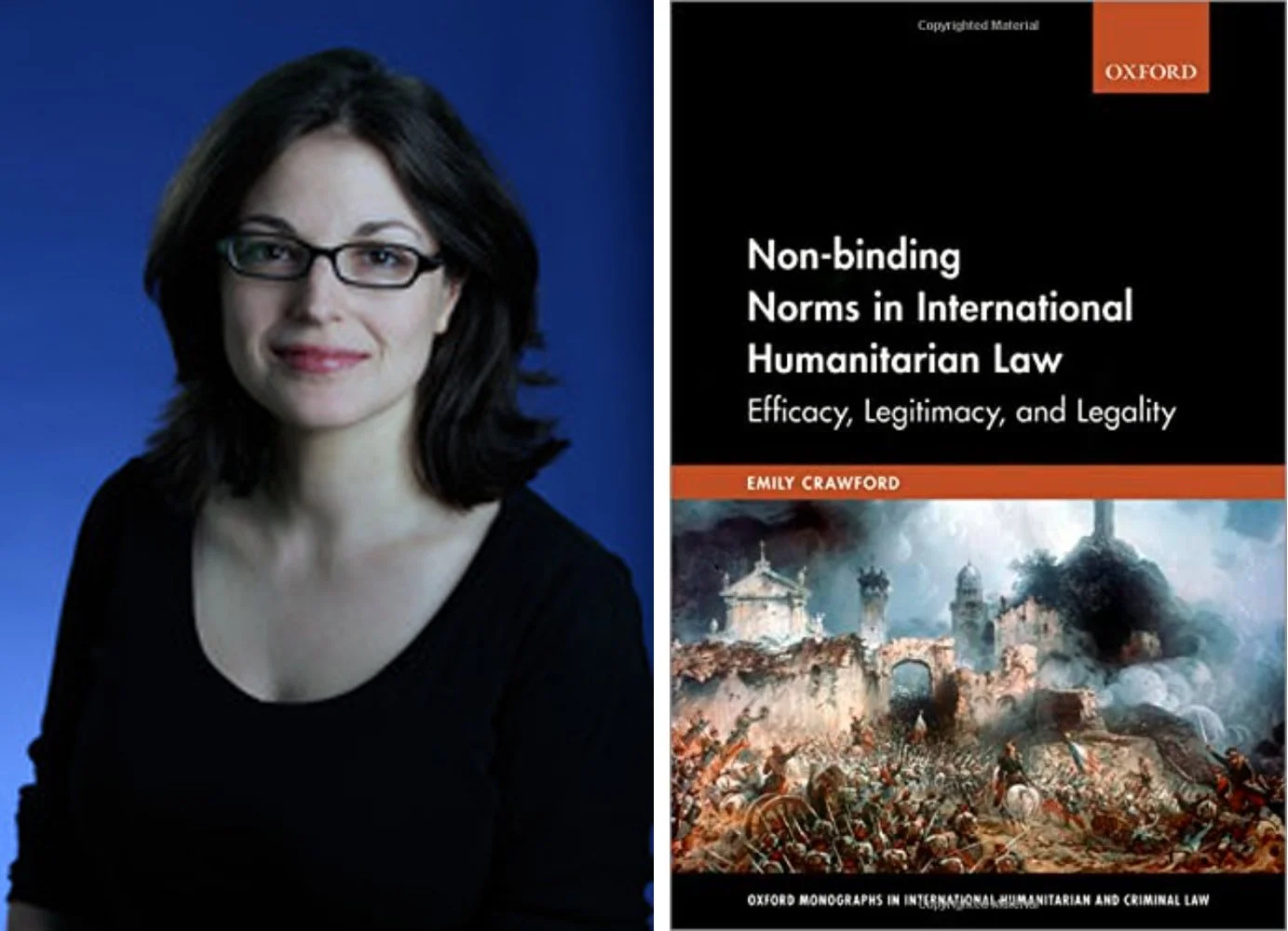
Professor Emily Crawford is a leading academic in international law at the University of Sydney Law School. She holds a BA (Hons), LLB, PhD from UNSW, and a GradCertEdStudies in Higher Education. Her primary affiliations include the Sydney Centre for International Law and the Sydney Law School's international law program. Her research focuses on international humanitarian law (IHL), international criminal law, and the efficacy of non-binding norms in shaping legal frameworks. Notable works include three monographs on IHL and co-authored textbooks like Public International Law . She was awarded the 2023 Max Planck-Cambridge Prize for International Law. Recent research explores legal terminology's role in warfare, cultural representations of international law in institutions, and state practice analysis. She has delivered over 50 conference presentations globally, including at the International Law Association and ICRC forums. Her teaching spans advanced international law topics, and she actively participates in legal reform initiatives. She co-curated the At the Vanishing Point exhibition examining international law's material culture. Grants include studies on gender analysis at the Khmer Rouge Tribunal and warrior identity under modern IHL.
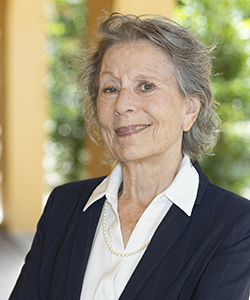
Linda H. Aiken - Academic Overview Linda H. Aiken is the Claire M. Fagin Leadership Professor of Nursing and Professor of Sociology, Africana Studies, and Education at the University of Pennsylvania. She leads the Center for Health Outcomes and Policy Research and holds appointments across multiple disciplines. Her research focuses on nurse workforce policy, healthcare quality, and global health systems, with a particular emphasis on addressing nurse shortages and improving patient outcomes. Education: PhD in Sociology (Specialization in Demography), University of Texas at Austin, 1973 MSN, University of Florida, 1966 Bachelor of Science in Nursing, University of Florida, 1964 (Cum Laude) Postdoctoral Research Fellowship in Medical Sociology, University of Wisconsin at Madison, 1973-74 Research Interests: Dr. Aiken’s work examines the intersection of nursing resources, healthcare policy, and patient safety. She co-directs RN4CAST, a multinational study analyzing nursing workforce dynamics and hospital care quality in 14 countries. Her research has demonstrated links between adequate nurse staffing, reduced patient mortality, and diminished racial disparities in healthcare outcomes. Key areas include Magnet Recognition Program dissemination, pandemic response strategies, and nurse burnout mitigation. Awards and Recognition: Baxter International Foundation’s William B. Graham Prize for Health Services Research (2006) AcademyHealth Distinguished Investigator Award (2005) Joint Commission’s Earnest A. Codman Award (2003) Fellow of the American Academy of Nursing (FAAN) and Royal College of Nursing (FRCN) Leadership and Impact: Dr. Aiken advises global initiatives such as the China Medical Board, Dubai Health Care City, and the Magnet4Europe project. Her advocacy for nurse staffing legislation and evidence-based practices has influenced policy reforms in the U.S. and internationally. She also leads collaborative projects to improve healthcare in post-Soviet states and underserved regions.
Amy Noelle Parks is a Professor in the Department of Teacher Education at Michigan State University's College of Education. She holds a Ph.D. from Michigan State University and focuses on young children's mathematical experiences, particularly for marginalized groups. Her research explores play-based learning, parental support in math, classroom emotional dynamics, and informal mathematical engagements. Education: Ph.D. in Education from Michigan State University. Office: 358 Erickson Hall. Contact: parksamy@msu.edu. Research Interests: Early childhood mathematics education Play as a pedagogical tool Educational equity and humane schooling practices Parent-child mathematical interactions Publications highlight themes of play in learning, classroom management, technology integration, and equitable teaching strategies. Her work emphasizes humanizing research practices to center children's voices and experiences.
Rachel E. Gartner is an Assistant Professor in the School of Social Work at the University of Pittsburgh. Her research focuses on violence prevention, discrimination, and health outcomes for minoritized populations, emphasizing intersectional approaches to address systemic inequities. She holds a BA in Psychology and Women, Gender, and Sexuality Studies, an MSW in Mental Health from Washington University in St. Louis, and a PhD in Social Welfare with a Designated Emphasis in Women, Gender, and Sexuality from UC Berkeley. Her research interests include sexual violence prevention, microaggressions, and victimization among marginalized groups such as women, gender minorities, and people of color. She prioritizes community-driven solutions and critiques carceral systems that exacerbate inequities. Recent work explores trans and gender-diverse students' campus experiences, anti-trans policies in social work education, and the development of intersectional gender equity frameworks. Dr. Gartner's scholarship integrates clinical practice experience as a sexual violence educator, mental health clinician, and advocate in academic and healthcare settings. Her projects often involve collaboration with community stakeholders to co-design interventions and policies. She contributes to interdisciplinary initiatives such as the Gender, Sexuality, & Women's Studies Program within the Kenneth P. Dietrich School of Arts and Sciences. Her articles span topics like campus sexual violence prevention strategies, LGBTQ+ youth intervention frameworks, and critiques of institutional policies that harm marginalized communities. Though no scientific awards are explicitly listed, her work reflects a commitment to advancing equity through rigorous, applied research.
Kirsten Galbraith is a Professor in the Department of Pharmacy and Pharmaceutical Sciences Education at Monash University. She holds leadership roles including Course Director for the Master of Clinical Pharmacy and Unit Coordinator for PGC5119 Advanced Practice Portfolio. Her expertise lies in practitioner development, competency-based education, and workplace-based assessment. She leads key programs such as the Skills Coaching program, Student Experiential Placements (StEPs), and the Intern Training Program. Education: MClinPharm, Faculty of Pharmacy and Pharmaceutical Sciences BPharm, Victorian College of Pharmacy Ltd Research focuses on advancing pharmacy education and workforce development, including global frameworks for professional advancement (e.g., FIP Hub initiatives). Her work aligns with UN Sustainable Development Goals, particularly in education and healthcare equity. Key projects include the 'Global Advanced Development Framework' and reducing medication-related risks through competency-based training. Recent articles emphasize entrustable professional activities (EPAs) in pharmacy training, AI in reflective learning, and global workforce resilience strategies. Awards include the American AACP Innovation in Teaching Award (2022) and Fellowships from FIP and SHPA. She leads collaborative grants on reducing medication risks and advancing practice standards. Supervises students like Carmen Abeyaratne (MClinPharm). Active in editorial roles for journals like Research in Social and Administrative Pharmacy and peer review for BMJ Open . Labs/Teams: Co-leads the Graduate Outcomes and Workforce Development group. Collaborates internationally via the FIP Hub and GRiT community for pharmacy workforce resilience.