Professor Anne Burmeister is a full Professor of Organizational Behavior at the University of Cologne, Faculty of Management, Economics, and Social Sciences. She specializes in knowledge transfer, age diversity, inclusion, and interpersonal dynamics in workplaces. Her research bridges organizational psychology with practical applications in aging and diverse teams. Education: PhD in Psychology (summa cum laude), Leuphana University of Lueneburg (2016) MSc in Management and Organizational Analysis, Warwick Business School (2011) BSc in Business Psychology, Leuphana University of Lueneburg (2010) Research Interests: Her work focuses on work and aging, age diversity, inclusion, knowledge transfer, and workplace friendships. She investigates how social interactions influence productivity and organizational health, particularly in multigenerational environments. Recent Trends: Recent publications analyze DEI initiative responses, knowledge sharing dynamics, and interventions for aging workforces. Themes include cognitive load theory, intergenerational collaboration, and ambivalent employee reactions to diversity policies. Scientific Recognition: Awarded 40 leading HR minds 2025 by HR magazine Contact: Email: burmeister@wiso.uni-koeln.de Phone: +49 221-470-5887
Besa Kadriu is an Associate Professor at the Contemporary Social Sciences Faculty of South East European University in Tetovo, North Macedonia. With a Doctor of Sciences in Public Governance and Administration (2015-2019), her work focuses on policymaking in multiethnic states, public administration reforms, and governance challenges. Native Albanian, C2 Macedonian, C1 English, and A2 German speaker Her research interests span public governance frameworks, integration challenges in Western Balkans, pension system sustainability, and youth migration dynamics. She has published extensively on policy implementation in post-conflict societies and institutional development. Recent publications demonstrate expertise in multiethnic governance (2016-2021), educational reforms (2015), and social inclusion policies (2019). Her work combines theoretical analysis with practical case studies from North Macedonia's political and administrative landscape.
Can Güler is an Assistant Professor in the Department of Lifelong Learning and Adult Education at the Faculty of Education, Anadolu University, Turkey. Previously, from 2002 to 2023, he served as a Lecturer in the Department of Distance Education at the Faculty of Open Education, Anadolu University. His academic career spans over two decades with continuous contributions to open and distance education systems. His educational background includes: Bachelor's degree in Computer and Instructional Technologies Education, Anadolu University (2002) Master's degree in Distance Education, Institute of Social Sciences, Anadolu University (2007) Ph.D. in Distance Education, Institute of Social Sciences, Anadolu University (2022) Güler's research centers on open and distance learning methodologies, educational technology integration, and instructional material development. He specializes in video-based learning systems, interactive media design, and gamification strategies for enhancing learner engagement. His work addresses practical challenges in digital content creation and accessibility for diverse learner demographics, particularly adult populations. Analysis of his publication trajectory reveals consistent innovation in multimedia applications for distance education, with recent emphasis on generative AI awareness among educators and interactive video transformation techniques. His research frequently employs design-based methodologies and institutional case studies from Anadolu University's open education infrastructure. Scientific Awards: None mentioned in available sources. Advising and Grants: No information provided regarding student supervision or research funding in current documentation.
Lana Salman is an Assistant Professor in the Department of Political Science at the University of Toronto . A scholar of international development and urban politics, her research focuses on everyday statecraft, social reproduction, and urbanism in the Middle East and North Africa. PhD, University of California, Berkeley (City and Regional Planning, Global Metropolitan Studies) MUPP, American University of Beirut Her research explores how urban populations negotiate citizenship and state formation through: Land access and infrastructure development Microfinance institution operations Post-revolutionary governance practices Transdisciplinary north-south comparative analysis Current projects include: Tunisia State-Making: Ethnographic study of urban poor communities' role in statecraft Brussels-Beirut Comparison: Analysis of social workers' roles in refugee resettlement and urban displacement
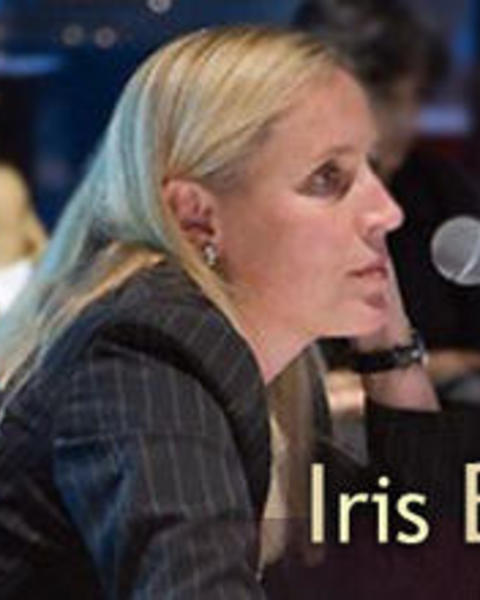
Iris Bohnet is the Albert Pratt Professor of Business and Government at Harvard Kennedy School and co-director of the Women and Public Policy Program. She serves as faculty director of the social sciences at Harvard Radcliffe Institute and has held significant leadership roles including academic dean of Harvard Kennedy School for six years and faculty chair of the World Economic Forum's executive program for Young Global Leaders for over a decade. Albert Pratt Professor of Business and Government, Harvard Kennedy School Co-Director, Women and Public Policy Program Faculty Director of Social Sciences, Harvard Radcliffe Institute Special Advisor to UN Secretary-General on Gender Equality Acceleration Plan Member, Gender Equality Advisory Council of the G7 Faculty Co-Chair, World Economic Forum's Young Global Leaders program Bohnet earned her Ph.D. in Economics from the University of Zurich in 1997 and joined Harvard Kennedy School as an assistant professor in 1998, becoming a full professor in 2006. Her research focuses on behavioral economics, combining insights from economics and psychology to improve decision-making in organizations and society, with particular emphasis on gender equality and cross-cultural perspectives. She pioneered experimental research in the Middle East and developed tools to measure behavior and beliefs across different global contexts. Her publications reveal a consistent focus on embedding fairness into organizational structures rather than relying on individual-level diversity training. Recent work emphasizes data-driven design for workplace equity, behavioral interventions to disrupt bias in hiring and performance evaluations, and creating organizational norms that support gender equality. Her research spans multiple disciplines including economics, psychology, management, and public policy, with practical applications for governments and corporations worldwide. Shortlisted for FT and McKinsey Business Book of the Year Award (2016) Financial Times Best Business Book of 2016 Named Most Influential Academics in Government by apolitical Named Most Influential People in Gender Policy by apolitical Recipient of multiple honorary degrees Bohnet advises governments and companies globally, serving on numerous boards including the Graduate Institute of International Studies in Geneva and advisory boards for institutions like the Vienna University of Economics. She directs the Harvard Decision Science Laboratory and has developed evidence-based frameworks that have influenced policy and organizational practices worldwide, particularly through her books 'What Works: Gender Equality by Design' and 'Make Work Fair'.
Prof. Dr. Sabrina Zajak serves as Head of the Consensus & Conflict Department at the Deutsches Zentrum für Integrations- und Migrationsforschung (DeZIM-Institut) and holds an adjunct professorship at the Faculty of Social Sciences, Ruhr University Bochum. A founding member of the Institute for Protest and Movement Research (ipb), she also serves on the board of Research Committee 47, 'Social Movements and Social Classes,' of the International Sociology Association. Her academic trajectory includes significant positions at Humboldt University Berlin, the Max Planck Institute for the Study of Societies Cologne, and the Social Science Center Berlin (WZB). Zajak's research centers on political sociology with dual emphases on consensus and conflict dynamics in plural societies. Her consensus research examines civil society engagement, refugee assistance networks, alliance formation, and everyday solidarity practices, while her conflict research analyzes protest movements, diversity challenges, and discrimination patterns. She has pioneered studies on transnational civil society alliances, particularly examining how social movements navigate national boundaries and build cross-border solidarity. Her recent publications reveal a decisive shift toward analyzing intersectional dynamics of race, migration, and social movements in European contexts. With significant attention to the Black Lives Matter movement's reception in Germany, her work demonstrates how global racial justice movements are adapted to local contexts. Her research increasingly addresses civil society responses to refugee crises, examining both supportive engagement and exclusionary practices, while also investigating structural barriers to diversity in German federal administration and cultural institutions. As a prolific academic leader, Zajak has served as (co-)editor for special journal issues including Development and Change (2017), Industrial Relations (2018), Social Movement Studies (2021), Competition and Change (2020), Moving the Social (2020), and European Cultural and Political Sociology (2022). Her department currently manages over 20 active research projects spanning discrimination experiences in Saxony, diversity in federal administration, Muslim youth association work, and violence protection in refugee accommodations, demonstrating the breadth and policy relevance of her research agenda.
Nathaly Carolina Pinto Torres is a Doctoral Researcher at Aalto University's Department of Design, working on critical design interventions for marginalized communities. Since 2020, she has led the "Emergencia de Educación en la Amazonía Ecuatoriana" project, collaborating with indigenous students and Confeniae to develop pictographic communication systems challenging social exclusion. Her research spans: Participatory design with indigenous communities Gender justice in education during crises Epistemic justice in plurinational contexts Visual resistance strategies in Amazonian regions Postcolonial educational frameworks Design for socio-environmental transformation Publication trends show focus on: Visual communication systems for marginalized groups Crisis-driven educational design Decolonial methodologies Intersectional analysis of exclusion Epistemic justice in academia Collective resilience building Scientific recognition includes: Best Demo Award (2021) SENESCYT International Graduate Scholarship (2019) Netherlands Fellowship Programmes (NFP) (2010)
Selin Çağatay serves as a Postdoctoral Fellow at the Department of Gender Studies and Department of Historical Studies at Central European University (CEU) in Vienna, Austria. She is an affiliated researcher in the ERC Advanced Grant-funded ZARAH project (Women’s labour activism in Eastern Europe and transnationally, from the age of empires to the late 20th century), led by Principal Investigator Prof. Susan Zimmermann. Her academic credentials include: Ph.D. in Comparative Gender Studies, Central European University M.A. in Cultural Studies, Istanbul Bilgi University B.A. in Political Science and Public Administration, Middle East Technical University Çağatay’s research centers on transnational gender politics and equality struggles, with particular focus on Turkey and Eastern Europe. She investigates cross-border activism, integrates understudied groups into feminist historiography, and critically examines global gender equality frameworks. Her ZARAH project work analyzes mid-20th century women’s educational initiatives—including vocational training and trade union education—within transnational contexts involving organizations like ILO and UNESCO. Her publication portfolio (2018-2024) reveals consistent engagement with women’s labor history, transnational feminist movements, and contemporary gender struggles. She frequently collaborates on interdisciplinary projects examining intersections of labor, gender, and activism across Eastern Europe and Turkey, with notable emphasis on historical continuity and transnational solidarity networks. Active in major research initiatives including ZARAH and previously the 'Spaces of resistance' project at Gothenburg University, she has taught gender studies courses across multiple institutions. Her scholarly contributions appear in high-impact publications addressing feminist historiography, labor activism, and conceptual frameworks in gender politics. As a core member of the international ZARAH team, she contributes to reshaping feminist history through transnational perspectives that center Eastern European experiences and underrepresented activist narratives.
Matthew J. Mayhew serves as the William Ray and Marie Adamson Flesher Professor of Educational Administration within the Department of Educational Studies at The Ohio State University's College of Education and Human Ecology. He received his BA from Wheaton College, Illinois; his master's degree from Brandeis University; and his PhD from the University of Michigan in 2004. Dr. Mayhew maintains an active research agenda examining how collegiate conditions, educational practices, and student experiences influence learning and democratic outcomes. Dr. Mayhew's research interests span higher education's impact on moral reasoning, pluralism, productive exchange across worldview differences, and innovation capacity. His work particularly focuses on religious, spiritual, and secular diversity in higher education settings, examining how these dimensions shape campus climate and student development. He has developed significant assessment tools such as the Interfaith, Spiritual, Religious, and Secular Campus Climate Index (INSPIRES) to measure institutional commitment to diverse worldview identities. His recent publications reveal a strong emphasis on innovation capacity development in students, religious pluralism in college settings, and the impact of campus environments on diverse student populations. The research demonstrates increasingly interdisciplinary approaches, with collaborations spanning engineering education, sustainability initiatives, and international comparisons of educational systems. American Educational Research Association Religion and Education SIG Emerging Scholar Award Diamond honoree by ACPA-College Student Educators International Dr. Mayhew has successfully secured over $20 million in research funding from prestigious sources including the National Science Foundation, the Ewing Marion Kauffman Foundation, the Andrew C. Mellon Foundation, the Templeton Religion Trust, and the Arthur Vining Davis Foundations. His major research projects include EDiCTS (Enhancing Diversity in Career and Technical STEM), EDiCTS 2.0, EmPOWERment, and InFORM (Including Faculty on Religious, Spiritual, & Secular Mattering). He serves as editor of the Digest of Recent Research and has held editorial board positions for the Journal of Higher Education, Research in Higher Education, and the Journal of College Student Development.
Lorna Camus is a developmental psychologist and Psychology Technician at Queen Margaret University, Edinburgh, with prior affiliation as a PhD student and Postgraduate Teaching Assistant at Heriot-Watt University. Her research centres on autistic young people’s mental health during the transition from primary to secondary school, and she explores how school transitions may influence the development or exacerbation of anxiety and depression among autistic individuals. Education & Training PhD in Psychology, Heriot-Watt University (2018–2022) Postgraduate Teaching Assistant, Department of Psychology, Heriot-Watt University Research Interests Dr Camus employs both quantitative and qualitative methodologies to investigate: • Autism Spectrum Disorders – understanding prevalence and experience of mental health challenges. • Educational Transitions – the psychological impact of moving from primary to secondary school for autistic pupils. • Social Identity & Self-Efficacy – how feelings of belonging and confidence in social situations affect well-being in autistic children and adults. Research Trends Across her publications, a clear trajectory emerges from foundational work on empathy, alexithymia, and autistic traits in children to applied studies on mental health, social identity, and educational inclusion. Recent outputs increasingly integrate participatory perspectives and widening-participation frameworks in higher education. Scientific Awards & Funding James Watt Scholarship, Heriot-Watt University Supervision & Collaboration PhD supervision: Dr Mary Elizabeth Stewart, Heriot-Watt University Professor Gnanathusharan Rajendran, Heriot-Watt University Collaborative research involves interdisciplinary teams across Heriot-Watt University, Queen Margaret University, and international partners. Labs & Teams She currently works within Mary Elizabeth Stewart's Lab at Queen Margaret University, supporting research activities and contributing to ongoing projects in developmental psychology and neurodevelopmental conditions.
Professor Yvonne Rydin is Chair of Planning Environment and Public Policy at The Bartlett School of Planning, University College London (UCL), where she has been based since 2006. She currently holds a 50 % part-time appointment at UCL and previously spent 16 years at the London School of Economics in the Department of Geography and Environment. Education PhD in Urban and Regional Planning Studies, University College London (1984) BA (Hons) in Land Economy, University of Cambridge (1978) Research Interests Professor Rydin is an internationally recognised scholar in governing for sustainability. Her work spans urban green space management, community energy, retail planning, and post-growth urban futures. Conceptually, she mobilises network metaphors (including social capital) and discourse analysis to unpack governing processes, while also drawing on socio-technical studies to examine large-scale energy infrastructure. A long-standing strand of research interrogates knowledge production within planning, scrutinising classificatory systems such as BREEAM and sustainability indicators and exploring the implications of socio-materiality. Her forthcoming monograph Planning without Growth (Policy Press, 2025) extends her agenda on low-growth planning by investigating how embedded and new knowledges can support alternative local economic models. Research Outputs & Trends Since 2018 she has published extensively on post-growth planning, regulatory theory, digital tools in participation, and diverse economies. Recent articles in Planning Theory, Built Environment and Planning Practice & Research articulate critical perspectives on moving beyond pro-growth orthodoxies and re-tooling the planning profession. Scientific Awards & Recognition While no specific awards are listed, Professor Rydin has held numerous prestigious roles: member of the RAE 2014 panel, invited oral evidence to the House of Commons Environmental Audit Committee, participant in the Raynsford Review of Planning, and repeated evaluator for the Norwegian Research Council, Finnish Academy, ESRC and FORMAS. Advising & Grants She has supervised collaborative Engineering Doctorate (EngD) studentships with industrial partners BRE Global and Buro Happold (2011-2020), and co-taught on the MSc Sustainable Urban Development at Oxford University’s Department for Continuing Education (2014-2018). Labs & Teams Professor Rydin served as Director of the UCL Environment Institute (2010-2013) and leads teaching on the postgraduate module Planning for Sustainability and Inclusion alongside Dr Yasminah Beebeejaun.
Dr. Hannes Petrowsky is a Senior Research Associate at the Chair of Business Psychology, Social Psychology & Experimental Methods at Leuphana University of Lüneburg. He earned his M.Sc. in Management & Marketing (2017-2019) and completed his Ph.D. on first-offer effects in negotiations (2020-2023). Academic Affiliation: Institute for Management & Organization (IMO) Location: Universitätsallee 1, C6.419, Lüneburg Contact: hannes.petrowsky@leuphana.de | +49.4131.677-1437 His research spans negotiation psychology , consumer behavior , and the impact of digital technologies (e.g., big data, machine learning, AI, VR). He investigates anchoring effects, price-ending strategies, and socially innovative transformations through inclusive working environments. Key Trends in Recent Publications: Analysis of concession patterns in negotiations using behavioral economics principles Development of immersive VR frameworks for skill acquisition Behavioral science-driven interventions for climate change mitigation Meta-analyses of negotiation dynamics across 25-26 million real-world transactions Exploration of technology adoption in public health contexts Dr. Petrowsky contributes to projects like the Digital Transformation Lab and MEHRCE (circular economy initiatives). His work bridges experimental psychology with digital innovation and sustainable entrepreneurship .
Scott McCabe is a Professor of Marketing at Birmingham Business School, University of Birmingham. He earned his PhD from the University of Derby in 2001, focusing on visitor motivations in the Peak District National Park, and holds an MA in Leisure and Tourism Studies from the University of North London (1993) and an HND in Leisure Studies from the University of Salford (1991). Current co-editor in Chief of the Annals of Tourism Research Editorial board member of Tourism Management Elected fellow of the International Academy for the Study of Tourism (2019+) His research spans social tourism , responsible tourism , tourist emotions , and socio-linguistic methodology , with significant work on wellbeing outcomes from supported holidays for disadvantaged families. He has contributed to Annals of Tourism Research , Journal of Travel Research , and other top-tier journals. Recent publications address topics like qualitative research sampling , tourism theory , dark tourism motivations , and smart destination engagement . His work combines tourism policy critique , consumer behavior analysis , and methodological innovation . Scientific awards include fellowships and leadership roles in international tourism research committees. He has served as VP for the International Sociological Association's Tourism Research Committee and co-chairs the Academy of Marketing's Tourism Marketing SIG.
Lauren Rivera is the Peter G. Peterson Chair in Corporate Ethics and Professor of Management & Organizations at Northwestern University’s Kellogg School of Management , with a courtesy appointment as Professor of Sociology at the Weinberg College of Arts & Sciences . Her research focuses on how merit definitions in organizations perpetuate social inequalities, including studies on hiring bias, gender disparities, and elite labor markets. PhD, Sociology (Harvard University, 2009) AM, Sociology (Harvard University, 2006) BA, Sociology and Psychology (Yale University, 2000) Her work spans disciplines such as hiring discrimination , gender equity , and disability studies , often employing qualitative and mixed methods . Recent articles examine racial bias mitigation , disability exclusion in education, and gendered promotion regimes in law firms. She has authored the best-selling book Pedigree: How Elite Students Get Elite Jobs and contributed to media outlets like the New York Times and Harvard Business Review . Scientific awards include the Granovetter Award , Max Weber Book Prize , and multiple Kellogg Teaching Awards . Her editorial roles include positions at the American Sociological Review and Princeton University Press Series in Cultural Sociology.
Nina Vollenbroker serves as Associate Professor of Architecture and Director of the Architectural Design PhD programme at University College London's Bartlett School of Architecture. A registered architect in the UK (ARB) and Germany (Architektenkammer NRW), she also acts as editor for Architectural Research Quarterly since 2020 and serves on the Society of Architectural Historians’ advisory committee on accessibility. Her educational background includes a PhD in Architectural History from UCL, along with multiple UCL degrees: Master of Architecture (2005), Certificate (2004), Master of Science (2002), Diploma (2001), and Bachelor of Architecture from Oxford Brookes University (1997). Vollenbroker's research centers on the intersection of deafness, disability, and architectural design, challenging normative spatial paradigms through historical and contemporary lenses. Her current Paul Mellon Centre-funded project "Hide and Speak" examines the first purpose-built deaf schools in 19th-century Britain, revealing how architecture actively shaped cultural understandings of deafness. She extends this work through "Deafening Architectural Modernism," which re-evaluates Adolf Loos's contributions through the lens of his hearing loss, demonstrating how sensory experience fundamentally informs spatial design. Her broader research encompasses migration studies, gendered domestic spaces, and critical examinations of architectural exclusion. Her recent publications span architectural history, disability studies, and material culture, with significant contributions to edited volumes on deafness in architecture (University of Illinois Press, 2025), mobile home-making (Brill, 2025), and the American West (Routledge, 2025). These works consistently demonstrate her methodological approach of centering marginalized perspectives within architectural discourse. Wilhelm Award from Pioneer America Society for outstanding research in material cultures studies Paul Mellon Centre Mid-Career Fellowship Royal Institute of British Architects Research Award British Academy Research Fund Award Vollenbroker supervises doctoral students in architectural design while securing major research funding from bodies including the Arts and Humanities Research Council, British Academy, and Royal Institute of British Architects. Her international collaborations include work with the Lebanese NGO Biladi on migration studies and knowledge-exchange programs funded by The Council for British Research in the Levant. She regularly convenes major conference sessions, including at the Society of Architectural Historians and Architectural Humanities Research Association conferences, and presents at institutions worldwide including Columbia University, Yale University, and Heidelberg University. Her research group actively engages with disability advocacy organizations and architectural practitioners to translate historical insights into contemporary inclusive design practices, particularly through her editorial work on special journal issues addressing disability and architecture.