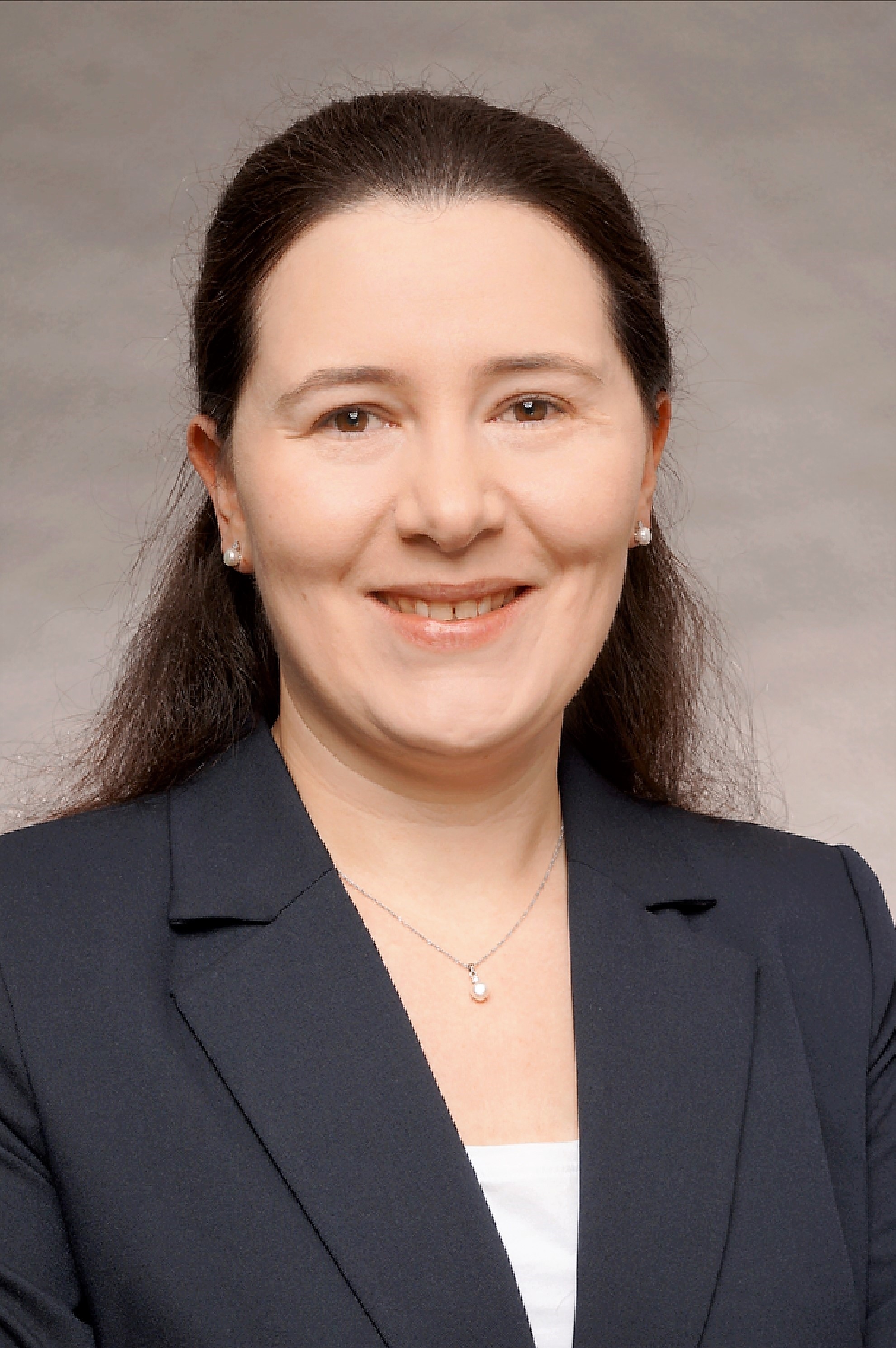
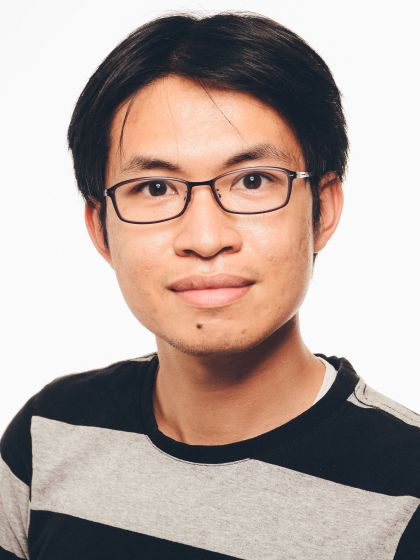
Sarah Eberle-Blick is a Senior Lecturer at the Institute of Mathematics , Goethe University Frankfurt, Department of Computer Science and Mathematics. Her work bridges numerical methods, inverse problems, and wave propagation in elasticity. Research Focus : Numerical analysis of PDEs, monotonicity methods for inclusion detection, FEM-BEM coupling, multiscale seismic data processing. Key Contributions : DFG-funded projects on elastic wave reconstruction; development of stable integral formulations for acoustic and thermoelastic wave equations; implementation of 3D wave simulations. Article Trends : Recent papers emphasize inverse problems in linear elasticity, time-harmonic wave equations, and multiscale analysis using wavelets. Collaborative work spans geophysics, computational mechanics, and mathematical modeling. Projects : Includes monotonicity-based regularization, Lipschitz stability estimation, and FEM-BEM coupling with convolution quadrature. Contact: eberle@math.uni-frankfurt.de | Room 103, Institute of Mathematics, Frankfurt am Main, Germany.
Mary E. Harrington is the Tippit Professor in the Life Sciences (Neuroscience) at Smith College, where she conducts groundbreaking research on circadian clocks and teaches courses in neuroanatomy, sensory systems, Alzheimer's disease, and experimental methods in neuroscience. She maintains an active laboratory that integrates undergraduate students directly into the research process, resulting in numerous student co-authorships on scientific publications. Education: Ph.D., Dalhousie University M.A., University of Toronto B.Sc., Pennsylvania State University Professor Harrington's research program focuses on understanding how circadian rhythms influence aging, neurodegenerative diseases, and overall health. Her laboratory has discovered that circadian clocks are impacted by aging but can be partially restored through exercise. Current investigations examine how light at night disrupts cellular clocks and how these disruptions contribute to Alzheimer's disease progression. She has also developed animal models for studying fatigue that have implications for multiple sclerosis research. Her publication record reveals a consistent trajectory of innovative work in chronobiology, with recent studies exploring the neurovascular unit in aging, the effects of light exposure on circadian rhythms and memory, and novel methods for detecting circadian rhythms across biological systems. She has contributed significantly to educational resources in the field, including CIRCADA, a Shiny application for circadian time series analysis with educational applications. Professional Recognition: Editor-in-Chief of the Journal of Biological Rhythms (since 2020) Tippit Professor in the Life Sciences at Smith College Author of 'The Design of Experiments in Neuroscience' (3rd edition) Professor Harrington is deeply committed to undergraduate research mentorship and educational innovation. She has developed Smith College's neuroscience major into a rigorous program where every student completes at least one year of hands-on research. Her laboratory course, Experimental Methods in Neuroscience, provides students with opportunities to conduct original research using current methodologies. She actively promotes Universal Design for Learning to increase inclusivity in science education, with 27% of neuroscience majors coming from groups underrepresented in the sciences. The Harrington Lab investigates the fundamental mechanisms by which daily rhythms shape biology, how light synchronizes internal clocks through visual pathways, and how age and disease weaken this delicate timing system. Current projects explore how exercise restores aged circadian rhythms by altering neural circuits, how chronic disruptions lead to desynchronization between brain and peripheral clocks, and how these findings could impact treatments for Alzheimer's Disease.
Beatriz Giraldo Giraldo is a prominent researcher at the Institute for Bioengineering of Catalonia (IBEC), where she leads the Biomedical Signal Processing and Interpretation research group. Her work bridges biomedical engineering and clinical medicine, focusing on advanced signal processing techniques applied to physiological signals. She maintains strong affiliations with the University of Barcelona and Universitat Politècnica de Catalunya, contributing to the collaborative research environment of IBEC. Dr. Giraldo Giraldo's research focuses on cardiorespiratory analysis, particularly in the context of mechanical ventilation weaning. She has developed sophisticated methods using time-frequency analysis, wavelet transforms, and machine learning to predict weaning outcomes and analyze respiratory patterns. Her work has significant clinical implications for intensive care units, helping determine the optimal timing for extubation and reducing complications from premature ventilator removal. Her recent publications demonstrate consistent research productivity with a focus on applying advanced signal processing techniques to solve clinical problems. She has published extensively on topics including cardiorespiratory phase synchronization, heart rate variability analysis, and the development of medical decision support systems using artificial intelligence. Dr. Giraldo Giraldo has received recognition through numerous publications in high-impact journals and conferences including IEEE Transactions on Biomedical Engineering, Physiological Measurement, and annual IEEE Engineering in Medicine and Biology Society conferences. Her research has been consistently funded, supporting ongoing work in biomedical signal processing and its clinical applications. She actively mentors students and collaborators, with numerous publications showing co-authorship with junior researchers. Her work involves substantial interdisciplinary collaboration between engineers, physicians, and computer scientists, reflecting the integrative nature of modern biomedical research.
Ki Wai Chau is an Assistant Professor in the Faculty of Economics and Business at the University of Groningen, specializing in Economics, Econometrics & Finance. He holds a PhD in Numerical Analysis from Delft University of Technology (2020) and an MPhil in Mathematical Finance from The University of Hong Kong (2014). PhD: Numerical Finance with Backward Stochastic Differential Equations, Delft University of Technology MPhil: Mathematical Finance, The University of Hong Kong His research focuses on Fourier-based numerical approximation, regression techniques, and stochastic differential equations in finance and insurance risk theory. Recent work includes comparative risk aversion analysis in the Omega ratio, rule-based investment strategies, and scalable Python tools for XVA pricing. His publications reflect expertise in Monte Carlo methods, BSDE applications, and error bounds for financial models. He teaches courses such as Statistical Modelling for EOR, Life Insurance, Risk Insurance, and Dependence & Extremes in Risk Management. Ancillary activities include serving on the Central Exam Committee at the Actuarieel Instituut.
Dr. Frederick Shic is a Professor of Pediatrics at the University of Washington School of Medicine and a Principal Investigator at Seattle Children's Research Institute. He also holds adjunct appointments in Computer Science & Engineering and Psychology at UW. His research integrates computer science, engineering, and developmental science to create innovative tools for understanding and improving outcomes for children with autism spectrum disorder (ASD) and other developmental conditions. Academic Affiliation: University of Washington (School of Medicine, Department of Pediatrics, General Pediatrics Division) Laboratory: Seattle Children's Innovative Technologies Laboratory (SCITL) Dr. Shic's expertise spans computational neuroscience, neuroengineering, and human-centered computing, with a focus on non-invasive technologies like eye tracking, functional near-infrared spectroscopy (fNIRS), and social robots. His work has been funded by the National Institute of Mental Health (NIMH), Institute of Education Sciences (IES), Simons Foundation, and Autism Speaks. Key contributions include: Development of interactive eye-tracking methodologies for joint attention assessment Investigation of physiological biomarkers (e.g., heart rate-defined sustained attention) in neurodiverse populations Creation of novel computational models for analyzing eye-tracking data Exploration of genetic contributions to attention through twin studies Application of social robots for in-home ASD interventions Analysis of spatiotemporal eye movement patterns as potential ASD biomarkers His academic journey includes: B.S. in Engineering and Applied Science from Caltech Ph.D. in Computer Science from Yale University Postdoctoral training at Yale Child Study Center under NIMH T32 program Prior roles: Associate Research Scientist at Yale, Software Engineer at Sony Interactive Studios, MRS Researcher at Huntington Medical Research Institutes Current research directions include: Standardization of clinical eye-tracking protocols through the International Society for Clinical Eye Tracking (ISCET) Development of accessible, technology-enhanced behavioral paradigms Investigation of reward and motivation mechanisms in ASD attention patterns Translation of EEG and eye-tracking findings into clinical applications
Sylvain Sardy is an Associate Professor in the Department of Mathematics at the University of Geneva, where he conducts research at the intersection of statistics, optimization, and machine learning. He is affiliated with the Analysis, Mathematical Physics and Probability research group and has held significant editorial positions including Associate Editor for Computational Statistics and Data Analysis since 2020. Professor Sardy's research focuses on statistical machine learning, sparsity, and optimization with applications spanning astronomy, chemometrics, finance, and tomography. His work develops innovative methods for high-dimensional data analysis, particularly using wavelet-based approaches and LASSO regularization techniques for feature selection, denoising, and model selection. His publications reveal a consistent focus on finding sparse signals in complex datasets across diverse scientific domains. Professor Sardy has mentored numerous graduate students, currently supervising PhD candidate Maxime van Cutsem and having previously guided Dr. Xiaoyu Ma, Dr. Pascaline Descloux, Prof. Jairo Diaz Rodriguez, and Dr. Caroline Giacobino. His Master's students include Jairo Diaz (now Professor at Universidad del Norte, Colombia), Jean-Luc Baeriswyl, and others who have pursued careers in academia, industry, and education. His academic service includes leadership roles as Swiss representative at the European Regional Committee of the Bernoulli Society (2014-2018), President of the Doctoral School of Applied Statistics and Probability (2010-2013), and Student Advisor for the Mathematics Section (2008-2015). His teaching portfolio includes Optimization with Applications I, Statistical Machine Learning, and Pharmaceutical Statistics and Methodology, reflecting his expertise in statistical methodology and its practical implementation.
Mohsen Bahmani-Oskooee is a Professor in the Department of Economics at the University of Wisconsin-Milwaukee and serves as Director of the Center for Research on International Economics. He also holds the title of Distinguished Professor and is Editor of the Journal of Economic Studies. PhD, Michigan State University MA, Michigan State University BA, National University of Iran His research focuses on International Finance , Open Economy Macroeconomics , and Applied Econometrics , with particular emphasis on asymmetric effects of exchange rate changes, the J-Curve phenomenon, black market exchange rates, currency substitution, and demand for money. Recent publications highlight his expertise in analyzing exchange rate dynamics through advanced econometric methods like nonlinear ARDL, wavelet analysis, and frequency domain approaches. His work spans emerging and developed economies, addressing trade balances, economic policy, and financial stability. Scientific awards and honors include: Distinguished Professor Dr. Bahmani-Oskooee has advised numerous research projects and co-authored studies on international economics. He has taught courses such as Introduction to International Economic Relations (ECON 351-201). No student or grant details are provided in the current information.
Gioacchino Cafiero is an Associate Professor at the Department of Mechanical and Aerospace Engineering (DIMEAS), Polytechnic University of Turin. His research focuses on data-driven experimental fluid mechanics, particularly applying machine learning techniques like deep reinforcement learning and genetic algorithms to control turbulent flows and optimize fluidic actuators. As a member of the Fluid Dynamics research group, he leads projects such as GREENER (drag reduction via sinusoidal riblets) and WINDED (drone wind investigation), while also directing commercial research on friction stress measurement methodologies. Specializes in turbulent flow control and machine learning applications Teaches PhD courses on Machine Learning for Flow Control Supervises students in aerospace engineering programs Recent publications analyze jet turbulence with explainable AI, heat transfer fluctuations in channel flows, and riblet-induced drag reduction. His work bridges aerospace engineering and fluid dynamics, contributing to SDG goals 9 (Industry Innovation) and 13 (Climate Action). Scientific awards include the Learning to Teach (L2T) Open Badge from Politecnico di Torino.
Arne Kovac serves as Associate Professor in Statistics within the School of Mathematics at the University of Bristol, where he completed his PhD in 1999 under B. Silverman with the thesis "Wavelet Thresholding for Unequally Time-Spaced Data". His academic profile centers on methodological innovations in nonparametric statistics. His research expertise is defined by eight core areas: Taut String algorithms (100% fingerprint prominence) Confidence Region construction (94% prominence) Regularization techniques Total Variation minimization (68% prominence) Extreme Value theory applications Statistical minimization problems Nonparametric regression frameworks Asymptotic analysis Publication trends from 2009-2014 reveal consistent advancement of smoothing methodologies, particularly through taut string extensions and graph-based regression. These works establish foundational contributions to statistical inference under shape constraints, with notable emphasis on edge preservation in signal processing and confidence band construction. No scientific awards or major honors are documented in the available records. Professionally, Kovac served on the editorial board of Annals of Statistics (2007-2009) and participates in specialized workshops including "Nonparametric statistical inference under shape constraints" (active since 2016). While student supervision and grant funding details remain unspecified, his 20 research outputs—including 14 journal articles with significant Scopus citations (60 for 2009 taut string paper)—demonstrate sustained scholarly impact.
Paolo Zatelli is an Associate Professor at the University of Trento , Department of Civil, Environmental and Mechanical Engineering. His academic career spans over two decades, with research expertise in geomatics, photogrammetry, and open-source GIS applications. Department of Civil, Environmental and Mechanical Engineering (since 2001) Researcher in ICAR06 (Topography and Cartography) International collaborations in geospatial projects Education includes a degree in Environmental and Territory Engineering (1993, 110/110 with honors) and a PhD in Topographic and Geodetic Sciences (1998). He has taught courses in GIS, Digital Cartography, and GPS surveying. Research Interests focus on geospatial technologies and their applications. Key areas include digital photogrammetry , wavelet applications in geodesy , GPS survey planning , and open-source GIS development . His work extends to environmental monitoring, historical cartography analysis, and sustainable forest management systems. Publication Trends show sustained contributions to FOSS4G (Free and Open Source GIS) applications, with recent work covering topics like landscape metrics , EV charging infrastructure , beta diversity analysis , and historical map digitization using GRASS GIS and QGIS. Scientific Contributions include: Member, IAG Special Study Group 4.187 on Wavelets in Geodesy Organizing committee, IV Hotine-Marussi Symposium Key developer of GRASS GIS applications Contributor to GOCE satellite geodesy projects Teaching and Mentorship highlights his role in both academic and professional GIS training, with over 20 theses supervised. His Technical Contributions involve developing open-source tools for spatial database management, statistical analysis, and georeferencing workflows.
Siniša Miličić is an Assistant Professor at the Faculty of Informatics in Pula, University of Pula, where he also serves as Vice Dean for Teaching and Students since 2021. He holds a PhD in mathematics from the University of Zagreb (2013) and previously worked as a junior researcher at the Faculty of Electrical Engineering and Computing in Zagreb from 2007 to 2017. Dr. Miličić's research focuses on the theory of dynamical systems and fractal dimensions, with applications extending to informatics and computer science, particularly in data science. His work bridges theoretical mathematics with practical computational applications, demonstrating expertise in both pure mathematical theory and its implementation in modern technological contexts. His teaching portfolio spans from foundational mathematics to advanced computational topics, including Differential and Integral Calculus, Geometry and Linear Algebra, Functional Programming, and Statistics across undergraduate, graduate, and integrated programs. His publication record shows a clear evolution from theoretical mathematics toward applied computational methods. Early works (2006-2013) focused on fundamental aspects of dynamical systems, fractal geometry, and differential equations. More recent publications (2018-2025) emphasize time-frequency analysis, image processing, and signal denoising, reflecting his growing interest in practical implementations of mathematical theory in data science applications. As Vice Dean for Teaching and Students, Dr. Miličić actively participates in the development of courses and design of study programs at the Faculty of Informatics in Pula. He teaches a comprehensive range of mathematics courses from introductory level to advanced topics including methodological courses in mathematics teaching, demonstrating his commitment to both theoretical foundations and practical applications of mathematics in informatics education.
Assistant Professor Sukru Kitis is a dedicated academic at Kütahya Dumlupınar University's Simav Faculty of Technology, Department of Electrical-Electronics Engineering. With over 15 years of academic experience, he has progressed from Instructor (2009-2019) to Doctor Lecturer (2019-present), currently serving as Deputy Head of Department since 2022. His academic journey includes a Bachelor's and Master's in Electrical-Electronics Engineering from Niğde University, followed by a PhD from Sakarya University. His educational background includes: 1999-2004: Bachelor's in Electrical-Electronics Engineering, Niğde University 2004-2007: Master's in Electrical-Electronics Engineering, Niğde University 2008-2019: PhD in Electrical-Electronics Engineering, Sakarya University Professor Kitis's research spans two primary domains with significant interdisciplinary connections: biomedical engineering and renewable energy systems. His biomedical work focuses on advanced signal processing techniques for EEG and ECG analysis, novel filter design for medical applications, and increasingly, machine learning approaches to medical diagnostics including thyroid cancer examination, obesity stage detection, and neurological disorder assessment. His energy research centers on geothermal heating system automation, solar energy applications, and innovative vehicle design using alternative energy sources. These research strands converge in his recent work on providing energy for biomedical devices using renewable resources. His publication record demonstrates strategic evolution from circuit design and biomedical instrumentation (2012-2017) toward data-driven healthcare solutions (2018-2025), while maintaining parallel expertise in sustainable energy systems. This dual focus creates unique opportunities for students interested in the intersection of healthcare technology and sustainable engineering. Professor Kitis has received recognition for his scholarly contributions, most notably the Best Paper award in 2017. His research impact extends through: 93 publications including journal articles and conference proceedings 3 major research projects related to forest fire monitoring, electric vehicle design, and geothermal system automation 2 scientific awards including Best Paper 2017 As an educator and mentor, Professor Kitis supervises numerous graduate students working on cutting-edge projects at the intersection of electrical engineering, biomedical applications, and renewable energy. His administrative roles as Department Head (2019-2021) and current Deputy Head of Department demonstrate leadership within his academic community while maintaining active research and teaching responsibilities. His lab environment emphasizes practical application of theoretical concepts, with students working on real-world problems in medical device development, energy system optimization, and data-driven healthcare solutions. The interdisciplinary nature of his research creates a dynamic environment where electrical engineering principles meet medical and environmental challenges.
Stefano Vigogna is an Associate Professor in the Department of Mathematics at the University of Rome Tor Vergata with significant contributions to theoretical machine learning. He is affiliated with the Rome Center on Mathematics for Modeling and Data Sciences (RoMaDS), focusing on the mathematical foundations of learning algorithms. His research expertise spans: Machine Learning Statistical Learning Theory Harmonic Analysis Professor Vigogna's publication record demonstrates deep theoretical work connecting advanced mathematics to machine learning. His research investigates the spectral properties, geometric structure, and convergence behavior of neural networks using functional analysis and harmonic analysis techniques. Notable publications include his 2022 ICML paper on multiclass learning with exponential convergence rates and numerous works exploring the mathematical properties of deep learning systems through reproducing kernel spaces. He teaches Statistica for the Master's program in Environmental Biology and Statistical Learning for the Master's program in Pure and Applied Mathematics, reflecting his dual expertise in mathematical theory and practical data science applications. Professor Vigogna maintains active collaborations with leading researchers including Lorenzo Rosasco and Ernesto De Vito, advancing our fundamental understanding of learning algorithms through rigorous mathematical analysis. His work represents an essential bridge between pure mathematics and the theoretical foundations of modern artificial intelligence.
Philippe Delachartre is a Professor at INSA Lyon (University of Lyon) in the Department of Electrical Engineering and researcher at CREATIS (Center for Research and Applications in Image and Signal Processing). He obtained his MS (1990) and PhD (1994) in Signal and Image Processing from INSA Lyon, joining the faculty in 1995 as Associate Professor before being promoted to Professor. His research focuses on medical image processing including: Advanced signal processing for ultrasound and MRI Motion estimation and segmentation algorithms Hypercomplex signal theory applications Deep learning for medical image analysis Real-time data acquisition systems With 30+ years of experience, he's contributed to over 100 publications. Recent publications (2018-2025) show strong focus on: Deep learning applications in medical signal classification Advanced segmentation methods (phase-field, CNN) Mathematical frameworks using hyperquaternions 3D ultrasound analysis for neurology and dermatology Cardiac motion estimation algorithms Research grants include: Regional project on emboli classification with deep learning (€170k) ANR LabCom project on Doppler ultrasound (€300k) Dermis characterization contract with Institut Pierre Fabre (€45k) Prostate segmentation project (€21k) Image denoising research (€100k) He has supervised 9 PhD students and leads research activities at CREATIS laboratory focusing on innovative medical imaging solutions.
Prof. Dr. Patric Eichelberger is a Professor and Head of the Bern Movement Lab at the Bern University of Applied Sciences, School of Health Professions, Department of Physiotherapy. He leads the Foot Biomechanics and Technology Research Group, focusing on quantitative assessment of human movement and biomechanics in injury prevention and rehabilitation. His work bridges clinical practice with technological innovation, particularly in foot biomechanics and orthopedic technology applications. Dr. Eichelberger's research interests center on movement biomechanics of the lower extremity, with special emphasis on foot biomechanics, movement analysis techniques, and biomechanics applications in injury prevention and rehabilitation. His work explores how current technologies can be applied to transfer objective assessment of movement biomechanics from laboratory settings into clinical routine. Specific areas of investigation include footwear and orthoses for running-related injuries, the relationship between running biomechanics and injury, and the development of innovative measurement techniques for dynamic postural stability. His recent publication trends show a strong focus on clinical biomechanics applications, with particular emphasis on ankle and foot biomechanics, movement analysis in injury contexts, and innovative measurement techniques. His work frequently appears in journals related to biomechanics, physiotherapy, orthopedics, and sports medicine, demonstrating interdisciplinary collaboration across these fields. The research consistently applies quantitative methods to address clinically relevant questions in movement science. Prof. Eichelberger actively supervises master's thesis projects through the Bern Movement Lab and teaches across multiple health profession programs. His teaching portfolio includes Quantitative Research Methods and Applied Statistics, Movement Biomechanics, Gait Analysis, and Biomechanical Models. He is also involved in the Center Health Technologies as Co-Head and serves on the Committee for 'Human Digital Transformation' at BFH. His laboratory infrastructure includes the Bern Movement Lab, Bern Mobility Centre, and Bern Pain & Stress Lab, which provide comprehensive facilities for biomechanical assessment, movement analysis, and clinical testing. Through partnerships with institutions like Ortho-Team AG, Praxisklinik Rennbahn AG, and Bern University Hospital, his research maintains strong clinical relevance while advancing methodological approaches in movement science.