معرفی
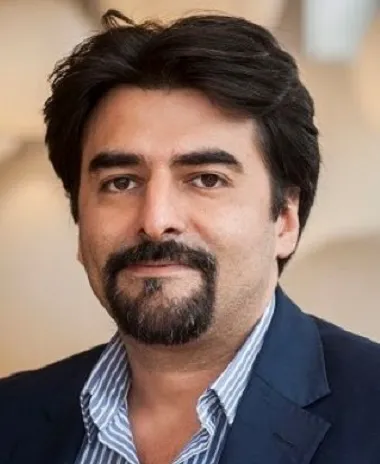
Dr. Frederick Shic is a Professor of Pediatrics at the University of Washington School of Medicine and a Principal Investigator at Seattle Children's Research Institute. He also holds adjunct appointments in Computer Science & Engineering and Psychology at UW. His research integrates computer science, engineering, and developmental science to create innovative tools for understanding and improving outcomes for children with autism spectrum disorder (ASD) and other developmental conditions.
- Academic Affiliation: University of Washington (School of Medicine, Department of Pediatrics, General Pediatrics Division)
- Laboratory: Seattle Children's Innovative Technologies Laboratory (SCITL)
Dr. Shic's expertise spans computational neuroscience, neuroengineering, and human-centered computing, with a focus on non-invasive technologies like eye tracking, functional near-infrared spectroscopy (fNIRS), and social robots. His work has been funded by the National Institute of Mental Health (NIMH), Institute of Education Sciences (IES), Simons Foundation, and Autism Speaks. Key contributions include:
- Development of interactive eye-tracking methodologies for joint attention assessment
- Investigation of physiological biomarkers (e.g., heart rate-defined sustained attention) in neurodiverse populations
- Creation of novel computational models for analyzing eye-tracking data
- Exploration of genetic contributions to attention through twin studies
- Application of social robots for in-home ASD interventions
- Analysis of spatiotemporal eye movement patterns as potential ASD biomarkers
His academic journey includes:
- B.S. in Engineering and Applied Science from Caltech
- Ph.D. in Computer Science from Yale University
- Postdoctoral training at Yale Child Study Center under NIMH T32 program
- Prior roles: Associate Research Scientist at Yale, Software Engineer at Sony Interactive Studios, MRS Researcher at Huntington Medical Research Institutes
Current research directions include:
- Standardization of clinical eye-tracking protocols through the International Society for Clinical Eye Tracking (ISCET)
- Development of accessible, technology-enhanced behavioral paradigms
- Investigation of reward and motivation mechanisms in ASD attention patterns
- Translation of EEG and eye-tracking findings into clinical applications