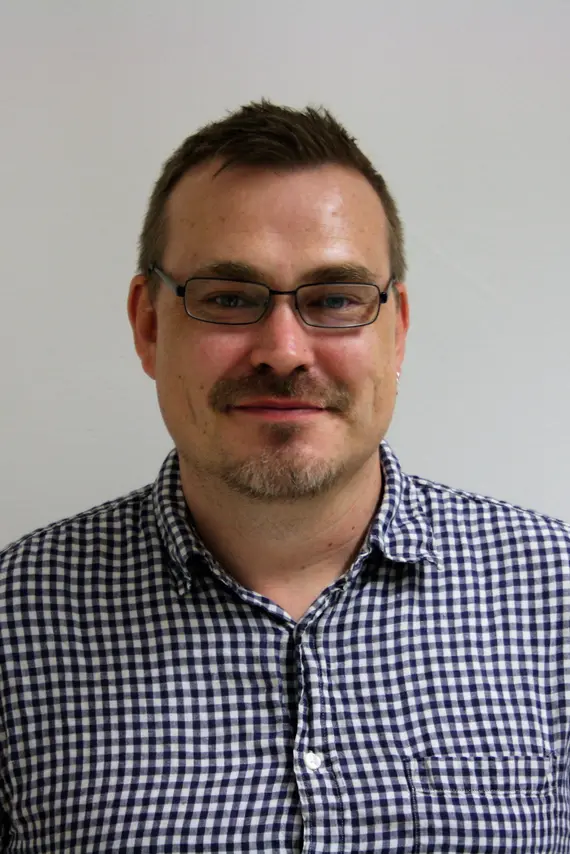
Oliver Tepner is Professor of Chemistry Education at the University of Regensburg and head of the chemistry education research group. His work focuses on empirical research into chemistry teachers’ professional knowledge (CK & PCK), the effectiveness of tasks and experiments, the promotion of explanatory competence, and the use of digital media and low-cost sensors in teacher education. Education & Career: Doctorate and habilitation in chemistry education; since 2015 Professor at University of Regensburg. Previously senior researcher and project coordinator in the federal ProwiN project at University of Duisburg-Essen. Research Interests: Modelling and measuring chemistry teachers’ content and pedagogical content knowledge (PCK/CK). Development of explanatory competence and adaptive explanation skills among pre-service teachers. Design and validation of experiments, micro-scale activities and low-cost digital sensors. Role of language, models and students’ misconceptions in chemistry instruction. Video-based reflection and flipped-classroom approaches in teacher education. Recent Publication Trends: Between 2019-2025 Tepner’s articles concentrate on three strands: (1) large-scale assessment of teacher knowledge within PISA-Ceco and FALKE projects, (2) fostering adaptive explanatory competence through video reflection, and (3) practical laboratory innovations such as self-built microcontroller pH-sensors and micro-scale climate-related experiments. Scientific Awards & Distinctions: No specific prizes are listed in the supplied text; he serves as reviewer and keynote speaker (e.g., plusLucis 2025 plenary). Grants & Projects: Co-spokesperson of the German chemistry component of PISA-Ceco 2022 (federal BMBF/PISA consortium). Project leader FALKE-C chemistry module (federal quality initiative teacher education). Former deputy coordinator ProwiN (Professionswissen in den Naturwissenschaften), BMBF 2008-2017. Labs & Teams: Tepner heads the chemistry education research group at Regensburg and supervises numerous doctoral and post-doctoral researchers (e.g., SHKs and TAs listed on the group homepage). The group maintains a teaching laboratory with open access times for pupils and pre-service teachers and collaborates closely with the FALKE and PISA-Ceco consortia across Germany.