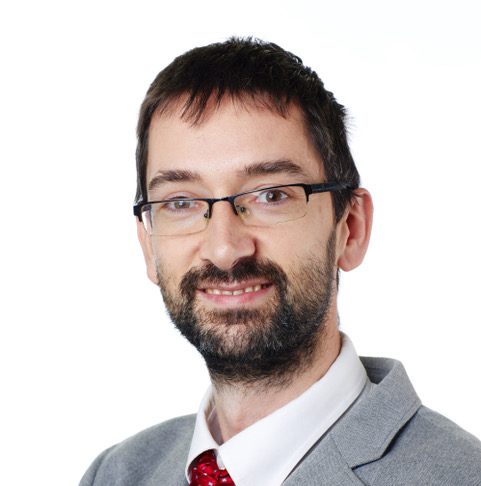
Richard Brenner is a Professor and Head of Department at the Department of Physics and Astronomy , Uppsala University. He is a key member of the ATLAS detector team at the CERN Large Hadron Collider (LHC) , focusing on instrumentation development and real-time data processing for dark matter detection. His work bridges semiconductor detector signals with machine learning systems , emphasizing radiation resistance in high-energy environments. Role: Head of Department of Physics and Astronomy Affiliation: Uppsala University and CERN Research Focus: Dark Matter, Higgs Boson, Particle Physics His recent 15 publications (2025) span topics like dark matter searches , Higgs boson production , vector boson fusion , and machine learning applications in data analysis. Keywords include High Energy Physics , Experimental Physics , and Quantum Interactions , with subfields such as Collider Physics , Detector Engineering , and Theoretical Modeling
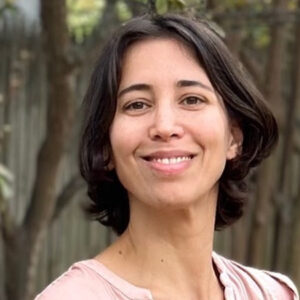
Curtis Baker is a Senior Scientist at the Research Institute of the McGill University Health Centre (RI-MUHC), Montreal General Hospital site, and a Professor in the Department of Ophthalmology and Visual Sciences at McGill University. His research focuses on understanding human visual perception , particularly low-level neural mechanisms that underpin everyday visual processing of figure-ground and local depth relationships through cues like contrast, texture, and motion . Institutional Affiliation: RI-MUHC, McGill University Academic Rank: Professor His lab employs human psychophysics , electrophysiology , optical imaging , and computational modeling to study how early visual processing detects and utilizes complex cues. Key research areas include receptive field dynamics , second-order boundary perception , and machine learning applications in visual neuroscience. Recent publications highlight his work on convolutional neural networks for receptive field estimation, Y-like neuronal responses in human vision, and texture regularity models using wavelet analysis. Collaborations span computational neuroscience , optical imaging , and depth perception mechanisms. Students and researchers in his lab include graduate students in Integrated Program in Neuroscience , Physiology , and Biomedical Engineering , alongside alumni contributing to neurophysiology and computational biology projects.
Dr. Wolfgang Hübner is a Researcher at the Faculty of Physics at University of Bielefeld, Germany, affiliated with the Biomolecular Photonics Group. His work focuses on advanced optical imaging techniques applied to cellular and molecular structures. He maintains an active research program as evidenced by numerous publications from 2023-2025. His research interests center on photonics, biophotonics, optical microscopy, super-resolution imaging techniques, cellular biophysics, and molecular imaging. Dr. Hübner's work bridges physics and biology, developing and applying cutting-edge microscopy methods to address biological questions at the nanoscale level. His recent publications demonstrate a strong focus on super-resolution microscopy techniques, particularly structured illumination microscopy, fluorescence lifetime imaging, and correlative imaging approaches. His research investigates cellular structures like liver sinusoidal endothelial cells, dystroglycan mutants, and mitochondrial dynamics, revealing how advanced optical methods can visualize biological processes at unprecedented resolution. Dr. Hübner's research shows consistent development in both methodological advances in optical imaging and biological applications. His work spans from fundamental optical engineering to biomedical applications, demonstrating interdisciplinary expertise across physics, engineering, and cell biology.
Roberto Tron is an Assistant Professor in the Mechanical Engineering and Systems Engineering departments at the Boston University College of Engineering , with his office located at 110 Cummington Mall. His research integrates control theory, robotics, and computer vision to solve complex multi-agent coordination problems. His primary research interests focus on Riemannian geometry applications , distributed multi-agent systems , and safety-critical control . Key methodologies include Control Barrier Functions (CBFs), Riemannian optimization, and distributed consensus algorithms, with applications spanning autonomous aerial vehicles, robotic manipulation, and multi-robot security systems. Analysis of his recent publications reveals a strong emphasis on safety verification and real-time optimization for autonomous systems. His work consistently bridges theoretical foundations in nonlinear control with practical implementations in robotics, particularly addressing challenges in limited sensor fields of view, distributed task allocation, and noise-robust navigation. The research shows increasing integration of formal methods like Signal Temporal Logic with learning-based approaches. Tron received his Ph.D. from The John Hopkins University and previously conducted post-doctoral research at the GRASP Lab, University of Pennsylvania. His work demonstrates significant contributions to provably safe autonomous systems through frameworks like the Control Barrier Function Toolbox.
Yuta Sugiura is an Associate Professor in the Department of Information and Computer Science at Keio University's Faculty of Science and Technology. His research focuses on innovative human-computer interaction techniques, particularly in wearable computing, tangible interfaces, and novel input methods. Previously, he worked as a postdoctoral researcher at the National Institute of Advanced Industrial Science. Dr. Sugiura's research interests span Human-Computer Interaction, Wearable Computing, Augmented Reality, Tangible User Interfaces, Gesture Recognition, Ubiquitous Computing, Haptics, and Virtual Reality. His work often explores how everyday objects and environments can become interactive surfaces, with notable projects including the iRing (intelligent ring), SenSkin (skin as interface), and EarHover (mid-air gesture recognition for hearables). He has developed numerous novel interaction techniques that leverage physical properties of materials and human physiology for input and output. His recent publications indicate a strong focus on hearable computing, medical applications of HCI, edible interfaces, and novel authentication methods. The research shows a consistent pattern of exploring unconventional interaction surfaces and leveraging subtle physical phenomena for input sensing. His work has significant implications for healthcare applications, particularly in neurological disorder screening and rehabilitation. Best Paper Award Dr. Sugiura has advised numerous students who have gone on to publish significant work in top-tier HCI venues. His research has been supported by various grants enabling the development of novel interaction techniques and systems. He maintains strong collaborations with researchers across Japan and internationally, particularly in the fields of wearable computing and medical applications of HCI. His laboratory appears to focus on lifestyle computing, developing interfaces that integrate seamlessly into daily activities. Current projects include exploring edible displays, adaptive ear interfaces, and novel authentication methods using wearable devices. Future work seems to be heading toward more medical applications of HCI, particularly in neurological assessment and rehabilitation.
Dr. Roza Gunes Bayrak is a Senior Research Engineer and Research Assistant Professor in the Department of Electrical and Computer Engineering at Vanderbilt University, with secondary appointments in the Department of Computer Science. She leads the Neuroimaging & Brain Dynamics Lab (NEURDY Lab) and is affiliated with multiple interdisciplinary institutes including the Vanderbilt Institute for Surgery and Engineering (VISE) and the Vanderbilt University Institute of Imaging Science (VUIIS). PhD in Computer Science from Vanderbilt University (2023) MS in Electrical Engineering from Tufts University BS in Electronic and Communication Engineering from Çankaya University, Turkey Her research focuses on advancing neuroimaging methodology for studying brain dynamics and brain-body interactions. Key areas include: Temporal modeling of neuroimaging data Development of open-source tools like PRAGMA and PhysioPy Graph-based machine learning for brain connectomics Reconstruction of physiological signals from fMRI data Interactive visualization techniques for functional brain parcellation Her recent publications emphasize: Graph neural networks for analyzing brain connectivity networks (Neurograph 2023) Deep learning approaches to decode respiration and heart rate from fMRI (DeepPhysioRecon 2023) Subject-specific functional brain mapping techniques (2022-2024) Reproducibility studies in white matter tractography (2021-2022) Roza actively promotes open science through leadership roles in initiatives like BrainHack Vanderbilt and the Organization for Human Brain Mapping's Open Science Special Interest Group.
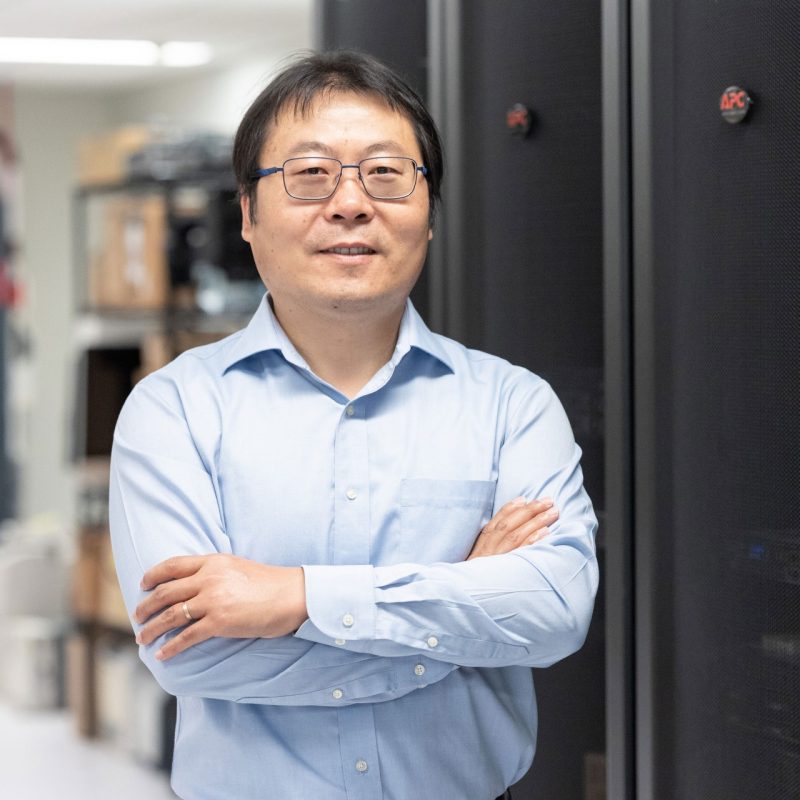
Guoqiang Yu is a Professor in the Bradley Department of Electrical and Computer Engineering at Virginia Tech. He holds a joint appointment at the Virginia Tech Research Center - Arlington. His research focuses on integrating machine learning, signal processing, and statistical methods to develop computational tools for analyzing multiplatform biomedical data. Key areas include neuroinformatics, bioinformatics, and systems biology, with applications in understanding human diseases through genomic, proteomic, and imaging data integration. Education: Ph.D. in Electrical Engineering, Virginia Tech (2011) Postdoctoral Fellowship at Stanford University (2012) M.S. Tsinghua University (2004) B.S. Shandong University (2001) Research Interests: Machine learning methodologies for biomedical data analysis, pattern recognition in complex datasets, optimization algorithms for high-dimensional data, stochastic signal processing, and their applications in neurodegenerative diseases (e.g., ALS, Alzheimer's), glial cell biology, and precision medicine. His work emphasizes developing open-source tools like ABDS, CAM3.0, and SynQuant for data normalization, deconvolution, and quantitative imaging analysis. Awards & Service: NSF Career Award (2018) Dean's Award for Excellence in Research (2022) Member of NIH BRAIN Initiative Consortium (2021–present) Associate Editor for BMC Bioinformatics (2017–present) Labs & Teams: Leads the Yu Lab at Virginia Tech, collaborating with multidisciplinary teams in neuroscience, bioengineering, and computational biology. Active in NIH-funded consortia focused on brain data science and large-scale neuroimaging initiatives.
Prof. Sander M. Bohte holds a part-time appointment as a Professor of Computational Neuroscience at the Swammerdam Institute for Life Sciences (SILS), University of Amsterdam, and is a researcher at the CWI Machine Learning group. His research focuses on computational models of neural information processing, emphasizing spiking neural networks, predictive coding, and reinforcement learning. He bridges computational neuroscience and machine learning, exploring how biological insights can improve neural network designs and vice versa. Key collaborations include work with Cyriel Pennartz (UvA), Pieter Roelfsema (NIN), and Steven Scholte (B&C). His applied research spans scientific machine learning applications in finance and genomics. He actively supervises MSc thesis students, prioritizing those from UvA, with projects ranging from biologically inspired neural architectures to efficient spiking network simulations. Research highlights include developing biologically plausible learning rules for deep networks, predictive coding models for sensory data, and spiking network models for working memory tasks. His work also addresses challenges in temporal dynamics and scalable neural computation, leveraging both theoretical and applied perspectives.
Dr David Jaud is a Senior Lecturer in Marketing and Wine Business at the University of Adelaide's Adelaide Business School, part of the Faculty of Arts, Business, Law and Economics. He serves as the Wine Business Program Director and has significant industry experience in the French wine sector. His research focuses on consumer behavior in wine and food contexts, particularly label design impacts, consumer wellbeing, and responsible consumption patterns. He has published in journals like European Journal of Marketing and Journal of Consumer Behaviour . Dr Jaud actively supervises postgraduate research as a co-supervisor, currently guiding Miss Cassidy Lia Shaw's PhD on 'Vice or Virtue: Examining the Factors Influencing the Adoption of NOLO Wines and Plant-Based Meats'. Professional Activities: Board Member of the Academy of Wine Business Research (AWBR) Steering Committee since 2024 Teaching: Courses include Marketing for Wine Business and Research Project in Marketing and Wine Business Key Research Themes: Label design psychology, cross-modal sensory effects, youth consumption patterns, and authenticity in marketing His 2025 publications explore topics like embossed label effects, rosé wine color perception, and authenticity's role in curbing risky drinking behaviors, reflecting a focus on both theoretical and applied marketing insights.
Prof Alice Eldridge is Professor of Sonic Systems (Music) at the University of Sussex, School of Media, Arts and Humanities. She holds leadership roles including Director of the Sussex Humanities Lab and Co-director roles in interdisciplinary research centers. Her academic journey includes a BSc Psychology (University of Leeds), MSc Evolutionary and Adaptive Systems, and PhD in Computer Science and AI (University of Sussex). Research focuses on ecoacoustics, soundscapes, and music-technology intersections with ecology. Key areas include acoustic complexity analysis, participatory conservation projects (e.g., WILDSENS projects), and feedback musicianship. Fieldwork spans tropical, temperate, and Arctic regions including Indonesia, Ecuador, and Swedish Lapland. Collaborates with indigenous communities and organizations like Peck Labs and Emute Lab. Music performance includes free jazz, chamber compositions, and pop bassistry with groups like Collectress and Feedback Cell. Grants include AHRC/NERC/EU funding for projects like WILDSENS Arctic mapping and environmental wellbeing studies. Over 70 publications span ecoacoustic methodologies, digital humanities, and sound-based conservation. Labs affiliated with: Sussex Humanities Lab, Peck Labs (ecology), Emute Lab (music tech). Teaching includes BA Music Technology and MA Sonic Media programs.
William L. Kath is the Margaret B. Fuller Boos Professor of Engineering Sciences and Applied Mathematics at Northwestern University's McCormick School of Engineering. He holds affiliations as Deputy Director of the National Institute for Theory and Mathematics in Biology, courtesy faculty in Neurobiology, and member of the Northwestern Institute on Complex Systems. His research bridges quantitative biology, neuroscience, and optics, focusing on dynamical models of biological systems and high-speed optical communication systems. Key projects include the EMBEDR algorithm for single-cell omics analysis and computational models of temperature sensing in Drosophila. Research interests emphasize quantitative and computational biology, particularly circadian rhythms, neuronal circuit modeling, and single-cell genomics. Collaborations include the Gallio lab (Drosophila thermosensation), Daniel Dombeck's lab (hippocampal neuron behavior), and Nelson Spruston's group (hippocampal microcircuits). His work on optics includes nonlinear pulse propagation and rare event analysis in fiber optics. Scientific awards include Fellowships from the Society for Industrial and Applied Mathematics and the Optical Society of America. He advises over 20 graduate students and has developed courses like ESAM 472 (RNA sequencing analysis) and ESAM 370 (Computational Neuroscience). Current students include Richard Suhendra and Nan Ding (jointly advised). Labs/teams: Leads the National Institute for Theory and Mathematics in Biology, co-leads the Gallio lab collaboration on thermosensory circuits, and maintains active projects in computational neuroscience and optics at Northwestern.
Jane-Ling Wang is a Distinguished Professor in the Department of Statistics at the University of California, Davis. Her research focuses on advancing statistical methodologies for functional and longitudinal data analysis, deep learning applications, and survival analysis. She holds a Ph.D. from UC Berkeley and has contributed extensively to interdisciplinary fields including neuroscience, biostatistics, and machine learning. Wang has received numerous accolades, including being elected an Academician at Academia Sinica (2022), recipient of the Humboldt Research Award (2020), and the ICSA Distinguished Achievement Award (2018). Her work bridges theory and practice, addressing challenges in data sparsity, dynamic systems modeling, and high-dimensional statistical inference. Her recent publications emphasize innovative techniques such as SAND (Transformer-based data imputation) and adaptive basis layers for functional data analysis. These contributions underscore her expertise in integrating modern computational tools with classical statistical frameworks.
Professor Herbert Ho Ching Iu is a distinguished academic at The University of Western Australia, serving in the School of Engineering within the Department of Electrical, Electronic and Computer Engineering. With an impressive research portfolio of over 500 publications and an h-index of 61, Prof. Iu has established himself as a leading authority in power electronics and nonlinear systems research. Prof. Iu received his BEng(Hons) in Electrical and Electronic Engineering from The University of Hong Kong in 1997, followed by a PhD in Electronic and Information Engineering from The Hong Kong Polytechnic University in 2000. After a brief research fellowship at HKPU, he joined The University of Western Australia in 2002 as a Lecturer and has since risen to the rank of full Professor. His primary research focuses on power electronics , renewable energy systems , nonlinear dynamics and chaos , current sensing techniques , and memristive systems . Prof. Iu's work uniquely bridges theoretical exploration with practical implementations, particularly in energy conversion, secure communications, and neuromorphic computing. His research has significant implications for DC microgrids, advanced encryption techniques, and next-generation computing paradigms. Analysis of Prof. Iu's recent publications reveals a strong interdisciplinary trajectory combining memristive systems with chaotic dynamics for applications in image encryption and secure communications . There's a notable emphasis on machine learning techniques applied to power electronics and energy systems , particularly for DC microgrids and battery management. His work demonstrates consistent progression from fundamental research in nonlinear systems to practical engineering solutions with real-world impact. Prof. Iu's significant contributions have been recognized with several prestigious awards: Vice-Chancellor's Award for HDR Supervision (2024) School of Engineering Award for Research Mentorship (2023) Vice Chancellor's Award in Research Mentorship (2023) With 18 supervised research students and leadership on 16 research grants, Prof. Iu has built a robust research program at the forefront of power systems innovation. His grant portfolio includes major projects like 'Mine Electrification' and 'Microgrid Battery Deployment' through the CRC for Future Battery Industry, as well as collaborations with Western Power on 'Project Symphony.' These initiatives demonstrate his ability to secure substantial funding and translate theoretical concepts into practical engineering solutions for industry. Prof. Iu leads a dynamic research team that specializes in hardware implementation of advanced theoretical concepts, particularly in memristive systems and chaotic circuits. The laboratory maintains strong industry connections, especially with energy and mining sectors, ensuring research has tangible real-world applications. Current work emphasizes DC microgrid technologies, advanced battery systems for electrified transportation, and novel applications of chaotic systems in security contexts, positioning the team at the cutting edge of power electronics research.
Dr. Freek van Ede is an Associate Professor at the Faculty of Behavioural and Movement Sciences, Vrije Universiteit Amsterdam, specializing in Cognitive Psychology. He leads the Proactive Brain Lab, focusing on how the brain prepares for upcoming behavior through attention and working memory. His research employs EEG, eye-tracking, and virtual reality to study dynamic cognitive processes. Education: PhD in Cognitive Neuroscience (Cum Laude), Radboud Universiteit Nijmegen (2014) MSc in Cognitive Neuroscience (Cum Laude), Radboud Universiteit Nijmegen (2009) BSc in Psychology, University of Utrecht (2007) Research Interests: His work investigates how attention and working memory interact with anticipation, timing, and action. Key methodologies include EEG, eye-tracking, and virtual reality. Recent projects explore stimulus-driven selective attention and how visual working memories are prepared for action. Grants & Awards: NWO Vidi Grant (2023–2028, €800,000) ERC Starting Grant (2020–2025, €1.5 million) Young Investigator Award, CNS (2023) Early Career Awards from BACN and NVP (2023, 2022) Lab & Teams: He directs the Proactive Brain Lab, emphasizing innovative experimental designs and interdisciplinary approaches. The lab welcomes motivated students at all levels.
Antonios Pantazis is an Associate Professor and Docent at Linköping University, affiliated with the Department of Biomedical and Clinical Sciences (BKV) within the Faculty of Medicine and Health Sciences. He leads the Pantazis Laboratory of Cellular Excitability (PaLaCE), focusing on ion channel biophysics and their role in health and disease. His work integrates electrophysiological, optical, and computational methods to study ion channel structure-function relationships, particularly in cardiac and neuronal systems. Research interests include voltage-gated ion channels, cellular excitability, and the molecular mechanisms underlying arrhythmias and neurological disorders. Key contributions involve understanding mutations in genes like SCN5A and KCNA2, which are linked to epilepsy and cardiac arrhythmias. He has been awarded the Swedish Fernström Prize (2021) for his work on ion channels. Publications span topics such as ion channel regulation, molecular transitions in voltage-dependent processes, and drug targets for arrhythmia suppression. His laboratory also explores cutting-edge techniques like voltage-clamp fluorometry and optical methods to visualize protein dynamics. Collaborations include institutions like the Wallenberg Centre for Molecular Medicine (WCMM) at Linköping University, emphasizing translational research in medical technology and bioengineering.