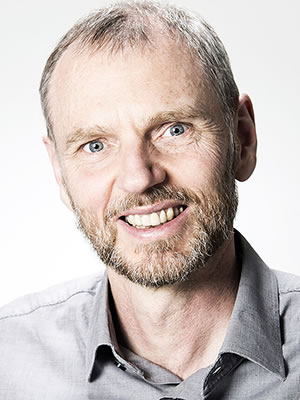
Dr. Taha Ertuğrul Kuzu is a Tenure-Track Professor at Pädagogische Hochschule Schwäbisch Gmünd since October 2023, holding the Professorship for Heterogeneity in Primary School . He previously served as a postdoctoral researcher at the University of Münster (2020-2023) and completed his doctorate at TU Dortmund (2018) with a thesis on Multilingual Concept Development Processes . His research focuses on multilingualism activation , qualitative interaction analysis , and AI integration in education . Bachelor: TU Dortmund (Mathematik/Deutsch, Grundschullehramt) Master: TU Dortmund (Mathematik/Deutsch, Grundschullehramt) His research interests span: Multilingual learners' mathematical meaning-making Translanguaging in classrooms Digital pedagogy with AI tools Heterogeneity-sensitive teacher training Qualitative interaction analysis His peer-reviewed publications examine AI-integrated task design, multilingual video explanations, and cognitive transitions in mathematics. Current projects include CaLSAM (Erasmus+ AI/multilingualism), KIKo-Prim (AI competencies), and ProHeDi (teacher professionalization). Scientific awards include: BMBF Avicenna Studienwerk Promotionsstipend (2014-2018) As editorial leader , he co-edits the BildungsWelten Grundschule book series and serves as Schriftleiter for Grundschulmagazin. He actively participates in professional networks including GDM, ERME, and Avicenna Alumni.
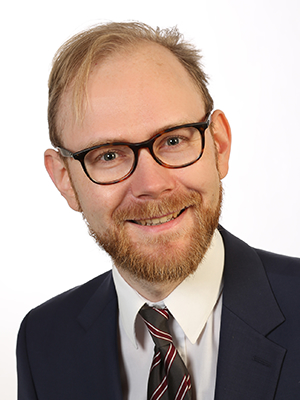
Klaus Ripper ist Professor für Kunst und ihre Didaktik an der Pädagogischen Hochschule Schwäbisch Gmünd , wo er seit 2013 lehrt. Er fungiert als Studiendekan der Fakultät II sowie stellvertretender Leiter des Instituts der Künste und Leiter der Abteilung Kunst. Seine Arbeit konzentriert sich auf inklusiven Kunstunterricht, digitale Medien im Kunstpädagogik und die Schnittstellen zwischen Kunst und Sprache. 2013: Professur für Kunst und ihre Didaktik 2011: Vertretungsprofessur 2010: Promotion zum Dr. phil. 1997–2011: Kunstlehrer an Privatschule für Hörgeschädigte Seine Forschung untersucht künstlerische Bildungsprozesse in heterogenen und inklusiven Kontexten. Er integriert digitale Medien in kunstpädagogische Praxis und erforscht die Beziehung zwischen visueller und sprachlicher Bildung. Besonders relevant sind seine Arbeiten zu ästhetischer Erfahrung bei Hörgeschädigten und multimodalen Lernansätzen. Die 15 jüngsten Publikationen zeigen einen klaren Fokus auf Inklusion im Kunstunterricht , digitale Transformation und interdisziplinäre Ansätze zwischen Kunst, Sprache und globalen Themen. Seine Beiträge in Fachzeitschriften wie IMAGO und BDKinform thematisieren u.a. postdigitale Kunstpädagogik und partizipative Ausstellungen. Publikumspreis 2010 (Stiftung Schloss Fachsenfeld) Anerkennungspreis 2003 (EnBW/ODR Kunstwettbewerb) Jury-Mitgliedschaften in künstlerischen Wettbewerben (2014–2022) Als Leiter der Ateliergemeinschaft >>zeitwolf
Prof. Dr.-Ing. Kurt Sandkuhl serves as Professor and Chair of Business Information Systems at the Institute of Computer Science within the Faculty of Computer Science and Electrical Engineering at the University of Rostock. He concurrently holds the position of Dean of the Faculty and maintains active roles as Academic Advisor for the Business Information Systems Master's program, ERASMUS+ Coordinator, and member of the academic management of the Center for Entrepreneurship. His research centers on enterprise architecture, enterprise modeling, capability management, and digital business models, with significant contributions to knowledge-based systems, smart process management, and mobile/wearable information systems. Recent work demonstrates pioneering integration of artificial intelligence—particularly large language models—into enterprise modeling practices, addressing challenges in cybersecurity, sustainable business transformation, and public sector digitalization. Analysis of his recent publications reveals dominant trends in AI-augmented enterprise modeling, cybersecurity architecture for public administration, and circular economy transitions in manufacturing. His work consistently bridges theoretical modeling frameworks with practical implementations in SMEs, public transport, and energy management contexts, emphasizing usability and real-world impact. Prof. Sandkuhl advises the WIN M.Sc. program and coordinates international academic exchanges through ERASMUS+. His institutional leadership extends to the IT Initiative Mecklenburg-Vorpommern board and co-opted membership in the Interdisciplinary Faculty's Department of Ageing, while maintaining active affiliations with the German Computer Science Society and founding membership in the European Association for Software and Systems Technology. He directs the Business Informatics Enterprise Modeling Lab, which employs multi-touch tables and smart boards for participatory modeling research. The lab focuses on capability-driven enterprise architecture, digital business ecosystem design, and context-aware systems for quantified products, with notable projects in maritime dataspaces and demand-responsive public transport integration.
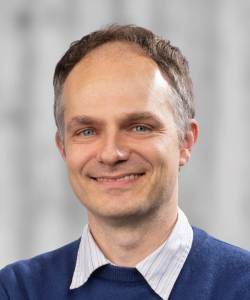
Dr. Stefan Oehmcke is the Junior Professor for Visual and Analytic Computing in Ocean Technologies at the Institute of Visual and Analytical Computing (University of Rostock). His research focuses on deep learning applications for tempo-spatial data analysis, multi-modal representation learning, and resource-limited learning systems, with particular emphasis on environmental monitoring and ocean technologies. Deep learning on tempo-spatial data (e.g., remote sensing) Multi-modal representation learning Resource-limited learning (e.g., automated data selection) ML models for system modeling and simulation Recent publications demonstrate expertise in geospatial analytics, LiDAR point cloud processing, and deep learning frameworks for ecological monitoring. His work spans climate modeling, biodiversity assessment, and UAV-based environmental data acquisition.
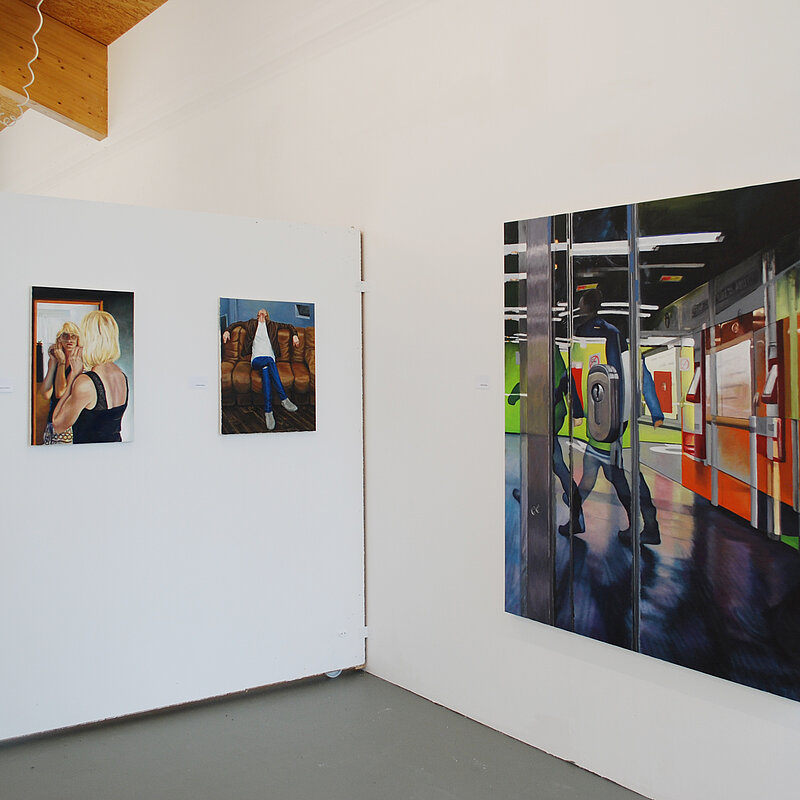
Prof. Andreas Orosz is a faculty member at Alanus College, where he leads a painting class focused on representational painting and graphic art . His teaching philosophy emphasizes "learning to see," fostering individual artistic perspectives through technical and intellectual skill development. The class includes Master students and Alumni , such as Maria Ostritz, Katharina Reschke, and others listed in collaborative exhibitions and studio exchanges. Teaching methods: Weekly colloquia, studio visits, and excursions to art hubs like Rome, Tuscany, and New York. Research interests: Visual interpretation of reality, craftsmanship in painting, and interdisciplinary artistic practices. Notable collaborations: Interactions with gallery owners, critics, and curators through structured studio visits and alumni participation.
Dr. Katharine Shapcott is a Post-Doc Researcher at the Ernst Strüngmann Institute (ESI) , affiliated with Goethe University Frankfurt . Her work focuses on neuroscience , particularly the dynamics of the visual cortex , predictive coding , attentional mechanisms , and the application of virtual reality in studying neural responses across species. Academic Rank: Researcher Institution: Goethe University Frankfurt Lab: Singer Lab Email: katharine.shapcott@esi-frankfurt.de Her research explores cross-species neural dynamics , utilizing techniques like optogenetics , high-density electrophysiology , and immersive virtual reality (e.g., DomeVR) to study attention, decision-making, and sensory processing in primates and rodents. Recent work includes quantifying predictive coding in V1 and analyzing gamma oscillations in visual areas. Scientific publications reveal a focus on neurophysiological mechanisms , with key contributions to understanding expectancy effects , reward-related suppression , and feature-based attentional sampling . Collaborations include the Havenith & Schölvinck Lab, emphasizing multi-lab integrations in neuroscience research.
Thomas Brox is a Professor for Pattern Recognition and Image Processing at the University of Freiburg , where he has headed the Computer Vision Group since 2010. He holds a PhD in computer science from Saarland University (2005) and has held postdoctoral positions at UC Berkeley, TU Dresden, and University of Bonn. Research Interests Education Publications & Awards Teaching & Leadership Roles His research focuses on computer vision and deep learning , particularly visual representation learning , video analysis , and training deep networks without manual supervision . He investigates how deep networks learn capabilities and applies these insights to action-perception cycles in robotics . Recent publications highlight trends in vision-language models , diffusion-based 3D generation , and anomaly detection . His work includes U-Net (seminal biomedical image segmentation) and FlowNet (optical flow estimation). Koenderink Prize (2014) ERC Starting Grant (2011) Longuet-Higgins Best Paper Award (2004) Multiple GCPR/ICCV/CVPR Best Paper Honors He teaches courses in Optimization , Statistical Pattern Recognition , and Computer Vision . He has served as Dean of Studies , Director of Computer Science Department , and will become Dean in 2026. His lab mentors 25+ PhD/MSc students and collaborates with institutions like Amazon (2020-2024).
Max Argus is a researcher at the Computer Vision Lab , University of Freiburg , focusing on computer vision and AI for robotics. He holds a PhD in Computer Science (2022) and a Master’s in Physics (University of Heidelberg), where his thesis was supervised by Björn Ommer . Research Interests : His work bridges Computer Vision for Robotics , Reinforcement Learning , and Vision-Language Integration . He explores Learning from Demonstration to enable compositional task planning, Visual Servoing for precise control, and XAI to enhance model interpretability. Publications Trends : Recent publications highlight advancements in Vision-Language Models (ICLR 2025), Explainable AI (TMLR 2025), and Robot Manipulation (ICRA 2024). His work integrates Latent Diffusion , Flow Matching , and Contrastive Learning for robotics and vision tasks. Labs & Collaborations : He collaborates with the Computer Vision Group under Prof. Thomas Brox and Wolfram Burgard , contributing to projects like cVLA (camera-space vision-language actions) and RobotIO (robot manipulation library.
Alexander Kuhrs Woltin is a Senior Lecturer at Leibniz University Hannover, working within the Faculty of Philosophy's English Seminar. He serves as an Internship Coordinator for Master's students in Language and Literature Studies (LG) and Educational Sciences (LBS), and functions as a Teacher for Special Tasks focusing on English teaching methods. His office is located in Building 1502, Room 727 at Königsworther Platz 1, 30167 Hanover, with appointments available via Stud.IP. 2007: First State Examination for teaching at Gymnasiums at Leibniz University, Hanover 2003-2004: Educational and practical stay abroad in the USA (Rochester, New York and Portland, Oregon) 2001-2007: Study of secondary school teaching (English/Biology) at Leibniz University, Hanover 2000: General higher education entrance qualification from Pädagogium boarding school in Bad Sachsa Dr. Woltin's research focuses on innovative approaches to foreign language education, with particular emphasis on digital media integration in competency-oriented teaching. His work explores how diversity and inclusion can be effectively incorporated into language classrooms, and he investigates the pedagogical potential of audio-visual texts for language acquisition. As an expert in Content and Language Integrated Learning (CLIL), he contributes to developing effective bilingual teaching methodologies. His scholarship also addresses textbook development and the quality assurance of teacher training programs, ensuring educators are equipped with contemporary, research-based practices. Analysis of Dr. Woltin's recent publications reveals a strong focus on contemporary challenges in language education. His work increasingly addresses digital transformation in teaching, with multiple articles on video-based instruction, flipped classrooms, and AI literacy. There's a consistent thread of inclusive pedagogy throughout his scholarship, particularly regarding diversity representation in language materials. His publications demonstrate practical applications of theoretical frameworks, often providing concrete classroom strategies for language educators. The collaborative nature of his work (frequently with J. Oldendörp and G. Blell) highlights interdisciplinary approaches to language teaching challenges. As Internship Coordinator for Master's programs, Dr. Woltin guides students through practical teaching experiences, connecting academic theory with classroom reality. His background as a practicing teacher in various German schools (including Sophienschule Hannover) informs his approach to teacher development. While specific grant information isn't detailed in the available materials, his extensive publication record and handbook editorship suggest significant scholarly contributions to the field of language education. Dr. Woltin contributes to the development of the Camden Town textbook series, which serves as core curriculum material for English education in German secondary schools. His work on Abitur preparation materials demonstrates his engagement with systemic educational frameworks and standards. Through his focus on practical teaching methods and materials development, he bridges academic research with classroom application, supporting both current educators and future language teachers.
Berit Hildebrandt is a Lecturer (Privatdozentin) at Leibniz University Hannover's Faculty of Philosophy, affiliated with the Historical Seminar department. She maintains concurrent research positions, including her role as Project Coordinator and Principal Investigator at the University of Göttingen since April 2022 for the interdisciplinary project 'Revealing the Israeli Silk Road'. She has held visiting professorships at Humboldt University Berlin (2022/23) and University of Bremen (2021). Her research focuses on intercultural exchanges along the Silk Roads, economic and social history of antiquity, and gender studies. Specializations include textile archaeology, trade networks, material culture analysis, and prestige economies in ancient Mediterranean societies. Publications demonstrate strong thematic consistency in Silk Road trade dynamics, Roman textile economies, and material culture interpretation. Recent works (2022-2023) emphasize archaeological textile analysis from Israeli sites, while earlier scholarship establishes foundations in Roman luxury consumption and silk terminology. Scientific Awards: Marie Sklodowska Curie Fellowship (2013-2015) Fellowship, Leadership Academy, German Scholar Organization (2018-2019) Postdoctoral Fellowship, Mahindra Humanities Center, Harvard University (2011-2012) Postdoctoral positions at Centre for Textile Research, Copenhagen and University of Munich She leads the Lower Saxony/Israel-funded 'Revealing the Israeli Silk Road' project, examining textile finds from Nahal Omer. Previous roles include project management at the Nordic Centre for Heritage Learning and research coordination at the Centre for Textile Research, University of Copenhagen.
Liane Schüller is a researcher at the University of Duisburg-Essen , affiliated with the Institute of German Studies - Literary Studies/Didactics under the Faculty of Humanities . Her work bridges literary analysis, digital education, and cultural critique, with a focus on contemporary intersections of technology and society. Role: Researcher in Literary Didactics University: University of Duisburg-Essen School: Faculty of Humanities Department: Institute of German Studies - Literary Studies/Didactics Email: liane.schueller@uni-due.de Research Interests span digital humanities, inclusive education, and gender narratives. Key projects include: The Culture of Digitality in Contemporary Literature and Art (2023, funded by UDE's Lehr-Lern-Innovationen) History(ies) of Migration, Mobility and Flight (2025, with DOMiD collaborations) Grimmwelten (2023, fairy tale adaptations and educational frameworks) Images of Mothers in Literature and Art (2025, curated exhibition with Dr. Sabine Kampmann) Scientific Awards : Fellowship from the Stifterverband and North Rhine-Westphalia Ministry for digital inclusion project Collaborations include Prof. Dr. Michael Beißwenger, Dr. Simone Loleit, and institutions like Schauspiel Essen and DOMiD. She has contributed to OER platforms digiLL and ORCA.nrw , emphasizing cooperative teaching methods and hypermedia communication.
Prof. Dr. Inga Gryl is Chair of the Institute for General Education and Professor of Didactics of General Education at the University of Duisburg-Essen, Faculty of Humanities. She serves as Member of the Board at the Center for Teacher Education and Deputy Director for Geography. Her teaching focuses on didactics of general studies, curriculum planning, and doctoral supervision. Her research explores the intersection of geography education, digital transformation, and sustainability. She has pioneered work in spatial citizenship education, critical cartography, and digital geomedia applications in teacher training. Current projects examine curriculum diffusion, innovativeness in education, and competences for sustainable development in digital cultures. Gryl's publications demonstrate consistent focus on critical approaches to spatial education, with recent work emphasizing digital-sustainability intersections in teacher education. Her research employs diverse methodologies including curriculum analysis, diffusion studies, and competence modeling.
Tobias Olenyi is a researcher at the Department of Informatics, Technical University of Munich (TUM), working under the Chair for Bioinformatics led by Prof. Dr. Burkhard Rost. Holding an M.Sc. degree, he contributes to computational biology research with focus on protein structure analysis and machine learning applications. His office is located at Boltzmannstr. 3, 85748 Garching bei München (Room 5609.01.055) with office hours Tuesday and Wednesday 10:00-17:00. Education: M.Sc. in relevant computational/biological field Research Interests: Olenyi's work centers on bioinformatics and computational biology , specifically protein structure prediction, visualization, and functional analysis. He leverages deep learning (protein language models, embeddings) and structural bioinformatics to develop tools for protein space visualization (FlatProt, ProtSpace), transmembrane protein analysis (TMVisDB), and phenotype prediction (LambdaPP). His research bridges computational methods with biological applications, emphasizing accessibility through interactive platforms and crowdsourced data collection. Publication Trends: From 2018-2025, Olenyi's work shows a clear trajectory toward protein-centric machine learning . Early projects focused on crowdsourced data platforms (VoiLA, 2018; gamified collection, 2019), while 2021-2022 publications established his expertise in protein embeddings for variant effect prediction and Gene Ontology annotation. His 2025 output demonstrates maturation into specialized visualization tools (FlatProt, TMVisDB), reflecting a cohesive research program that integrates AlphaFold2 structures and deep learning to solve protein analysis challenges. Laboratory and Team Affiliation: Olenyi operates within the Rost Lab at TUM—a globally recognized bioinformatics group specializing in protein structure prediction. The lab maintains strong industry/academic collaborations and emphasizes open-source tool development (e.g., PredictProtein server). His work directly supports the chair's mission to translate computational advances into biological insights, particularly in protein function and disease mechanisms.
Michael Pecka is a Research Group Leader at the Division of Neurobiology within the Faculty of Biology at Ludwig-Maximilians-University Munich. As a Regular member of MCN and GSN full member, he leads the Pecka Lab which focuses on understanding neural mechanisms of real-world hearing through innovative behavioral paradigms and ecologically relevant contexts. The lab develops and utilizes novel experimental approaches to identify network representations, brain states, and defined behaviors during unrestricted self-motion. Dr. Pecka's research centers on active audition during natural behavior, with particular interests in spatial hearing under real-world circumstances, the role of context for predictive coding, goal-oriented behavior during active sensing, and the circuits of selective listening. His lab has developed the Sensory Island Task (SIT), a groundbreaking behavioral paradigm that allows studying sensory perception and neural processing in freely moving animals. This paradigm has been extended to human subjects (SITh) to investigate active hearing in humans. His research vision aims to bridge the gap between minimalistic experimental conditions and ecologically relevant settings to better understand neural processing dimensionality in natural contexts. Analysis of Dr. Pecka's publication record reveals consistent focus on auditory neuroscience with particular emphasis on spatial processing, neural coding mechanisms, and the relationship between self-motion and sensory perception. His work demonstrates a clear trajectory from basic neural mechanisms in the auditory brainstem toward more complex cognitive processes during natural behavior. The development of the SIT paradigm represents a significant methodological innovation that has enabled his team to study neural processing under conditions with greater ecological validity. Recent publications increasingly incorporate human subjects and mobile EEG technology, showing expansion of research scope toward translational applications. Dr. Pecka actively mentors multiple students at various levels, including PhD candidates and Master's students. His lab includes both animal and human research components, with projects examining goal-oriented behavior, neural circuits of active listening, and the role of sound sources in path finding. The lab collaborates with other research groups within LMU and internationally, contributing to a broader understanding of auditory processing and its applications for improving hearing aids and cochlear implants. The Pecka Lab operates as part of the Division of Neurobiology under Chair Prof. Grothe at LMU Munich. The lab environment fosters interdisciplinary research combining behavioral neuroscience, electrophysiology, computational analysis, and human psychophysics. Current team members include postdocs, PhD students, and Master's students working on various aspects of active sensing and auditory processing. The lab maintains strong connections with other neuroscience groups at LMU and participates in collaborative projects examining neural mechanisms across species.
Dr. André Zenner is a Post-Doctoral Researcher at the Deutsches Forschungszentrum für Künstliche Intelligenz (DFKI) within the Saarland Informatics Campus, affiliated with Saarland University's Faculty of Computer Science and Department of Human-Computer Interaction. He leads research in the Ubiquitous Media Technology Lab (UMTL) under Professor Antonio Krüger, where he focuses on advancing virtual reality interaction techniques through perceptual illusions and haptic feedback systems. Dr. Zenner's research interests center on virtual and augmented reality, with particular expertise in haptic feedback, redirection techniques, psychophysics, and illusion techniques. His work investigates how to create more immersive and natural VR experiences by leveraging perceptual thresholds and multimodal sensory integration. He has pioneered research in hand redirection techniques, developing methods that subtly alter hand movements in VR without users noticing, enabling applications like reaching beyond physical boundaries and enhancing safety in VR environments. His research bridges the gap between theoretical psychophysics and practical VR applications, with implications for training, education, and consumer VR experiences. Dr. Zenner has received significant recognition for his work, including the prestigious IEEE VGTC Virtual Reality Best Dissertation Award in 2024 and the Best Poster Award at VRST 2023. His research has been published extensively in top-tier venues including CHI, UIST, and IEEE VR, with over 49 publications to his name. He has served as General Chair for the ACM Symposium on Spatial User Interaction (SUI) 2024 and as a program committee member for numerous conferences including ACM VRST and IEEE VR. As an educator, Dr. Zenner has taught numerous courses at Saarland University including 'Virtual Reality - Grundlagen und Stand der Forschung' and 'Recent Topics in XR and XAI'. He has supervised over 15 Master's and Bachelor's theses on VR topics, mentoring students through research on hand redirection, haptic feedback, and perceptual illusions. His lab, the Ubiquitous Media Technology Lab, fosters interdisciplinary collaboration between computer science, psychology, and design to push the boundaries of immersive technologies.