Ashley Hugginsمشاهده پروفایل
استادیار
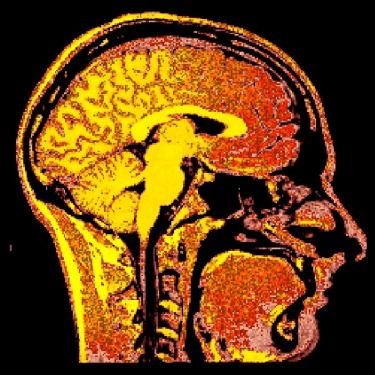
Ashley Huggins serves as Assistant Professor and Clinical Director of the Cognition, Affect, and Traumatic Stress (CATS) Lab in the Department of Psychology at the University of Arizona, where she teaches advanced courses in abnormal psychology and cognitive neuroscience using cutting-edge neuroimaging methodologies. Education B.A., University of Southern California M.S., University of Wisconsin-Milwaukee Ph.D., University of Wisconsin-Milwaukee Clinical Internship in Neuropsychology, Charleston Consortium (Medical University of South Carolina and Charleston VA Medical Center) Research Focus Her work investigates the neurobiological mechanisms of PTSD and anxiety disorders through fear conditioning paradigms and structural/functional MRI , with particular emphasis on brain-based risk factors, resilience in older adults, and socioenvironmental impacts like community violence exposure. She explores critical intersections between cognitive and emotional processes in trauma-exposed populations, utilizing large-scale multi-site collaborations to identify neural biomarkers. Publication Trends Recent publications (2024-2025) demonstrate heavy involvement with the ENIGMA-PGC PTSD consortium, featuring mega-analyses of cerebellar volume reductions, resting-state connectivity disruptions, and differential effects of childhood trauma subtypes. Her work consistently applies data-driven computational approaches to neuroimaging data, revealing how neighborhood disadvantage, threat exposure, and social support modulate neural fear circuits and PTSD symptomatology across diverse populations. Laboratory Leadership As director of the CATS Lab, she oversees research examining neural substrates of traumatic stress through high-resolution fMRI (including 7T studies), fear generalization experiments, and longitudinal assessments of trauma recovery, with direct clinical applications for PTSD treatment development.