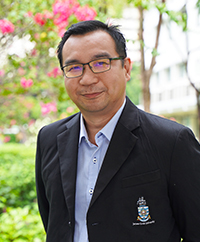
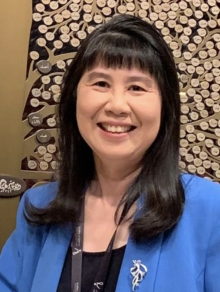
Jyh-An Lee is a Professor and founding Executive Director of the Centre for Legal Innovation and Digital Society (CLINDS) at The Chinese University of Hong Kong (CUHK) Faculty of Law. He leads the New Ventures Legal Team (NVLT) and holds advisory roles at institutions like the European Center for E-Commerce & Internet Law and National University of Singapore. Education : JSD (Stanford), LLM (Harvard), MBA & LLB (National Taiwan University) Admissions : Practicing lawyer in Taiwan His research interests focus on Intellectual Property , AI and the Law , Law & Digital Technology , and Asian Law . He has contributed to landmark studies on NFTs, metaverse legal frameworks, cybersecurity, and IP litigation in Asia. The scientific awards he has received include: CUHK PhD IMPAC Award (2024-25) CUHK Vice-Chancellor’s Exemplary Teaching Award (2023, 2019) CUHK Outstanding Research Impact Award (2022-23) Numerous other university and faculty-level honors His work has been cited by major international courts and agencies. He is also a TRAIL Academic Fellow and active in policy advisory roles for Creative Commons and IP offices in Taiwan and Hong Kong.
Subodha Kumar is the Paul R. Anderson Distinguished Chair Professor of Statistics, Operations, and Data Science at Temple University’s Fox School of Business. He serves as the Founding Director of the Center for Business Analytics and Disruptive Technologies and has a secondary appointment in Information Systems. His roles include Ph.D. Program Concentration Director for Operations and Supply Chain Management. With over 240 publications, he ranks #1 globally in Information Systems Research publishing and holds a robotics patent. His research focuses on AI, blockchain, healthcare analytics, and cybersecurity, with notable contributions to digital transformation and operations management. Awards include the INFORMS ISS Distinguished Fellow and POMS Fellow. He advises major journals like Production and Operations Management and organizes conferences like POMS 2018. Media mentions span NYT, WSJ, and CBS. Education: University of Washington faculty Texas A&M University faculty Research Interests: Dr. Kumar explores AI applications, blockchain in fintech, healthcare system optimization, and supply chain analytics. He investigates cybersecurity’s operational impacts and data mining strategies. His work bridges theory and practice, addressing challenges in digital transformation and platform economies. Publications Trends: Recent work emphasizes digital platforms (e.g., blockchain adoption, telemedicine impact), organizational behavior (real-time feedback systems), and healthcare operations (personalized treatment algorithms). He frequently collaborates internationally, with studies appearing in Management Science, Information Systems Research, and Decision Sciences. Awards & Recognition: Changjiang Scholars Chair (China) ISB Visiting Professorship POMS Executive Editor Grants & Labs: Secured NIH grants for health analytics projects. Leads Temple’s analytics center fostering industry partnerships. Active in editorial roles (e.g., Production and Operations Management Journal Deputy Editor). Teaching: Offers courses in data science, optimization methods, and innovation entrepreneurship at graduate/undergraduate levels.
Ira Kemelmacher-Shlizerman is a Full Professor of Computer Science at the Paul G. Allen School of Computer Science & Engineering at the University of Washington and Director of the UW Reality Lab. She also serves as a Principal Scientist at Google, where she leads the Shopping Gen AI visuals teams focusing on Virtual Try-On, 3D, and product videos. Her research spans computer vision, computer graphics, and Generative AI, with particular contributions to virtual try-on technology, 3D modeling, and augmented reality applications. Professor Kemelmacher-Shlizerman's research interests focus on Generative AI applications in visual computing. Her work bridges the gap between theoretical computer vision and practical applications, particularly in e-commerce and virtual reality. She has made significant contributions to virtual try-on technology, 3D editing with generative models, and AI applications for shopping experiences. Her research combines deep learning with traditional computer vision techniques to solve challenging problems in image and video synthesis. Her recent publications demonstrate a strong trend toward Generative AI applications for visual shopping experiences, virtual try-on technology, and 3D content creation. The work spans multiple top conferences including CVPR, SIGGRAPH, and ICCV, with a focus on practical applications of computer vision and graphics. Her research has evolved from foundational work in face reconstruction and aging to current applications in virtual shopping and 3D content generation. Google faculty award Madrona prize GeekWire Innovation of the Year Award Covers of CACM and SIGGRAPH Best student paper honorable mention at CVPR'21 Best demo runner up MobiSys'22 Senior member of IEEE Distinguished Member of ACM Professor Kemelmacher-Shlizerman has successfully tech-transferred multiple research projects to industry. She founded Dreambit, a startup acquired by Meta, and previously built and launched the Face Movies feature at Google. She currently leads Google's Shopping Gen AI visuals teams, focusing on 10x improvements to shopping journeys. Her UW Reality Lab serves as a hub for AR/VR research with industry partnerships. She has mentored numerous PhD students who have become researchers in both academia and industry, with several publications featuring student co-authors receiving recognition at top conferences. Professor Kemelmacher-Shlizerman leads the Graphics and Imaging Laboratory (GRAIL) and the UW Reality Lab, which focuses on augmented and virtual reality research with industry partnerships including Google. The labs work on cutting-edge projects in virtual try-on, 3D modeling, and immersive experiences, bridging academic research with real-world applications.
Natalie T. Wood, PhD (Auburn University, 2002), is a Professor of Marketing and Associate Dean at Saint Joseph’s University’s Haub School of Business. Her expertise spans consumer behavior and social media marketing, with a focus on digital engagement and virtual environments. PhD, Auburn University (2002) GradDip in Marketing, Edith Cowan University (1999) BBus in Marketing, Edith Cowan University (1996) Her research explores social media’s influence on consumer trends, political marketing, themed hospitality authenticity, and virtual education. Key journals include Journal of Consumer Behaviour and Business Horizons . Recent publications analyze microblogging’s role in customer service and brand promotion. Notable awards: Saint Joseph’s University Faculty Merit Award for Teaching (2013) and Research (2007). Grants from Arrupe Center (2019) and Direct Selling Education Foundation (2010-2011) highlight her funded work. Professional roles include Assistant Director, Center for Consumer Research (2007-2011).
Jun Hwa (Jacky) Cheah is an Associate Professor in Marketing at the Norwich Business School, University of East Anglia (UEA), a position he has held since February 2023. Before joining UEA, he served as a Senior Lecturer at Universiti Putra Malaysia and Universiti Teknologi Malaysia in Malaysia. He holds a PhD in Business Economics and an MBA in International Business from Universiti Putra Malaysia, along with a Bachelor of Management in Marketing from Universiti Malaysia Terengganu. His research focuses on digital marketing, technology marketing, consumer behavior, data analytics, and statistical modeling. He has published extensively in top journals such as the Journal of Business Research , European Journal of Marketing , and Psychology & Marketing . He currently serves as a Guest Editor, Associate Editor, and Editorial Board member for multiple academic journals. Dr. Cheah has received several accolades, including the Emerald Young Researcher Award (2021) and a Young Researcher Award from his former university. He has supervised PhD students, one of whom successfully completed their doctoral program. He is actively engaged in PhD supervision and collaborative research, with a strong emphasis on advancing quantitative methodologies and addressing contemporary marketing challenges.
Dr. Omkar Prabhakar Dastane is a Senior Lecturer and Director of Postgraduate Studies at the Malaysia School of Business, Monash University Malaysia. He holds a PhD in Business from Curtin University and certifications including Certified Management and Business Educator (CMBE) from CABS, UK, and HRDF-approved trainer status in Malaysia. His research focuses on technological impacts on businesses, digital consumer behavior, and customer value perception, with publications in A-ranked journals like the Journal of Retailing and Consumer Services and Asia Pacific Journal of Marketing & Logistics . He has secured MYR 157,549 in research grants and received notable awards like the Best Paper Awards (2017/2018) and Emerald Literati Award (2024). Dr. Dastane has held leadership roles including Head of MBA Programs and Head of Postgraduate Studies at top-tier institutions. He actively contributes to editorial roles for journals like Arab Gulf Journal of Scientific Research and reviews for SSCI/SCIE-indexed publications. His teaching emphasizes strategic branding and services marketing, integrating AR/VR tools for immersive learning. He has also led educational visits across ASEAN countries. His research interests span metaverse applications in business, immersive technologies, and contemporary consumer behavior trends. Recent work explores AI-driven services, live-stream commerce, and digital transformation's role in achieving UN SDGs. He has advised on over 200 research projects and secured multiple teaching grants including the 2025 Learning & Teaching Grant.
Katy Börner is a Professor affiliated with Indiana University, Bloomington, USA. Her research focuses on data visualization, scientometrics, and the science of science, with contributions to tools like Network Workbench (NWB) and Sci2. She leads interdisciplinary projects such as the Human Reference Atlas and explores visualization literacy in education and public health. Her work spans virtual reality applications, biomedical knowledge networks, and AI-driven scientific discovery. Key research interests include mapping scientific collaboration networks, analyzing scholarly publications, and developing visualization frameworks for big data. She collaborates widely with institutions like NIH and VIVO, advancing open science and interdisciplinary research. Her projects often bridge computational methods with human-centric design, enhancing understanding of complex systems in health, technology, and social sciences. Publications highlight innovations in interactive visualization tools (e.g., opioid crisis research networks), data integration (Human Reference Atlas), and AI applications in biomedical research. She emphasizes translating data into actionable insights through visual analytics, impacting policy, education, and healthcare.
Dr. Yu-Ting Lin is a Senior Lecturer and Postgraduate Research Coordinator at the School of Marketing, The University of New South Wales (UNSW) . With a PhD in Marketing from Imperial College London , an MS in Management Information Systems from National Chengchi University , and a BBA in Management Information Systems from National Chiayi University , she bridges human-computer interaction and digital marketing through innovative research. Education: BBA, National Chiayi University MS, National Chengchi University PhD, Imperial College London Her research focuses on the intersection of digital technology and consumer behavior , particularly in emotional ad design , immersive media , and real-time marketing . She also explores mHealth applications for behavioral change. Dr. Lin’s work spans Journal of Marketing , Journal of Service Research , and other high-impact venues. Her recent Google Scholar publications highlight themes in branding psychology , digital interventions , and user experience analytics . Scientific Awards: 2024 ANZMAC Best Paper in Track Artificial Intelligence and Innovation 2024 Research Impact Award, UNSW Business School 2024 Research Supervisor Award, UNSW 2022 Dean's Research Fellowship, UNSW Business School 2021 Research Excellence Award – Early Career Researcher, UNSW Business School 2021 AMA TechSIG Lazaridis Prize for Best Paper on Marketing Innovation 2020 Finalist MSI Paul Root Award 2019 Technologies Incubation Scholarship, MOE (Taiwan) 2018 Case Centre Fellowship, Imperial College Business School 2017 Tutorial Fellowship, Imperial College Business School Dr. Lin’s grants include over AUD 400,000 in funding from ARC Discovery Projects , Australian Marketing Institute , and Taiwanese Overseas Pioneers Grant . She contributes to the Media Engagement and Analytics Lab (MEAL) at UNSW Business School.
Dr. Dahlia El-Manstrly is an Associate Professor (Senior Lecturer) in Marketing and Director of Research for the Marketing and Creative & Cultural Industries (MCCI) group at the University of Sheffield Management School. She previously served as Co-Director of the Center for Service Excellence at the University of Edinburgh. Her expertise spans services marketing, with a focus on service recovery, customer loyalty, and international marketing. Education: BSc (First Class Honours) MSc (Huddersfield University) MRes PhD (Glasgow University) AHEA (Advanced HE Academy) Research Interests: Service Recovery and Complaint Management Customer Loyalty and Satisfaction International Marketing in Services Transformative Services and Well-being Tourism Services and Online Travel Communities Awards and Recognition: Highly Recommended Paper Award (AMA SERVSIG, 2014) Three Teaching Excellence Awards (University of Edinburgh) Grants and Supervision: Supervises PhD students on topics like sustainability in fashion and elderly adoption of self-service technology. Recipient of grants including the British Academy Quantitative Skills Award and ESRC Seminar Series funding. Labs/Teams: Leads the MCCI research group at the University of Sheffield Management School.
Dr. Tan Kim Lim is a Senior Lecturer at the James Cook University (Singapore Campus), specializing in organizational psychology and consumer behavior. He holds a PhD from Curtin University (2016–2019), an MBA from the University of Melbourne (2004–2006), and a Bachelor of Business from Monash University (1999–2002). His research focuses on the future of work, employee attitudes, technology adoption in hospitality/tourism, and consumer behavior analysis. He employs advanced methodologies like PLS-SEM and has published over 47 articles in top journals like the European Business Review and Asia Pacific Journal of Marketing and Logistics . Dr. Lim has held roles including Assistant Professor at BNU-HKBU United International College (2020–2022) and Post-doctoral researcher at the Human Capital Leadership Institute (2019–2021). He currently serves on editorial boards of the Journal of Responsible Tourism Management and Journal of Global Responsibilities , and is a member of the Singapore Human Resource Institute and Society of Industrial-Organizational Psychology. His applied research spans commissioned projects for governments and private entities, including studies on waste classification behavior, country music festivals, and AI adoption in social services. Awards include the JCUS Early Career Researcher Award (2023) and Emerald Literati Reviewer Award (2022). Dr. Lim also actively speaks at regional conferences on topics like AI in networking and post-pandemic workplace trends. His current research interests include STARA (Smart Technologies, AI, Robotics, Algorithms) impacts on work, meaningful work dynamics, and tourism behavior analysis. He supervises PhD students exploring AI in social services, indigenous tourism, and workplace technology adoption.
Greg W. Marshall serves as the Charles Harwood Professor of Marketing and Strategy at Rollins College, with an extensive publication record cited over 11,600 times. His academic career spans more than two decades with continued scholarly output through 2020. Dr. Marshall's research focuses primarily on sales force management, workplace isolation among field sales professionals, and the impact of technological advancements on selling environments. His work examines critical issues such as sales strategy development, organizational commitment among salespeople, and the evolution of traditional sales methodologies in digital contexts. He has made significant contributions to understanding how virtual work arrangements affect sales performance and employee engagement. His publication trends reveal a consistent focus on sales management with increasing attention to technology's role in selling processes. Early work examined foundational sales concepts like the seven steps of selling, while more recent research investigates social media's impact on sales environments and the psychological effects of workplace isolation in virtual sales teams. Co-author of the 13th edition of Sales Force Management (2020), considered a contemporary classic in the field Extensive research on workplace isolation and its effects on sales performance Pioneering work on technology adoption in sales force environments Marshall has collaborated extensively with leading scholars in sales research including Mark Johnston, William Moncrief, and Juan Pablo Mulki. His research has practical implications for sales organizations navigating digital transformation and virtual work arrangements, with applications across multiple industries that rely on field sales forces.
Dr. Mary Lacity is a Distinguished Professor of Information Systems at the Sam M. Walton College of Business, University of Arkansas, and holds the David D. Glass Endowed Chair. She is also a Visiting Professor at the London School of Economics for Spring 2025. Director of Walton College’s Blockchain Center of Excellence (2014-2019) Former Curators’ Distinguished Professor at University of Missouri Holds visiting positions at MIT, Washington University, and Oxford University Senior Editor for MIS Quarterly Executive Contributing Editor for Journal of the British Blockchain Association Her research focuses on enterprise adoption of emerging technologies, particularly blockchain, metaverse, service automation, and ethical technology use. She has conducted extensive case studies and surveys on automation and Web3 implementation across hundreds of organizations globally. Recent publications include books like Human Privacy in Virtual and Physical Worlds (2024) and Blockchain Fundamentals for the Web 3.0 (2022). She has over 30 books and 26,300 Google Scholar citations (h-index: 68). 2014: Inducted into IAOP’s Outsourcing Hall of Fame 2024: Recognized as top 2% scholar in Business and Management (Stanford) 2024: Top 1% scholar in Business and Management (ScholarGPS) Fellow of the Association of Information Systems She actively contributes to blockchain standards via the Global Standards Mapping Initiative (GSMI) of the Global Blockchain Business Council and the Linux Foundation’s Trust over IP (ToIP). Her work bridges academic research and practical applications in enterprise technology adoption.
Ming Lin is a Distinguished University Professor at the University of Maryland, College Park, holding joint appointments in Computer Science (Department of Computer Science), the Institute for Advanced Computer Studies (UMIACS), Electrical and Computer Engineering (ECE), and the Maryland Robotics Center. She holds the Dr. Barry Mersky and Capital One E-Nnovate Endowed Professorships. Her research focuses on physically-based modeling, virtual environments, haptics, robotics, and AI applications in healthcare and urban computing. Education: Ph.D., M.S., and B.S. in Electrical Engineering & Computer Sciences from UC Berkeley. She previously spent 20 years at UNC Chapel Hill before joining UMD in 2018. Research interests include collision detection algorithms (e.g., Lin-Canny algorithm), real-time physics simulation, virtual/augmented reality systems, and medical imaging applications. Her work has led to over 2 million downloads of her group's software tools and licenses with 60+ companies. Notable contributions include the Oculus Rift-related VR technologies and Amazon's virtual try-on system. Awards: IEEE Fellow (2012), ACM Fellow (2011), NAI Fellow (2022), and Washington Academy of Sciences Distinguished Career Award (2020). Active in professional service, she serves on the CRA Board and chairs the Committee on Widening Participation in Computing Research. Advising: Supervises 12+ PhD/Master's students. Her lab (GAMMA Group) focuses on AI-driven robotics, autonomous systems, and physically-based simulations. Key projects include traffic simulation frameworks, medical VR applications, and 3D garment modeling.
Dr. Tatsuya Mori is a Professor at the Department of Computer Science and Communication Engineering , Faculty of Science and Engineering, Waseda University . He also holds visiting researcher positions at RIKEN Center for Advanced Intelligence Project (since 2018) and National Institute of Information and Communications Technology (since 2019). Education: Ph.D. in Information Science (2005), Waseda University Research Interests: Spanning information security and privacy across emerging technologies like autonomous driving , AI , 3D sensing , VR , biometric measurement , and Web3 . His work focuses on offensive security and interdisciplinary research , including physical-layer attacks on sensors and behavioral studies on phishing detection. Scientific Awards: Recipient of multiple prestigious awards, including the Distinguished Paper Award Runners-Up at IEEE EuroS&P 2024 , IPSJ Outstanding Paper Award 2024 , and CSS2024 Concept Research Prize . His research has been recognized in top conferences like USENIX Security , NDSS , and ACM CCS . Professional Leadership: Active in academic governance as Chief Investigator for NISC Working Groups and Committee Member for JST Research Areas . He serves on program committees for NDSS , IMC , and ACM CCS .
Professor Markus Helfert is a leading academic in Digital Service Innovation and Digital Transformation at Maynooth University's School of Business . He serves as Director of the Innovation Value Institute , Hub for Data and Digital Research, and holds Science Foundation Ireland Principal Investigator roles at Lero – The Irish Software Research Centre and Adapt Research Centre. His research spans Service Innovation , Artificial Intelligence , Intelligent Transportation Systems , FinTech , and Enterprise Architecture , with active involvement in European Standardisation initiatives.