- Machine Learning
- Data Mining
- Distributed Computing
- +۶ مورد دیگر
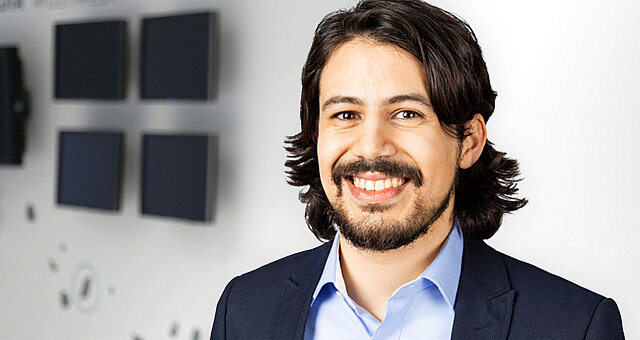
Giuseppe Di Fatta is a Professor in the Department of Mathematics and Computer Science at the University of Salerno, Italy. With an extensive publication record spanning from 1998 to 2025, he has established himself as a leading researcher in multiple areas of computer science. His academic journey began with a PhD from the University of Palermo in 2003, focusing on active solutions in computer networking, which laid the foundation for his diverse research career. Di Fatta's research interests span a broad spectrum of computer science disciplines, with particular expertise in Machine Learning, Data Mining, and Distributed Computing. His work bridges theoretical foundations with practical applications, especially in Bioinformatics and Healthcare Informatics where he has made significant contributions to Alzheimer's disease prediction through advanced machine learning techniques. He has also pioneered research in Edge Computing and IoT systems, addressing critical challenges in distributed data processing for resource-constrained environments. His recent publications demonstrate a strong focus on deep learning applications, particularly in addressing class imbalance problems and multi-task learning frameworks. His publication trends reveal a strategic evolution from foundational work in network protocols and distributed systems toward increasingly sophisticated machine learning applications in healthcare and other domains. The last five years show a pronounced emphasis on medical applications, particularly Alzheimer's disease prediction, where he has developed innovative feature selection and transfer learning approaches. His research demonstrates strong interdisciplinary collaboration, working with medical researchers, data scientists, and domain experts across various fields. Di Fatta has served as editor for major conferences including the IEEE ICDM Workshops and Internet and Distributed Computing Systems (IDCS) conference series, demonstrating his leadership in the academic community. His editorial contributions span multiple conference proceedings published by Springer in the Lecture Notes in Computer Science series. His research has been consistently funded through collaborative projects that bridge academia and practical applications. Notably, the 5VREAL Project demonstrates his work translating computer vision research into sports analytics applications. His research methodology often combines theoretical rigor with practical implementation, addressing real-world challenges in data-intensive domains while contributing to the theoretical foundations of machine learning and distributed computing.