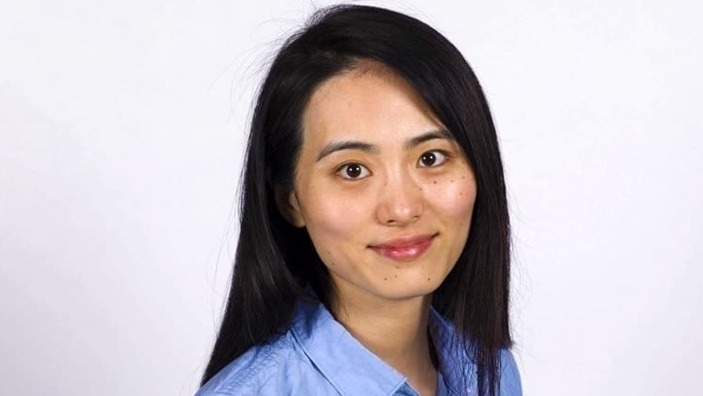
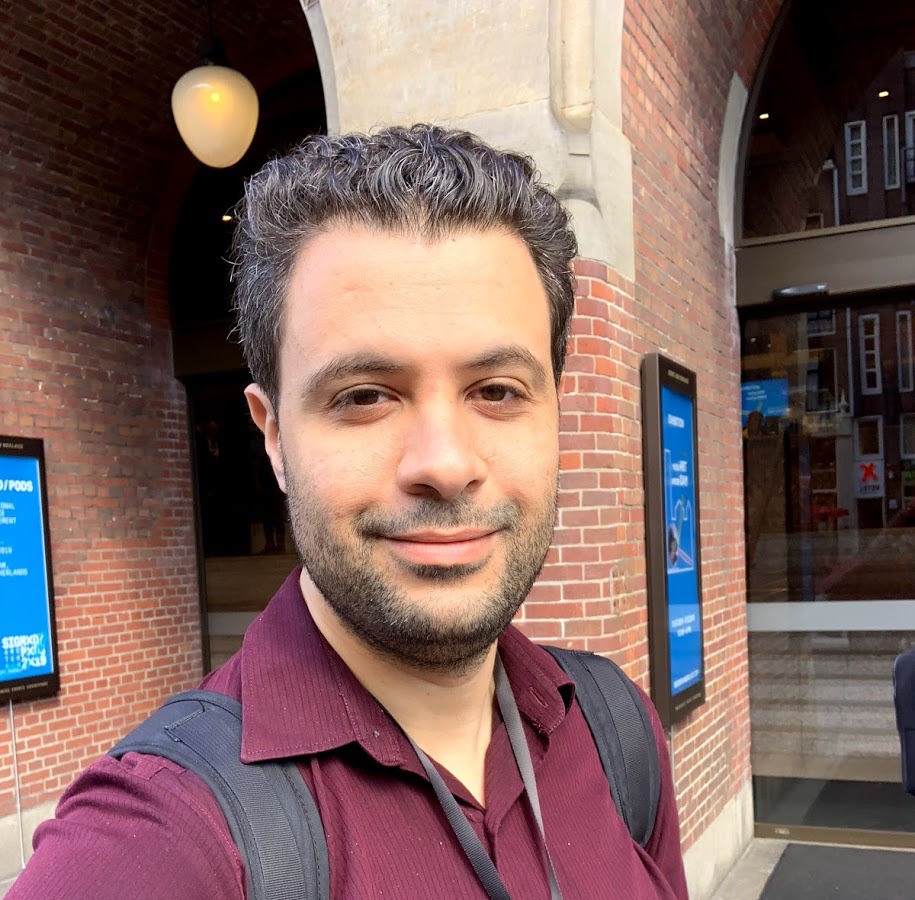
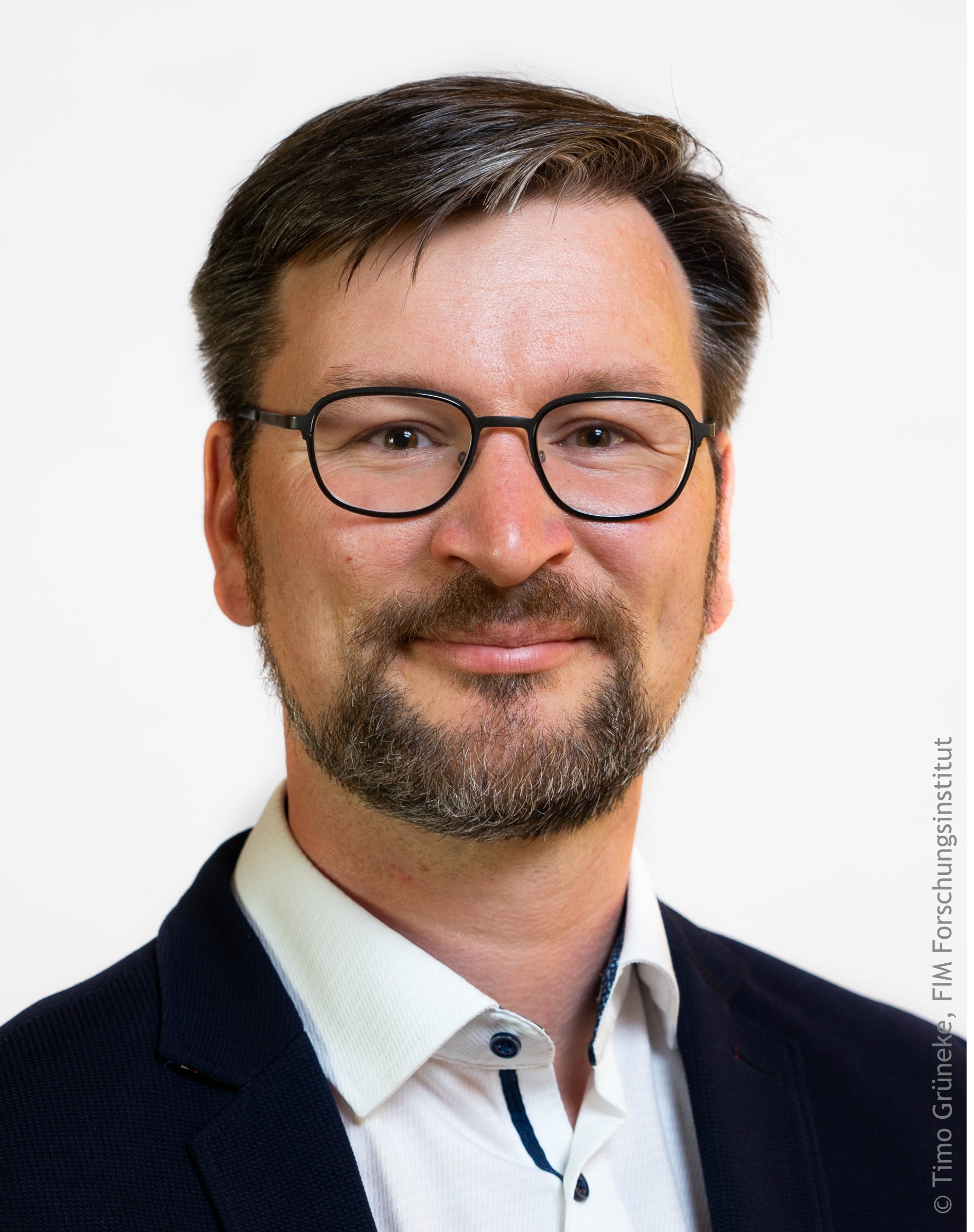
Dr. James Bowden is a Senior Lecturer in Accounting and Finance at the University of Strathclyde Business School, specializing in financial technology (fintech), unstructured data analysis, and regulatory technology. He co-directs the MSc Financial Technology program and teaches modules such as Corporate Financing and Fintech Innovations. His research focuses on AI applications in finance, including sentiment analysis of corporate earnings calls, fairness in algorithmic lending, and ESG reporting transparency. He collaborates with the Financial Regulation Innovation Lab (FRIL), producing industry-relevant white papers on financial regulation. Bowden supervises three doctoral students and serves as an external examiner at Newcastle University and the University of West London. Education includes a PhD in Accounting and Finance from the University of Dundee, MSc in Investment Analysis from the University of Stirling, and a PG Cert in Learning and Teaching in Higher Education. His professional roles prior to academia included Senior Stock Research Analyst at Russell Investments and Knowledge Transfer Associate at Bangor University. Bowden’s research interests span fintech, AI-driven solutions for financial regulation, and sustainable finance. He has contributed to peer-reviewed journals like European Journal of Finance and Journal of International Financial Markets , and his commentary appears in The Conversation UK and World Economic Forum . He has been shortlisted twice for the Strathclyde Teaching Excellence Awards for his innovative pedagogy. Current projects include the Fintech Centre of Innovation in Financial Regulation (Glasgow City Region) and collaborative initiatives on satellite data for sustainability. His external engagements include advisory roles on fintech ethics and regulatory technology.
Naeem Janjua is a Senior Lecturer at Flinders University and an Adjunct Senior Lecturer at Edith Cowan University. He specializes in AI, Deep Learning, Semantic Web technologies, and Knowledge Graphs, with a focus on real-world applications in logistics, healthcare, and IoT systems. His research emphasizes causal relationships in data and event-centric AI decision-making. He holds a PhD from Curtin University's School of Information Systems (2013), recognized as an outstanding thesis. His interdisciplinary work includes frameworks for unstructured data structuring into semantic-rich knowledge graphs, enhancing AI applications like recommendation systems. Recent projects explore causal inference in real-time event analysis. He has secured significant grants, including an AUD 1.75M Australian Research Council (ARC) Linkage Grant for green logistics via Cyber-Physical Systems (2016–2020) and AUD 150K from Cinglevue Pty Ltd for knowledge graph-based educational tools (2020–2024). Dr. Janjua has advised four PhD students, including notable works on SLA management, stochastic software modeling, and medical image analysis. He is a Course Coordinator for the BIT Program and teaches software systems, testing, and quality assurance courses. His professional recognition includes IEEE Senior Member status and Australian Computing Society certification. Research interests span AI ethics, causal ML, and decision support systems, with over 700 citations and an h-index of 13. Collaborations include global institutions and industry partners like Cinglevue Pty Ltd.
Lisa Posch, a Research Fellow at the Institute of Human-Centred Computing at Graz University of Technology, focuses on digital thinking pedagogy, crowdsourcing mechanics, and social media analytics. Her work bridges computational methods with sociotechnical systems. Education: Dipl.-Ing. (Master of Science), Dr.techn. (Doctorate in Technical Sciences), BSc Her research spans Human-Centered Computing , Natural Language Processing , and Digital Humanities , with publications on crowdworker motivation, social media monitoring, and metadata modeling. She has contributed to advancements in probabilistic ontology mapping and multilingual topic modeling. Her recent publications (2013-2023) demonstrate expertise in social media analytics , digital labor dynamics , and semantic data systems . She actively engages in educational initiatives through the Teaching Digital Thinking Project (TDT).
Dr. Shasha Lu is an Associate Professor in Marketing at the Cambridge Judge Business School , University of Cambridge. Her research focuses on artificial empathy , digital marketing , and unstructured data analytics in business contexts, leveraging advanced machine learning techniques to enhance customer insights and business practices. Key research areas include: Development of AV analytics frameworks for understanding consumer behavior Creative privacy-preserving visual technologies like the contour-as-face method Innovative garment recommendation systems using video analytics Her work intersects marketing strategy with AI applications , addressing challenges in modern data-rich business environments . Contact: s.lu@jbs.cam.ac.uk | Phone: +44 (0)1223 748823
Tatiana Tommasi is an Associate Professor at the Department of Control and Computer Science (DAUIN) at Polytechnic University of Turin, actively contributing to advanced AI research and education. She serves as Deputy Coordinator of the National Doctoral College in Artificial Intelligence and Scientific Advisor for the European AI, Data, and Robotics Association (ADRA) and ELLIS Network. Her affiliations include the SmartData@PoliTO Laboratory and VANDAL Visual and Multimodal Applied Learning Laboratory. Her research focuses on algorithm fairness, computer vision, domain adaptation, autonomous driving, and robot learning. Recent work includes improving neural network reliability through fault-aware design, 3D semantic novelty detection, and visual relationship reasoning for robotic grasp planning. She has contributed to European research projects like ELSA (Secure and Safe AI) and commercial initiatives in space technologies and autonomous vehicle uncertainty quantification. Selected 2024-2025 publications demonstrate expertise in foundation models, fairness metrics, uncertainty estimation, and geometric deep learning. Her team leads commercial research projects on industrial robotics trajectory generation and satellite data analysis. She teaches core courses in Computer Engineering, Automotive Engineering, and Data Science, mentoring PhD students in Artificial Intelligence and Computer Systems Engineering. Research keywords: Artificial Intelligence, Machine Learning, Computer Vision, Domain Adaptation, Robot Learning, Transfer Learning, Fairness in AI, Uncertainty Quantification, Autonomous Driving, 3D Point Cloud Analysis, Vision Transformers, Industrial Robotics.
Bogdan Vrusias is a Visiting Professor at the University of Surrey's School of Computer Science and Electronic Engineering (part-time). He concurrently serves as Global Head of AI and Data Engineering at The Economist. His academic journey began at Surrey as an undergraduate (BSc Computing and Information Technology, 1998), followed by a PhD in multi-modal information retrieval (2004) and an MBA (2010). He is a Fellow of the Higher Education Academy (FHEA). Education: PhD, University of Surrey (2004) MBA, University of Surrey (2010) BSc Computing and Information Technology, University of Surrey (1998) His research spans Generative AI, Large Language Models, Foundation Models, Machine Learning, Deep Learning, Cloud Computing, Natural Language Processing, and Computer Vision . His work focuses on developing scalable AI architectures and semantic technologies for real-world applications. Publications consistently explore semantic systems, neural networks, and multimodal information retrieval . Recent articles emphasize video annotation frameworks and P2P network architectures, while earlier work established foundations in self-organizing maps and feature selection for high-dimensional data. Awards: FHEA (Fellow of the Higher Education Academy) He previously directed UG/PG programs at Surrey and created pioneering courses like Web Hacking Countermeasures. His industry leadership includes founding tech startups and heading Amazon Web Services' AI/ML Specialist Solutions Architects team for EMEA. At The Economist, he drives AI and data transformation.
Anoop Mayampurath is an Assistant Professor at the University of Wisconsin–Madison, affiliated with the Division of Pulmonary Medicine in the Department of Medicine, School of Medicine and Public Health. He co-leads the ICU Data Science Lab with Drs. Churpek and Afshar, focusing on developing machine learning models to predict clinical outcomes using electronic health record (EHR) data, including structured, unstructured, and imaging data. His research emphasizes explainable AI for pediatric critical care and addressing healthcare disparities through predictive analytics. Key research interests include: Prediction of critical illness outcomes in hospitalized patients (e.g., substance misuse, postoperative complications) Integration of multimodal data (text, imaging, vital signs) for clinical decision support Development of pediatric early warning systems using machine learning Evaluation of bias in clinical documentation and AI-generated language His work spans applications in critical care, oncology, and public health, with a focus on translational research to improve patient outcomes. Notable contributions include models predicting postoperative venous thromboembolism and overdose fatality review tools. Dr. Mayampurath collaborates across disciplines to address gaps in healthcare data science and clinical informatics. Advising and grants: While specific grant details are not listed, his lab’s projects suggest involvement in NIH-funded initiatives and collaborative industry partnerships. His team’s work is published in high-impact journals and presented at major medical informatics conferences. Labs/Teams: Primary affiliation with the ICU Data Science Lab , contributing to the Pediatric Acute Lung Injury and Sepsis Investigators Network (PALISI), and collaborations with UW-Madison’s Department of Biostatistics and Medical Informatics.
Prof. Dr. Christian Hänig is a Professor at the Department of Computer Science and Languages and a Temporary Lecturer at the Department of Electrical Engineering, Mechanical Engineering and Industrial Engineering at Anhalt University of Applied Sciences. He advises the Data Science (Full-Time Program) Master of Science degree and teaches courses such as Artificial Intelligence, Data Mining, and Deep Learning. His research focuses on Machine Learning, Deep Learning, Natural Language Processing (NLP), Computer Vision, Medical Imaging, Multimodal Document Processing, and Data Science. Recent work emphasizes applications in financial domains (e.g., German financial language models and corpus development) and agricultural sector benchmarking. Earlier research includes VR education analytics, unsupervised NLP techniques, and knowledge extraction from unstructured data. Key publications (2024) include developing benchmarks for Ukrainian language models, evaluating agricultural LLMs, and creating financial domain corpora. His contributions span over 20 years, addressing challenges in domain-specific NLP, clinical text mining, and industrial quality analysis. Prof. Hänig’s academic service includes roles as a degree program advisor and committee member. Office hours are Thursdays 4:30–6:00 PM (by appointment) at the Ratke Building, Room 23-114, Köthen campus.
Professor Gianluca Demartini is a Professor in Data Science and an ARC Future Fellow at the School of Electrical Engineering and Computer Science, Faculty of Engineering, Architecture and Information Technology at the University of Queensland, Australia. He also serves as an affiliate of the Centre for Enterprise AI. His research focuses on human-in-the-loop artificial intelligence systems with applications for public good, bridging structured knowledge graphs and unstructured text analytics to address societal challenges. Dr. Demartini earned his Ph.D. in Computer Science from Leibniz University of Hannover in Germany in 2011, with a focus on Semantic Search. His academic journey includes positions as a Lecturer at the University of Sheffield (UK), post-doctoral researcher at the eXascale Infolab at the University of Fribourg (Switzerland), visiting researcher at UC Berkeley, junior researcher at the L3S Research Center (Germany), and intern at Yahoo! Research (Spain). His research interests span four major interconnected domains: Misinformation (studying human interaction with misinformation and AI-based mitigation strategies), Crowdsourcing and Human Computation (improving efficiency of human-in-the-loop systems), Big Data Analytics (designing scalable algorithms for large datasets), and AI for Public Good (applying AI for societal and environmental benefits). His work consistently addresses real-world challenges in information quality, human-AI collaboration, and ethical technology deployment. Analysis of Professor Demartini's recent publications reveals a clear trajectory toward addressing misinformation through sophisticated human-AI collaboration frameworks, with increasing emphasis on cognitive aspects of fact-checking, data bias management, and strategic application of large language models. His research bridges theoretical advances in information retrieval with practical applications for societal challenges, particularly in media literacy, online safety, democratic discourse, and environmental conservation. Professor Demartini has received numerous prestigious awards recognizing the quality and impact of his work: Best Paper Award at ACM SIGIR International Conference on the Theory of Information Retrieval (ICTIR) in 2023 Best Paper Award at AAAI Conference on Human Computation and Crowdsourcing (HCOMP) in 2018 Best Paper Awards at European Conference on Information Retrieval (ECIR) in 2016 and 2020 Best Demo award at International Semantic Web Conference (ISWC) in 2011 Honorable Mention Award at CSCW 2020 (Top 2% of submissions) As an active supervisor, Professor Demartini currently guides PhD students working on cutting-edge topics including Retrieval Augmented Generation, Human-in-the-Loop Decision Systems for Online Safety, Human-Centred Artificial Intelligence for Democracy, and Bias in Data Pipelines. His research program is generously funded through multiple major grants: ARC Future Fellowships (2025-2028): PBIAS - A Principled Approach to Data Bias Management Swiss National Science Foundation (2022-2025): Large-Scale Political Participation: Issue Identification, Deliberation, and Co-creation ARC Training Centre for Information Resilience (2021-2026) Previous funding from Wikimedia Foundation, Meta, Google, and Facebook for projects on misinformation detection and human-AI collaboration Professor Demartini's work sits at the critical intersection of human computation, information retrieval, and AI ethics. Through extensive collaborations with industry partners including Facebook, Google, Microsoft, Yahoo!, IBM, SAP, and The National Archives (UK), he has developed practical systems that address real-world challenges in misinformation detection, data quality, and human-AI collaboration. His research group actively explores how to make AI systems more transparent, accountable, and beneficial for society through principled human-in-the-loop approaches that leverage both machine intelligence and human expertise.
Stephan Ludwig is a Professor of Marketing at Monash University specializing in marketing communications, digital marketing, and marketing analytics. He holds editorial roles at top journals including the Journal of the Academy of Marketing Science (Co-Editor), Journal of Retailing (Area Editor), and Journal of Marketing (Editorial Review Board). He chairs the Marketing Theory Track at EMAC and previously led the Digital Marketing Track at ANZMAC. His research focuses on communication design, text mining, and consumer behavior, with work published in leading marketing and information systems journals. He collaborates with Fortune 500 companies and startups, and has led programs such as the Digital Marketing Master at University of Melbourne and the Unilever Business Academy. Ludwig’s current research project (2023–2026) explores 'Harnessing Business Insights from Unstructured Customer Data.' His contributions span academic leadership, industry partnerships, and methodological innovation in analyzing unstructured data.
Wen Xie is a Postdoctoral Research Fellow at the Institute for Experiential AI, Northeastern University. Contact: we.xie@northeastern.edu, 360 Huntington Ave, Boston, MA 02115. Research Interests: Focuses on digital marketing strategies, consumer behavior analysis, and machine learning applications in advertising. Specializes in visual attention mechanisms (eye-tracking), advertising congruence effects, and diversity in visual marketing communication. Article Trends: Recent work emphasizes multimodal analysis of ad interruption, social media engagement optimization, and automated detection of skin-tone diversity in marketing content. Leverages big data, machine learning, and empirical studies. Awards: No awards explicitly listed. Advising/Grants: No students or grants mentioned in provided texts. Labs/Teams: Affiliated with Northeastern’s Institute for Experiential AI, focusing on AI-driven marketing solutions.
El Kindi Rezig is an Assistant Professor at the Kahlert School of Computing, University of Utah, specializing in data management and data quality. He holds a Ph.D. in Computer Science from Purdue University, advised by Walid Aref and Mourad Ouzzani. Previously, he was a research scientist/postdoc at MIT CSAIL under Turing Award recipient Michael Stonebraker. His research focuses on automating data science workflows through systems addressing data discovery, preparation, and debugging. Collaborations with Intel and healthcare institutions drive real-world applications. Research interests include scalable data cleaning (e.g., Horizon system), causal explanations for AI (CausalExplain), and visual data wrangling (Buckaroo). Major grants include an NSF-Simons Institute award (PI: Stella Offner) and University of Utah funding. He has advised 8 students (Ph.D., MS, and undergraduate researchers) since 2021. Key awards include Purdue's Raymond Boyce Teaching Excellence Award (2017) and teaching fellowship (2015-2016). Courses taught include Data Management for ML (University of Utah) and Systems Programming at Purdue. He is active in conference service, serving on PC for VLDB 2025, SIGMOD 2025, and KDD 2024. His Erdős number is 3 via a path linking through Michael Stonebraker and Patrick E. O'Neil. Notable systems include Dagger (data debugging), DICE (example-based data discovery), and SeerCuts (explainable discretization). Recent work emphasizes healthcare analytics and heterogeneous data management, as co-editor of a Springer LNCS volume on the topic (2021).
Prof. Dr. Maximilian Röglinger is Chair of Business Informatics and Value-Oriented Process Management at the University of Bayreuth and Managing Director of the FIM Research Institute for Information Management. He is also Deputy Director of the Business Informatics branch at Fraunhofer FIT and previously served as an Adjunct Professor at Queensland University of Technology. He co-directs the Finance & Information Management program with TUM and co-moderates the Master's program in Digitalization & Entrepreneurship. His research spans digital transformation , process mining , AI in business processes , strategic IT management , and digital innovation . He investigates how data-driven methods can enhance process decisions, how digital technologies reshape customer interactions, and how organizations can structure digital transformation initiatives. His work combines theoretical rigor with practical application across industries. His recent publications (2023–2025) reveal a strong focus on generative AI integration in process mining and chatbots, human-AI collaboration in healthcare and logistics, process improvement systems , and digital ecosystems . He explores emerging topics like triadic delegation, explainable AI, and object-centric process mining from text. Scientific recognitions include: Paper of the Year 2019, Electronic Markets Best Associate Editor Award, ECIS 2021 Top 1.5% in BWL-Forschungsranking 2024 Certificate of Outstanding Contribution in Reviewing, European Journal of Information Systems 2023 Röglinger leads numerous publicly funded and industry-applied research projects with partners such as BMW, Siemens, Deutsche Bahn, Allianz, and Celonis. His work is supported by BMBF, ERDF, ERASMUS+, and Bavarian Research Foundation. He has co-founded the Digital Innovation Workshop, Digital Leadership Academy, and Fraunhofer Center for Process Intelligence. He is active in the international research community as Associate Editor of Business & Information Systems Engineering and editorial board member of Electronic Markets and Journal of Strategic Information Systems , and regularly organizes tracks at ECIS and BPM conferences.
Domenec Puig is a Professor at the Department of Computer Science and Mathematics, Rovira i Virgili University, Spain. His research focuses on machine learning, medical imaging, and computer vision, with applications in healthcare and biomedical informatics. He collaborates extensively with researchers in AI-driven medical diagnostics, including fundus image analysis, MRI segmentation, and neonatal birth weight prediction using multimodal data. Key research areas include deep learning architectures for semantic segmentation, generative adversarial networks (GANs), and interpretable AI models. His work bridges theoretical advancements in neural networks with practical solutions for challenges in medical image analysis, such as crack detection in materials, tumor classification, and survival prediction in oncology. Recent publications highlight contributions to transformer-based models, hybrid architectures (e.g., CoAtUNet), and domain adaptation techniques for cross-site generalization in MRI segmentation. His methodologies often emphasize explainability and efficiency in resource-constrained settings.
Carolyn P. Rosé is the Kavčić-Moura Professor of Language Technologies and Human-Computer Interaction at Carnegie Mellon University, affiliated with the Language Technologies Institute and the Human-Computer Interaction Institute. Her research focuses on Sociotechnical Artificial Intelligence, blending computational linguistics, sociolinguistics, and learning sciences to develop AI systems that enhance human communication and learning. She earned her Ph.D. in Language and Information Technologies from CMU and has authored over 300 publications across five fields. Rosé oversees the Master of Computational Data Science program and teaches courses like Applied Machine Learning. She is a Fellow of the International Society of the Learning Sciences and an AAAS Leshner Leadership Fellow. Her research interests include neural representation learning, multimodal multi-agent systems, and computational discourse analysis. Recent work explores AI applications in collaborative learning, code review, and healthcare. She leads the Teledia Lab, fostering interdisciplinary projects in AI ethics, explainability, and societal impact. Rosé actively participates in academic leadership roles, including co-chairing EMNLP 2025 and editing special journal issues on AI in collaborative learning. Awards include recognition in four research domains, with contributions to benchmarks like coreference for dialogue and event ordering datasets. She advises numerous students, many of whom have successfully defended dissertations. Rosé’s professional affiliations include IEEE and the Association for Computational Linguistics, reflecting her influence in both computational and educational AI domains.