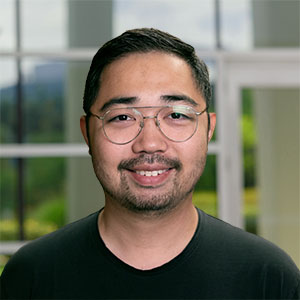
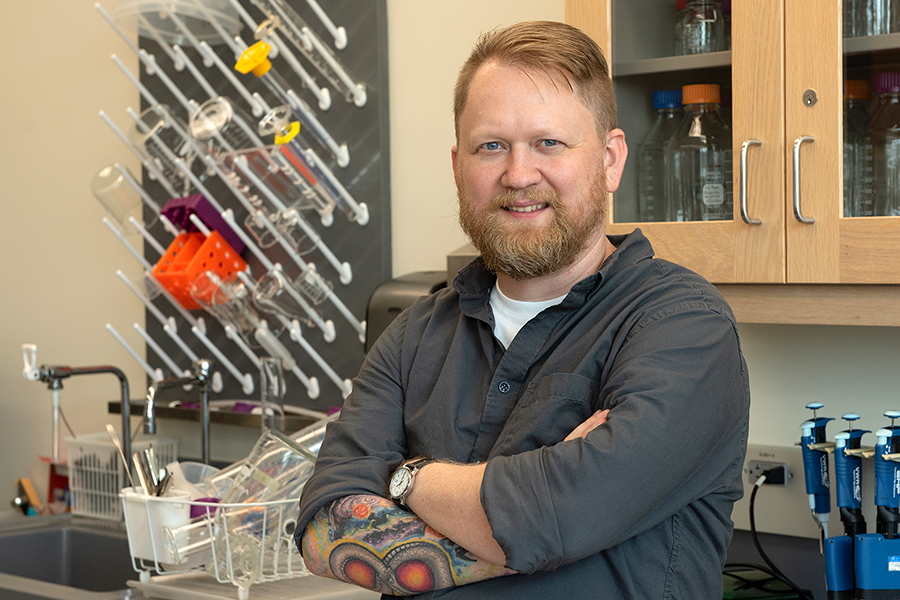
Hayley Newton is a Professor in the Department of Microbiology and Biomedicine Discovery Institute at Monash University. Her research focuses on intracellular bacterial pathogens, particularly Coxiella burnetii, a zoonotic pathogen requiring a One Health approach for study. She completed her PhD on Legionella pneumophila pathogenesis at Monash University and held a NHMRC Training Fellowship for postdoctoral research at Yale University, where she pioneered genetic studies on Coxiella. In 2022, she returned to Monash as part of the Infection Program. Education: PhD in Microbiology (Monash University) NHMRC Training Fellowship (Yale University) Research Interests : Mechanisms of pathogen manipulation of host cells Coxiella burnetii virulence factors and lysosomal biology Host-pathogen interactions in intracellular bacteria Role of autophagy and mitochondrial dynamics in infection Projects : "Cell death at the host-pathogen interface" (2025-2030) "Coxiella pathogenesis and Effector-Effector Interplay" (2023-2024) Awards : NHMRC Training Fellowship Labs/Teams : Infection Program at Monash Biomedicine Discovery Institute
Cecilia Alsmark is a researcher affiliated with Newcastle University , focusing on genomics, parasitology, and horizontal gene transfer in microbial pathogens and eukaryotic parasites. Her work explores evolutionary mechanisms in organisms like Entamoeba histolytica , Trichomonas vaginalis , and trypanosomatids, with a particular interest in lateral gene transfers and their impact on eukaryotic proteomes. Research Interests: Comparative genomics of parasitic protozoa and microbial symbionts Evolutionary dynamics of horizontal gene transfer Genomic deterioration in intracellular pathogens Functional divergence of secretion systems in parasites Key Publications: Spanning 2002–2015, her research includes studies on Rickettsia elements, Bartonella evolution, and protozoan parasite genomes. These works highlight trends in gene acquisition, loss, and adaptation.
Mart Krupovic is a researcher at the Institut Pasteur in Paris, France, where he leads projects in the Department of Cell Biology and Virology of Archaea. He serves as Principal Investigator (PI) for multiple research initiatives, including the ANR-ENVIRA and Emergence(s) MEMREMA projects, focusing on archaeal membrane remodeling and virus egress mechanisms. His research interests include archaeal virology, extracellular vesicles, membrane dynamics, structural biology, and viral evolution . His work leverages advanced techniques such as cryo-electron microscopy (cryo-EM), genomics, and biophysical analysis to study extremophilic archaea and their viruses. Recent publications highlight discoveries in viral capsid malleability, DNA-carrying extracellular vesicles, and the structural evolution of archaeal motility appendages. The trends in his recent publications (2022–2025) reflect a strong emphasis on structural characterization of archaeal systems , particularly viral and surface appendage architectures. His work often bridges evolutionary biology and molecular mechanics, revealing deep homologies between archaeal and bacterial systems, and uncovering novel mechanisms in DNA transfer, membrane remodeling, and virus-host coevolution. Scientific Awards: No awards mentioned in the provided text. Advising and Grants: Dr. Krupovic has supervised or collaborated with several PhD students and postdoctoral researchers, including Emmanuelle Quemin, Sofia Medvedeva, and Miguel Gomez-Raya-Vilanova. He leads externally funded projects such as ANR-ENVIRA, ANR-FunVesi, and the Emergence(s) MEMREMA project, indicating active grant support for his research. Labs and Teams: He is a key member of the 'Evolution & Ecology Moléculaire Microbienne' research group at the Institut Pasteur, specifically within the 'Cell Biology and Virology of Archaea' team. His lab employs interdisciplinary approaches combining virology, structural biology, and microbial genomics to study archaeal systems.
Elisabeth Grohmann is a Professor of Microbiology at the Berlin University of Technology (Department of Life Sciences and Technology) and holds concurrent roles as a Professor and Group Leader in the Department of Infectious Diseases at the University Hospital Freiburg. Her career includes positions such as Visiting Researcher at the University of the Basque Country (Spain) and postdoctoral fellowships in Spain and Austria. She specializes in microbial genetics, conjugative plasmids, antibiotic resistance, and environmental microbiology. Her research focuses on mechanisms of horizontal gene transfer, biofilm formation, and the impact of wastewater irrigation on microbial communities. Education: PhD in Molecular Biology (Graz University of Technology, 1994), Habilitation in Molecular Biology (Technical University of Berlin, 2003). Research Interests: Conjugative plasmid transfer in Gram-positive bacteria, antibiotic resistance dissemination, microbial biofilms, environmental microbiology, and pathogen adaptation in extreme environments such as space habitats. She leads the AG Grohmann lab, which investigates antimicrobial resistance mechanisms and develops novel antimicrobial surface coatings. Publications: Over 100 peer-reviewed articles, including studies on type IV secretion systems, AGXX antimicrobial coatings, and the role of wastewater irrigation in ARG spread. Key contributions include identifying TraG/TraM proteins in Enterococcus conjugation and demonstrating the efficacy of AGXX coatings against multi-resistant pathogens. Lab Members: PhD students (e.g., Michelle Bölcke, Florian Martin), postdocs (Leila Soufi, Daniela Wischer), and collaborations with institutions like the University of Freiburg and the ISS space mission teams.
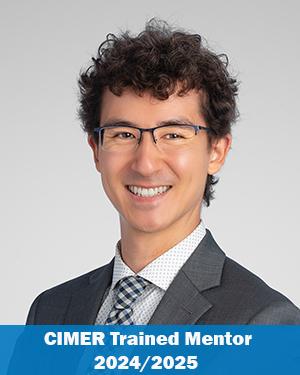
Apollo Stacy, PhD, is an Assistant Professor of Molecular Medicine at the Cleveland Clinic Lerner College of Medicine and Assistant Staff in the Cardiovascular & Metabolic Sciences Department at the Cleveland Clinic Lerner Research Institute. He is also a Member of the Center for Microbiome & Human Health at Cleveland Clinic since 2022. Dr. Stacy leads the APOLLO (Analysis of POLymicrobial-host Language in the Oral cavity) Lab, which focuses on deciphering microbiota-host metabolic communication in the oral cavity, particularly in the context of gum disease and its comorbidities. Washington University in St. Louis (B.A. Biology and Earth & Planetary Sciences, 2006-2010) The University of Texas at Austin (Ph.D. Microbiology, 2010-2017) National Institute of Allergy & Infectious Diseases (Postdoctoral Fellowship, 2017-2022) Dr. Stacy's research centers on the metabolic dialogue between host and microbiota, investigating how host-derived metabolites shape the ecological balance between commensal and pathogenic bacteria in the oral cavity. His work specifically examines periodontitis, one of the most prevalent inflammatory diseases worldwide, and its systemic connections to conditions like diabetes and oral cancer. Current projects fall under two main themes: Training Commensals (exploring how inflammation-induced metabolites like nitrate can nourish commensal bacteria to mitigate periodontitis) and Targeting Pathogens (investigating how pathogens exploit metabolites like formate under inflammatory conditions and whether selenium depletion can target pathogen metabolism). Analysis of Dr. Stacy's publication record reveals a strong focus on host-microbe metabolic interactions, particularly how host-derived metabolites influence microbial community composition and function. His work spans from fundamental mechanisms of bacterial metabolism to translational applications in inflammatory diseases. A notable trend is the progression from studying basic microbial interactions to understanding how these interactions translate to human health outcomes, with increasing emphasis on therapeutic applications. Finalist for NOSTER Science Microbiome Prize (2022) CIMER Trained Mentor (completed mentorship training curriculum) Dr. Stacy actively mentors postdoctoral fellows and graduate students, welcoming individuals interested in polymicrobial-host interactions, bacterial metabolism, genomics, and barrier immunity. His lab accepts students from Case Western Reserve University, Cleveland State University, and Kent State University. The APOLLO Lab's research has implications for developing microbiota-directed therapies that could mitigate periodontitis and its systemic complications without the broad-spectrum effects of traditional antibiotics. The APOLLO Lab employs an interdisciplinary approach combining bacterial genetics, genomics, animal models, immune profiling, and human samples to characterize polymicrobial-host interactions within the oral cavity. The lab's work bridges basic science with clinical applications, aiming to translate discoveries about host-derived metabolites into novel therapeutic strategies for microbiota-driven diseases.
Silja Wessler is a Professor of Microbiology at the University of Salzburg, Faculty of Natural and Life Sciences, since 2010. Her research focuses on Helicobacter pylori pathogenesis, protease function (e.g., HtrA), host-pathogen interactions, and signaling mechanisms in gastric cancer development. She leads research on bacterial virulence factors and their roles in epithelial barrier disruption. Education: PhD in Biology (2001, Max-Planck-Institute), Diploma in Biology (1997, Max-Planck-Institute), studies at University of Bielefeld and Free University of Berlin. Research Interests: Helicobacter pylori virulence mechanisms, protease-mediated host cell disruption, signal transduction in inflammation and cancer, host-pathogen communication, and antimicrobial drug targets. Awards: Postdoctoral fellowship of the Schering Research Foundation (2001–2003) Max-Planck Foundation postdoctoral scholarship (2001) Fonds der Chemischen Industrie scholarship (1998–2000)
Dr. Arnaud Kengmo Tchoupa is a Researcher and Group Leader at the University of Tübingen's Faculty of Science within the Infection Biology department at the Interfaculty Institute of Microbiology and Infection Medicine. His research focuses on host-pathogen interactions, particularly how Staphylococcus aureus adapts to host-derived antimicrobial fatty acids. Dr. Kengmo Tchoupa's research interests center on bacterial adaptation mechanisms at the host-pathogen interface. His laboratory investigates how pathogens like Staphylococcus aureus respond to antimicrobial fatty acids present in human skin and other host environments. His work explores the role of lipases in detoxifying host-derived antimicrobial fatty acids, bacterial membrane vesicle release as a resistance mechanism, and the implications for skin disorders like atopic dermatitis where deficiencies in sapienic acid correlate with increased S. aureus colonization. Analysis of Dr. Kengmo Tchoupa's publications reveals a strong focus on lipid-mediated host-pathogen interactions, particularly the role of fatty acids in bacterial resistance mechanisms. His research spans molecular microbiology, biochemistry, and translational applications for combating antibiotic-resistant infections. Key themes include bacterial adaptation strategies, membrane vesicle functions, and the molecular mechanisms of host-derived antimicrobial compounds. Alexander von Humboldt postdoctoral fellowship (2019-2021) DFG Cluster of Excellence EXC214 CMFI Collaborative research grant (2021-2024) DFG Cluster of Excellence EXC214 CMFI Young investigator grant (2021) DAAD PhD scholarship (2011-2014) Institut Pasteur International Network Master's scholarship (2008-2009) DFG Research Training Group associate fellowship (2013-2015) Dr. Kengmo Tchoupa leads a research group comprising PhD students Justine Camus and Xuanheng Hu, Master's student Anima Horlbeck, and technical assistant Ulrike Redel. His research is supported by multiple DFG grants focusing on lipid-mediated crosstalk between microbiota and host during skin immune responses. His laboratory investigates bacterial membrane vesicles at the host-pathogen interface and collaborates with Prof. Dr. Birgit Schittek on skin immunity research.
Dr. Shoichi Tachiyama is a Research Fellow in Microbial Pathogenesis at Yale School of Medicine. His research focuses on understanding bacterial pathogenesis mechanisms, particularly in Shigella and Helicobacter pylori. He investigates the structural and functional aspects of bacterial secretion systems and flagellar motors using cryo-electron microscopy and biophysical approaches. He earned his Ph.D. in Biochemistry and Biophysics from the University of Kansas (2020), followed by postdoctoral training in Dr. Jun Liu’s lab at Yale. His work explores the molecular architecture of the Type III Secretion System (T3SS) in Shigella and the high-torque flagellar motor of Helicobacter pylori. Collaborations with Drs. William Picking (University of Kansas) and Timothy Hoover (University of Georgia) have advanced his studies on flagellar motor proteins and outer membrane dynamics. Key research interests include host-pathogen interactions, bacterial motility mechanisms, and structural biology of pathogenic proteins. His recent studies highlight the structural basis of flagellar motor components and their roles in bacterial pathogenicity.
Gabriel Waksman is a Courtauld Professor of Biochemistry at University College London (UCL) and Birkbeck, University of London, where he also serves as Director of the Institute of Structural and Molecular Biology (ISMB) and Head of Department. He is a Professor of Structural and Molecular Biology with a long-standing track record in academic leadership. Current: Courtauld Professor of Biochemistry, UCL & Birkbeck; Director, ISMB; Head of Department Past: P. Roy and Diana Vagelos Professor, Washington University School of Medicine Research Interests focus on structural and molecular biology, particularly bacterial secretion mechanisms, Gram-negative bacteria, and Type IV secretion systems. His work explores the molecular details of the chaperone-usher pathway and pilus biogenesis, bridging fundamental biochemical processes with pathogenicity. Scientific Awards include: Royal Society – Wolfson Merit Award (2003) EMBO Membership (2007) Fellow of the UK Academy of Medical Sciences (FMedSci) (2008) Fellow of the Royal Society (FRS) (2012) Wellcome Trust Senior Investigator (2013) ERC Advanced Investigator award (2013) Member of the German National Academy of Sciences Leopoldina Education includes training at École Normale Supérieure, dual BSc degrees in Genetics and Physical Chemistry from the University of Paris, followed by a Diplome d'Etudes Approfondies (DEA) and a Doctorat de Troisième Cycle (PhD) in Fundamental Biochemistry. He also served in the military in Ivory Coast (1982–1985) and worked as a Staff Scientist at Rhone Poulenc Agrochemical, Lyon, France (1985–1987).
Charline Focant is a researcher at the Namur Research Institute for Life Sciences, specializing in the Biology of Microorganisms. She completed her Doctorate in Sciences and focuses on bacterial pathogenesis, particularly the biogenesis of the VirB type IV secretion system and metal homeostasis in Brucella abortus . Her work explores histidine metabolism and its role in copper regulation, contributing to understanding microbial adaptation mechanisms.
Clarissa Durie, Ph.D., is an Assistant Professor in the Department of Biochemistry at the University of Missouri School of Medicine. Her research focuses on bacterial protein secretion systems and membrane translocation mechanisms using cryo-electron microscopy and biochemical approaches. Education: Ph.D., Chemistry, University of Alabama at Birmingham B.S., Chemistry, University of Alabama at Birmingham B.B.A, Marketing, College of William and Mary Her interdisciplinary work combines structural biology, enzymology, and genetics to study how bacterial pathogens translocate virulence factors across membranes. Key areas include type IV secretion systems (T4SS), molecular motor regulation, and allosteric protein dynamics. Recent publications highlight her expertise in cryo-EM structure determination of secretion systems (T4SS in Legionella and Helicobacter), mechanistic studies of AAA+ ATPases like Hsp104/ClpB, and explorations of allosteric regulation exceptions. She also investigates AI applications in cryo-EM data analysis. Laboratory: Schweitzer 137 at the University of Missouri.
Marcela F. Pasetti, PhD, is a Professor in Pediatrics at the University of Maryland School of Medicine with a secondary appointment in Microbiology and Immunology. She serves as Chief of the Applied Immunology Section at the Center for Vaccine Development (CVD), leading a robust research program focused on pediatric vaccine development and immunology. Dr. Pasetti's educational background includes: Orientation in Microbiology and Immunology, University of Buenos Aires (1990) PhD in Immunology, University of Buenos Aires (1994) Diplome d’Immunologie Générale, Institute Pasteur (1994-1995) Postdoctoral Fellow, University of Maryland School of Medicine CVD (1996-2001) Her research centers on pediatric vaccines, neonatal/infant immunology, and maternal immunization. She develops novel strategies against pathogens affecting young children, including live attenuated Salmonella and Shigella vaccines, protein subunits, and polysaccharide conjugates. A key project involves a broadly protective vaccine targeting Salmonella , Shigella , and Yersinia using conserved Type III secretion proteins, evaluated in maternal-infant models. Analysis of her 14 publications (2006-2016) reveals consistent focus on mucosal immunity, maternal-infant vaccine interactions, and enteric pathogen vaccines. Her work bridges preclinical models and human clinical trials, emphasizing correlates of protection, serological assays for efficacy prediction, and maternal antibody impacts on infant responses. Key pathogens include Shigella , Salmonella , influenza, and measles. No specific scientific awards are mentioned in the source text. Dr. Pasetti has secured extensive funding as PI or Co-PI on 12 major grants since 2006, including NIH R01/R21 awards, Gates Foundation projects, and industry collaborations. Current work focuses on maternal immunity against shigellosis, serological assays for Shigella vaccines, and pertussis protection mechanisms. Her CVD lab provides critical immunological support for global vaccine trials. She directs the CVD's Applied Immunology Lab, which employs advanced techniques including human immune enteroid models, flow cytometry (GUAVA-mini), multi-array cytokine assays, and specialized equipment for mucosal immunity studies. Her team collaborates on enteric pathogen research using animal models and clinical specimens.
John Pascal is a Full Professor in the Department of Biochemistry and Molecular Medicine at the Université de Montréal's Faculty of Medicine. His research focuses on understanding the molecular mechanisms of DNA repair and the structural biology of poly(ADP-ribose) polymerases (PARPs). He obtained his PhD in Biochemistry from the University of Texas, followed by postdoctoral training at Harvard University. He joined the Université de Montréal in 2015 as a Titular Professor. His laboratory uses X-ray crystallography and biophysical techniques to study protein structures and their roles in cellular processes. Key research themes include DNA repair pathways, PARP enzyme regulation, and structural biology of macromolecular complexes. He has secured significant funding from agencies like the NIH, Canadian Institutes of Health Research (CIHR), and the Canadian Foundation for Innovation (CFI). Major achievements include a 2015 Leaders Fund Competition award from the CFI and a 2015 Molecular Cell cover article. He supervises graduate students and has mentored postdoctoral fellows in structural biology and biochemistry. His lab collaborates with institutions worldwide and contributes to advancing therapeutic strategies targeting PARP enzymes in cancer treatment.
Donghyun Raphael Park, PhD is an Assistant Professor in the Department of Integrative Structural and Computational Biology at Scripps Research. He holds joint appointments in the Immunology & Microbiology division and the Skaggs Graduate School of Chemical and Biological Sciences. His research focuses on bacterial nanomachine structures using cryo-electron tomography to understand pathogen-host interactions. Education: B.S. in Microbiology, University of Minnesota (2013) Ph.D. in Microbial Pathogenesis, Yale School of Medicine (2022) Professional Experience: Post-baccalaureate research at Bing Chen Laboratory, Harvard Medical School (2013–2015) Research interests: Deciphering how bacterial secretion systems assemble and function in native environments to mediate pathogenicity. Uses cryo-ET to visualize multiprotein complexes involved in substrate secretion during infection. Publications highlight structural analyses of HIV envelope spikes, type III secretion systems, and Coxiella burnetii's Dot/Icm system. Work emphasizes in situ structural biology to reveal mechanistic details of bacterial virulence.
Dr. Aaron Lynne is Professor and Chair of the Department of Biological Sciences at Sam Houston State University. He holds a Ph.D. in Molecular Pathogenesis from North Dakota State University. His research program focuses on two primary areas: developing microbial clocks for postmortem interval estimation through decomposition microbiome analysis, and investigating antimicrobial resistance mechanisms in enteric pathogens like Salmonella and E. coli. Research interests include: Characterizing microbial succession patterns during human decomposition under varied environmental conditions Investigating plasmid-mediated antimicrobial resistance transmission Developing metagenomic approaches for forensic applications Analyzing virulence factors in foodborne pathogens Dr. Lynne's publications demonstrate consistent focus on microbial forensics with recent work emphasizing machine learning applications for decomposition analysis. Earlier research established foundational knowledge on Salmonella plasmid biology and resistance mechanisms. His laboratory participates in the Small World Initiative for antibiotic discovery. He directs an active research team at the Lynne Research Lab and collaborates nationally on decomposition ecology projects funded by the National Institute of Justice. Courses taught include General Microbiology, Virology, and Molecular Biology, along with specialized seminars linking science and society.