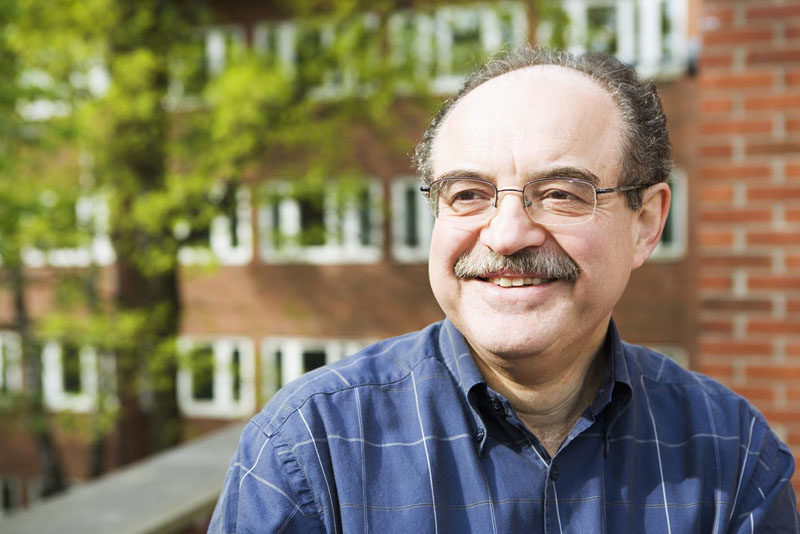
Professor Philip Tinnefeld is a leading academic at Ludwig-Maximilians-Universität München (LMU Munich), serving as Dean of the Faculty of Chemistry and Pharmacy and head of the Tinnefeld Lab. His research integrates molecular biology, physical chemistry, biophysics, and nanophotonics to advance single-molecule detection, super-resolution microscopy, and DNA nanotechnology. Notable contributions include the development of dSTORM and DNA-PAINT techniques, graphene energy transfer (GET), and MXene-based biosensors. He coordinates the EU-funded BioHYBRITE doctoral program and leads interdisciplinary projects at the Center for NanoScience (CeNS). Research Focus: Single-molecule dynamics, DNA origami-based tools, graphene/MXene nanomaterials, and super-resolution microscopy innovations. Recent work includes studies on DNA nanoantennas, force spectroscopy, and MINFLUX-based imaging. Lab Activities: The lab actively publishes in top journals (e.g., Nature Methods, Nature Nanotechnology), hosts international collaborations, and trains PhD students in advanced techniques. Key students include Cindy (PhD 2025), Fiona (2025), and Renukka (2024). Awards include CeNS Publication Awards and funding from EU Marie Skłodowska-Curie Actions.
Dr. Antony J Workman is a Senior Lecturer in Cardiovascular & Metabolic Health at the University of Glasgow's Institute of Cardiovascular & Medical Sciences. His research focuses on atrial fibrillation mechanisms, particularly electrophysiological and molecular processes. He holds a BSc in Animal Physiology (London University, 1988) and a PhD in Cardiovascular Pharmacology (De Montfort University, 1996). He was awarded the British Heart Foundation Basic Science Lectureship (2001–2011) and secured tenure in 2006. His work integrates experimental and computational models to study arrhythmias, ion channels, and drug effects in atrial cells. Education: BSc Animal Physiology, London University (1988) PhD Cardiovascular Pharmacology, De Montfort University, Leicester (1996) Postgraduate Certificate in Academic Practice, Glasgow (2004) Research Interests: Dr. Workman investigates atrial fibrillation mechanisms, including ion channel remodeling, calcium signaling, and drug-induced effects. His projects explore how β-blockers and adrenergic signaling influence arrhythmogenesis, with a focus on human atrial myocytes and computational modeling. Recent studies address the role of ISK currents, adrenoceptor subtypes, and T-tubule organization in AF pathophysiology. Awards/Grants: British Heart Foundation Lectureships (2001–2011) Grants from BHF and EU for AF research Teaching & Mentorship: He coordinates the BSc Cardiovascular Studies program, oversees student projects, and mentors PhD candidates. Responsibilities include curriculum development, assessment design, and supervising MSc/MedSci research projects in cardiovascular sciences. Professional Activities: Presented at international conferences (e.g., Heart Rhythm UK, American College of Cardiology) and contributed to collaborative networks like AFib-TrainNet. His work bridges basic science and clinical applications, emphasizing translational research in cardiac arrhythmias.
Ashley Lauren Harrell King is an Assistant Professor of Sociology at Duke University, with a courtesy appointment in Psychology and Neuroscience. She holds a Ph.D. from the University of South Carolina (2017). Her research focuses on structural and social-psychological mechanisms underlying cooperation, collective action, and social order, employing experimental methods to explore how individual attitudes shape macro-level outcomes. Education: Ph.D. in Sociology, University of South Carolina, Columbia (2017) Research Interests: Dr. King examines cooperative behavior in networked groups, norm enforcement, information-sharing dynamics, and the interplay between identity, resource distribution, and generosity. Her work bridges social psychology and structural sociology, with applications to public goods provision and social inequality. Recent Publications: Her recent work includes studies on cooperation in networked groups ( Social Psychology Quarterly , 2023), information-sharing effects ( PNAS Nexus , 2023), and identity-based cooperation ( Social Forces , 2023). These studies highlight how group size, network structure, and resource asymmetry influence collective action outcomes. Awards: No scientific awards explicitly mentioned in the provided texts. Teaching & Service: Recent courses: Sociological Inquiry, Leadership and Collaboration, Research Independent Study Professional activities: Participant in Duke’s Faculty Success Program (2023) Labs/Teams: She leads Duke’s Sociological Study of Cooperation (SSoC) Lab, investigating cooperative dynamics through experiments and data-driven approaches. Lab research addresses questions like how group size affects cooperation, the role of leaders in norm-setting, and resource disparities’ impact on generosity.
Dr. Anne Berthold is a Lecturer and Senior Researcher at ETH Zurich's Department of Health Sciences and Technology, affiliated with the Institute for Environmental Decisions (IED). She holds a Diploma in Psychology from the University of Leipzig (1999–2005) and has held academic roles since 2004, including postdoctoral research positions at Friedrich Schiller University Jena (2005–2011) and the University of Zurich (2012–2020). Her research focuses on environmental psychology, scarcity perception, and contextual effects like color, with projects exploring climate protection, sustainable technologies, and consumer behavior. Her work integrates behavioral science, sustainability, and social psychology. Recent studies examine gender differences in disgust sensitivity, the psychological impacts of the pandemic on medical education, and consumer responses to environmental labels. She teaches Consumer Behaviour at ETH Zurich and collaborates on interdisciplinary projects addressing climate change communication and technology adoption. Berthold’s research consistently bridges theoretical insights with practical implications for sustainable practices and environmental decision-making. She has published extensively in journals like Journal of Environmental Psychology and Risk Analysis , with a focus on behavioral responses to scarcity, climate risk perception, and pro-environmental behavior.
Boris Zhivotovsky is a Professor of Toxicology and Head of the Division of Toxicology at the Institute of Environmental Medicine (IEM), Karolinska Institutet in Stockholm, Sweden. He concurrently serves as Professor and Head of the Laboratory of Investigation of Apoptosis Mechanisms at Lomonosov Moscow State University, Russia. His academic journey includes a PhD in Radiobiology (1975) and a Dr.Sc. in Biochemistry/Radiobiology (1989) from the Central Research Institute of Roentgenology and Radiology in Leningrad (now St. Petersburg). His research focuses on molecular mechanisms of cell death, autophagy regulation, and tumor chemo/radiosensitivity. Zhivotovsky has coordinated major EU projects like IMPALED (FP5), APO-SYS (FP7), and an INTAS Genomics initiative. He has been recognized with prestigious awards including the European Cell Death Organization Prize (2012) and the USSR State Prize (1987). Zhivotovsky has held leadership roles in professional societies such as the European Cell Death Organization (President 2010–2012) and serves on editorial boards of journals like Apoptosis and Cancer Biology and Therapy . His work bridges basic science and clinical applications in cancer therapy and toxicology.
Carl H. Coleman is a Professor and Associate Dean for Graduate Programs at Seton Hall University. His expertise spans bioethics, public health law, and global health ethics. He served as Bioethics and Law Adviser at the WHO (2006-2007) and led numerous WHO guidance documents on infectious disease ethics and clinical trials. From 2010-2013, he was on the U.S. Secretary’s Advisory Committee on Human Research Protections (SACHRP). He has held roles on institutional review boards, New York’s End-of-Life Care Commission, and the New York State Bar Association’s Health Ethics Committee. Education: Harvard Law School graduate, former law clerk to Chief Judge James L. Oakes (U.S. Court of Appeals for the Second Circuit). Early career included litigation at Leventhal Slade & Krantz and roles with New York’s Task Force on Life and the Law. Research focuses on global health ethics, clinical research oversight, and pandemic governance. Notable works include Rethinking the Regulatory Triggers for Prospective Ethics Review (2019) and Equitably Sharing the Benefits and Burdens of Research (2020). His recent articles address pandemic legal frameworks, physician misinformation regulation, and involuntary commitment ethics. Recipient of the Andrea Catania Fellowship for Excellence in Teaching (2007) and appointed Hastings Center Fellow. Advises on WHO’s Global Health Ethics team and has co-authored over 100 scholarly works across journals like the New England Journal of Medicine and Journal of Law, Medicine & Ethics .
Dr. Mike Chase serves as a Senior Lecturer in the Department of Applied Sciences within the Faculty of Health and Applied Sciences at the University of the West of England (UWE Bristol) . With over 30 years of experience in health and social care research, he operates at the intersection of Community Psychology and systemic service improvement. His research focuses on vulnerable populations including homeless individuals, people with complex disabilities, dementia patients, and those navigating psychiatric services. Key interests include applying early Pragmatism principles to develop participatory research methods that bridge gaps between health/social care policy and practice. He champions person-centered interventions through innovative mixed-methods evaluations of community-based services. Analysis of his 10 recent publications reveals consistent focus on systemic fragmentation in care delivery, with growing emphasis on student-led research methodologies (2021-2023) and disability justice frameworks . His work spans qualitative analyses of practitioner challenges (dementia care), longitudinal arts-prescription impacts, and critical examinations of power dynamics in mental health services. As an active collaborator, Chase works with the Psychological Sciences Research Group (PSRG) , Cardiff Council Homelessness Services , and Bristol Wellbeing College . He oversees commissioned student-led reviews across diverse service settings while advocating for disempowered individuals within care systems. His teaching portfolio includes Community and Social Psychology , Service Evaluations , and Mixed/Qualitative Research Methods , directly translating his research expertise into innovative pedagogy for future health and social care professionals.
Simon-Pierre Gravel is an Associate Professor at the University of Montreal's Faculté de pharmacie. He holds a PhD in Pharmacy (2011) and completed postdoctoral training at McGill University (2016), focusing on breast cancer metabolism and skin aging. His research investigates the metabolic basis of inflammation in chronic diseases, cancer, and viral infections, with a focus on PGC-1 coactivators' roles in linking cellular metabolism to immune activation. He leads studies on immunometabolism in melanoma and skin aging, supported by grants from the Canadian Institutes of Health Research (CIHR), Natural Sciences and Engineering Research Council (NSERC), and the Canadian Cancer Society. Education: PhD in Pharmacy (University of Montreal, 2011), Postdoc at McGill University's Goodman Cancer Research Centre (2016) Research interests include: 1) PGC-1 family proteins' regulation of mitochondrial biology and transcriptional programs, 2) Metabolic drivers of immunosuppression in cancer, 3) Development of therapies targeting metabolism-inflammation axis. His lab has identified stress-induced PGC-1 downregulation as a pro-inflammatory trigger in skin and melanoma contexts. Recent work highlights mitochondrial biogenesis rheostat functions in skin aging and immunometabolic landscapes, with projects funded through NSERC (2023-2029), CIHR (2021-2028), and cancer-focused grants. Over 15 students have been mentored since 2018, including master's theses on PGC-1β modulation and immunotherapy response. Key grants include a 2023 NSERC Discovery Grant for skin aging studies and a 2023 Canadian Cancer Society grant targeting melanoma immunometabolism. He also collaborates on nanoparticle delivery systems for gene therapy and anti-inflammatory drugs. Administrative roles include committee work for the BSc in Biopharmaceutical Sciences program and biosafety oversight. Editor for Metabolites (2019), and peer reviewer for multiple national funding agencies.
Jessa Koch, PharmD, is an Assistant Professor in the Department of Neurology at the School of Medicine and an Associate Professor in the Department of Pharmacy Practice at the School of Pharmacy, Loma Linda University. She is actively involved in clinical practice, research, and teaching, with dual affiliations reflecting her interdisciplinary expertise in neurology and psychiatric pharmacy. Her educational background includes a PharmD from the University of Pittsburgh School of Pharmacy (2014), followed by a PGY-1 residency in Pharmacy Practice and a PGY-2 residency in Psychiatric Pharmacy Practice, both completed at the Chillicothe Veterans Affairs Medical Center. Dr. Koch's research interests span primary care mental health integration, Parkinson's disease and associated psychiatric conditions, substance use disorders, opioid prescribing practices, and interprofessional education . She is particularly focused on clinical pharmacotherapy in complex neurological and psychiatric populations. Her teaching responsibilities include coordinating and lecturing in the Central Nervous System courses and teaching "Mental Health in the Movies," reflecting innovative pedagogical approaches. Her recent publications from 2015 to 2024 demonstrate a consistent trajectory in movement disorders, psychiatric pharmacotherapy, and interprofessional collaboration. Key themes include the use of VMAT2 inhibitors in tardive dyskinesia, management of OFF episodes in Parkinson’s disease, antidepressant safety during breastfeeding, and the impact of the opioid epidemic and pandemic on prescribing behaviors. Her work blends clinical insight with public health relevance. College of Psychiatric and Neurologic Pharmacists (2014–Present) Dr. Koch has served as Principal Investigator (PI) or investigator on numerous research grants, including federally funded projects like the Federal Hispanic Center of Excellence in Pharmacy and multiple industry-sponsored clinical trials related to Parkinson’s disease and botulinum toxin therapies. These grants reflect her leadership in clinical research and commitment to improving patient outcomes in underserved and complex populations. Although no formal list of advisees is provided, her role as course coordinator and involvement in interprofessional education suggest active mentorship of health professional students. She practices clinically in multidisciplinary settings, including the Social Action Community Health System (SACHS) clinic for behavioral health, the Internal Medicine Department, and the Movement Disorders Clinic, where she collaborates with neurologists to manage Parkinson’s disease and related conditions.
Daniel Funk is a Professor and Ed Rosen Senior Research Fellow at the School of Sport, Tourism and Hospitality Management (STHM) at Temple University. His research spans sport marketing, sport management, and sport tourism, with a focus on consumer experiences, customer acquisition, retention, and expenditure. His work is highly applied, often funded by industry partners to assess the economic, media, and community impacts of sport and cultural events. Research Interests: Dr. Funk’s scholarship centers on understanding sport consumer behavior, including team identification, fan engagement, sponsorship effectiveness, and the economic impacts of events. His interdisciplinary research bridges marketing, psychology, and tourism, offering actionable insights for sport organizations and event planners. Publication Trends: His recent publications reflect a strong trajectory in consumer behavior within sport contexts, with increasing attention to digital engagement, eSports, and event legacy. The integration of meta-analytic and longitudinal methods highlights methodological rigor and theoretical advancement in the field. Research Fellow, Sport Marketing Association Research Fellow, North American Society for Sport Management Research Fellow, National Academy of Kinesiology Research Fellow, Sport Management Association of Australia and New Zealand Advising and Grants: Dr. Funk has mentored PhD students for over two decades and currently advises the Temple Esports Club. His research has been supported by industry-funded grants aimed at evaluating the impact of major sport and cultural events. He actively collaborates with academic and industry stakeholders to translate research into practice. Labs and Teams: He is affiliated with research centers at STHM, including the Sport Industry Research Center and the Athletic Innovation, Research, and Education Lab, where he contributes to interdisciplinary projects focused on innovation and impact in sport and hospitality.
Vivek Garg serves as Assistant Professor in the Department of Pharmacology & Physiology at the University of Maryland School of Medicine, where he leads research on mitochondrial calcium signaling mechanisms and their physiological implications. His work bridges molecular biophysics with cardiovascular pathophysiology, utilizing innovative electrophysiological approaches to investigate fundamental cellular processes. Education: B.Pharmacy in Pharmacology, Panjab University, India (1999) M.Pharmacy in Pharmacology, Panjab University, India (2002) Ph.D. in Pharmacology, The Ohio State University (2009) Postdoctoral Fellowship, University of Utah (2014) Researcher Position, University of California San Francisco (2020) Dr. Garg's research centers on mitochondrial bioenergetics and membrane excitability, with particular emphasis on the molecular physiology of mitochondrial calcium uniporter (MCU) complexes. His laboratory employs direct patch-clamp techniques on intracellular organelles combined with cell biology and multi-omics approaches to decipher how mitochondrial calcium signaling regulates cellular metabolism and electrical activity. This work has significant implications for understanding heart failure, metabolic disorders, and other conditions involving mitochondrial dysfunction. Analysis of his publication record reveals a consistent trajectory from cardiac ion channel research toward specialized mitochondrial electrophysiology. His recent work demonstrates technical innovation in organelle patch-clamp methodology while establishing critical regulatory mechanisms for MCU through EF-hand domain proteins. The publications span fundamental biophysical characterization to disease-relevant models, particularly focusing on cardiac pathophysiology and metabolic plasticity. Scientific Awards: No scientific awards documented in provided materials Dr. Garg currently serves as Principal Investigator on a National Institute of General Medical Sciences R01 grant (2023-2027) titled 'Molecular Physiology of Mitochondrial Calcium Uniporter (MCU)', reflecting the significance of his research program. While no formal advisees are listed in the provided documentation, he directs the Garg Lab which maintains active research operations focused on mitochondrial function. The Garg Lab operates within the Department of Pharmacology & Physiology, utilizing specialized equipment for mitochondrial patch-clamp recordings, confocal imaging, and omics analyses. Their research program investigates how mitochondrial abnormalities contribute to disease states through altered bioenergetics and signaling pathways, with particular attention to calcium and redox homeostasis in cardiac and metabolic contexts.
Ilias Kapoutsis serves as Associate Professor of Management at Athens University of Economics and Business (AUEB), affiliated with the School of Business and Department of Business Administration. His academic profile combines rigorous theoretical research with practical organizational applications, evidenced by publications in premier journals including Journal of Management and Journal of Organizational Behavior. His educational foundation includes: Bachelor's degree in Business Administration from AUEB Ph.D. in Management from AUEB MSc in Business Information Technology from University of Manchester Dr. Kapoutsis' research program investigates political behavior dynamics in organizations, examining motivational drivers, cognitive logic, and balancing mechanisms that govern workplace politics. He explores leadership integrity, emotional labor consequences, remote work adaptations, and negotiation processes. His work reveals how political will, skill, and prudence interact to shape career trajectories and organizational effectiveness, often employing nonlinear modeling to capture complex behavioral patterns. Analysis of his recent publications (2020-2025) shows evolving focus on leader-follower power dynamics, passion burnout thresholds in healthcare, and phronesis (practical wisdom) in leadership. His methodological approach combines multi-study designs with systematic reviews, contributing to theoretical refinement in organizational behavior through examination of contextual contingencies and boundary conditions. While holding editorial roles as Associate Editor for Frontiers in Psychology: Organizational Psychology and Guest Editor for European Management Journal special issues, no specific scientific awards are documented in available sources. Dr. Kapoutsis leads significant research initiatives including the Greek National Employment Strategy (2021-2027) commissioned by the Ministry of Labour, and UAE National Research Fund projects on public sector strategic planning. His applied work includes founding the Athens Negotiation Tournament in 2019 and extensive consulting for organizations like IKEA, National Bank of Greece, and Ministry of National Defence, translating academic insights into real-world management solutions. Information regarding dedicated research laboratories or specialized teams is not explicitly provided in current documentation.
Andy J. Minn, M.D., Ph.D. is an Adjunct Professor of Radiation Oncology at the University of Pennsylvania Perelman School of Medicine, an Associate Investigator in the Abramson Family Cancer Research Institute, and Director of the Mark Foundation Center for Immunotherapy, Immune Signaling, and Radiation. He also serves as an Attending Physician in Radiation Oncology at the Hospital of the University of Pennsylvania and the Philadelphia VA Medical Center, and holds memberships in the Abramson Cancer Center, the Institute for Immunology, and the Parker Institute for Cancer Immunotherapy. Education: BA (Biology), University of Chicago, 1992 Ph.D. (Immunology), University of Chicago, 1999 M.D. (Medicine), University of Chicago, 2000 Research Interests: Dr. Minn’s laboratory investigates how interferon-stimulated gene programs—normally deployed against viral pathogens—are activated by endogenous “virus-mimicking” signals within tumors. His group studies: The identity of tumor-derived nucleic acids and exosomal RNAs that trigger pattern recognition receptors (PRRs) and anti-viral interferon signaling. The evolutionary pressures that lead cancer cells to co-opt these pathways. How chronic interferon signaling can either enhance or suppress anti-tumor immunity depending on context, thereby influencing responses to radiation, chemotherapy, and immune checkpoint blockade. Translational strategies to combine JAK/STAT inhibition, CAR-T engineering, and radiation to overcome immunotherapy resistance. Recent Publication Trends: Over the past decade, the Minn laboratory has produced a steady stream of high-impact papers that illuminate the dual roles of interferon signaling in cancer. Their 2024 Science study provided clinical evidence that JAK inhibition plus PD-1 blockade can overcome adaptive resistance in non-small cell lung cancer. Earlier work, including 2019 and 2016 Cell papers, dissected opposing interferon functions that coordinate innate and adaptive immunity during checkpoint blockade. Additional studies have linked micronuclei formation, exosome-mediated RNA transfer, and epigenetic memory to therapy resistance, establishing a cohesive narrative that spans basic discovery, mechanistic dissection, and early-phase clinical translation. Scientific Awards & Honors: No specific named awards are listed in the provided text; however, his continuous funding from the Mark Foundation, leadership of a major center, and frequent publication in top-tier journals attest to significant peer recognition. Advising & Team Science: Dr. Minn mentors a diverse team: Graduate students: Lex Johnson (Immunology), Bihui Xu (Cancer Biology), Erica Dhuey (Cancer Biology), Lisa Cucolo (Cell Biology), Jingya Qiu (Genomics and Computational Biology), Darwin Ye (Cancer Biology), Yuwei Qi (Cell Biology), Shangshang Wang (Chemistry). Post-doctoral fellows: Yuanming Xu, Fevzi Demircioglu, Xiang Ni. Research staff: Caitlin Foley (Research Fellow), Yongjun Yu (Senior Lab Manager). Rotation projects are continually available, and the lab actively engages in cross-disciplinary collaborations—most notably with Carl June’s group for CAR-T cell engineering—through the Mark Foundation Center for Immunotherapy, Immune Signaling, and Radiation.
Thomas Sloan serves as an Associate Professor in the Operations and Information Systems Department at the University of Massachusetts Lowell's Manning School of Business. He coordinates the M.S. Business Analytics program and teaches courses including Global Supply Chain Management and Introduction to Business Analytics. His research bridges operations management with sustainability challenges across multiple industries. Education: Ph.D. in Management Science, University of California Berkeley M.S. in Operations Research, University of California Berkeley B.B.A. in Operations Management, University of Texas at Austin Sloan's research integrates environmental considerations into traditional operations frameworks, with significant contributions to sustainable supply chains, medical device reprocessing, and green equipment maintenance. His work demonstrates consistent focus on balancing economic, environmental, and safety factors across diverse operational contexts. Recent publications examine pandemic-era supply chain disruptions and multi-criteria decision approaches for industrial solvent selection. Scientific Recognition: Teaching Excellence Award (2013) from UMass Lowell Operations and Information Systems Department Exceeding Excellence Teaching Award (2009) from UMass Lowell Student Government Association Sloan actively contributes to educational innovation through technology implementation projects including the UML Echo360 Lecture Program and ForClass Application pilot studies. His professional service spans university committees (NEASC Reaccreditation, Climate Action Plan), department leadership roles, and professional societies including INFORMS, POMS, DSI, and APICS where he serves as faculty advisor for the OIS Club. His research grants focus on enhancing student engagement in supply chain management education through digital tools.
Professor Emma Boyland serves as Deputy Executive Dean for the Institute of Population Health at the University of Liverpool and is a core member of the Department of Psychology's Appetite and Obesity research group. She co-leads the Liverpool Obesity Research Network spanning the University of Liverpool, University Hospital Aintree, and Royal Liverpool and Broadgreen Hospital Trusts, and holds an honorary academic contract with the UK Government's Office of Health Improvement and Disparities. Her research centers on food and beverage marketing's impact on eating behavior, particularly in children, encompassing cross-media monitoring, experimental studies on behavioral effects, and evidence-to-policy translation. She maintains extensive collaborations with WHO Europe, UNICEF, and international research networks across Europe, Australia, and Canada. Her work integrates neuroscientific, ecological, and policy evaluation methodologies to address obesity prevention through regulatory frameworks. Analysis of her 15 most recent publications (2022-2025) reveals dominant themes in digital food marketing's impact on children, systematic evaluation of policy interventions, and emerging intersections with oral health and social determinants. Her methodology portfolio emphasizes systematic reviews/meta-analyses (60% of recent work), neuroimaging (15%), and innovative ecological momentary assessment approaches (10%), with increasing focus on digital environments and vulnerable populations. Scientific Awards: Fellow of the Higher Education Academy (2015) Professor Boyland actively supervises undergraduate and postgraduate students across multiple programs including MPsycholSci and MSc courses, with specific expertise in food marketing and eating behavior research. Her competitive research funding portfolio includes major grants from NIHR, MRC, ESRC, Wellcome Trust, and Cancer Research UK, totaling over £5 million in active projects addressing obesity policy, digital marketing exposures, and food security initiatives. She leads the Liverpool Obesity Research Network's Appetite and Obesity group while contributing to international frameworks through INFORMAS (as Food Promotion Module Leader) and WHO's Global Steering Committee on digital food marketing. Her operational teams integrate psychologists, public health specialists, and policy experts across academic and governmental settings to translate research into actionable regulatory strategies.