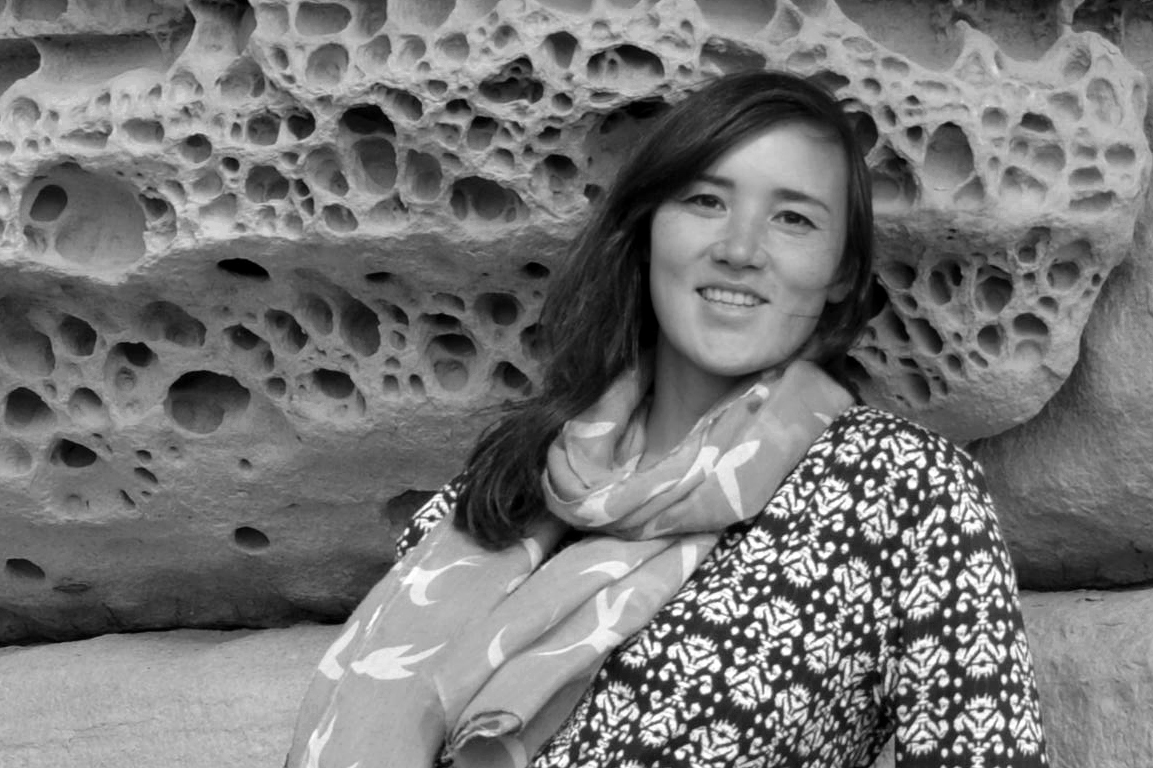
Professor Fay Couceiro is a Professor of Environmental Pollution in the School of Civil Engineering and Surveying at the University of Portsmouth. She leads the Microplastics Research Group and the 'Evaluating change across the plastics lifecycle' theme for the Revolution Plastics Institute, focusing on pollution sources, interventions, and collaborations with industry. She holds editorial roles at Cambridge Prisms: Plastics and peer reviews for multiple journals and funding bodies. Education: BSc in Marine Biology (Queen's University Belfast), PhD in Biogeochemistry (funded project on Strangford Lough), postdoctoral research at the University of Plymouth. Research Interests: Contaminants' fate, microplastics' environmental and health impacts, nutrient dynamics, heavy metals, and organic pollutants like PAHs. Her work integrates pure science with civil engineering solutions. Publications span 2007–2025, emphasizing microplastic toxicity, soil-oil interactions, and pollution mitigation strategies. Over 27 peer-reviewed articles highlight her contributions to environmental science. Advising & Grants: Supervises MSc/PhD students and collaborates with companies like Southern Water. Active in STEM outreach and UK research policy, including the EU's HR Excellence in Research accreditation process. Labs/Teams: Microplastics Research Group, Revolution Plastics Institute, and interdisciplinary teams in environmental technology and resilience.
Dr. Daniel Roxbury is an Associate Professor and Graduate Director at the Department of Chemical, Biomolecular and Materials Engineering within the University of Rhode Island's College of Engineering. With expertise in nanoscience and carbon nanomaterials, his research focuses on nano-bio interactions, developing functionalized nanotubes for biomedical applications and environmental monitoring through his NanoBio Engineering Laboratory. His work spans multiple disciplines including: Biomedical nanosensors Smart wearable biomaterials Targeted drug delivery systems Environmental nanotechnology Single-molecule imaging Nanotoxicology Recent publications emphasize machine learning-enhanced spectral analysis, coral reef conservation nanotechnology, and wearable stress monitoring textiles. His 2024 ACS Nano study introduces AI-driven macrophage phenotyping, while 2023 Nature Nanotechnology work explores coral reef restoration strategies using nanomaterials. Awarded the 2019 NSF CAREER grant for cellular nanometrology, he leads multiple NIH-funded projects including: $820,000 NSF CAREER: Spectral Imaging for Sub-Cellular Nanometrology $140,000 Miriam Hospital COBRE: Cortisol Detection Textiles $700,000 NSF EAGER: Multiplexed Wound Biomarker Detection His laboratory houses state-of-the-art equipment including: Near Infrared Hyperspectral Microscope Custom NIR Fluorescence Spectrometer Jasco UV/VIS/NIR Spectrophotometer Biosafety Cabinet Cell Culture Incubator Cryo-Storage System
Jennifer Lynes is an Associate Professor at the University of Waterloo in the Department of Environment and Business, where she co-directs the Sustainability & Financial Management program. She also serves as Chair of REEP Green Solutions and co-founded the North American Sustainable Concerts Working Group. Current roles: Associate Professor, Co-Director (Sustainability & Financial Management), REEP Green Solutions Chair Education background: Marketing and Environmental Studies Her research bridges business and environmental sustainability, focusing on: Social and community-based green marketing Youth environmental engagement programs Residential energy conservation behavior Sustainable tourism and hospitality practices Recent publications analyze: Water efficiency programs and behavioral change Electric vehicle adoption strategies Textile waste management in fashion consumption Sustainable eating behaviors in Canadian universities Scientific recognition includes: Emerald Publishing Group Highly Commended Paper (2014) She teaches courses such as: ENBUS 102: Introduction to Environment and Business ENBUS 309: Applied Social Marketing ENBUS 630: Enterprise Strategies for Social Accountability
Professor Hu Qing serves as a Professor at the School of Environmental Science and Engineering, Southern University of Science and Technology (SUSTech), and Director of the Engineering Innovation Center (Beijing) at SUSTech. With over 30 years of research and professional experience in environmental science and engineering, she has established herself as a leading expert in soil and groundwater remediation, environmental policy, and sustainable development. Education: PhD in Soil Environmental Pollution and Hydrology, Imperial College London (1993-1998) MSc in Water Treatment and Environmental Chemistry, Chinese Academy of Sciences (1987-1990) BSc in Environmental Engineering, Tsinghua University (1982-1987) Professor Hu's research focuses on critical environmental challenges including soil and groundwater remediation, contaminated site management, environmental policy development, and sustainable urban development. Her work integrates technical innovation with policy implementation, particularly in the areas of green and sustainable remediation methodologies for contaminated sites. She has pioneered approaches that combine big data applications with traditional environmental engineering practices, contributing significantly to China's environmental protection framework and international collaboration efforts in ecological sustainability. Analysis of Professor Hu's recent publications reveals a strong emphasis on practical environmental solutions with policy implications. Her work spans soil and groundwater remediation technologies, environmental policy development, and sustainable approaches to contaminated site management. A notable trend is the integration of international best practices with China-specific environmental challenges, particularly in the areas of brownfield redevelopment and soil pollution control. Her research demonstrates a consistent focus on translating scientific findings into practical applications that inform national environmental policies and standards. Scientific Awards: State Council Special Allowance Experts (2013) Second Prize of National Science and Technology Progress Award (2017) First Prize of Environmental Protection Science and Technology Award (2021) Science and Technology Progress Award of Ministry of Education (2012) IBM Global Distinguished Scholar Award (2016) Professor Hu has led and participated in more than ten national and provincial research projects, including the National 863 Program and the National Water Pollution Control and Treatment Science and Technology Major Project. She has managed dozens of site investigation and remediation projects across multiple industries including chemicals, printing and dyeing, petroleum, and electroplating. Her international collaboration experience is extensive, having served as the Chinese leading expert in the Sino-UK Soil & Groundwater Remediation Science & Technology Cooperation Program and as project leader for multiple World Bank and Asian Development Bank projects. As Director of the Engineering Innovation Center (Beijing), Professor Hu leads a multidisciplinary team focused on developing innovative solutions for environmental challenges. The center serves as a bridge between academic research and practical implementation, working closely with government agencies including the National Development and Reform Commission, Ministry of Science and Technology, and Ministry of Environmental Protection to shape national environmental policies and standards.
Dr. Esmaeel Esmaeeli is a Senior Lecturer in Civil and Environmental Engineering at Brunel University London, serving as Course Director for the MSc in Structural Engineering. His work focuses on sustainable structural retrofitting solutions, safety, and resilience of concrete and masonry structures. Brunel University London (Current: Senior Lecturer) Queen’s University Belfast (Postdoctoral Fellow, Horizon 2020 MSC Fellowship) University of Minho (PhD research on Hybrid Composite Plate) K. N. Toosi University (MSc research on seismic strengthening) His research spans advanced materials like Strain-Hardening Cementitious Composite (SHCC) and Carbon Fibre Reinforced Polymer (CFRP) for seismic retrofitting, computational modeling of FRP-concrete interfaces, and dynamic response under extreme loads. Recent work includes the SMArtPlate and Hybrid Composite Plate (HCP) systems. Scientific recognition includes the Horizon 2020 Marie Skłodowska-Curie Individual Fellowship and a Portuguese Foundation for Science and Technology (FCT) scholarship. He has advised on structural vulnerability assessments and leads teams in consultancy projects.
Jocelyn Alcántara-García is an Associate Professor in the Department of Art Conservation at the University of Delaware, with a joint appointment in the Department of Chemistry and Biochemistry since 2023. She specializes in conservation science, focusing on the forensic analysis and preservation of cultural heritage materials, particularly textiles and archival objects. Education: B.S. in Chemistry – National Autonomous University of Mexico (UNAM) Ph.D. in (Inorganic) Chemistry – National Autonomous University of Mexico (UNAM) Postdoctoral Fellowship – Johns Hopkins University (Andrew W. Mellon Postdoctoral Fellow) Conservation Studies – National School of Conservation, Restoration and Museography (ENCRyM) Internship in Polymers – Brno University of Technology, Czech Republic Conservation Science Fellowship – National Museum of Contemporary Art Reina Sofia, Spain Research Focus: Dr. Alcántara-García’s work is deeply interdisciplinary, bridging chemistry, conservation science, and cultural heritage studies. Her research is structured around three core areas: forensic analysis of historical materials, reverse engineering and degradation mechanisms of heritage textiles, and the development of non-destructive techniques for studying cultural artifacts. She also integrates innovative pedagogical approaches to attract and retain students in STEM fields, using cultural heritage as a focal point for teaching chemistry and conservation science. Publications Overview: Her scholarly output reflects a consistent focus on the application of advanced analytical techniques to the study of historical materials. Topics include the non-destructive identification of dyes and pigments, the degradation of copper-based pigments, and the use of spectroscopic and chromatographic methods in conservation science. Her work often involves collaboration with conservators, historians, and scientists, and is published in high-impact journals in the fields of conservation, chemistry, and cultural heritage. Scientific Awards & Honors: Andrew W. Mellon Postdoctoral Fellowship Phi Kappa Phi Honor Society Membership Sigma Xi Scientific Research Society Membership Advising & Mentorship: Dr. Alcántara-García is actively involved in mentoring students across multiple departments and institutions. She works with undergraduate and graduate students in Art Conservation, Chemistry and Biochemistry, and the Winterthur/University of Delaware Program in Art Conservation (WUDPAC). Her mentorship emphasizes interdisciplinary research and hands-on experience with analytical instrumentation in cultural heritage contexts. Labs & Affiliations: She is affiliated with the Winterthur Museum, Garden and Library, where she conducts research and teaches WUDPAC students. She also engages with students and collaborators in Old College and Lamont DuPont/Brown/Drake facilities at the University of Delaware.
Jan Bill is Professor of Viking Age Archaeology at the University of Oslo's Department of Archaeology and curator of the Viking Ship Collection at the Museum of Cultural History since 2007. His academic trajectory includes leadership roles at the Viking Ship Museum in Roskilde (2003-2007) and the Centre for Maritime Archaeology at Denmark's National Museum (1997-2003), where he progressed from PhD researcher to deputy director. His research centers on Viking Age and medieval archaeology, specializing in seafaring, burial practices, and scientific methodologies. Key investigations focus on Norwegian ship burials (Oseberg, Gokstad) to decode power representation through funerary rituals, and seafaring's role in societal complexity. His interdisciplinary approach integrates archaeology with genetics, geochemistry, and digital humanities. Recent publications reveal dominant trends in Viking Age genomics, ship burial reinterpretation, and geoarchaeological analysis of settlements. Major themes include population migrations, ancient pathogens, trade networks, and landscape reconstruction, often through large-scale collaborations like the Population Genomics of the Vikings project. Scientific recognition includes: Aage Rothenborgs Endowment (2017) for contributions to early medieval Scandinavian maritime culture Bill currently supervises two PhD candidates and leads significant grants including the Gokstad revitalised research project, Saving Oseberg Project, and Gjellestad excavation. His grant portfolio emphasizes interdisciplinary Viking Age studies combining archaeology with DNA analysis and geophysical surveying. He directs the Centre for Viking-Age Studies (ViS) and contributes to INTER-Action research group. Critical institutional work involves developing the new Museum of the Viking Age and steering major conservation initiatives like the ADED project for archaeological digital documentation.
Cara Krmpotich is a Professor and Associate Dean at the University of Toronto's Faculty of Information, specializing in museum anthropology with a focus on decolonizing and Indigenizing practices. She co-directs the Great Lakes Research Alliance for the Study of Aboriginal Arts and Cultures (GRASAC), advancing repatriation efforts and Indigenous heritage sovereignty. Krmpotich also co-led DigiLabs, exploring equity and ethics in digital cultural heritage. Her academic leadership includes roles as Past-President of the Council for Museum Anthropology and Board member of the Ontario Museum Association. Education : DPhil, University of Oxford (2004–2008) MA, University of British Columbia (2002–2004) BA, Trent University (1997–2001) Certification in Museum Management and Curatorship, Fleming College (1999–2000) Research Interests : Repatriation of cultural property, kinship and material culture, community-engaged museum practices, digital heritage ethics, and Indigenous sovereignty in cultural institutions. Her work bridges anthropological theory with actionable initiatives to address historical inequities in museum collections. Grants & Collaborations : SSHRC-funded projects on ethical stewardship of Indigenous heritage and digital colonial collections (2013–2025) Canada Foundation for Innovation grants for mobilizing Indigenous heritage research (2018–2025) Initiatives with institutions like the Smithsonian and University of Edinburgh on repatriation and reconciliation Teaching : Courses include Collection Management, Curatorial Practice, and Museums & Indigenous Communities. Krmpotich emphasizes critical pedagogy and practical engagement with museum ethics.
Professor Maria Hayward is a leading scholar in early modern history, specializing in textiles, court culture, and material culture. She serves as Head of the History Department at the University of Southampton, having previously held roles such as Director of the AHRC Research Centre for Textile Conservation and Studies (2004-2007). Her research focuses on Tudor and Stuart periods, particularly the interplay between clothing, power, and identity. She has authored award-winning works like Stuart Style: Monarchy, Dress and the Scottish Male Elite (2020) and is currently writing a book on Catherine of Braganza. Education: BA History, PG Dip in Textile Conservation (Textile Conservation Centre), PhD in History (LSE, University of London). Research Groups: Centre for Medieval and Renaissance Culture, Southampton Centre for Nineteenth-Century Research. Awards: Fellow of the Society of Antiquaries (2004), Fellow of the Royal Historical Society (2021). Teaching includes modules on Tudor-Stuart monarchy, Roman imperial history, and supervision of PhD students. Current research explores early modern queenship and textile conservation links.
Federica Burini is a Full Professor of Geography at the Department of Foreign Languages, Literatures and Cultures of the University of Bergamo . She serves as Scientific Coordinator of the Imago Mundi Lab, member of the Center for Territorial Studies, and Scientific Director of OrobieLab. Her academic career spans participatory processes, collaborative mapping, and sustainable territorial regeneration. Full Professor of Geography Imago Mundi Lab Coordinator Center for Territorial Studies member OrobieLab Scientific Director Research Focus : Federica specializes in participatory geography through collaborative mapping techniques for environmental governance in both rural and urban contexts. Her work emphasizes sustainable development in Sub-Saharan Africa and European mountainous regions, with particular attention to landscape valorization via participatory processes and responsible tourism. Key projects include digital co-mapping initiatives for community engagement and territorial regeneration. Participatory mapping tools Sustainable tourism frameworks Mountainous area development Rural community empowerment Digital geospatial applications Landscape perception studies Publications : Recent works explore digital collaborative mapping tools (2024), industrial heritage interpretation for slow tourism (2024), and water resource-driven community regeneration (2024). Earlier contributions examine pandemic impacts on tourism (2020) and participatory cartography methodologies (2016). Her research consistently bridges geographical theory with practical territorial governance solutions.
Emily Whiting is an Associate Professor of Computer Science at Boston University and Director of the Shape Design & Computation Lab. She also serves as Director of PhD Admissions and Co-Director of the BU Computer Graphics Lab. Her research focuses on computational fabrication, architectural geometry, and computer-aided design, bridging digital geometry processing, engineering mechanics, and rapid prototyping. She holds a PhD from MIT (2012), an SM in Design & Computation from MIT (2006), and a BASc in Engineering Science from the University of Toronto (2004). Previously, she was faculty at Dartmouth and a Marie Curie Postdoctoral Fellow at ETH Zurich. Her research interests include 3D printing optimization, structural design for fabrication, and tools for functionally-valid object creation. Notable projects include work on elastic garments, climbing experience replication, and print-wind instrument design. Her work has been featured on TEDx and PBS NOVA, and she has received awards such as the NSF CAREER Award and Sloan Research Fellowship. Education: PhD (MIT), SM (MIT), BASc (University of Toronto) Labs: Shape Design & Computation Lab, BU Computer Graphics Lab Key Projects: Knitting 4D garments, Environment-Scale Fabrication, Thermal-comfort casts Recent professional activities include program committee roles at SIGGRAPH 2025 and UIST 2024, and serving as Program Co-Chair for Pacific Graphics 2024. She advises a team of PhD and MS students, with alumni now in academia and tech industries.
Nelson Sepulveda Alancastro is a Professor and Interim Chairperson of Electrical and Computer Engineering (ECE) at Michigan State University's College of Engineering, with a joint appointment in Mechanical Engineering (ME). He holds a Ph.D. (2005) and M.S. (2002) from Michigan State University, and a B.S. (2001) from the University of Puerto Rico-Mayaguez. His research integrates micro/nano sensors, smart materials, and energy harvesting, with applications in biomedical devices, environmental monitoring, and MEMS. Research Focus: Dr. Sepulveda's work centers on ferroelectret nanogenerators, vanadium dioxide-based reconfigurable devices, flexible sensors, and machine learning for sensor data analysis. His lab develops self-powered systems for biomechanical monitoring, invasive species detection, and concussion prediction. Awards and Honors: MSU Withrow Teaching Excellence Award (2018) MSU Withrow Diversity Excellence Award (2018) Michigan State University Teacher-Scholar Award (2015) NSF Career Award (2010-2015) IEEE Senior Member (2011) Students and Team: He advises Ph.D. candidates including Ian González-Afanador, Gerardo Morales-Torres, and Henry Dsouza. His Advanced Microsystems Group (AMG) focuses on interdisciplinary projects spanning materials science, MEMS, and embedded systems.
Dr. Dominique Claveau-Mallet is an Associate Professor in the Department of Civil, Geological and Mining Engineering at Polytechnique Montréal. She holds a Tier 2 Canada Research Chair in Water Treatment in Decentralized or Small-Scale Facilities and serves as Co-Director of the Environmental Engineering Laboratory. Her affiliations include membership in the Center for Research, Development and Validation of Water Treatment Technologies and Processes (CREDEAU) and the Geothermal and Hydrogeology Research Group. Her research focuses on innovative solutions for water treatment challenges, with emphasis on: Decentralized wastewater systems and small-scale treatment facilities Microplastics capture and pollution mitigation strategies Phosphorus removal technologies using reactive filters Membrane filtration processes and hydraulic performance optimization Hydrogeology of contaminants in groundwater systems Analysis of her recent publications reveals strong research trends in microplastics characterization (capture methods, environmental fate, citizen science approaches), advanced filtration systems (reactive filters, membrane technologies), and sustainable wastewater treatment solutions for decentralized applications. Her work frequently combines experimental research with practical implementation studies. Awards & Recognition: Tier 2 Canada Research Chair (2020-present) Recipient of federal/provincial research grants including NSERC Discovery Grants She actively supervises graduate students, having recently directed 2 doctoral theses and 5 master's theses on topics spanning membrane filtration, phosphorus removal, and microplastics mitigation. Her research receives significant media coverage for its environmental impact, particularly regarding microplastics capture technologies and septic system management. Dr. Claveau-Mallet leads interdisciplinary teams at the Environmental Engineering Laboratory and collaborates extensively with municipal partners and citizen science initiatives. Current investigations focus on developing next-generation filtration systems and optimizing existing water treatment infrastructure for climate resilience.
Susie Nash is the Deborah Loeb Brice Professor of Renaissance Art at The Courtauld Institute of Art. She specializes in late medieval and Renaissance art of Northern Europe, particularly focusing on material analysis, technical art history, and courtly patronage. Her research centers on the Valois courts of France, examining inventories, art objects, and their cultural significance. She has held a Leverhulme Senior Research Fellowship (2016–2018) and authored influential works on Burgundian art, Claus Sluter’s sculpture, and manuscript illumination. Her research interests include materials science, sculpture polychromy, and the intersection of art and political power. Notable publications include Late Medieval Panel Paintings (2015) and Northern Renaissance Art (2008). She supervises PhD students in areas such as Burgundian textiles, manuscript iconography, and metalwork crosses. Nash’s articles explore topics like Philip the Bold’s tombs, the de Limbourg brothers’ work, and the Seilern Triptych. Her work frequently bridges art-historical analysis with material and technical evidence, emphasizing the physical object’s role in understanding historical context.
Dr. Meredyth Winter is a Lecturer in Early Islamic Arts at The Courtauld Institute of Art, University of London. She specializes in medieval Islamic craft traditions, focusing on artistic knowledge transmission and technical art history in Iraq and Iran. Her work bridges material culture and art history to reconstruct historical labor networks through analysis of materials and techniques. Winter earned a PhD in Middle Eastern Studies and Art History from Harvard University and a Master’s from the Bard Graduate Center. She was a Mellon Postdoctoral Fellow at the Philadelphia Museum of Art (2021–2024), researching textiles from Erich Schmidt’s excavations at Rayy. Education: PhD in Middle Eastern Studies and the History of Art & Architecture, Harvard University MA in Material Culture, Bard Graduate Center (New York) Research Interests: Meredyth Winter’s research emphasizes technical analysis of art-making processes, from weaving to brick masonry. She examines how artisans learned and preserved skills, and how craft traditions influenced technological and artistic developments. Her studies highlight interdisciplinary approaches to reconstructing historical labor practices and material networks. Awards: Andrew W. Mellon Postdoctoral Fellowship in Costume & Textiles (2021–2024) Teaching & Grants: Teaches courses on Islamic ornamentation, medieval craft, and art history at The Courtauld Supported by grants from the Aga Khan Program, the American Institute for Iranian Studies, and Harvard’s Center for Middle Eastern Studies Research Projects: Her Mellon Fellowship involved analyzing textiles from Rayy, Iran, excavated by Erich Schmidt. This work contributes to understanding medieval textile production and cultural exchange.