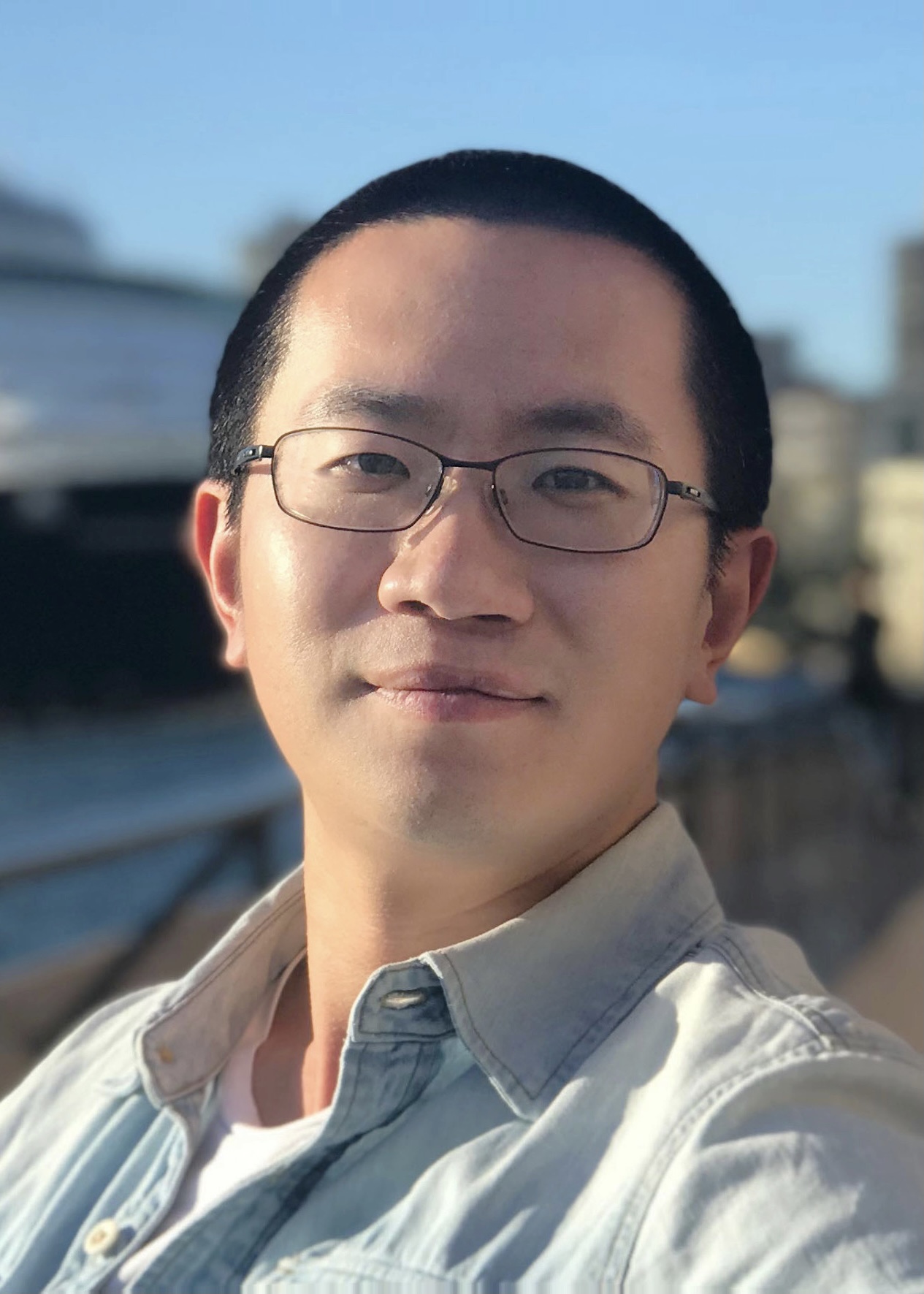
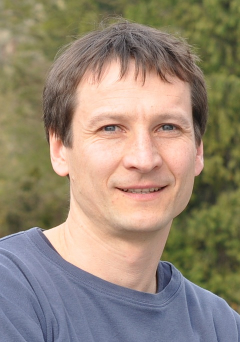
Jericho Lawson serves as a Lecturer in the Department of Statistical and Data Sciences at Smith College, where he is dedicated to delivering student-centric statistical education that empowers learners from diverse backgrounds with career-ready analytical tools. His academic credentials include: Ph.D. and M.S. in Applied Statistics from the University of California, Riverside B.S. from the University of Arizona Dr. Lawson's research focuses on high-dimensional variable selection methodologies, sports statistics analytics, and deep learning applications. His work bridges theoretical statistical innovation with practical implementation, particularly in complex data environments where dimensionality reduction and predictive modeling are critical. No scientific awards or honors were documented in the source material. While the provided text confirms his teaching commitment, it contains no details regarding graduate student supervision, research grants, or collaborative laboratory structures.
R. Edwin Garcia serves as an Assistant Professor in the Department of Materials Engineering within Purdue University's College of Engineering, appointed as new faculty in 2005. His academic background includes: Bachelor of Science in Physics from the University of Mexico (1996) Master of Science in Materials Science and Engineering from MIT (2000) Doctor of Philosophy in Materials Science from MIT (2002) Minor in Applied Mathematics from MIT Dr. Garcia's research focuses on theoretical and computational frameworks for microstructurally complex materials. He develops public-domain codes and analytical tools that transform micrographic images into engineered material properties and macroscopic responses. His work emphasizes optimizing multifunctional materials through fundamental processing-structure-property relationships, utilizing scientific visualization techniques to enhance performance and reliability in technologically critical applications. No information about scientific awards was provided in the source text. While previously affiliated with NIST's Center for Theoretical and Computational Materials Science, Dr. Garcia's current Purdue-based research prioritizes making computational methodologies accessible to the global scientific community. Details regarding graduate student advising and grant funding were not specified in the available documentation.
Gee Y. Lee is an Associate Professor with Tenure in the Department of Statistics and Probability and the Department of Mathematics at Michigan State University. Lee holds a PhD from the University of Wisconsin-Madison and is an Associate of the Society of Actuaries (ASA). Their research focuses on applying advanced statistical and machine learning methods to solve complex problems in actuarial science and insurance. Dr. Lee's educational background includes: PhD from the University of Wisconsin-Madison Associate (ASA) designation from the Society of Actuaries Dr. Lee's research spans several critical areas in modern actuarial science. Their primary focus includes insurance loss modeling for rate-making and loss reserving applications, optimization of multivariate insurance coverage, and dependence modeling. A significant portion of their recent work applies machine learning methods, particularly deep neural networks, to traditional actuarial problems. They are also pioneering research in analyzing unstructured data for insurance applications, which represents an emerging frontier in the field. Their work bridges theoretical statistical methods with practical insurance industry needs. Dr. Lee's publication record demonstrates a clear evolution from traditional actuarial methods toward more sophisticated and interdisciplinary approaches. Early work focused on fundamental aspects of insurance pricing and modeling, while more recent publications incorporate machine learning techniques, natural language processing, and advanced optimization methods. A notable trend is the increasing integration of unstructured data analysis into actuarial science, reflecting broader industry shifts. Their research consistently addresses both theoretical advancements and practical applications in insurance risk assessment and management. While specific awards aren't detailed in the available information, Dr. Lee's recognition includes: Associate (ASA) designation from the Society of Actuaries Michigan State University recognized by the Society of Actuaries as granting MS and PhD degrees focused on actuarial science (as of 2023) Dr. Lee actively mentors students at multiple levels, supervising undergraduate research through REU programs, directed studies (STT 490, MTH 490, MTH 491B), and graduate research for MS and PhD candidates. They have advised numerous students who have presented at UURAF (Undergraduate Research Assistant Fellowship) conferences. For graduate students, Dr. Lee supports research leading to MS degrees in Statistics, Applied Statistics, and Industrial Mathematics with actuarial science focus, as well as PhD dissertations in Statistics. Beyond direct student supervision, Dr. Lee has organized significant academic events including the Simon Conference for Young Researchers in Risk Management and Insurance (2019, 2023) and contributed to other workshops, demonstrating leadership in the actuarial research community. While specific lab names aren't mentioned, Dr. Lee appears to lead a research group focused on actuarial science and insurance analytics at Michigan State University. Their collaborative work with researchers like Scott Manski, Taps Maiti, Peng Shi, and others suggests an active research team working at the intersection of statistics, machine learning, and actuarial applications. The research group seems particularly focused on bridging traditional actuarial methods with modern data science techniques.
Dr. Elizabeth S. Chen is an Associate Professor of Medical Science and Health Services, Policy and Practice at Brown University. She serves as Interim Director of the Brown Center for Biomedical Informatics (BCBI) and leads the Clinical Informatics Innovation and Implementation (CI3) Lab, focusing on improving mental health (mental health informatics) and child health (pediatric informatics) via EHR, data mining, and machine learning. Her work spans clinical decision support, standards interoperability, and NLP for biomedical discovery. Education: PhD in Biomedical Informatics, Columbia University BS in Computer Science, Tufts University Research Interests: Dr. Chen’s research integrates electronic health data with health IT to advance healthcare delivery and translational research. Key areas include EHR optimization, clinical documentation, NLP, machine learning, and health information standards. She mentors students across levels and contributes to Rhode Island’s BIBCE Core for data accessibility in clinical research. Article Trends: Dr. Chen’s 15 most recent publications emphasize NLP, machine learning, and EHR applications in mental health, pediatrics, and public health. Topics include suicide risk modeling, comorbidity analysis, clinical documentation standards, and interoperability frameworks. Scientific Awards: Fellow of the American College of Medical Informatics (FACMI) Mentoring & Governance: Dr. Chen co-instructs biomedical informatics courses, mentors junior faculty, and held leadership roles at NIH/NLM (BILDS Review Committee Chair) and journal editorial boards. Her lab focuses on inspiring future clinical informaticians. Labs & Collaborations: The CI3 Lab at BCBI drives EHR innovation, implementation, and education. Dr. Chen collaborates with Rhode Island’s BIBCE Core, the Scholarly Concentration in Biomedical Informatics, and interdisciplinary teams in mental health and pediatric informatics.
Xiaoyang Wang is a Senior Lecturer in the School of Computer Science and Engineering (CSE) at the University of New South Wales (UNSW). He holds a Bachelor's and Master's degree in Computer Science from Northeastern University, China, and earned his PhD from CSE UNSW. Dr. Wang's research focuses on database systems with a special emphasis on query processing and data mining on large-scale graph, spatial, and streaming data. His expertise extends to data-driven machine learning, smart contract analysis on blockchain, and FinTech with financial network analysis. His work spans Graph Processing, Graph Neural Networks, Spatial Data Processing, AI for Databases (AI4DB), Database for AI (DB4AI), and FinTech applications. His publication record shows significant contributions to the field with 7 book chapters, 56 journal articles, 61 conference papers, 7 edited conference proceedings, and 4 conference abstracts. Recent publications (2022-2025) demonstrate his strong research trajectory in advanced graph processing techniques, neural network applications, and innovative database approaches. Key themes include hierarchical contrastive learning, robust attack frameworks, temporal graph processing, influence maximization, knowledge graph-enhanced reasoning, and rumor mitigation. Dr. Wang actively recruits PhD students interested in pursuing research in related fields and encourages current undergraduate and master's students at UNSW to contact him about research opportunities. He maintains an active research agenda with practical implications for industries dealing with large-scale network data, financial technology applications, and data-intensive systems. He can be reached at xiaoyang.wang1@unsw.edu.au and is located in Engineering building K17-501D at UNSW.
Sanna Sundqvist serves as Associate Professor in the Department of Marketing at LUT University, with a research focus spanning international business, export performance, and entrepreneurial strategy. Her work bridges empirical analysis with practical applications in global markets. Her academic credentials include a Doctoral degree in Engineering and Technology (awarded November 29, 2002) and a Master's degree in the same field (awarded December 21, 2000), both from LUT University. Professor Sundqvist's research examines how entrepreneurial orientation and cognitive biases influence international business decisions, with particular emphasis on structural equation modeling techniques. Her work explores the interplay between prior experience and export performance, Finnish market dynamics, and sales strategy optimization in global contexts. Recent investigations extend into consumer behavior analytics, examining online data patterns and high-involvement service interactions. Analysis of her 2018-2025 publications reveals a concentrated trajectory in international entrepreneurship, with increasing attention to cognitive microfoundations of business decisions. Her methodological approach combines bibliometric analysis with computational text mining, while maintaining strong empirical grounding in structural equation modeling for export performance studies. As principal investigator, she has secured multiple research projects including Wisdom2 (2022-2024), KATAJA/New Product Development (2022), KATAJA/LISREL (2021-2022), and KATAJA/Asikainen (2020), demonstrating consistent funding success in international business research.
Jan Kemper serves as an Honorary Professor of Business Administration and Entrepreneurship at RWTH Aachen University, appointed in July 2022 after a decade of continuous academic engagement. His primary academic affiliation is with the Innovation and Entrepreneurship Group (WIN), where he integrates scholarly research with extensive industry experience. Concurrently, Kemper maintains an active business career spanning investment banking at Goldman Sachs, Credit Suisse, and Morgan Stanley across Germany, the UK, and Saudi Arabia, followed by executive roles at Groupon, Zalando, ProsiebenSat.1, Omio, and N26. He is a serial entrepreneur with ventures including the triathlon brand Ryzon, the event venue "Der Kemper Hof", and Green-Tech firm Greenair, while also serving as a business angel and non-executive director for companies like Flink and Hedosophia. His academic credentials include: Business Administration studies at WHU Vallendar, ICADE (Madrid), and Bordeaux Business School Doctoral degree (Dr. rer. pol.) from RWTH Aachen University Kemper's research critically examines entrepreneurship through multiple interconnected lenses. His core focus areas encompass general entrepreneurship dynamics, corporate entrepreneurship strategies, and innovation processes. He further investigates entrepreneurial finance mechanisms, venture capital ecosystems, marketing approaches specific to new ventures, and operational challenges in startup environments. This research program is uniquely informed by his dual expertise in academic theory and real-world business execution, creating practical frameworks for entrepreneurial success. Analysis of his 12 publications (2010-2022) reveals a dominant focus on consumer behavior within digital marketplaces, particularly e-commerce contexts. Recurring themes address sustainable consumption practices (e.g., eco-label effectiveness), retail strategy (private label dynamics and fast fashion), payment system innovations, customer review impacts on loyalty, and product return logistics. His methodological approach consistently employs empirical field experiments and cross-cultural comparisons, reflecting both academic rigor and practical relevance derived from his global business exposure across multiple continents. While specific student supervision details are absent from source materials, Kemper's decade-long teaching role suggests mentorship of entrepreneurship students through RWTH Aachen's programs. His extensive industry network—including corporate board memberships and startup investments—implies strong potential for industry-academia research partnerships and applied grant funding, though explicit grant details remain undocumented in available texts. The Innovation and Entrepreneurship Group (WIN) serves as Kemper's primary research hub at RWTH Aachen, functioning as the operational nexus where his academic investigations into venture creation and innovation processes directly intersect with his practical business experience across finance, digital platforms, and sustainable enterprises.
Xu Xiang is a Tenured Professor and Vice Dean at Tongji University School of Art and Media , where he serves as Director of the Big Data and Computational Communication Research Center. He is also Editor-in-Chief of Computing, Intelligence, and Communication , reviewer for CSSCI journals, and former Deputy Secretary-General of Beijing Society of Literature and Art. PhD in Literary Theory (Beijing Normal University, 2009) M.A. in Chinese Language and Literature (Tsinghua University, 2006) B.A. in Sociology (Nanjing University, 2004) His research focuses on computational communication, particularly analyzing social media networks, user behavior, and information dissemination. He established key theoretical frameworks including 'Opinion Paradigm', 'Social Echo Chamber', 'Influence Circle', 'Idol Conformity', 'Emotional Setting', and 'Silent Public Opinion', with extensive publications on social media emotional dynamics, information narrowing, and cultural communication mechanisms. His 15 most recent publications (2017-2022) demonstrate consistent exploration across computational communication theory, algorithmic platform analysis, and social media's role in cultural dissemination. Key research trends include information narrowing mechanisms, emotional preference patterns, and structural transformations in social media ecosystems. Fourth China 'News Communication Academic Award' (2018) Youth New Media Academic Research 'Qi Hao Award' (2018) National News Academic Youth Scholar Award (2012) Beijing-Taiwan Research Award (2013) Beijing Outstanding Talent Funding (2011) Tongji University '13th Five-Year Plan' Scientific Research Advanced Individual (2020) As an award-winning mentor, he guided student teams to first, second, and third prizes in multiple national competitions including China Data Journalism Competition and National Undergraduate New Media Creative Competition. His research bridges academic theory with policy practice, with findings receiving Central Politburo member instructions and extensive national media coverage.
Yu Fu is an Assistant Professor at the University of Central Florida (UCF) Department of Computer Science, leading the Designing Interactive & Intelligent Data (DiiD) Lab. His research focuses on data visualization, human-computer interaction, and AI-powered data analysis with applications in sports analytics, journalism, and digital twin systems. Educational Background: Ph.D. in Human-Centered Computing from Georgia Institute of Technology. His work emphasizes designing interactive systems and visualization techniques to enhance data storytelling and critical thinking in data-rich environments. Recent research explores automated fact-checking, basketball performance analysis, and journalistic data communication. Publications highlight interdisciplinary applications of visualization in sports analytics, journalism, and digital twin systems, combining empirical studies, interaction design, and system development.
Daniel Baum is a Research Professor and Head of the Visual Data Analysis research group at the Zuse Institute Berlin (ZIB), which is affiliated with Freie Universität Berlin. His work spans across scientific visualization, computational biology, and image analysis, with a particular focus on developing methods for analyzing complex biological structures and neural circuits. He is actively involved in multiple interdisciplinary research projects including HFSP Chitons, Geometric Learning for Single-Cell RNA Velocity Modeling, and RobustCircuit. Dr. Baum's research interests center on visual and data-centric computing approaches to solve complex problems in biology and medicine. His work bridges the gap between computational methods and biological applications, with significant contributions to cryo-electron tomography analysis, neural circuit mapping, and geometric morphometrics. He develops innovative algorithms for 3D reconstruction, image segmentation, and visualization of biological structures, from molecular to organismal scales. His publication record demonstrates consistent contributions to visualization techniques applied to biological problems, with recent work focusing on neural circuit analysis in zebrafish and Drosophila, biomechanical studies of animal structures, and advanced methods for analyzing ancient artifacts. The research shows a clear trajectory toward increasingly sophisticated multimodal data integration and machine learning approaches. Dr. Baum leads a productive research group with several key collaborators who frequently appear as co-authors on his publications, indicating a strong mentoring relationship. His projects involve substantial funding from various sources supporting interdisciplinary collaborations across biology, computer science, and engineering. His laboratory at ZIB focuses on visual data analysis for complex biological systems, with particular strength in developing computational methods for neuroscience applications and biomaterial analysis. The group maintains strong collaborations with multiple institutions working on cutting-edge imaging technologies and biological model systems.
Heiner Giefers is a Professor for Cloud Computing at the Department of Computer Science and Natural Sciences at Southwestphalia University of Applied Sciences since 2018. Prior to this position, he worked as a Research Staff Member at IBM Research - Zürich (2013-2018), focusing on hardware acceleration in cloud environments, implementation of big data algorithms on FPGAs, and development of hardware platforms for approximate and in-memory computing. Dr. Giefers received his doctorate (Dr. rer. nat.) from Universität Paderborn in 2012 with a dissertation titled "Design and Programming of Reconfigurable Mesh based Many-Cores." His academic journey at Universität Paderborn includes serving as an Academic Council Member (Akademischer Rat a.Z.) from 2008-2013 and as a Scientific Staff Member from 2006-2012, where he taught digital technology and computer architecture. Professor Giefers' research focuses on energy-efficient computing, particularly through hardware acceleration using FPGAs for cloud and AI workloads. His work spans cloud computing infrastructure, hardware-software co-design, approximate computing, in-memory computing, and energy-efficient implementations of machine learning algorithms. He has made significant contributions to the field of reconfigurable hardware for high-performance computing applications. His recent publications show a strong trend toward applying hardware acceleration techniques to artificial intelligence and machine learning workloads, with a particular focus on energy efficiency. His work bridges the gap between theoretical computer science and practical hardware implementation, often resulting in patented technologies that address real-world computing challenges in cloud environments. Best Paper Award for "Stochastic Matrix-Function Estimators: Scalable Big-Data Kernels with High Performance" (2016) Best Paper Award Nomination for "Energy-Efficient Stochastic Matrix Function Estimator for Graph Analytics on FPGA" (2016) Best Paper Award Nomination for "Analyzing the energy-efficiency of dense linear algebra kernels by power-profiling a hybrid CPU/FPGA system" (2014) Best Paper Award Nomination for "A Triple Hybrid Interconnect for Many-Cores: Reconfigurable Mesh, NoC and Barrier" (2010) Professor Giefers actively supervises numerous Bachelor's and Master's students, with over 50 completed theses covering topics from machine learning and cloud computing to IoT systems and hardware acceleration. He leads the "Energy-efficient AI" project (eki), which aims to increase the energy efficiency of AI systems through approximation techniques for FPGA implementation. Additionally, he collaborates with Prof. Dr. Christian Plessl on the "Digital teaching materials with Jupyter Notebooks" project, creating interactive learning materials that integrate teaching content, program code, and results into a single document. His work extends to practical applications through multiple patents related to FPGA implementations, neural networks, and memory systems, demonstrating his commitment to translating research into real-world solutions.
Domingo Savio Rodríguez Baena is a Professor at Pablo de Olavide University, affiliated with the Department of Computer Languages and Systems. His research focuses on data mining, bioinformatics, and computational biology, with a particular emphasis on biclustering algorithms, gene co-expression networks, and high-performance computing applications. PhD in Engineering, Data Science, and Bioinformatics (2012) from Pablo de Olavide University His work spans interdisciplinary domains, including recommender systems , livestock behavior analysis , and biological data interpretation . Recent articles highlight his contributions to multi-GPU optimization , ensemble learning , and historical database construction . Key collaborations include the DATAi Intelligent Data Analysis and DASE Data Analytics Science & Engineering research groups. He has developed tools like the CyEnGNet–App for gene network visualization and BIGO for gene enrichment analysis. Contact: dsrodbae@upo.es
Professor David Grant is an Honorary Professor at the UNSW Business School , where he serves as Academic Lead for the Business and Climate Risk Project. He is also the Senior Deputy Director of the UNSW Institute for Climate Risk and Response. Previously, he held the position of Pro Vice Chancellor (Business) at Griffith University, which he continues to support as an Adjunct Professor . His academic career spans leadership roles at the University of Sydney Business School and Head of the Department of Management at King’s College, London. David’s research focuses on leadership dynamics , organizational change at multiple levels , and technological and climate-related disruptions . He has attracted significant government and industry funding for projects analyzing business responses to climate change, ERP system implementations, and discourse-based organizational transformations. His work appears in top-tier journals and award-winning edited collections . Recent publications emphasize artificial intelligence in climate action , metaphorical leadership frameworks , and discourse analysis in crisis management . These works bridge strategic sustainability , organizational storytelling , and dialogic change theories . He co-edited the Leadership Development & Practice series and contributed to foundational texts like the SAGE Handbook of Organizational Discourse . Scientific accolades include Fellow of the Academy of Social Sciences Australia (2008), President of the Australian Business Deans Council (2019–2022), and Fellow of the Institute of Managers and Leaders . His career exemplifies interdisciplinary research connecting management theory, climate strategy, and critical discourse analysis.
Dr Jiao Ji serves as Lecturer in Finance and Programme Director of Accounting, Governance, and Financial Management at the University of Sheffield Management School, where she actively contributes to the Accounting and Financial Management division and Centre for Research into Accounting and Finance in Context (CRAFiC). Her academic credentials include: BSc. in Accounting (CPA) from Southwestern University of Finance and Economics MSc. in Economics and Finance from Durham University Ph.D. in Finance and Accounting from University of Sheffield Specializing in empirical corporate finance and governance, Dr. Ji employs advanced big data analytics and textual analysis to investigate corporate risk, misconduct, and disclosure practices. Her research extends into banking, financial innovations, ESG/CSR initiatives, and behavioral finance, with particular emphasis on extracting insights from corporate disclosures and social media content through machine learning methodologies. Her publication record (2018-2025) reveals consistent focus on governance-risk relationships using innovative quantitative approaches. Recent work applies double machine learning to healthcare diversity studies, examines shareholder structures in stock crash risk, and investigates legal enforcement in fintech credit across international contexts. China-based evidence features prominently in her corporate governance research. Professional recognition includes: Fellow of the Higher Education Academy (FHEA) Dr. Ji currently supervises three PhD candidates researching P2P lending dynamics, CEO organizational identification, and boardroom education impacts, while previously guiding research on bank CSR and governance. Her externally funded projects address critical industry issues: Exploring the Link Between Toxic Culture in Banks and Misconduct: Machine Learning Approach (British Academy/Leverhulme, 2023, £9,070) Enhancing Sustainable Supply Chain Management with Big Data Analytics (The Grantham Centre, 2024, £8,500) As an active member of CRAFiC, she collaborates on interdisciplinary finance research while serving as Associate Editor for Qualitative Research in Financial Markets and Committee Member for BAFA's Corporate Governance Special Interest Group.
Dr Andrew Elliott is a Senior Lecturer in the School of Statistics at the University of Glasgow. His research bridges Statistics , Computational Statistics , and Machine Learning & AI , with applications in Social & Urban Studies and Imaging, Image Processing & Image Analysis . Education: Not explicitly detailed in the text. Dr Elliott's work focuses on modeling in space and time , synthetic data generation , and network analysis . His recent publications explore fairness constraints in AI , agent swarms , and temporal network modeling , reflecting interdisciplinary applications in urban analytics and environmental science. His publications from 2014–2024 span network science , machine learning , image analysis , and geospatial studies . Key trends include privacy auditing , counterfactual explanations , and deep learning for network time series . Dr Elliott supervises doctoral students and has advised Zhengduo Zhao and Weiyue Zheng . He actively contributes to research groups in Statistics & Data Analytics and Machine Learning . Notable collaborations include work with Mihai Cucuringu and Gesine Reinert .