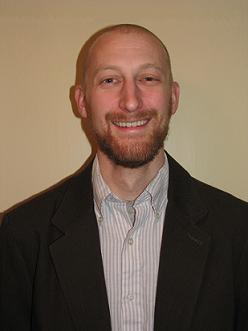
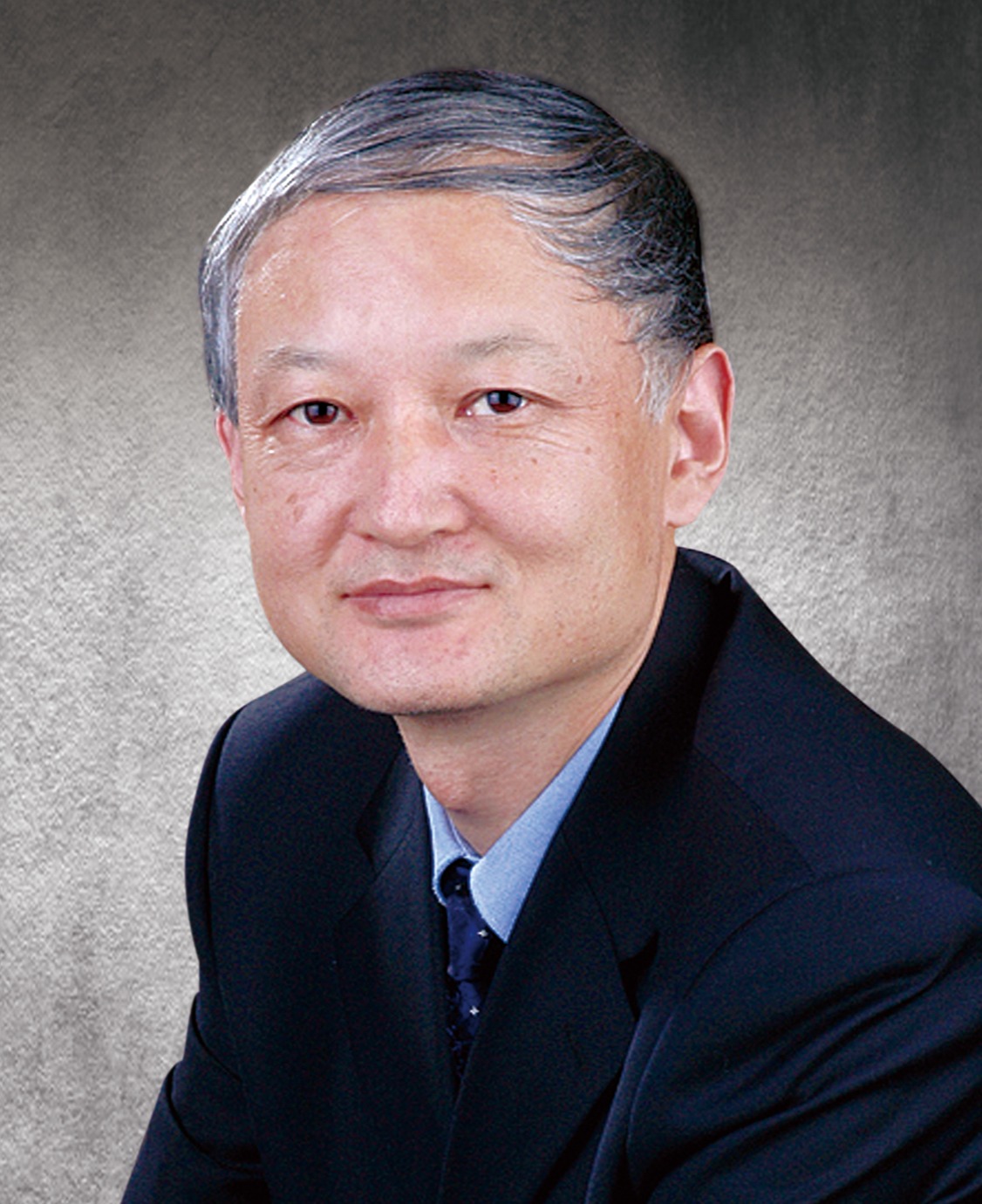
Ritske Jong is a Professor in Experimental Psychology at the Faculty of Behavioural and Social Sciences. His research utilizes electroencephalography (EEG) to explore cognitive mechanisms underlying attention, task-switching, and time perception. He investigates neural correlates of performance variability and decision-making under cognitive constraints. Research Focus: Jong's work spans attentional bias, temporal processing, and neurocognitive modeling. Key themes include EEG signatures of time perception, resit exam effects on learning investment, and implicit temporal regularities. His lab employs behavioral experiments and neuroimaging to dissect cognitive control mechanisms. Publication Trends: Recent articles (2017–2022) cluster in three domains: 1) EEG-informed temporal cognition studies, 2) attentional processing in learning environments, and 3) computational modeling of cognitive tasks. Cross-disciplinary collaborations extend to healthcare technology and educational psychology.
Dr. Alaina DeBiasi is an Assistant Professor in the Department of Criminology and Criminal Justice at Wayne State University within the College of Liberal Arts and Sciences. Her research focuses on firearm violence prevention, policing strategies, crime geography, and community-engaged research. She evaluates violence prevention initiatives and leverages law enforcement data systems to advance crime gun intelligence. Her work emphasizes developing evidence-based policies through studies like the Detroit Crime Gun Intelligence Center's impact on shooting clearance rates and crosswalk analyses of nonfatal shootings. She also explores the intersection of technology and crime measurement, such as using Google Street View for physical disorder observation. DeBiasi teaches courses like 'Police and Society' and 'Policing and Society,' reflecting her commitment to bridging academic research with practical policing practices. While no scientific awards are explicitly listed, her contributions to firearm violence reduction and community-based strategies highlight her impactful research trajectory. Her articles (2023-2025) analyze pandemic-era crime trends, ghost gun proliferation, and gendered perceptions of neighborhood safety. These studies underscore her interdisciplinary approach, combining quantitative analysis with qualitative insights to address urban crime challenges.
Alexander Genevsky is an Associate Professor in the Department of Marketing Management at the Rotterdam School of Management (RSM), Erasmus University Rotterdam. His interdisciplinary research bridges psychology, neuroscience, and marketing to understand the emotional and cognitive mechanisms underlying consumer decisions. Institution: Erasmus University Rotterdam School: Rotterdam School of Management (RSM) Department: Department of Marketing Management Academic Rank: Associate Professor Dr. Genevsky holds a Ph.D. in Psychology from Stanford University, with a focus on decision-making and affective neuroscience, and a bachelor’s degree in Computer Science from Binghamton University. His research employs behavioral experimentation, neuroimaging (e.g., fMRI), and market-level data analysis to explore how emotions shape preferences and choices. He is particularly known for his work on neuroforecasting —using brain activity to predict aggregate market behaviors such as crowdfunding success and video engagement. His recent publications reveal a consistent trajectory in consumer neuroscience and neuroeconomics , with a focus on decoding affective responses, modeling emotional integration over time, and applying neural insights to real-world marketing challenges. Articles like "When brain beats behavior" and "Neural affective mechanisms predict market-level microlending" highlight his pioneering role in demonstrating that neural data can outperform traditional self-reports in forecasting consumer behavior. Dr. Genevsky’s work has been widely covered in international media, including features on brain scans predicting crowdfunding success and the psychological underpinnings of fast fashion consumption. He has collaborated extensively with researchers from Stanford University and the University of Michigan. Scientific Focus: Consumer Neuroscience, Affective Neuroscience, Decision-Making, Neuroforecasting Media Impact: Coverage in Medical Xpress, Morningstar, and documentaries on fast fashion Collaborators: Brian Knutson (Stanford), Carolyn Yoon (Michigan), Maarten Boksem (RSM) He teaches courses in marketing management and leads research that integrates computational modeling with neuroscience to scale lab findings to market-level predictions. There is no indication of advisory roles for students in the provided text, nor any mention of formal scientific awards.
Dr Tom Crook is a Senior Lecturer and Programme Lead in History at Oxford Brookes University's School of Education, Humanities and Languages. He specializes in modern British history, focusing on governance, public health systems, and political corruption. His doctoral training at the University of Manchester (PhD 2005) laid the groundwork for his research on institutional systems and their impact on modernity. He has supervised numerous PhD students, including Dr Mike Esbester and Dr Stefan Fisher-Høyrem, on topics ranging from safety culture to Victorian time perception. His research explores systemic approaches to public health governance (e.g., Governing Systems: Modernity and the Making of Public Health in England, 1830–1910 ), corruption in British public life, and ecological histories of welfare. He regularly publishes in top journals like Journal of British Studies and Past & Present , and organizes conferences on political history themes. Teaching includes modules on ideologies of the West, risk society analysis, and Victorian governance. He is active in public engagement, co-creating performance pieces like the Bonhoeffer-Eichmann narrative, and serves as Postgraduate Research Tutor for his school.
Professor Philip Gerrans is a faculty member in the School of Humanities at the University of Adelaide, within the Faculty of Arts, Business, Law and Economics. His research focuses on using psychological disorders to study the mind, with a particular emphasis on neuropsychiatry, cognitive modeling, and philosophical issues in mental health. He collaborates with the Swiss Centre for Affective Sciences, integrating computational models of neural processing with experiential phenomena. Current projects include the relationship between emotional processing and self-representation, and the philosophical implications of psychedelic experiences. He is eligible to supervise Masters and PhD students in these areas. Key research interests include developmental disorders (e.g., autism), moral psychopathology, delusional disorders, and the application of predictive coding frameworks to mental health. His work bridges neuroscience, philosophy, and clinical psychology, addressing topics like self-dissolution during psychedelic use, neural models of depression, and the cognitive basis of delusions. He emphasizes interdisciplinary methods, combining empirical research with theoretical analysis. Professor Gerrans has published extensively on topics such as depersonalization disorder, mirror neuron systems, and the neurochemistry of emotion. His recent work explores the intersection of psychedelic science and consciousness studies, as well as the computational underpinnings of psychiatric disorders. He maintains active collaborations across disciplines and institutions, contributing to both academic discourse and clinical understanding.
Amit S Yahav is an Associate Professor in the Department of English, Language and Literature at the University of Minnesota, College of Liberal Arts. His academic work bridges literary studies, temporality, and cultural theory, with a focus on 18th- and 19th-century British literature. Research Interests: His scholarship explores the intersections of literature with time, rhythm, leisure, and modern capitalism. Central to his work is the literature of Jane Austen, particularly Mansfield Park and Northanger Abbey , where he investigates themes of temporality, sound, and social rhythm. His research also engages with Johnsonian aesthetics, the philosophy of time, and the cultural significance of idleness and reading practices in the Enlightenment era. The analysis of his 18 research outputs reveals a consistent trajectory in literary theory and historical criticism. His publications span journals such as Modern Language Quarterly , History and Theory , and Eighteenth Century , as well as contributions to major companions like The Routledge Companion to Jane Austen . The dominant keywords include temporality, rhythm, leisure, and literary sound, indicating a sustained inquiry into the temporal and sensory dimensions of narrative form. Scientific Awards and Fellowships: American Society for Eighteenth-Century Studies Fellowship (2006–2007) Charlotte W. Newcombe Doctoral Dissertation Fellowship (2002–2003) Clark Center for 17th & 18th Century Studies Kanner Fellowship (2007–2008) Donald V. Hawkins Professor of English (2019–2020) Graduate Prize Fellowship, Center for Research on Culture and Literature (2000–2001) Advising and Grants: While specific advisees are not listed, his receipt of multiple competitive fellowships suggests a strong record of research funding and academic mentorship. His work has been supported by prestigious institutions dedicated to 18th-century studies and literary scholarship, reflecting national recognition of his contributions to the field. Labs and Research Groups: Although no formal lab or research team is mentioned, his affiliation with centers such as the Clark Center for 17th & 18th Century Studies indicates active participation in interdisciplinary scholarly networks focused on early modern and Enlightenment-era culture.
Emore Paoli is a Full Professor in the Department of International Human and Social Sciences at the University of Perugia, where he teaches Latin language, literature, and European cultural foundations. His academic focus lies in medieval Latin literature, particularly hagiography and religious culture in Umbria, with extensive contributions to the study of saints, manuscripts, and spiritual traditions. His research interests include Latin Literature, Medieval Religious Culture, Hagiography, Manuscript Studies, and Umbrian History . Paoli has published widely on the cults of saints such as San Fortunato, Angela da Foligno, and Iacopone da Todi, analyzing how sanctity was constructed through texts, liturgy, and political strategies in medieval Italy. He has contributed to major scholarly series and edited critical editions of medieval works, including the Catalogus sanctorum by Petrus de Natalibus and the Memoriale of Angela da Foligno. The most recent publications highlight enduring themes in his scholarship: the development of sainthood , manuscript transmission , vernacular adaptations of mystical texts , and the interplay between theology and political authority . His work bridges philology, history, and religious studies, with a strong regional focus on Umbria and central Italy. Among his notable contributions are critical editions, introductions, and analyses in volumes published by the Centro Italiano di Studi sull’Alto Medioevo and SISMEL. He has also authored entries in the Dizionario Biografico degli Italiani , affirming his recognition in Italian academic circles. Paoli has advised on manuscript cataloging, notably the medieval holdings of Todi’s Leonii Library, and collaborates with leading scholars such as Enrico Menestò. While no formal students or grants are listed, his sustained output and editorial roles indicate a central presence in medieval Italian studies. He is actively teaching courses in Latin and cultural history as of the 2025–2026 academic year.
Daniel M. Bartels, Professor of Marketing at the University of Chicago Booth School of Business, investigates mental representations and processes underlying consumer financial decision-making, moral psychology, and intertemporal choice. He joined Booth in 2018 after serving as Associate Professor (2016-2018) and Assistant Professor (2013-2016) at Booth, and Assistant Professor at Columbia Business School (2010-2013). He holds a Ph.D. in Cognitive Psychology from Northwestern University (2007) and a B.S. in Psychology from the University of Wisconsin-Green Bay (2001). Research Interests: Bartels' work bridges Judgment and Decision-Making Consumer Behavior Moral Psychology Cognitive Psychology Behavioral Economics . His research explores how individuals mentally represent expenditures, identity continuity over time, moral trade-offs, and algorithmic decision-making. Article Trends: Recent publications examine cognitive discovery incentives, LLM evaluation frameworks, temporal self-perception, and algorithmic moral trade-offs. His work spans Psychological Science , Cognition , Journal of Consumer Research , and JEP: General , often integrating moral psychology with behavioral economics. Academic Service: He serves as Section Editor for Cognition , has been an Occasional Guest Editor for PNAS , and reviews for over 20 journals including JCR , Psychological Science , and Nature Human Behavior . Grants: Funded by the National Science Foundation, John Templeton Foundation, and U.S.-Israel Binational Science Foundation, Bartels' research addresses foundational questions in decision-making and consumer psychology.
Professor Jonathan White is a leading scholar in political theory and European politics at the London School of Economics and Political Science (LSE) . As Deputy Head of the European Institute , he explores themes such as democracy, emergency governance, technocracy, and populism. His work bridges theoretical rigor with empirical analysis of EU institutions and global political challenges. His research focuses on democratic theory , political partisanship , and future-oriented governance . He examines how climate change and crisis politics reshape democratic legitimacy, with a particular interest in the intersection of technology and transnational solidarity . Recent articles analyze WhatsApp governance , technocratic myopia , and the politics of long-termism . He has received prestigious awards including the 2017 British Academy Brian Barry Prize and best-article honors from European Journal of International Relations (2023) and Political Studies (2015). His influential books include The Politics of Last Resort (OUP 2019) and In the Long Run: the Future as a Political Idea (Profile 2024). White’s academic trajectory includes visiting positions at Harvard, Stanford, and Humboldt University. His interdisciplinary approach integrates democratic theory , social theory , and qualitative methods to address contemporary political challenges.
Professor Kasia Jaszczolt is Professor of Linguistics and Philosophy of Language at the University of Cambridge, where she is affiliated with the Faculty of Modern and Medieval Languages and Linguistics and the Department of Theoretical and Applied Linguistics. She is also a Professorial Fellow at Newnham College, where she serves as Director of Studies in Linguistics. Joining Cambridge in 1995 as an Assistant Lecturer, she progressed through the ranks to become a full Professor in 2010. She previously taught at Oxford, Brighton, and Sussex universities. Her educational background includes Master's degrees in English and Linguistics (1987) and Philosophy (1988) from the University of Łódź, Poland, followed by a D.Phil. in Linguistics and Philosophy from the University of Oxford (1992), where she was a Rawnsley Scholar at St Hugh's College and previously a Soros Scholar at Somerville College. Jaszczolt's research sits at the intersection of linguistics and philosophy, with particular focus on semantics, pragmatics, and the philosophy of language. She developed the influential theory of Default Semantics, which proposes 'dynamic functional propositions' as a way to capture meaning as it evolves in discourse. Her recent work centers on two major projects: (i) dynamic meaning in discourse, where she develops the concept of a functional, dynamic proposition, and (ii) the semantics, pragmatics, and metaphysics of time, particularly human concepts of time and time flow as externalized in different languages. Her research bridges linguistic analysis with philosophical inquiry, examining how language reflects and shapes our understanding of fundamental concepts. Her scholarly output shows a clear evolution from foundational work on propositional attitude reports and semantic ambiguities toward more expansive investigations of self-expression across languages and cultures, and most recently to comprehensive examinations of time representation. The articles demonstrate increasing interdisciplinary engagement, connecting linguistics with philosophy of mind, cognitive science, anthropology, and healthcare communication. Member of Academia Europaea (2012) Alumnus VIP, University of Łódź (2015) Throughout her career, Jaszczolt has secured significant research funding, including from The Leverhulme Trust for projects on Default Semantics (2003-4) and Expressing the Self: Cultural Diversity and Cognitive Universals (2014-17). She currently collaborates on the CHRONOS project 'Rethinking and Communicating Time' with Universitat Autònoma de Barcelona. She serves as General Editor of the Oxford Studies of Time in Language and Thought book series and sits on numerous editorial boards including Journal of Pragmatics and Intercultural Pragmatics. Her academic leadership includes serving as President of the Cambridge Institute of Language Research and Head of Department of Linguistics (2009-11). Based at Newnham College, Jaszczolt maintains an active research group focused on time representation and discourse meaning. She collaborates internationally, particularly with researchers in Barcelona on temporal linguistics, and with scholars across Europe on cross-cultural aspects of self-expression. Her work has created a distinctive approach that bridges formal linguistic analysis with philosophical inquiry into fundamental concepts.
Prof. Dr. Martin Schröder is Professor of Sociology with a focus on Europe at Saarland University, where he conducts research on social inequality, the welfare state, variants of capitalism, economic sociology, generations, morality, and life satisfaction. He is affiliated with the Faculty of Social Sciences and Philosophy and the Department of Sociology. His research interests center on empirical analyses of societal well-being, European identity, political trust, and the critique of generational myths. He frequently uses large-scale datasets such as the German Socio-Economic Panel (SOEP) and pairfam to investigate what truly contributes to life satisfaction, particularly among women and across different societal groups. He challenges widespread narratives about societal decline and generational conflict using robust statistical evidence. His recent publications reveal a strong trend toward analyzing longitudinal public opinion on European integration, citizen reactions to political rhetoric, and the impact of crises like the pandemic and unconventional monetary policy on trust. His work combines political sociology with economic and moral dimensions, emphasizing data-driven insights over popular assumptions. While no scientific awards are mentioned in the provided text, his research has been widely disseminated through academic journals and public media, indicating significant scholarly and societal impact. He advises no named students in the provided material and there is no mention of grants or funding sources. He is the author of three popular science books and three specialist books, and has published around 25 peer-reviewed articles. His public engagement includes blog posts and media interviews where he explains complex sociological findings in accessible language. He is based at Saarland University’s campus in Building C5 3, Room 0.11, and collaborates with researchers such as Prof. Dr. Georg Wenzelburger, Dr. Martin Ulrich, and Dr. Moritz Rehm. There is no mention of a specific research lab or team, but his collaborative work suggests active participation in research networks focused on European politics and societal well-being.
Dimitri Vasiljevic is an Associate Professor of Organizational Behavior and Negotiation at NEOMA Business School. Holding a PhD in Social Psychology from Université de Nanterre Paris-Ouest La Défense and a post-doctoral degree from INSEAD, his research focuses on how emotions—felt and expressed—affect negotiation processes and group collaboration. PhD in Social Psychology Post-Doc from INSEAD His work explores emotional dynamics in organizational settings, with publications spanning negotiation tactics , group decision-making , and behavioral economics . Key journals include the Journal of Applied Psychology, Organizational Behavior and Human Decision Processes, and Personality and Social Psychology Bulletin.
Leslie Kwakye is an Associate Professor of Neuroscience at Oberlin College and the Director of the Office of Undergraduate Research. She teaches courses such as Neuroscience of the Arts , sensory neuroscience lectures/labs, and a senior seminar on Mind, Brain, Eyes, and Ears . Her research focuses on multisensory integration and attentional modulation in neurotypical individuals, musicians, and those with developmental disorders. Education : BA from Oberlin College PhD from Vanderbilt University Research Interests include: Neural mechanisms of multisensory integration Impact of attention on temporal perception Developmental differences in sensory processing Applications of Bayesian causal inference modeling Publications highlight work on: Autism spectrum disorder and sensory responsiveness Virtual reality environments for studying integration Role of distractors in temporal acuity Comparative studies in auditory-visual processing Director of Undergraduate Research : Supports student and faculty research collaboration Advocates for equitable access to research opportunities Facilitates manuscript writing and project conception with undergraduates
Jason Rose is an Associate Professor of Psychology at the University of Toledo's College of Arts and Letters , where he co-directs the Integrating Social Psychology and Health in Research (InSPHIRe) laboratory . His work bridges social cognition , judgment and decision-making , and health psychology through empirical studies on social comparison processes, norm perception biases, optimism, risk perception, and cultural/individual differences. Ph.D. in Psychology (University of Iowa, 2009) B.A. in Psychology (Purdue University) His research focuses on: How social comparison influences self-esteem and emotional regulation in contexts like social media , pandemic compliance , and borderline personality disorder . Norm perception biases and their role in health behaviors , including Covid-19 vaccination uptake and placebo effects . Optimism and risk perception across diverse populations, with attention to cultural differences and individual variation . Recent publications (2022-2024) examine: Social media's impact on moral judgments and mental health in young adults. Comparative risk assessments during the Covid-19 pandemic , linking self-efficacy to protective behaviors . Dimensional comparisons (temporal, social, counterfactual) in health contexts and exercise psychology . Placebo effects and personal control in pain management and medical treatments .
Chen Guoqing is a Professor and Senior Professor of Humanities at Tsinghua University's School of Economics and Management, where he serves as Deputy Director of the Academic Committee. He chairs the National Natural Science Foundation of China's Big Data Major Research Program Guidance Expert Group and directs the Ministry of Education's Higher Education Management Science and Engineering Professional Teaching Guidance Committee, with additional roles on national informatization and New Liberal Arts committees. Education: Bachelor's Degree, Renmin University of China (1982) Master's Degree, University of Leuven, Belgium (1988) Doctorate, University of Leuven, Belgium (1992) Research Focus: Professor Chen pioneers research in Business Intelligence and Big Data Analysis, developing frameworks like PAGE for data-driven decision-making. His work spans E-commerce, IT Strategy, and Fuzzy Logic, with recent emphasis on personalized recommendation systems, online consumer behavior, and AI-human collaboration in business contexts. His publications reveal a trajectory from foundational fuzzy logic research to cutting-edge big data applications, consistently bridging technical innovation with managerial relevance. Awards: AIS Fellow (first from mainland China) IFSA Fellow Fudan Management Outstanding Contribution Award Changjiang Scholar Distinguished Professor National Science Fund for Distinguished Young Scholars National Outstanding Doctoral Dissertation Advisor Leadership: As former Executive Vice Dean of Tsinghua SEM and Vice President of IFSA, he has shaped academic policy globally. He leads major NSFC projects and international collaborations while advising government bodies on informatization strategy. His teaching includes national-level courses like "Management Information Systems" and "Management in the Big Data Era."