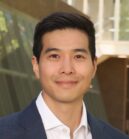
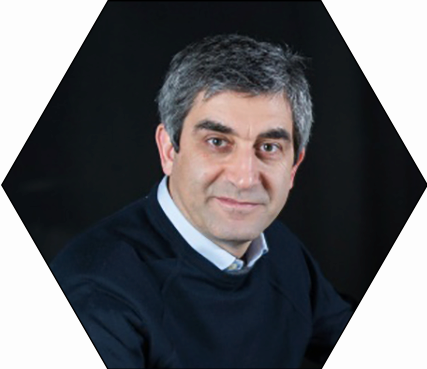
Christian FISCH is an Associate Professor in Business Economics and Entrepreneurship at the University of Luxembourg's Interdisciplinary Centre for Security, Reliability and Trust (SnT). His research focuses on the intersection of entrepreneurship with digital technologies, venture finance, and socio-cultural influences. Key areas include blockchain-based financing mechanisms (e.g., ICOs), the psychological and digital identity aspects of entrepreneurs, and the impact of environmental/climate factors on entrepreneurial activity. He has published extensively in top journals, addressing topics such as B Corp certification signaling effects, venture capital decision-making, and the paradox of technology adoption among SMEs. His work spans both theoretical contributions (e.g., extending Schumpeterian frameworks) and applied analyses (e.g., post-pandemic entrepreneurial resilience). FISCH collaborates with global institutions, leveraging mixed-methods approaches including digital trace analysis from platforms like Twitter to study investor behavior and entrepreneurial traits. He has no listed awards but maintains active research agendas in decentralized finance, climate entrepreneurship, and cross-cultural entrepreneurial motivations. Professional activities include editorial roles in entrepreneurship journals and advising on innovation policy. His research often addresses emerging trends such as NFTs in creative industries, DAO governance structures, and the role of trademarks/patents in regional innovation ecosystems.
David S. Caudill is a Professor of Law and the inaugural Arthur M. Goldberg Family Chair at Villanova University’s Widger School of Law since 2005. He also holds the title of Senior Fellow at the University of Melbourne Law Faculty. Caudill has held visiting appointments at the University of Texas, Southern Illinois University, Cardozo School of Law, and the University of Florida. Education: J.D., University of Houston Law Center (1981) Ph.D., Philosophy, Free University of Amsterdam (1989) B.A., Philosophy, Michigan State University (1973) Postdoctoral work: Science & Technology Studies at Virginia Tech (2001) and Washington Psychoanalytic Institute (1994-95) Caudill’s research bridges law and science studies , law and literature , and sports and entertainment law . His recent work examines the legal implications of scientific consensus, confidentiality in business contexts, and the ethical dimensions of literary narratives in jurisprudence. His five 2025 publications reflect interdisciplinary engagement with legal ethics, scientific evidence in courtrooms, and the intersection of law with cultural and scientific discourse. Articles address topics like non-disclosure agreements, climate change litigation, and the use of literature in legal ethics training. Scientific Awards: SKAPP grant (2007) Société de Chimie Industrielle Fellow (2007/2008) Before academia, Caudill practiced real estate and sports law, clerked for the Fifth Circuit, and taught as an adjunct professor at the University of Texas. His presentations span themes like expertise crises, psychoanalytic theory in law, and religious aspects of legal epistemology.
Steffi Haag is a Professor of Digital Innovation and Entrepreneurship at the Institute of Computer Science , Heinrich Heine University Düsseldorf (HHU) . She bridges the Faculty of Mathematics and Natural Sciences and Faculty of Business Administration and Economics , collaborating with the Center for Entrepreneurship Düsseldorf (CEDUS) to inspire tech startups. Her research focuses on sustainable information systems, digital experiences, and business models. Steffi Haag’s research integrates Shadow IT , Usable Cybersecurity , and Digital Idea Management . Her work emphasizes theoretical , quantitative , qualitative , and mixed-methods research , including experimental and survey methodologies. Steffi Haag’s publications (2018–2024) span Information Systems , Cybersecurity , Digital Twins , and Sustainable Design . Common themes include Shadow IT dynamics , user behavior in security , and innovation management . Hermann Gutmann Award for special scientific achievements (2023) Schöller Fellow (2020) HMD Best Paper Award (2018) Research Award in Data Protection and Data Security (2017) Dissertation Prize (2017) Steffi Haag has secured grants such as the TU Darmstadt Postdoctoral Fellowship for Female Researchers (2016–2018) and Deloitte Foundation Fellowship (2009–2011). She actively moderates conferences and serves as Associate Editor of Business & Information Systems Engineering .
Prof. Dr. Bernd Skiera holds the first chair for electronic commerce in Germany at Goethe University Frankfurt am Main since 1999. He serves on the board of efl - The Data Science Institute and the Schmalenbach Society, while representing Germany at the European Marketing Community (EMAC). Chair of Marketing, Goethe University Frankfurt am Main Board member, efl - The Data Science Institute National representative, European Marketing Community (EMAC) His research focuses on MarTech/SalesTech integration, customer value management, online advertising analytics, data-driven pricing models, and the economic implications of internet privacy regulations. He leads the ERC Advanced Grant project on cookie usage restrictions' economic consequences. Recent publications examine dynamic pricing in digital markets, competition visualization using big data, and AI applications in marketing analytics. The ERC Advanced Grant research has produced empirical analyses of GDPR impacts on advertising ecosystems. 2015 Journal of Marketing Best Paper Award 2013 International Journal of Research in Marketing Best Paper Award Multiple MSI/H. Paul Root Award recognitions He has mentored 17 doctoral students who became professors globally, including at London Business School and LMU Munich. His work bridges marketing analytics with financial valuation through customer equity modeling.
J. Daniel Kim is an Assistant Professor of Management at the Wharton School, University of Pennsylvania, where he teaches MBA and PhD courses on entrepreneurship and innovation. His research focuses on high-growth entrepreneurship, venture scaling, strategic human capital, mergers and acquisitions, innovation, and labor markets. PhD - MIT Sloan School of Management BA - Dartmouth College His research explores: Startup hiring challenges and firm-driven search strategies Timing and risks of venture scaling Post-acquisition employee retention patterns Founder impact on organizational change Immigrant founder contributions to entrepreneurship Key article trends show: Focus on talent dynamics in high-growth firms Analysis of organizational antecedents in acquisitions Quantitative approaches using population-level data Interdisciplinary connections between entrepreneurship, strategy, and economics Debunking myths about founder demographics Linkage between labor market mechanisms and startup performance Scientific recognition includes: Multiple Teaching Excellence Awards at Wharton (2024-2020) Best Paper Prize from Strategic Management Society (2020) Kauffman Dissertation Fellowship (2017) MIT Sloan Doctoral Thesis Prize (2019) Prof. Kim serves as an economist with the United States Census Bureau and has published in top journals including Strategic Management Journal , Organization Science , and American Economic Review: Insights . His work has been featured in The Wall Street Journal , New York Times , and Financial Times .
Professor Raghavendra Rau is the Sir Evelyn de Rothschild Professor of Finance at Cambridge Judge Business School, University of Cambridge. He is the Founder and Academic Director of the Cambridge Centre for Alternative Finance (CCAF) and serves on editorial boards of journals like the Journal of Corporate Finance and Journal of Banking and Finance. He will be President of the Financial Management Association in 2025 and has held visiting roles at Gresham College, Universiti Malaya, and University of Jordan. Education: MBA (IIM Bangalore), MSc, PhD (INSEAD) Previous Roles: Principal at Barclays Global Investors, Ambank Chair, Gresham Professorship His research focuses on how investors and firms process information, with key areas including corporate governance, behavioral finance, fintech, digital finance, CEO decision-making, and ESG. He explores links between prenatal environmental exposure and executive risk-taking, gender diversity in finance, and regulatory impacts on crowdfunding and digital lending. Recent publications analyze serial acquirers' behavior, CSR impacts on firm value, superstitious fund managers, and digital financing regulations. His work bridges behavioral biases, environmental factors, and financial innovation. Awards include the 2015 Ig Nobel Prize in Management.
Kiran Pedada is an Associate Professor of Marketing at the Asper School of Business, University of Manitoba, and holds the F. Ross Johnson Fellow and The Associates Fellow in Marketing and Inclusive Business. Previously, he was an Assistant Professor at the Indian School of Business (ISB) and a Visiting Scholar at the University of North Carolina. He has been recognized as ISB’s Teacher of the Year (2020 and 2021) and named a top MBA professor by BusinessBecause. His research focuses on marketing strategy, digital transformation, emerging markets, and inclusive business practices. Dr. Pedada earned his Ph.D. in Marketing from Texas Tech University, where he won the Helen Devitt Jones Excellence in Graduate Teaching Award. His doctoral work on international marketing alliances in emerging markets won the prestigious AMS Mary Kay Inc. Doctoral Dissertation Award. Before academia, he worked in management consulting and corporate strategy. Research Interests : Marketing strategy in digital environments Social and financial impact of marketing Global marketing expansion via digital ecosystems Emerging markets dynamics Brand competitiveness through digital orientation Key Contributions : His research has been published in top journals like Journal of Marketing Research and Journal of the Academy of Marketing Science. He co-authored cases on digital transformation for Harvard Business Publishing and serves on editorial boards of key marketing journals. His work has been featured in Forbes, Fortune, and CNN. Awards : AMS Mary Kay Inc. Doctoral Dissertation Award (2019) F. Ross Johnson Fellowship Teacher of the Year (ISB, 2020 & 2021) He actively advises on digital readiness of SMEs and ESG integration in alliances. His current projects explore metaverse applications and rural microentrepreneurship in India.
F. Levent Degertekin is a Regents' Entrepreneur and the George W. Woodruff Chair in Mechanical Systems and Professor at the George W. Woodruff School of Mechanical Engineering at Georgia Institute of Technology. His office is located in Love Building, room 311B, and his contact email is levent.degertekin@me.gatech.edu. Dr. Degertekin's academic journey includes a Ph.D. in Electrical Engineering from Stanford University (1997), an M.S. in Electrical Engineering from Bilkent University, Turkey (1991), and a B.S. in Electrical Engineering from Middle East Technical University, Turkey (1989). Dr. Degertekin's research focuses on micromachined ultrasonic devices and systems for medical applications, particularly in intravascular ultrasound imaging, therapeutic ultrasound, and acousto-optical sensors for MRI. His work spans from fundamental research on novel transduction methods to complete catheter-based imaging systems close to commercialization. He has made significant contributions to capacitive micromachined ultrasonic transducers (CMUTs), developing diffraction grating based optomechanical sensing methods now commercialized by Silicon Audio, novel atomic force microscopy imaging probes, and micromachined ultrasonic ejector structures for cell transfection commercialized by OpenCell Technologies. His research integrates acoustics, optics, and their combinations for various medical applications, utilizing conventional microfabrication (MEMS) and integrated circuit technologies. The Degertekin lab exposes students to applied physics, electrical, mechanical and biomedical engineering, biology, and biomimetic systems, providing them with thorough theoretical and experimental education in acoustics and optics while learning interdisciplinary research. Dr. Degertekin's work has received significant media attention, including coverage in IEEE Spectrum, Wired Magazine, The New York Times, and Fox Business News, highlighting innovations such as handheld ultrasound probes, MRI safety sensors, and minimally invasive cardiac imaging technologies. IEEE Fellow for 'Contributions to micromachined ultrasonic and optomechanical transducers and systems,' 2022 IEEE UFFC Society Inaugural Carl Hellmuth Hertz Ultrasonic Achievement Award, 2014 George W. Woodruff School Outstanding Achievement in Commercialization and Entrepreneurship Award, 2024 National Science Foundation CAREER Award, 2004-2009 Whitaker Foundation Biomedical Engineering Research Grant Award, 2001 66 US and 6 International Patents Dr. Degertekin has mentored numerous students who have gone on to make significant contributions in the field. Several of his students have received IEEE Ultrasonics Symposium Best Student Paper Awards, including Jeff McLean (2003), Sheng-Yu Peng (2006), Rasim O. Guldiken (2005 and 2007), and Toby Xu (2014). His research has been supported by various grants including the NSF CAREER Award and Whitaker Foundation grant. His work has led to multiple commercial ventures including Silicon Audio and OpenCell Technologies. The Degertekin Group at Georgia Tech focuses on transducers and systems for medical imaging and sensing, with current projects including capacitive parametric transducers, acousto-optic sensors for MRI, novel transducer methods for focused ultrasound in the brain, microsystems for intravascular and intracardiac ultrasound imaging, and CMUT-on-CMOS systems for IVUS imaging.
Stephan J. Goetz is a Professor in the Department of Agricultural Economics, Sociology and Education at the College of Agricultural Sciences, Pennsylvania State University. He is based at 207C Armsby Building, University Park, PA 16802, and can be reached at sjg16@psu.edu. His research spans agricultural economics, regional development, and rural policy, with a strong emphasis on human and social capital, innovation, and community well-being. His research interests focus on the role of markets and human capital in economic growth and poverty reduction. Key areas include regional food systems, self-employment, social network analysis, targeted regional development, agritourism, direct farm sales, and the digital divide. His work often integrates data science, spatial analysis, and policy evaluation to understand rural economic dynamics. The recent publications highlight a consistent trend in analyzing rural innovation, food system resilience, and socioeconomic impacts of technology and crises. His work combines empirical methods with optimization models, often using county-level U.S. data. Themes include food hub logistics, cloud computing in rural economies, pandemic-related food insecurity, and gender impacts in farming. While no specific awards are listed, his extensive publication record in high-impact journals reflects scholarly recognition. He has collaborated with researchers across disciplines, suggesting active grant-funded projects and likely student mentorship, though formal advisees are not named. He is involved in research on equitable communities and the built environment, and affiliated with initiatives related to health and environmental sustainability. His work with extension services indicates engagement with public outreach and community development programs.
Susan Scott is a Professor of Management and Artificial Intelligence at Imperial College London, holding a joint appointment with the Imperial College Business School and IX, the university’s AI initiative. She previously held academic roles at the London School of Economics and Political Science (LSE), including Professor of Information Systems and Innovation and Faculty Group Lead in the Department of Management. Her research spans Information Systems, Organization Theory, and Technology Management, with a focus on sociomateriality, digital transformation, and ethical innovation. Scott earned a PhD in Management (Information Systems) from the University of Cambridge, an MSc in Information Systems from LSE, and a BA in History and Politics from SOAS, University of London. Her work bridges theoretical and applied domains, addressing challenges in digital accountability, institutional displacement, and the societal impacts of emerging technologies. She has contributed to major initiatives like the SWIFT financial network analysis and explored ethical dimensions of AI and big tech. Her articles critically examine topics such as crowd-based accountability, digital undertows in industry standards, and the material-discursive practices shaping organizational practices. Though no awards are listed, her extensive publications reflect a commitment to rigorous qualitative and mixed-methods research, emphasizing phenomenon-focused theorizing in Information Systems. Scott’s research agenda integrates academic and practical insights, addressing future challenges like AI governance, digital responsibility, and the sociotechnical reconfigurations reshaping institutions and industries.
Olga Kokshagina serves as an Associate Professor in Innovation & Entrepreneurship at The University of Sydney, with adjunct research appointments at Monash University's Emerging Technology Lab and the UNU Hub - Learning Planet Institute. She is also an active member of the French Digital Council. Her research program investigates technology-mediated collaboration in complex innovation systems, focusing on healthcare transformation, deep tech commercialization, and co-design methodologies. Kokshagina has led high-impact projects with global institutions including the World Health Organization, OECD, STMicroelectronics, Vall d’Hebron Hospital, and Roche, demonstrating strong translational research capabilities. Her scholarly work centers on value-based healthcare innovation, digital platform governance, and AI-enhanced collaborative systems. She examines how organizational capabilities evolve during technological transitions, particularly in healthcare ecosystems, and investigates regulatory frameworks for algorithmic control in digital markets. Kokshagina's research bridges theoretical innovation management with practical applications, evidenced by her co-founding of Ninti—an initiative advancing women's health in workplace environments—and her Open Covid-19 crowdsourcing campaign that mobilized global expertise during the pandemic. Analysis of her 2021-2025 publications reveals a cohesive trajectory examining innovation in socio-technical systems. Key themes include value digitalization in healthcare, mission-oriented interdisciplinary collaboration, and the impact of big data on technology management. Her work consistently addresses grand challenges through mixed-methods approaches, spanning conceptual frameworks in journals like Research Policy to applied studies in Technovation and R&D Management, with increasing focus on quantum readiness and AI-augmented learning systems. No scientific awards are documented in the provided materials. Kokshagina currently holds a 2025 research grant for "Co-designing societal readiness and scenario building for quantum" through the University of Sydney Nano Institute/Catalyst program. While no student supervision activities are mentioned, her collaborative projects involve multi-institutional teams across industry, government, and academic sectors. Kokshagina maintains active roles within the University of Sydney Nano Institute and contributes to international policy discourse through the French Digital Council. Her Ninti initiative exemplifies her commitment to human-centered innovation, while ongoing collaborations with healthcare providers like Roche and Vall d’Hebron Hospital demonstrate sustained engagement with real-world implementation challenges in value-based care systems.
Peter Brummund is an Associate Professor of Economics at the University of Alabama, holding a position in the Department of Economics, Finance, and Legal Studies within the Culverhouse College of Business. He is also an IZA Research Fellow since December 2023, having previously served as a Research Affiliate since October 2018. In 2021, he was a Visiting Professor at WU Wien (Vienna University of Economics and Business). Education: PhD in Economics from Cornell University (2012) MA in Economics from Cornell University (2010) MSc in Development Studies from the London School of Economics (2006) BS in Computer Science from Taylor University (1999) Peter Brummund's research focuses on labor and development economics, with particular emphasis on how labor markets can enable people to work their way out of poverty. His work examines incomplete labor markets, job creation and destruction, job quality, job stability, minimum wages, monopsony, occupational segregation, program and policy evaluation, trade and labor, and the wage-productivity gap. He utilizes high-resolution datasets from numerous countries including Brazil, Ethiopia, Indonesia, Malawi, Uganda, United States, and Tanzania. His recent publications reveal a strong focus on labor market dynamics in developing countries, with particular attention to agricultural labor markets in Africa, occupational segregation trends in the United States, and the impacts of minimum wage policies. His methodological approach combines rigorous econometric analysis with detailed institutional knowledge of the labor markets he studies. Scientific Awards: Ernst Liu Family Economics Outstanding Teaching Award, Cornell, 2008 IZA Research Fellow (since December 2023) Professor Brummund has advised numerous PhD students, including Laura Connolly (2018, now at Michigan Tech) and Chris Oconnor (2021, now at Holy Cross), and currently advises Klara Kinnl and Melanie Gräser at WU Wien. His undergraduate mentoring has led to placements at prestigious institutions like Stanford's Institute for Economic Policy Research and recognition through the Randall Research Scholars Program and University of Alabama Undergraduate Research Awards. He teaches courses in Labor Economics, Development Economics, Policy Evaluation Methods, and Microeconomics at both undergraduate and graduate levels.
Amir Sufi is the Bruce Lindsay Distinguished Service Professor of Economics and Public Policy at the University of Chicago Booth School of Business, where he has been a faculty member since 2005. He serves as a Research Associate at the National Bureau of Economic Research and co-director of its Corporate Finance Program. Bachelor’s Degree, Walsh School of Foreign Service, Georgetown University (1999) PhD in Economics, Massachusetts Institute of Technology (2005) His research focuses on finance , macroeconomics , and corporate finance . Key areas include household debt dynamics , credit market structure , income inequality , and interest rate impacts on productivity growth . Recent work examines customer capital investment and low-interest rate effects on market concentration . Selected scientific awards include the 2017 Fischer Black Prize, Econometric Society Fellow (2022), and American Academy of Arts and Sciences Fellow (2024). His peer-reviewed publications and working papers span topics from syndicated loans to global household debt cycles , with notable contributions to understanding credit-driven business cycles and government-led consumer credit programs . He teaches courses in leveraged finance , private credit , and corporate restructuring .
Professor Terry Flew (BEc (Hons), MEc (Sydney), MBA (QUT), PhD (Griffith)) is a leading academic at the University of Sydney , holding the Professor of Digital Communication & Culture position within the Faculty of Arts and Social Sciences . As an Australian Research Council Laureate Fellow (2024-2029), he leads the Centre for AI, Trust & Governance , a flagship initiative involving multiple faculties. His international appointments include Research Fellow at the UK Creative Industries Policy & Evidence Centre and Honorary Professor at the University of Nottingham Ningbo China. Co-Director, Centre for AI Trust and Governance Member, SSSHARC research center International collaborations with Carleton University (Canada), Communications University of China, University of Glasgow (UK) Research Focus : Specializing in platform governance , digital policy , and mediated trust , Professor Flew bridges media economics , AI ethics , and creative industries . His work examines digital platform regulation , news media sustainability , and global internet governance , with recent projects analyzing trust mechanisms in AI systems and digital content regulation . The 2024-2028 Laureate Fellowship on "Mediated Trust" integrates these themes. Publications & Grants : With 16 authored/edited books and 129 journal articles , he has secured $11 million in research funding (including $9.9 million from ARC). Key grants include ARC Discovery projects on digital platform governance and Linkage projects on citizen journalism. Professional Leadership : Served as ICA President (2019-2020), ANZCA President (2009-10), and Lead Commissioner for the Australian Law Reform Commission. Currently sits on editorial boards of Journal of Communication , Global Media and Communication , and Media International Australia .
Charles Baden-Fuller is the Centenary Professor of Strategy and leader of the Strategy Group at Bayes Business School , City St George’s, University of London . He is concurrently a Senior Fellow at the Wharton School, University of Pennsylvania . Recognised among the world’s top strategy scholars, he has directed major multi-institutional research initiatives and served as Editor-in-Chief of Long Range Planning (1999-2010). Education & Qualifications BA (Oxon) – University of Oxford MA Economics – Cornell University PhD – London School of Economics Research Interests Charles’s work lies at the intersection of strategic management , business model innovation and digital transformation . His early research explained how mature firms can be rejuvenated and how alliances create competitive advantage. More recently he has advanced the concept of business models , investigating what they are, how they evolve, and how managerial cognition shapes their deployment in increasingly digitalised environments. Empirical settings span biotechnology, financial services, automotive software ecosystems and creative industries. Publications & Impact With over 80 refereed journal articles and five influential books—including the seminal Rejuvenating the Mature Business (Harvard Business Press)—his scholarship has shaped both academic theory and managerial practice. Recent articles (2021-2025) focus on digital platform alliances, entrepreneurial networking logics, and AI-enabled business model design. Honours & Awards Fellow of the Strategic Management Society (SMS Fellow, 2009) Fellow of the British Academy of Management Fellow of the British Academy Fellow of AACSB Doctoral Supervision & Research Funding He has supervised to completion more than six PhD students, many now faculty at leading universities. His research has attracted over £4 million in grants from the European Union , UK ESRC , EPSRC and the Mack Institute-Wharton , supporting multi-university teams at Bayes, Sussex, LSE, CREATE-Glasgow, Grenoble EM and Wharton. Professional & Outreach Roles Beyond academia, Charles serves as director or strategic advisor to several high-technology start-ups and as trustee of a major charity. He is a frequent keynote speaker for industry and policy audiences, and his research findings have been featured in the Financial Times , Management Today and other leading media.