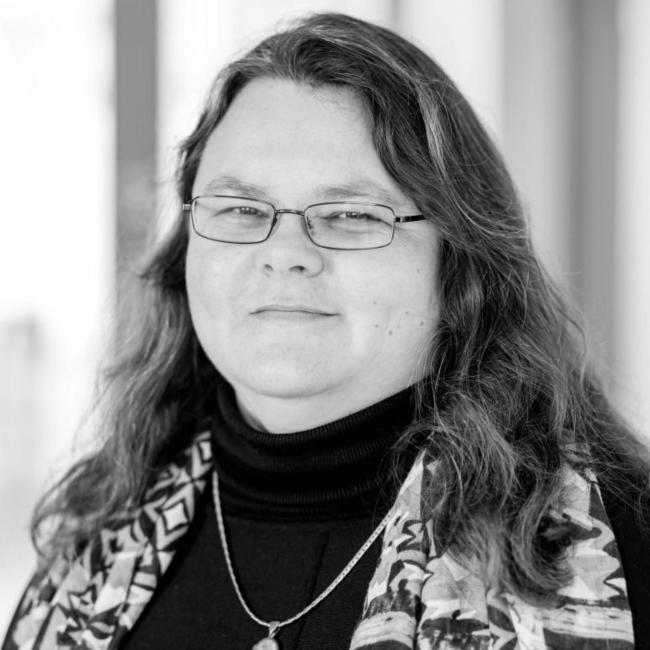
Jussi Taipale is a Professor of Medical Systems Biology at Karolinska Institutet and holds professorships at University of Helsinki. His research focuses on transcription factor binding mechanisms , cancer genomics , and gene regulatory networks . The interdisciplinary Taipale Lab operates across three international locations: Wellcome Sanger Institute (UK), Karolinska Institutet (Sweden), and University of Helsinki (Finland), with over 20 members including senior scientists, postdoctoral fellows, and graduate students. Ph.D., University of Helsinki (1996) Postdoctoral training: University of Helsinki, Johns Hopkins University Research spans transcription factor cooperativity , epigenetic regulation , chromatin accessibility , and noncoding mutation analysis . Key methodologies include HT-SELEX , CUT&RUN , ATI assays , and CRISPR-based functional genomics . The lab has significantly advanced understanding of Myc-driven oncogenesis , TF-nucleosome interactions , and dinucleotide specificity mechanisms . Notable discoveries include chromatin context-dependent enhancers , water-mediated DNA recognition , and novel composite transcription factor motifs . The group maintains active collaborations across Europe and has trained numerous alumni now leading academic and industry positions worldwide.
Yvonne Lindqvist is Professor in Translation Studies at the Department of Swedish Language and Multilingualism, Institute for Interpretation and Translation Studies, Stockholm University, Sweden, a position she has held since 2021. She also serves as Director of Studies for the PhD program at the Institute and is a member of the Faculty Club board. During the academic year 2024/25, she is on sabbatical at University College London's Centre for Translation Studies, researching contemporary Anglophone Caribbean literature in Swedish translation. Dr. Lindqvist's research primarily operates within the frameworks of Descriptive Translation Studies and the Sociology of Translation. She has developed the influential 'Double Consecration Hypothesis,' which examines how literature from peripheral cultures gains access to Swedish readers. Her work consistently emphasizes the role of agents involved in translation processes, products, and functions across various literary genres including crime fiction, cookery books, and modern classics. In recent years, she has increasingly focused on World Literature Studies, exploring how translation sociology intersects with literary circulation and 'distant reading' approaches. She considers Bibliomigrancy a key bridge concept between these fields, arguing that 'world literature is written by the translators.' Her publication record is extensive, with 37 peer-reviewed papers, 3 monographs, 3 anthologies, 2 scientific reports, and 12 popular science publications as of March 2024. Her scholarly output reveals consistent engagement with the dynamics of literary translation, particularly in examining consecration mechanisms that enable bibliomigrancy from literary peripheries to semi-peripheries, with special focus on Caribbean literature in Swedish translation. Dr. Lindqvist has supervised four completed PhD dissertations and currently serves as primary supervisor for Giada Brighi. Her administrative roles include membership on the department board (2013-2023), Vice Director of the Institute (2014-2020), and Director of Studies for the PhD program (since 2021). She has been instrumental in developing translation courses at the Institute, teaching from undergraduate to PhD levels. She is an active member of the research community, having been part of the research program 'World Literatures: Cosmopolitan and Vernacular Dynamics' (2016-2022), and contributes to the TRISS (Translation in Societies) research group which investigates translation as a fundamental social relation in our globalized world, and the 'Network Language and Power' research group. She is a member of EST (European Society for Translation Studies) and a CETRA-alumni.
Rakel Österberg is an Associate Professor in Spanish Linguistics at Stockholm University's Department of Romance Studies and Classics. Her work focuses on second language acquisition, academic writing, and heritage language education for Romance languages, particularly Spanish. She collaborates internationally through research groups like RomSLA (Romance Languages and Second Language Acquisition) and previously worked on the TAL project examining foreign language education alignment in Swedish schools. Research Themes: Syntax in native/non-native speech, multilingual writing development, heritage language biliteracy Teaching: Supervises bachelor and master's theses, teaches SLA, Spanish grammar, academic writing, and language education Key Collaborations: Works with Dr. Lars Fant (SU) on high-proficiency L2 syntax, co-authored projects with Dr. Alejandra Donoso (Linnaeus University) and Dr. Enrique Sologuren (Universidad de los Andes, Chile) Recent publications analyze syntactic peripheries in Romance languages, multilingual academic writing, and heritage language maintainence. She co-organized international workshops on Spanish heritage language in Sweden (2014, 2019) and contributes to shaping language education policy through the TAL project's findings. Contact: rakel.osterberg@su.se | ORCID: 0000-0002-6125-4755
Carin Östman is a Lecturer in Nordic Languages at Uppsala University. Her research focuses on stylistics, grammar, and the historical development of Swedish, particularly in literary and dramatic contexts. She is actively involved in computational linguistics projects, including the SLäNDa corpus for Swedish literary analysis. Research Interests Stylistics and grammar of Swedish Historical language development in literature Dialogue structures in drama Computational analysis of literary texts Language education and teacher training Key Contributions Co-developer of SLäNDa (Swedish Literary Narrative and Dialogue) corpus Editorial roles in Språk och Stil and Language and Style journals Studies on Swedish syntax in Strindberg's works and Lagerlöf's language innovation Investigations into linguistic reduction and modern spelling practices Contact: carin.ostman@nordiska.uu.se
Johanna Salomonsson is a researcher at Linnaeus University's Department of Swedish, focusing on discourse analysis, systemic-functional grammar, and language education. She is affiliated with the Centre of Language for Specific Purposes (CLSP), the Educational Linguistics research group, and the Nordic Research Network for Educational Linguistics (NordEdLing). Her work examines how language is conceptualized across migration discourses, online communication, and second language acquisition contexts. Key research areas include discourse analysis , systemic-functional grammar , and computer-mediated communication She investigates language's role in integration, migration policies, and political rhetoric Her publications span analyses of prepositional phrases, narrative structures, and language policy Salomonsson has co-authored studies on EU nurses' integration into Swedish healthcare and contributed to understanding misunderstanding strategies in German forums. She teaches grammar, grading, and writing in Swedish as a second language, with a focus on net-based learning and oral task design.
Päivi Juvonen is a Professor of Swedish as a Second Language at Linnaeus University's Faculty of Arts and Humanities , Department of Swedish. Her research focuses on multilingualism, language development, and social inclusion of newly arrived students in Swedish upper secondary schools. Research Interests include Multilingual education and translanguaging Swedish language instruction for migrants Disciplinary literacy and student heterogeneity Language policy and educational sociology Lexical typology and language contact Publications span topics such as: Language development in heterogeneous classrooms Attitudes toward multilingualism in education Lexical simplification in pidgin languages Pragmatics of determiners in spoken Finnish Scientific Contributions include a Swedish Science Foundation-funded project (2018-2022) analyzing language and academic progress of newly arrived students through ethnographic methods, policy documents, and statistical analysis. She collaborates with institutions like Stockholm University and Dalarna University.
Hyeseung Jeong is a Lecturer at the Department of English at Stockholm University , where she teaches grammar proficiency, second language learning theories, and academic writing to pre-service primary and secondary school teachers. Her research focuses on English as a Lingua Franca (ELF) , Global Englishes (GE) , and critical examinations of nativeness ideologies in language education. She supervises research projects at both undergraduate and Master’s levels, and develops digital examination tools on platforms like Inspera. Jeong’s work explores how linguistic ideologies impact pronunciation teaching and listener attitudes, particularly in multilingual contexts. Her recent projects include studies on Swedish pupils’ comprehension of diverse accents and interventions to promote inclusive language policies. Current research with Marcella Caprario and Stephanie Lindemann involves challenging racialized native-speakerism through a Global Englishes curriculum in Hong Kong teacher education. She has published extensively on topics such as phonological training , workplace English , and cross-linguistic intelligibility. Her scientific collaborations span institutions in Sweden, Malaysia, and Hong Kong. Notable publications include critiques of language policies in Swedish higher education and experimental studies on Mutual Intelligibility between Malay- and Swedish-accented English. Jeong’s methodological expertise includes corpus-supported discourse analysis and interpretative phenomenological analysis (IPA) . She advocates for pedagogical shifts that prioritize equitable communication strategies over traditional nativeness paradigms.
Gilbert Ambrazaitis is a Senior Lecturer in Swedish as a second language and a phonetics researcher at Linnaeus University, Department of Swedish Language. He holds a PhD in Phonetics (2010) and an M.A. in Phonetics and Digital Speech Processing (2004). His research focuses on prosody, particularly the multimodal interaction between speech and bodily movements, and children's acquisition of contrastive intonation. He leads an externally funded project on contrastive focus production in children and collaborates with the Linnaeus University Centre for Intermedial and Multimodal Studies (IMS) and the Educational Linguistics research group. Educations: PhD in Phonetics (2010), M.A. in Phonetics (2004) Affiliations: Linnaeus University Centre for Intermedial and Multimodal Studies (IMS), Educational Linguistics, LiLa Lab (Language, Cognition & Culture Lab) Research Interests: Prosody, multimodal communication, intonation acquisition, Swedish phonetics, speech-gesture interaction. His work bridges phonetics, linguistics, and education, with projects like 'Learning to Focus' exploring children’s intonation development across dialects. He also investigates the role of gestures and head movements in Swedish news presentations. Key Projects: Leading 'Learning to Focus' (Riksbankens Jubileumsfond) and collaborating on 'Alternative Media Logic' (Swedish Research Council). Current studies include embodied pronunciation training and media production analysis. Labs/Teams: Linnaeus University Language, Cognition and Culture Lab (LiLa Lab), part of interdisciplinary networks like Nordic Research Network for Educational Linguistics (NordEdLing).
Owen Eriksson serves as a Professor in the Department of Informatics and Media at Uppsala University, Sweden. His academic work focuses on foundational aspects of information systems through conceptual modeling and ontological approaches. His research centers on conceptual modeling, ontology engineering, and identity management within information systems. Key contributions include developing institutional ontology frameworks that examine how conceptual models transform organizational realities. Eriksson explores the philosophical underpinnings of identity representation, particularly how identifiers function within digital ecosystems and social interaction contexts. His work bridges theoretical ontology with practical applications in e-service design and public sector infrastructure. Analysis of his recent publications reveals a consistent trajectory in institutional ontology development, evolving from foundational class-instance relationships (2019) to prescriptive institutional modeling (2025). His research demonstrates interdisciplinary connections between information systems, social theory, and philosophical ontology, with significant contributions to understanding identity tensions in mobile ecosystems and e-government infrastructures. Professor Eriksson actively contributes to leading journals including Information Systems Journal , Journal of the Association for Information Systems , and European Journal of Information Systems . His collaborative work spans international institutions with prominent researchers like Paul Johannesson, Pär Ågerfalk, and Maria Bergholtz. His research methodology integrates conceptual modeling with sociomaterial perspectives, examining how information systems mediate social interactions in both public sector contexts (e.g., e-recept, Ladok systems) and commercial ecosystems. The Department of Informatics and Media provides the institutional framework for his ongoing investigations into the ontological foundations of digital systems.
Sofia Svensson is a lecturer in Swedish as a second language at Linnaeus University 's Faculty of Arts and Humanities , Department of Swedish Language. She specializes in applied linguistics , literacy , multilingualism , and identity construction . Her work integrates pedagogical translanguaging to enhance students' language, knowledge, and identity development from preschool to upper secondary education. Currently leading the General School Vocabulary Project under the ULF initiative (Education, Learning and Research) Collaborates on the Fläx project (multilingual classrooms in Växjö) Participated in the Demsam project (school-parent collaboration via translanguaging) Research Themes Her research focuses on: Translanguaging as a pedagogical paradigm Development of multilingual students' general school vocabulary Discourse particles in multilingual youth communication Language didactics in teacher training programs Educational interventions in linguistically heterogeneous schools Key Projects Active in initiatives like: ULF (Education, Learning and Research) - Government-funded vocabulary development Fläx - Municipal collaboration for multilingual education Demsam - School-parent translanguaging strategy research Publications Her 15 most recent publications (2015-2024) explore: Translanguaging in homework and parent collaboration Multilingual students' text analysis and identity Systemic functional grammar in writing skills Discourse particles in Malmö's multilingual youth Teacher training for Swedish as a second language
Professor Verner Egerland at Lund University's Centre for Languages and Literature serves as both Professor of Romance Languages and Manager of Research and Research Education at Italian Studies. He teaches courses at multiple levels including ITAA23 (Italian Level 3), ITAA32 (Italian Level 2 Online Course), and ITAM13 (Synchrony and Diachrony of Italian Language). Research Focus: Italian grammar, comparative Romance studies, Swedish linguistics, dialectology Administrative Roles: Leading research education, contributing to curriculum development Collaborations: Institutions in Florence, Venice, Padua, Perugia, and Rome His research combines diachronic analysis with comparative grammar , examining topics like impersonal constructions, tense-aspect systems, and pronoun semantics. Publications include work on absolute constructions, non-finite verbs, and narrative particles across Romance and Scandinavian languages. Recent research trends demonstrate sustained focus on historical Italian syntax (2022), narrative particle evolution (2021), and medieval linguistic structures (2025). Earlier works (2021-2025) show consistent exploration of grammaticalization processes and cross-linguistic comparisons. He co-leads the Aspect Seminar since 2007 and has organized academic events like 'Italiensk renässans' (2024). Current projects include studies on Italian compounds and grammatical category interactions in Germanic/Romance languages.
Carlos Henderson is a Senior Lecturer and Manager of Research and Research Education at the Spanish Studies department within Lund University's Centre for Languages and Literature. He holds a PhD in Spanish Linguistics from Stockholm University (2010), specializing in tense usage across Spanish dialects. His academic roles include directorship in research education and membership on the board for the Master of Arts in Language and Linguistics program. Research interests span Spanish linguistics with focus areas including: Tense and aspect systems (especially Perfect tense) Historical evolution of Spanish in Latin America and Spain Pedagogical approaches to Spanish grammar instruction Anglicisms in Spanish-speaking communities Second language acquisition of modal variation His publications demonstrate consistent focus on Spanish morphosyntax across dialects, with recent work examining tense indifference in Mexican/Spanish variants and Anglicisms. Earlier research analyzed historical epistolary corpora and L2 learner perception. Administrative responsibilities include managing research education for Spanish Studies and serving as safety representative. He teaches undergraduate/master's courses in Spanish grammar, linguistics, and language variation.
Kristina Danielsson is a Professor of Swedish in Education at Stockholm University and Professor of Swedish at Linnaeus University, Sweden. At Linnaeus University, she also serves on the boards of the Center for Educational Linguistics and the Linnaeus University Center for Intermedial and Multimodal Studies (IMS). Her academic work focuses on literacy practices across various school disciplines with particular emphasis on multimodality and meaning-making processes in educational contexts. Dr. Danielsson holds a PhD in Scandinavian languages and has established herself as a leading researcher in disciplinary literacy and multimodal education. She has written numerous articles for teachers' in-service training and school development concerning reading, writing, and text talk in educational contexts on behalf of the Swedish Board of Education. Together with Dr. Kok-Sing Tang from Curtin University, she was the founding coordinator of the Special Interest Group 'Languages and Literacies in Science Education' and co-edited the publication 'Global Developments on Literacy in Science' published by Springer. Her research interests center around literacy practices, meaning-making, and classroom interaction across different subjects. Particularly, she investigates how students develop disciplinary literacy through multimodal resources including language, images, gestures, and physical objects. Her work examines how linguistic diversity affects science learning, how digital technologies support early literacy development, and how teachers can orchestrate multimodal classroom activities to support conceptual understanding. She approaches these questions through social-semiotic and systemic functional linguistic frameworks that analyze how meaning is constructed across different semiotic modes. Professor Danielsson's extensive publication record reveals consistent focus on multimodal approaches to science and literacy education. Her work demonstrates how students' meaning-making processes evolve through carefully designed classroom activities that integrate multiple semiotic resources. A notable trend across her research is the examination of how linguistic diversity intersects with science learning, showing how teachers can scaffold students' development of both content knowledge and disciplinary language proficiency. Her research also emphasizes practical applications, with many studies developed in close collaboration with teachers to ensure relevance to classroom practice. While specific scientific awards aren't mentioned in the available information, Professor Danielsson's leadership in major research projects funded by the Swedish Research Council and Swedish Institute for Educational Research demonstrates significant recognition of her scholarly contributions. Her work has substantial impact on educational practice through her publications for teacher development and her involvement with national education authorities. Professor Danielsson actively supervises PhD students and teaches in doctoral courses while also contributing to teacher education programs. She leads multiple significant research projects including 'Disciplinary literacy in primary teacher education' (2023-2026), 'Multimodal meaning making and assessment in linguistically diverse science classrooms' (2024-2027), 'Theory of evolution in comics' (2024-2026), and 'Exploring six-year-olds' meaning making' (2024-2027). These projects, primarily funded by the Swedish Research Council, reflect her ongoing commitment to advancing understanding of multimodal literacy development across educational contexts. She is actively involved with two research groups: 'Literacy and Multimodality – LiM' which centers around research on literacy practices, meaning making, and classroom interaction in different subjects; and 'Early literacy in a digitized society' which explores young children's early literacy development, focusing on teaching design and the use of diverse resources. These groups provide collaborative frameworks for interdisciplinary research that connects theory with practical educational applications.
Andrea Schalley is a Professor in English Linguistics at Karlstad University, Sweden, leading the Centre for Language and Literature Education (CSL). She holds a PhD in Theoretical Linguistics (2003) and has held academic roles at Griffith University (Australia) and the University of New England (Australia) before joining Karlstad in 2016. Her research focuses on bilingualism, sociolinguistics, and ontology-based linguistic methods, with over 150 publications. She co-founded the AILA Research Network on Social and Affective Factors in Home Language Maintenance and co-edits the Current Issues in Bilingualism series. Key affiliations include: Karlstad University: Department of English Linguistics Adjunct Professor at Griffith University (2018–2020) Research Affiliate at CoEDL (Australian Research Council Centre of Excellence for the Dynamics of Language) Research interests span multilingualism's social dimensions, language policy, and computational semantics. She has supervised over 10 PhD students and pioneered open-access publishing in linguistics. Recent work emphasizes corpus-based analyses of lexical semantics and collaborative ontological research tools like TYTO. Notable contributions include the Handbook of Home Language Maintenance and Development (2020) and the SCOPIC corpus guidelines (2024). She actively engages in policy discussions on multilingual education and has examined language maintenance strategies among migrant communities.
Patrik Jansson is a Professor of Computer Science at Chalmers University of Technology since 2011, with joint affiliation to Gothenburg University. His work bridges Functional Programming, Domain-Specific Languages (DSLs), and applications to Climate Impact Research, Fusion, and Physics.