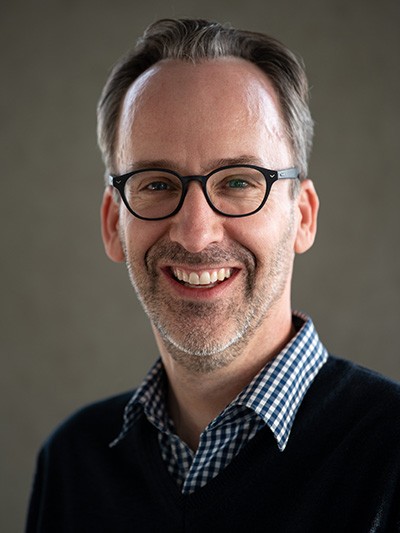
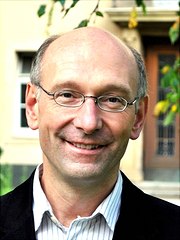
Klaus Mølmer is a Professor at the Niels Bohr Institute, University of Copenhagen, specializing in Quantum Optics and Photonics. His research spans quantum information, entanglement, and cavity QED, leveraging machine learning and Grover's algorithm for quantum state engineering. His recent work focuses on spin squeezing, Rydberg atom interactions, and mechanical resonator cooling. A leader in quantum simulation and superradiance, he collaborates on cavity-mediated emission and quantum network design. The 15 most recent articles highlight advancements in quantum state manipulation, entanglement protocols, and robust differential phase sensing. These studies bridge theoretical frameworks with experimental applications in cavity QED, Rydberg arrays, and zero-photon detection.
Seth Lloyd is a Professor in the Department of Mechanical Engineering at the Massachusetts Institute of Technology (MIT), with adjunct appointments at the Santa Fe Institute since 1988 and as a Fellow at the Institute for Scientific Interchange since 2000. His research spans quantum information science, quantum control theory, and complex systems analysis. His educational background includes: B.A. from Harvard University (1982) M. from the University of Cambridge (1984) Ph.D. from Rockefeller University (1988) Lloyd's work focuses on quantum computation, quantum communications, and quantum limits to control and sensing. He has pioneered research in quantum algorithms, quantum metrology, and applications of quantum information to complex biological and physical systems. His research bridges theoretical physics, computer science, and engineering, with over 200 publications and two patents in quantum information processing. Analysis of his recent publications reveals dominant trends in quantum machine learning, quantum metrology, and quantum communication protocols, with increasing interdisciplinary applications in quantum biology and quantum gravity. His work consistently explores fundamental limits of quantum information processing. His scientific awards include: Lindbergh Fellow (1994) Finmeccanica Professorship (1996) Edgerton Prize (2001) Fellow of the American Physical Society (2007) Quantum Communication, Measurement, and Computation Prize (2012) Lloyd serves on the editorial board of Quantum Information Processing and holds significant MIT service roles including Course 2 Undergraduate Committee coordinator and membership on the Institute Foreign Scholarships Committee. He teaches advanced courses in quantum information, dynamics, and computational methods, shaping the next generation of quantum scientists and engineers. As a member of the American Physical Society, he maintains active research collaborations across quantum information science, with ongoing work in quantum algorithms and quantum-enhanced sensing technologies.
Professor Paul C. Bressloff holds the Chair in Applied Mathematics and Stochastic Processes at Imperial College London's Department of Mathematics within the Faculty of Natural Sciences. His research focuses on stochastic and non-equilibrium processes, particularly in molecular and cell biology, utilizing tools from probability theory, statistical physics, and dynamical systems. He authored a seminal textbook Stochastic Processes in Cell Biology (Springer), with a 2nd edition published in 2022. Previously, he led the graduate program in mathematical biology at the University of Utah from 2001 to 2023. Research interests include stochastic multi-particle systems, active particles, phase separation, and diffusion across semi-permeable interfaces. His work spans applications in neural field theory, cytoneme-mediated morphogenesis, and protein trafficking. He is affiliated with the Biomathematics Group and Mathematical Physics Group at Imperial. Recent articles explore stochastic resetting in search processes, narrow-capture problems, and hybrid models of switching diffusions. His advising includes over 20 graduate students, many now faculty in mathematical biology. His contributions bridge applied mathematics and biological systems, emphasizing interdisciplinary approaches to complex stochastic phenomena.
Professor David Thomas holds the position of Professor in Computer Engineering at the University of Southampton's Electronics and Computer Science Department. His research focuses on the intersection of software and hardware, particularly leveraging FPGAs for novel digital architectures and event-driven computing. He has a notable academic trajectory, having previously served as a Lecturer and Senior Lecturer at Imperial College London before joining Southampton in 2021. Dr. Thomas is actively involved in supervising PhD students and contributes to interdisciplinary research projects funded by the EPSRC, such as the SONNETS initiative exploring scalable event-triggered systems. Education: BSc in Computer Science (Imperial College London), PhD in Digital Architectures (Imperial College London). Postdoctoral roles included Research Associate and Research Fellow at Imperial's Department of Computing. Research Interests: Event-driven computing, FPGA-based systems, high-level synthesis, and high-performance computing. His work emphasizes practical implementations of theoretical models, such as custom processors and application-specific accelerators. Current projects include optimizing random number generation for FPGAs and exploring meta-programming techniques for hardware design. Advising and Grants: Supervises multiple PhD students in areas like neuromorphic computing and algorithm optimization. Active in securing funding for distributed system architectures and FPGA-based solutions. Labs/Teams: Member of the Cyber Physical Systems research group. Collaborates with interdisciplinary teams on projects like POETS (Partially Ordered Event-Triggered Systems) for large-scale parallel computing.
Prof. Dr. Ioachim Pupeza serves as Group Leader in the Department of Spectroscopy/Imaging at the Leibniz Institute of Photonic Technology (Leibniz-IPHT) in Jena, Germany. His research focuses on advanced optical measurement techniques, particularly in the field of field-resolved spectroscopy and precision optical measurements. Dr. Pupeza's research interests center around optical spectroscopy with a particular emphasis on field-resolved techniques that capture the complete electric field waveform of light-matter interactions. His work spans infrared spectroscopy , molecular fingerprinting , ultrafast laser technology , and precision optical measurements . He has made significant contributions to electro-optic sampling techniques, which enable characterization of electric-field waveforms across the terahertz to visible spectral range. His research also extends to mid-infrared light generation , terahertz spintronic emitters , and cavity-enhanced spectroscopy , with applications ranging from fundamental physics to medical diagnostics. Analysis of Dr. Pupeza's recent publications reveals a strong trend toward increasingly sophisticated field-resolved spectroscopy techniques with applications in both fundamental science and practical diagnostics. His work has evolved from basic measurement techniques to applications in cancer detection through molecular fingerprinting of biofluids. A consistent theme across his publications is the pursuit of higher precision, broader bandwidth, and improved sensitivity in optical measurements, often achieving attosecond-level precision. His research bridges physics, engineering, and medical applications, demonstrating how fundamental optical advances can translate to real-world diagnostic tools. Dr. Pupeza leads the research group "Field-Resolved Optical Precision Measurement Methods" at Leibniz-IPHT, which appears to collaborate extensively with other research institutions and groups. His work involves sophisticated laser systems including high-power Yb:YAG thin-disk oscillators, femtosecond enhancement cavities, and dual-oscillator systems for precision measurements. The group's research has implications for molecular spectroscopy, medical diagnostics, and fundamental studies of light-matter interactions at the most fundamental time scales.
Sunil Mittal is an Assistant Professor in the Department of Electrical and Computer Engineering at Northeastern University, specializing in quantum and topological photonics. He joined Northeastern in 2021 and holds a PhD from the University of Maryland, College Park, alongside master’s degrees in Physics and Optoelectronics. His research focuses on quantum photonics, topological photonics, nonlinear photonics, and two-dimensional materials, with notable contributions to topological frequency combs and photonic quadrupole phases. Education: PhD in Electrical Engineering (University of Maryland, 2014), MS in Physics and Optoelectronics, and industry experience in optical telecommunications. Research highlights include pioneering work on topological sources of quantum light and non-Hermitian photonics systems. Recipient of 2024 and 2022 Stanford University citations (top 2% most-cited scientists) Lead co-PI on a $1.5M NSF DMREF grant (2024) for photonic materials development Recipient of Northeastern’s FY24 TIER 1 Interdisciplinary Research Seed Grant His Quantum Photonics Lab explores topological photonics applications in quantum computing and optical communication. Recent projects include using deep learning to accelerate photonic material design and studying excitonic Mott insulators in 2D heterostructures.
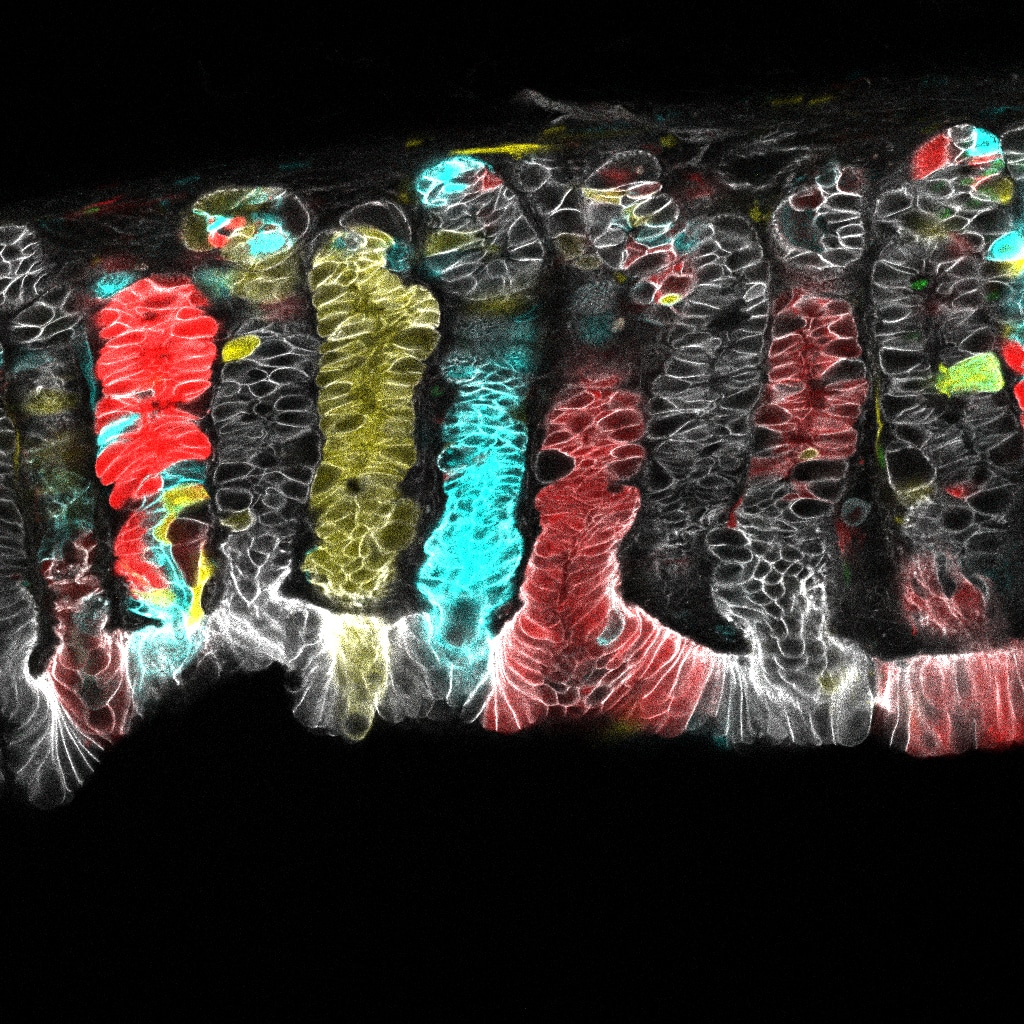
Benjamin Simons is the Royal Society EP Abraham Professor and Herchel Smith Professor of Physics at the University of Cambridge. He serves as Director of the Gurdon Institute, Senior Group Leader at the Gurdon Institute, Principal Investigator at the Cambridge Stem Cell Institute, and member of the Theory of Condensed Matter physics group. He is also a Fellow of St. John's College, Cambridge. His research integrates quantitative approaches from physics and mathematics with experimental biology to investigate stem cell fate regulation in tissue development, maintenance, and cancer pathogenesis. Research focuses on: Stochastic cell fate decisions in epithelial tissues Self-organization principles in tissue morphogenesis Single-cell lineage tracing and gene expression analysis Mathematical modeling of stem cell dynamics Cancer initiation through stem cell reprogramming Publication analysis reveals consistent themes: spatial dynamics of stem cell niches, mechanical regulation of cell fate, computational modeling of tissue organization, and evolutionary principles in cancer development. Recent work emphasizes in vivo lineage tracing, single-cell omics, and interdisciplinary approaches bridging physics and biology. Scientific Awards: Fellow of the Royal Society (FRS) Fellow of the Academy of Medical Sciences (FMedSci) Leads an interdisciplinary research group combining wet-lab experiments (lineage tracing, single-cell genomics) with theoretical modeling. Research supported by EPSRC, MRC, Wellcome Trust, Cancer Research UK, and Royal Society grants. Current projects include gliomagenesis mechanisms, spermatogenic wave regulation, and injury response pathways co-opted in cancer.
Dr. Fabian Schmid is a Researcher affiliated with the Institute for Quantum Electronics at ETH Zürich, working within the Professorship for Experimental Quantum Information . His research focuses on quantum control, precision spectroscopy, and optical frequency comb technologies. Key applications include molecular ion manipulation, laser cooling techniques, and advanced spectroscopic methods for atomic and molecular systems. His work bridges quantum physics and optics, with contributions to ultra-stable laser systems, low-repetition-rate frequency combs, and high-resolution spectroscopic measurements. Recent efforts target applications in trapped ion systems and new boson constraints via calcium isotope studies. Schmid's experimental setups often involve precision engineering of optical components and cavity-stabilized laser systems. Notable experimental achievements include demonstrating quantum control over single molecular ions (H₂⁺) and developing number-resolved detection methods for Coulomb crystals. His research also explores synergies between dual-species laser cooling and cavity-based technologies. While currently holding no listed academic awards, Schmid's contributions are evident through his prolific publishing record in top-tier physics journals. His lab work integrates cutting-edge quantum optics with atomic physics to advance fundamental understanding and precision measurement capabilities.
Prof. David J. Norris is a Full Professor at ETH Zurich's Department of Mechanical and Process Engineering and Director of the Optical Materials Engineering Laboratory. He holds a B.S. in Chemistry from the University of Chicago (1990) and a Ph.D. in Physical Chemistry from MIT (1995). His research focuses on engineering materials to achieve novel optical properties, particularly semiconductor nanocrystals (quantum dots) and plasmonic films. Notable awards include the Max Rössler Prize (2015) and ERC Advanced Grant (2014-2019). Research interests span nanoscale optical phenomena, including exciton dynamics in colloidal systems and plasmonic nanofocusing. He has pioneered studies on magic-sized semiconductor nanocrystals and developed methods for high-throughput characterization of atomically thin semiconductors. His work bridges nanotechnology and photonics, addressing applications in lasers, sensors, and energy systems. Awards also include the Credit Suisse Award for Best Teaching (2015) and fellowships from the American Physical Society and AAAS. He serves on editorial boards for ACS Photonics and Nano Letters , reflecting his leadership in nanophotonics and materials science. Grants include an ERC Advanced Grant supporting his exploration of optical materials. His lab’s innovations include template-stripping techniques for plasmonic devices and plasmon-enhanced catalysis. Past roles include Director of Graduate Studies at the University of Minnesota and an Alexander von Humboldt Fellowship at TU Munich (2006-2007).
Gonzalo Manzano Paule is a Ramón y Cajal tenure-track researcher at IFISC (Instituto de Física Interdisciplinar y Sistemas Complejos), a joint research institute of CSIC (Consejo Superior de Investigaciones Científicas) and UIB (University of the Balearic Islands), where he has been working since January 2023. He previously held a Juan de la Cierva Incorporation fellowship (2021-2023), was an ESQ Postdoc at IQOQI Vienna (2020-2021), and a Postdoc at ICTP Trieste (2018-2020) funded by Scuola Normale Superiore. He obtained his PhD in Physics from Universidad Complutense de Madrid in July 2017, followed by a short Postdoc at IFISC (2017-2018). His research interests focus on quantum and stochastic thermodynamics, open quantum systems, information theory, and the foundations of nonequilibrium statistical physics and quantum mechanics. He is particularly interested in applying concepts from nonequilibrium thermodynamics to understand classical and quantum complex systems. While his work is primarily theoretical, he actively seeks collaborations with experimentalists. His research has been featured in popular science journals including Physics, Quanta Magazine, and Diario de Mallorca. He has also collaborated with artist Evarist Torres to merge art and science and has written a popular science article for Investigación y Ciencia (Scientific American). Manzano Paule's recent publications demonstrate a strong focus on quantum thermodynamics, fluctuation theorems, and quantum information processing. His work spans theoretical foundations of quantum thermodynamics to applications in quantum heat engines and molecular motors. A notable pattern in his research is the exploration of how quantum effects can enhance thermodynamic processes and the relationship between information theory and thermodynamics. His scientific achievements have been recognized through prestigious fellowships including the Ramón y Cajal program, Juan de la Cierva Incorporation fellowship, and ESQ Postdoc fellowship. His work has also garnered attention in popular science media, indicating its broader impact beyond academic circles. As an educator, Manzano Paule supervises Master's students and teaches advanced courses including Open Quantum Systems for the Master's Degree in Advanced Physics and Applied Mathematics and the Master's Degree in Physics of Complex Systems. His teaching portfolio also includes Quantum Collective Phenomena, Quantum and Nonlinear Optics, Thermodynamics, and Atomic and Molecular Physics. He currently leads the research project 'QTD-InFlexity Quantum thermodynamics: information, fluctuations and complexity' and participates in the 'CoQuSy Complex Quantum Systems' project. He is also part of the María de Maeztu Unit of Excellence at IFISC, which has received continuous funding since 2008.
Antoine Aubret is a postdoctoral fellow at the University of California San Diego, working in the Soft Condensed Matter Lab under Pr. Jeremie Palacci. His research focuses on self-assembly and self-organization in active micro-particle systems. PhD in Physics (2015), Université Claude Bernard Lyon 1, with advisors Pr. Christophe Dujardin and Pr. Joel Bellessa Expertise in nano-optics and non-equilibrium soft matter physics Develops custom microscopes with optical tools for colloidal architecture manipulation Recent work includes experimental studies on dissipative structures and interfacial transport in active matter systems. Publications span journals like Nature Physics , Soft Matter , and ChemPhysChem .
Dr. Alessandro Romito is a Senior Lecturer in Condensed Matter Theory at Lancaster University's Department of Physics. His research focuses on quantum many-body effects and their implications for quantum information processing, particularly exploring weak quantum measurements, topological phases of matter, and entanglement dynamics in nanoscale systems. Recent publications highlight his work on measurement-induced phase transitions, quantum chaos in dissipative systems, and topological heat pumping. His research group includes PhD students Subhajyoti Bid , Gobinda Chakraborty , Clio Johnson , and Max Tymczyszyn . Projects : NWCyberCom – Quantum dynamics cloning algorithms (2025) Topogical Thermal Machines (TOTheM) (2021–2024) Contact : Email: alessandro.romito@lancaster.ac.uk Office: B072, Physics Building
Mario Dipoppa is an Assistant Professor in the Department of Neurobiology at the University of California, Los Angeles. His research focuses on computational neuroscience, cortical adaptation, and neural circuit dynamics. Position: Assistant Professor, Neurobiology Email: mdipoppa@g.ucla.edu Research Interests: Mario's work explores how neural populations in the visual cortex adapt to sensory input, with a particular emphasis on the interplay between neural oscillations, synchrony, and cognitive functions like working memory. His recent studies investigate optimal coding strategies in visual adaptation, contextual modulation mechanisms, and the role of transcriptomic diversity in cortical interneuron function. Publications Trends: His research spans computational modeling of cortical networks, visual neuroscience, and neurogenetic analyses of brain circuits. Early work (2013-2016) focused on working memory mechanisms and neural oscillations, while recent studies (2022-2025) emphasize visual cortex adaptation, population coding, and cross-species circuit comparisons.
Ying-Cheng Lai is a Regents' Professor in the School of Electrical, Computer and Energy Engineering at Arizona State University (ASU), where he has been a full-time faculty member since 2005. He holds affiliations with the Center for Biodiversity Outcomes and the Center for Biological Physics. Previously, he served as the Sixth Century Chair in Electrical Engineering at the University of Aberdeen (2009–2017) and returned to ASU as the ISS Endowed Professor (2014–present). His academic journey includes a BS and MS in Optical Engineering from Zhejiang University (1982–1985), followed by MS and PhD in Physics from the University of Maryland, College Park (1989–1992). He completed a postdoctoral fellowship in Biomedical Engineering at Johns Hopkins University School of Medicine (1992–1994). His research focuses on Nonlinear Dynamics and Chaos , Machine Learning applied to complex systems, Relativistic Quantum Chaos , Complex Networks , Mathematical Biology , and Theoretical Ecology . He explores topics such as quantum scars in Dirac materials, synchronization control in networks, and early warning signals for ecological tipping points. His work integrates data analysis techniques with interdisciplinary applications in healthcare, climate science, and cybersecurity. His recent publications highlight advancements in machine learning-driven predictions for critical transitions, quantum transport modeling in graphene, and cybersecurity strategies for power grids. These trends reflect his commitment to bridging theoretical physics with applied engineering solutions. Awards: Regents Professor (ASU's highest faculty honor, 2021) Vannevar Bush Faculty Fellowship (DoD, 2016) Corresponding Fellow of the Royal Society of Edinburgh (2018) Foreign Member of Academia Europaea (2020) Fellow of AAAS (2020) Fellow of the American Physical Society (1999) Ying-Cheng Lai has advised 24 PhD and 20 MS students, supported 15 postdocs, and secured funding from agencies like DOD (AFOSR, ARO, Navy-ONR), NSF, and the National Academies. His grants include projects on quantum billiard systems, sensor applications, and network resilience in multilayer ecological frameworks. He runs a research group focused on advanced topics in electrical engineering and interdisciplinary physics.
Prof. Dr. Wolfgang Hillert is a leading physicist at the University of Hamburg , serving as the Bjørn-Wiik Professor for Accelerator Physics since 2016. Affiliated with the Institute of Experimental Physics under the Faculty of Mathematics, Informatics and Natural Sciences, he specializes in Accelerator Physics , Superconducting Accelerator Technology , and Free-Electron Lasers (FEL) . His work focuses on polarized electron beams, SRF cavity optimization, and gravitational wave detection methods. Education: Physics degree from University of Bonn (1987), Promotion in Atmospheric Physics (1992), Habilitation in Physics (2001) Leadership Roles: Head of Accelerator Physics Group (2016–present), Managing Director of Institute of Experimental Physics (2019–2021) Research Trends: His recent work spans superconducting RF cavities for gravitational wave detectors ( 2025 ), resonant slow extraction in electron boosters, and atomic layer deposition of superconducting thin films. Publications highlight advancements in beam dynamics , cryogenic systems , and terahertz generation . Teaching & Outreach: He has lectured on Accelerator Physics since 2002 and engaged in public science communication, including talks on Physics of Music (2005–2021) and teacher training programs at DESY. Labs & Collaborations: Leads the Accelerator Physics Group at DESY, collaborates on projects like XFELO and BGO-OD beamline , and contributes to international schools (CAS) and symposia.