معرفی
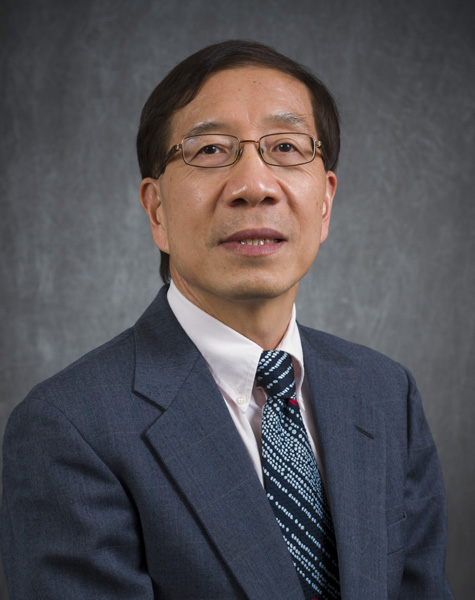
Ying-Cheng Lai is a Regents' Professor in the School of Electrical, Computer and Energy Engineering at Arizona State University (ASU), where he has been a full-time faculty member since 2005. He holds affiliations with the Center for Biodiversity Outcomes and the Center for Biological Physics. Previously, he served as the Sixth Century Chair in Electrical Engineering at the University of Aberdeen (2009–2017) and returned to ASU as the ISS Endowed Professor (2014–present). His academic journey includes a BS and MS in Optical Engineering from Zhejiang University (1982–1985), followed by MS and PhD in Physics from the University of Maryland, College Park (1989–1992). He completed a postdoctoral fellowship in Biomedical Engineering at Johns Hopkins University School of Medicine (1992–1994).
His research focuses on Nonlinear Dynamics and Chaos, Machine Learning applied to complex systems, Relativistic Quantum Chaos, Complex Networks, Mathematical Biology, and Theoretical Ecology. He explores topics such as quantum scars in Dirac materials, synchronization control in networks, and early warning signals for ecological tipping points. His work integrates data analysis techniques with interdisciplinary applications in healthcare, climate science, and cybersecurity.
His recent publications highlight advancements in machine learning-driven predictions for critical transitions, quantum transport modeling in graphene, and cybersecurity strategies for power grids. These trends reflect his commitment to bridging theoretical physics with applied engineering solutions.
- Awards:
- Regents Professor (ASU's highest faculty honor, 2021)
- Vannevar Bush Faculty Fellowship (DoD, 2016)
- Corresponding Fellow of the Royal Society of Edinburgh (2018)
- Foreign Member of Academia Europaea (2020)
- Fellow of AAAS (2020)
- Fellow of the American Physical Society (1999)
Ying-Cheng Lai has advised 24 PhD and 20 MS students, supported 15 postdocs, and secured funding from agencies like DOD (AFOSR, ARO, Navy-ONR), NSF, and the National Academies. His grants include projects on quantum billiard systems, sensor applications, and network resilience in multilayer ecological frameworks. He runs a research group focused on advanced topics in electrical engineering and interdisciplinary physics.