Rebecca J. Whelan is an Associate Professor in the Department of Chemistry at the University of Kansas, specializing in bioanalytical chemistry. With appointments in both the Chemistry and Bioengineering programs, her research focuses on ovarian cancer biomarker analysis through proteomics, microscale separations, and affinity reagent development. B.A. Chemistry and English, Lawrence University (1996) Ph.D. Chemistry, Stanford University (2003) Postdoctoral Research Fellow, Bioanalytical Chemistry, University of Michigan (2003-2004) Research Interests: The Whelan Lab develops innovative analytical methods for cancer biomarker characterization, including: Structural analysis of CA125 (MUC16) using long-read sequencing and mass spectrometry Development of DNA aptamers as artificial antibodies for biomarker detection Microscale separation techniques (capillary electrophoresis) for clinical proteomics Biosensor development for point-of-care diagnostics Integration of bioinformatics with experimental validation Sample preparation methods for glycoprotein analysis Scientific Awards: Vice Chair-Elect, Gordon Research Conference on Bioanalytical Sensors (2022) Henry Dreyfus Teacher-Scholar Award (2011) W.M. Keck Foundation Fellowship (2008) Research Corporation, Cottrell College Science Award (2006) Walter J. Gores Award for Teaching Excellence (1999) Teaching and Funding: Whelan has received multiple teaching honors including the Professor Props Award finalist. Her lab receives funding from the National Cancer Institute, National Science Foundation, and Dreyfus Foundation. She co-directed the T32 Chemical Biology training program and received the Newmark Award for biochemical research excellence.
Justin Karlin is a Professor in the Department of Ophthalmology at the David Geffen School of Medicine, University of California, Los Angeles (UCLA) , specializing in Orbital, Lacrimal, and Oculofacial Plastic Surgery . He completed his ophthalmology residency at the University of Virginia School of Medicine (2015-2018) and the David and Randi Fett Orbital and Ophthalmic Plastic Surgery Fellowship at the UCLA Stein Eye Institute (2020). His clinical practice spans the Doheny Eye Center, UCLA Orange County and UCLA Stein Eye Institute , with hospital affiliations including Ronald Reagan UCLA Medical Center . Education: MD , Sackler School of Medicine, Tel Aviv University (2014) MS , California State University, Northridge (2010) Internship , Surgery, University of Virginia (2015) Ophthalmology Residency , University of Virginia (2018) Orbital Fellowship , UCLA Stein Eye Institute (2020) Research Interests: Dr. Karlin’s work integrates Artificial Intelligence (AI) and Deep Learning to enhance diagnostic accuracy for Orbital Diseases , with a focus on Thyroid Eye Disease (TED) . He pioneers Medical Device Design , including innovations for eyelid reconstruction using Tissue Engineering and Allograft/Xenograft Materials . His studies on Lacrimal System Imaging and Ocular Surface Disease Treatment with Autologous Serum Tears bridge translational research and clinical application. Publications & Awards: With over 15 recent publications (2025-2017), his work spans AI diagnostics, eyelid surgery outcomes, and orbital disease mechanisms. Recognized as Top Doctor by Los Angeles Magazine (2024, 2021) and recipient of the Fellow Teaching Award (UCLA, 2019) and All University Teaching Award (University of Virginia, 2018), he emphasizes education and innovation, including participation in the UCLA Faculty Innovation Fellowship (2021) .
David Peter Cormode is a full Professor in the Department of Radiology at the Perelman School of Medicine, University of Pennsylvania. He is affiliated with multiple translational research centers including the Center for Translational Targeted Therapeutics and Nanomedicine, Institute for Translational Medicine and Therapeutics, and the Penn Institute for Immunology. His research focuses on nanoparticle-based contrast agents for CT, MRI, and molecular imaging , with applications in cardiovascular disease and cancer diagnostics . Key innovations include developing gold, bismuth, and cerium oxide nanoparticles with fluorescence, antioxidant, and therapeutic properties . Recent publications highlight advances in biofilm infection treatment (2024), photon-counting CT (2023), and renally excretable contrast agents (2022). His work bridges chemistry, radiology, and biomedical engineering through collaborations with the Penn Bioengineering and Pharmacology Graduate Groups.
Devid Maniglio is an Associate Professor at the Department of Industrial Engineering, University of Trento. His research focuses on bioengineering, biomaterials, and tissue engineering, with a particular emphasis on bioprinting, surface modification, and functional materials. He has contributed to advancements in silk fibroin and hydrogel-based systems for medical applications. Research Interests Bioengineering for personalized medicine Biomaterials and surface engineering 3D bioprinting and tissue regeneration Molecular imprinting and biosensors Drug delivery and cell encapsulation Teaching Diagnostic and therapeutic technologies for personalized medicine Engineered materials for precision medicine Fundamentals of biomedical technologies Functional surfaces laboratory Labs & Collaborations Devid Maniglio is affiliated with the Functional Surfaces Laboratory at the University of Trento, collaborating with researchers such as Stefano Rossi and Flavio Deflorian. His work integrates interdisciplinary approaches in biomedical engineering and sustainable medical technologies.
Joav Prives serves as a Professor in the Department of Pharmacological Sciences at Stony Brook University, where his research centers on the molecular regulation of neurotransmitter receptors in neuromuscular systems. His work bridges cellular and molecular pharmacology with neurobiology through investigations of receptor biogenesis and membrane dynamics. His academic foundation includes: Ph.D. from McGill University Postdoctoral training at Weizmann Institute of Science, Israel Prives' research program systematically dissects the regulation of nicotinic acetylcholine receptor (AChR) expression, with emphasis on endoplasmic reticulum-mediated folding, chaperone-assisted assembly (particularly involving calnexin), and phosphorylation-dependent topogenesis. His laboratory employs primary chick muscle cells and transfected models to investigate how N-linked glycosylation, disulfide bond formation, and cytoskeletal interactions govern receptor clustering and dispersal at neuromuscular junctions. This work provides fundamental insights into receptor trafficking disorders and synaptic maintenance mechanisms. Analysis of his publication record (1993-2000) reveals a cohesive trajectory exploring AChR biogenesis through biochemical and cell biological approaches. His work consistently integrates signal transduction principles with receptor pharmacology, demonstrating how small GTPases (Rac/Cdc42) and phosphorylation events regulate receptor clustering. The research spans molecular neuroscience, membrane biology, and protein biochemistry with implications for myasthenia gravis and related neuromuscular pathologies. No scientific awards were documented in the source materials. While the texts confirm active laboratory research through 2000, specific details regarding graduate student mentorship, grant funding, or collaborative teams were not provided in the available documentation.
Arle Kõrkjas is a doctoral student and part-time lecturer at the University of Tartu's Institute of Pharmacy, Faculty of Medicine. He has been actively working since 2017 in pharmaceutical technology research with focus on ultrasound-enhanced electrospinning of nanofibers for biomedical applications. PhD in progress since 2018 Lecturer in Pharmaceutical Technology since 2022 His research systematically explores nanofiber fabrication using ultrasonic electrospinning , with applications in bone tissue engineering and wound healing . Publications demonstrate technical innovations in gradient structure formation and multilayered assemblies through process parameter optimization. Active in Estonian Pharmaceutical Society and European electrospinning symposiums , his work contributes to biomedical device development through advanced material processing. Current projects include multifunctional 3D bioprinted constructs for bone regeneration (PRG1903, €577,200 funding).
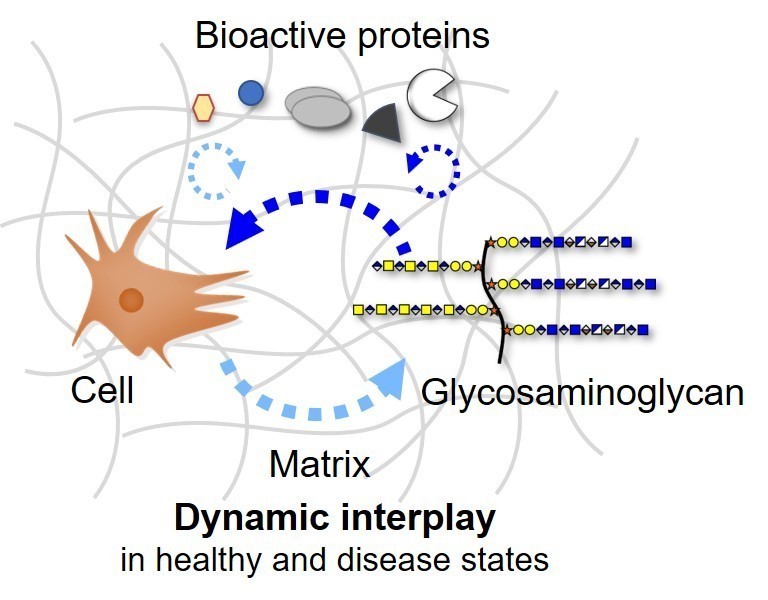
Dr. Sandra Rother is an Assistant Professor at Saarland University's School of Medicine, affiliated with the Center for Integrative Physiology and Molecular Medicine (CIPMM) in Homburg. She leads an active research laboratory focused on glycosaminoglycan-mediated signaling pathways and their implications in biomedical conditions including cancer, chronic wounds, and inflammation. Her work bridges fundamental biochemistry with clinical applications through biomimetic material development. Her primary research examines how glycosaminoglycans regulate extracellular matrix dynamics and growth factor signaling (particularly TGF-β cytokines) in pathological contexts. The lab employs cutting-edge techniques including Surface Plasmon Resonance (SPR), Fluorescence-Activated Cell Sorting (FACS), LC-MS glycosaminoglycan analysis, CRISPR/Cas9 gene editing, and engineered 3D cell culture systems to investigate structural modifications affecting protein binding and cellular responses. Current research priorities include: Glycocalyx manipulation for melanoma therapeutics Development of glycosaminoglycan-functionalized hydrogels for angiogenic regulation Impact of advanced glycation products on extracellular matrix Glycosaminoglycan mimetics from sustainable sources Her research is funded by: Dr. Rolf M. Schwiete Stiftung (Project 2024-021: Targeting the glycocalyx for melanoma treatment) WISNA-Program (Federal-State Program for the Promotion of Young Scientists) Dr. Rother leads a diverse team including 6 current students (PhD, MD, and Bachelor/Master candidates) and 8 alumni. She actively recruits postdoctoral researchers and students interested in glycoscience, emphasizing diversity and equity in her laboratory. Current team projects include bioactive hydrogel development, glycocalyx imaging, and biomimetic implant coatings.
T M Indra Mahlia , a Distinguished Professor at the School of Civil and Environmental Engineering , University of Technology Sydney (UTS), leads cutting-edge research in sustainable energy systems and environmental engineering. As a core member of the Centre for Technology in Water and Wastewater and the Centre for Advanced Modelling and Geospatial Information Systems , he bridges engineering innovation with practical climate solutions. PhD from University of Malaya (Kuala Lumpur, Malaysia) Fluency in English, Indonesian, Malay, and Achinese for peer review His research spans Techno-Economic Analysis , Circular Economy , and Water-Energy Nexus challenges, supported by over $5 million in grants. His work focuses on: Hydrogen energy systems optimization Advanced materials for energy storage Low-cost water purification technologies Sustainable biodiesel production Thermal management innovations As a Highly Cited Researcher (Clarivate Analytics, 2017-2022) and The Australian 's 2019/2025 Sustainable Energy Leader , he mentors future researchers - notably guiding two Highly Cited PhD students ( H.C. Ong and A.S. Silitonga ). His publications across 2024-2026 demonstrate technical advancements in: Hydrogen carrier systems Microalgae-derived lubricants High-entropy alloy corrosion resistance Artificial neural network optimization Phase change material thermal sinks Biohydrogen production pathways
Prof. Zbigniew Wzorek is a Full Professor and Head of the Department of Chemical Technology and Environmental Analytics (C-1) at the Faculty of Chemical Engineering and Technology, Tadeusz Kościuszko Cracow University of Technology. With a career spanning over 30 years, he holds a PhD (1998) and DSc (2009) in Chemical Technology, and was awarded professorship in 2021. MSc Eng., Cracow University of Technology (1992) Dr. Eng., Wrocław University of Science and Technology (1998) Dr. hab. Eng., West Pomeranian University of Technology (2009) Professor (2021) His research focuses on advanced materials synthesis, waste valorization, and environmental analytics. Key areas include: Nanoparticle-based solutions for wastewater treatment Circular economy strategies for sewage sludge management Development of organo-mineral fertilizers from industrial byproducts Catalytic processes for chemical production Phosphorus recovery technologies Eco-friendly construction material formulations Publications reveal strong emphasis on sustainable chemistry, with recent work exploring: Antibacterial silver nanomaterials for agricultural applications Zirconium phosphonate sorbents for metal removal Phosphorus extraction from sewage sludge ash Catalytic mechanisms in ethylene oligomerization Circular economy implementation in fertilizer production Use of biomass and industrial residues in construction
Takuya Nakanishi is a Professor and Senior Researcher at Waseda University's Comprehensive Research Organization, where he has been employed since July 2022. Previously, he held research positions at Waseda University's Research Organization for Nano & Life Innovation, National Institute for Materials Science (NIMS), and National Institute of Advanced Industrial Science and Technology (AIST). His academic journey began with a Doctor of Science degree from Hokkaido University. Dr. Nakanishi's research spans multiple disciplines at the intersection of nanotechnology, electrochemistry, and biosensing. His expertise includes nanomaterials characterization and synthesis, molecular recognition, surface science, and chiral analysis. A significant portion of his work focuses on developing innovative field effect transistor (FET) biosensors for detecting biomarkers, viruses, and other analytes with high sensitivity. His research has important applications in medical diagnostics, pharmaceutical development, and food safety. His publication record shows a clear progression from fundamental studies on chiral discrimination and surface electrochemistry to applied research on biosensors and nanomedicine. The most recent work demonstrates sophisticated integration of nanomaterials with biological systems for sensitive detection and therapeutic applications, particularly in cancer detection and treatment. His scientific achievements have been recognized with multiple awards: Poster Award at Chirality 2006 - 18th International Symposium on Chirality (ISCD-18) Best Poster Presentation Award at The 56th Annual Meeting of the International Society of Electrochemistry Poster Award at Chirality 2003 - 15th International Symposium on Chirality (ISCD-15) Dr. Nakanishi has been actively involved in numerous professional committees, including the Electrochemical Society of Japan, where he has served on Public Relations, Convention Planning, and Editorial committees. His research has secured significant funding for projects involving nanomaterials, biosensors, and electrochemical systems. He has also contributed to the development of magnetite nanoparticle-based cancer therapies and advanced sensor technologies for medical diagnostics. His laboratory work centers on nanoscale electrochemical systems, with particular emphasis on FET biosensors, chiral recognition interfaces, and magnetic nanoparticle applications. Current research directions include improving biosensor stability in biological environments, developing debonding-on-demand adhesives, and investigating chiral inversion mechanisms in pharmaceutical compounds.
Jerzy Choma is a Full Professor at the Faculty of Advanced Technologies and Chemistry at Warsaw University of Technology. His research focuses on carbon materials, adsorption processes, and mechanochemical synthesis techniques. With expertise in chemical physics and porous structure engineering, he has published 196 papers and supervised 11 promoted theses. Research Interests: Carbon materials, adsorption, activation, carbonization, metal-organic frameworks (MOFs), graphene-based composites, sustainable synthesis, nanoporous materials Key Achievements: H-index of 35 in Scopus and Web of Science, total impact factor of 442.369, and ministerial score of 4,561 Email: jerzy.choma@wat.edu.pl His recent work emphasizes greener synthesis methods, including mechanochemical approaches for creating biomass-derived porous carbons, MOFs, and graphene composites. These materials demonstrate exceptional adsorption capacities for gases like CO₂ and benzene, aligning with environmental remediation and energy storage applications. Despite his extensive contributions, no specific scientific awards are mentioned in the provided texts.
Kemal Celik is an Assistant Professor of Civil Engineering at New York University Abu Dhabi (NYUAD) and holds a Global Network Assistant Professor appointment at New York University Tandon School of Engineering. He directs the AMBER Lab , focusing on sustainable construction materials and building energy efficiency. PhD in Civil and Environmental Engineering from University of California, Berkeley (2015) MS and BS in Civil Engineering from Istanbul University His research spans multi-scale material characterization, 3D printing of cementitious composites, carbonation processes for CO2 sequestration, and hybrid simulation methods for daylighting optimization. Current trends include lunar regolith simulants for space construction and low-carbon cement technologies. Scientific Awards: Outstanding Graduate Student Instructor Award, UC Berkeley (2013-14) Outstanding Paper Award, SCMT3 Conference, Kyoto (2013) UC Berkeley Conference Grant Ministry of National Education of Turkey Scholarship TUBITAK Fellowship
Andrea D. Merg is an Assistant Professor in the Department of Chemistry and Biochemistry within the School of Natural Sciences at the University of California, Merced. He leads the Merg Lab, which focuses on the design and fabrication of nanoscale materials derived from the self-assembly of sequence-programmable biomolecules including peptides, proteins, and nucleic acids. Dr. Merg received his B.S. in Chemistry from Winthrop University in 2010, completed his Ph.D. at the University of Pittsburgh in 2017 working on peptide-based methods for directing gold nanoparticles, and conducted postdoctoral research at Emory University until 2020. His research spans multiple disciplines including peptide chemistry, materials chemistry, supramolecular chemistry, materials science, and bioengineering. The Merg Lab develops rational approaches for creating bionanomaterials with predetermined physical and chemical properties, with applications in biosensors, drug delivery, and catalysis. Their work addresses the outstanding challenge of developing supramolecular architectures with hierarchical physical and chemical control across length-scales. Analysis of Dr. Merg's recent publications reveals a strong focus on peptide-based nanomaterials, particularly collagen-mimetic structures and coiled coil peptide assemblies. His research demonstrates expertise in creating programmable biomolecular building blocks that enable precise control over nanoscale architecture formation. The work combines synthetic chemistry, biophysical characterization, and computational modeling to understand and design novel biomaterials. NSF grant CHE-2316870 for fundamental research ARO grant W911NF-23-1-0365 NSF grant for developing aCMP frameworks NSF-CREST fellowship supporting graduate student Anthony R. Perez Dr. Merg actively mentors graduate and undergraduate students, with Anthony R. Perez being the first Ph.D. student to successfully defend his dissertation in the Merg Lab. The lab maintains strong outreach efforts, including visits to local high schools to promote STEM careers. Current research directions include developing mesoporous peptide frameworks, expanding the coiled coil assembly toolkit, and engineering shape-shifting peptide nanomaterials with responsive properties.
Changchun Zeng serves as Chair and Professor of Industrial and Manufacturing Engineering at the FAMU-FSU College of Engineering, a joint institution between Florida A&M University and Florida State University. His leadership spans academic administration and cutting-edge research in advanced materials science. He earned his Ph.D. from Ohio State University in 2004, establishing a foundation for his interdisciplinary work bridging polymer engineering and biomedical applications. His educational background underpins his innovative approach to materials design and manufacturing. Dr. Zeng's research centers on Polymeric Materials, Nanomaterials, and Composite Materials with pronounced emphasis on biomaterials for tissue engineering. His lab pioneers organoid-based models and extracellular vesicle technologies, developing auxetic scaffolds that regulate stem cell differentiation through mechanical and viscoelastic cues. Recent work integrates piezoresistive sensor design with neural and vascular applications, demonstrating translational potential for neuropathy treatments. Analysis of his 2023-2025 publications reveals three dominant trends: (1) Extracellular vesicle engineering from blood vessel and brain organoids for anti-senescence and neuropathy applications; (2) Development of auxetic foams and scaffolds with precisely controlled mechanical properties for tissue regeneration; (3) Advanced piezoelectret sensors leveraging cyclic olefin copolymers for flexible electronics. These intersect biomaterials, stem cell biology, and polymer physics to address unmet needs in regenerative medicine. Dr. Zeng actively mentors graduate students in the Industrial and Manufacturing Engineering program, supervising research in bioreactor design, stem cell-material interactions, and advanced manufacturing processes. His laboratory secures continuous funding for projects spanning NSF and NIH domains, particularly in biomaterials development and organoid-based disease modeling. The research group operates state-of-the-art facilities for polymer processing, nanomaterial characterization, and 3D bioprinting. Current team efforts focus on vertical wheel bioreactors for extracellular vesicle production, surface-engineered scaffolds for spinal cord regeneration, and piezoresistive sensor arrays for neural monitoring.
Bruno Georges Pollet is a Full Professor of Chemistry, Co-Director of the Hydrogen Research Institute, and Director of the Green Hydrogen Lab at the University of Quebec at Trois-Rivières. He holds an NSERC Tier 1 Canada Research Chair in Green Hydrogen Production and an Innergex Research Chair on Green Hydrogen Production. Dr. Pollet is also a Fellow of the Royal Society of Chemistry and the International Association for Hydrogen Energy with extensive experience in hydrogen energy research across the UK, Japan, South Africa, Norway, and Canada. Postgraduate Certificate of Education (module 1), University of Birmingham, UK (2010) Doctorate in Sonoelectrochemistry, Coventry University, UK (1994-1998) Master's in Analytical Chemistry, University of Aberdeen, UK (1992-1993) Bachelor's Honors in Applied Chemistry, Coventry University, UK (1991-1992) Bachelor's Equivalent in Chemistry and Material Sciences, University of Grenoble I, France (1989-1991) Professor Pollet's research focuses on green hydrogen production, renewable energy systems, and electrochemical engineering, with particular expertise in sonoelectrochemistry, fuel cell technology, and water electrolysis. His work bridges fundamental electrochemistry with practical applications in sustainable energy systems, emphasizing the development of efficient technologies for hydrogen production and utilization. His research portfolio demonstrates a strong interdisciplinary approach connecting chemistry, engineering, and environmental science. His recent publications reveal a strong focus on advancing hydrogen production technologies, particularly through innovative approaches like seawater electrolysis, sonochemical methods, and improved catalyst development. The research spans fundamental electrochemistry to practical engineering solutions for renewable energy systems, with particular emphasis on improving efficiency, reducing costs, and addressing technical challenges in green hydrogen production. President of the Green Hydrogen Division of the International Association for Hydrogen Energy (2020-2025) Fellow of the Royal Society of Chemistry (FRSC) Fellow of the International Association for Hydrogen Energy (FIAHE) Editorial Board Member for multiple high-impact journals including Materials Advances and Ultrasonics Sonochemistry As Executive Vice President of the International Association for Hydrogen Energy and leader of the UN Secretary-General's Council's Hydrogen Task Force, Professor Pollet plays a significant role in shaping global hydrogen strategies. His extensive collaborations across 10+ countries demonstrate his international leadership in the field. His research has secured substantial funding through his Canada Research Chair position and numerous international partnerships with institutions in Canada, China, South Africa, France, and the United States. Professor Pollet leads the Green Hydrogen Lab and co-directs the Hydrogen Research Institute at UQTR, which serve as hubs for interdisciplinary research on hydrogen production, storage, and utilization. His teams focus on developing innovative solutions for green hydrogen production through water electrolysis, with particular expertise in sonoelectrochemical processes. The research groups maintain strong industry connections and contribute significantly to Canada's hydrogen strategy and international hydrogen research networks.