معرفی
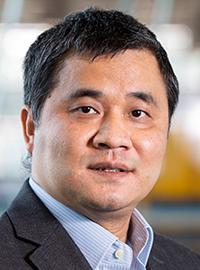
Changchun Zeng serves as Chair and Professor of Industrial and Manufacturing Engineering at the FAMU-FSU College of Engineering, a joint institution between Florida A&M University and Florida State University. His leadership spans academic administration and cutting-edge research in advanced materials science.
He earned his Ph.D. from Ohio State University in 2004, establishing a foundation for his interdisciplinary work bridging polymer engineering and biomedical applications. His educational background underpins his innovative approach to materials design and manufacturing.
Dr. Zeng's research centers on Polymeric Materials, Nanomaterials, and Composite Materials with pronounced emphasis on biomaterials for tissue engineering. His lab pioneers organoid-based models and extracellular vesicle technologies, developing auxetic scaffolds that regulate stem cell differentiation through mechanical and viscoelastic cues. Recent work integrates piezoresistive sensor design with neural and vascular applications, demonstrating translational potential for neuropathy treatments.
Analysis of his 2023-2025 publications reveals three dominant trends: (1) Extracellular vesicle engineering from blood vessel and brain organoids for anti-senescence and neuropathy applications; (2) Development of auxetic foams and scaffolds with precisely controlled mechanical properties for tissue regeneration; (3) Advanced piezoelectret sensors leveraging cyclic olefin copolymers for flexible electronics. These intersect biomaterials, stem cell biology, and polymer physics to address unmet needs in regenerative medicine.
Dr. Zeng actively mentors graduate students in the Industrial and Manufacturing Engineering program, supervising research in bioreactor design, stem cell-material interactions, and advanced manufacturing processes. His laboratory secures continuous funding for projects spanning NSF and NIH domains, particularly in biomaterials development and organoid-based disease modeling.
The research group operates state-of-the-art facilities for polymer processing, nanomaterial characterization, and 3D bioprinting. Current team efforts focus on vertical wheel bioreactors for extracellular vesicle production, surface-engineered scaffolds for spinal cord regeneration, and piezoresistive sensor arrays for neural monitoring.