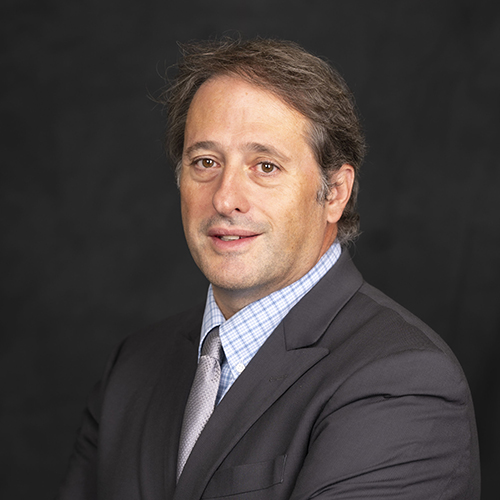
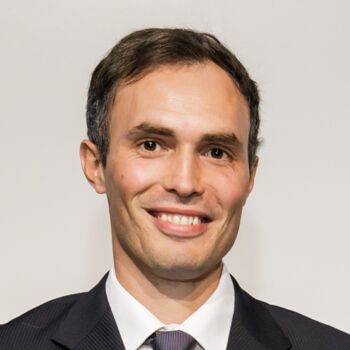
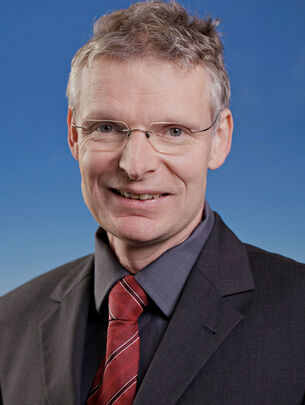
Robert Swinney is the Senior Associate Dean for Executive MBA and Quantitative Management Programs and a Professor of Operations Management at Duke University's Fuqua School of Business. He specializes in strategic supply chain operations, consumer behavior dynamics, and platform management. His research explores sustainability, risk mitigation, and ethical practices within complex supply networks. Education: Bachelor of Science in Astronomy, California Institute of Technology PhD in Operations Management, Wharton School, University of Pennsylvania Prior Role: Associate Professor at Stanford University Graduate School of Business Research Interests: His work addresses operational implications of consumer behavior, start-up and platform operations, supply chain resilience, and ethical sourcing strategies. He emphasizes practical applications in healthcare, food delivery systems, and digital content platforms. Editorial Contributions: Currently serves as Department Editor at Manufacturing & Service Operations Management , with prior roles at Management Science and Production & Operations Management . Advising & Grants: No specific grants or advising roles explicitly listed in provided text.
Kevin McTigue is a Clinical Professor of Marketing at Northwestern University's Kellogg School of Management since 2023, teaching MBA and Executive Education programs. His expertise spans marketing strategy, advertising strategy, and digital marketing. Education: MBA (2005) from Kellogg School of Management, B.S. (1996) from Miami University His research focuses on marketing strategy in hyper-connected environments, digital transformation , and consumer insights . Recent publications address advertising innovation in subscription services, metaverse marketing, and data-driven strategies in entertainment platforms. He has received multiple teaching accolades including: Sidney J. Levy Teaching Award Chair's Core Course Teaching Award (multiple years) J. Keith Murnighan Outstanding Professor Award Faculty Impact Award McTigue directs Kellogg’s Chief Digital Officer program and co-directs the Advertising and Marketing Communication Strategy program. His prior roles include leading strategy consulting at SapientRazorfish and brand management at Tyson/Hillshire Brands/Sara Lee.
Pedro Ferreira is a Full Professor at Carnegie Mellon University (CMU), holding a joint appointment in the School of Information Systems & Management at the Heinz College and the Department of Engineering and Public Policy within the College of Engineering. His research focuses on how technology influences education, media consumption, and peer effects, leveraging large datasets from randomized experiments. Ferreira has been recognized with the 2018 INFORMS Early Career Award and Top 17th worldwide research scholar ranking (2020–2022). He co-founded CMU's Initiative for Teaching and Education Analytics (iTEA) and advises numerous students in areas like AI/ML in education and media analytics. Education: BSc in Computer Science (IST), MSc in Electrical Engineering and Computer Science & Technology Policy (MIT), PhD in Telecommunications Policy (CMU). He has taught at MIT, IST, and invited roles at Católica-Lisbon and the University of Cambridge. Research Interests: Impact of digital technologies on education outcomes (e.g., smartphones in classrooms, video analytics), peer influence in media industries (e.g., binge-watching, recommender systems), and empirical methods using randomized experiments. Current projects include AI-driven education improvement and policy implications of AI/ML technologies. Notable Achievements: Over 15 peer-reviewed articles in top journals like Management Science and MIS Quarterly. Key grants include Gates Foundation funding for video-based education research and Koch Foundation support for online certification studies. He serves as Associate Editor for Management Science and previously for MIS Quarterly. Advising & Grants: Advised 23 PhD students, many now in academia and industry. Current students research facial recognition in education and hybrid recommender systems. Ferreira has led grants totaling millions, including studies on GDPR's impact on piracy tracking and worldwide VoD availability. Professional Service: Organized conferences like the Symposium on Statistical Challenges in eCommerce Research (SCECR). Served on NSF review panels and CMU’s Portugal PhD program steering committee.曾参与葡萄牙知识社会局(UMIC)的国家级政策制定,推动宽带学校项目。
Yuri Levin is a Professor at the Smith School of Business, Queen’s University, where he holds the Stephen J.R. Smith Chair of Analytics and serves as Founding Executive Director of the Smith School of Business Analytics and AI. He also leads the Scotiabank Centre for Customer Analytics. His research focuses on Analytics & AI, with expertise in revenue management, dynamic pricing, and strategic consumer behavior. Levin holds a Ph.D. in Operations Research from Rutgers University and degrees in Economics and Applied Mathematics from Belarus State University. Levin’s academic contributions include co-winning the 2013 INFORMS Revenue Management and Pricing Practice Prize and the 2009 INFORMS COIN-OR Cup. He has advised companies like Scotiabank, Loblaws, and McDonald’s on pricing strategies and consumer analytics. As an Associate Editor of Operations Research , he shapes academic discourse in operations research and pricing strategies. Education: Ph.D. in Operations Research, RUTCOR, Rutgers University (2001) B.S. in Economics, Belarus State University (1998) M.S. (Honours) in Applied Mathematics, Belarus State University (1998) His research explores dynamic pricing models under social influence, strategic consumer behavior, and revenue management in hospitality and retail industries. He has pioneered methodologies for optimizing pricing strategies in networked markets and developed algorithms for cargo capacity management. Awards: 2010 Queen’s School of Business Award for Research Achievement 2003 New Researcher Achievement Award Levin’s teaching spans MBA, Master of Management Analytics (MMA), and executive education programs, covering analytical decision-making and pricing optimization. His advisory work includes roles as a Visiting Professor at the Skolkovo Moscow School of Management and the University of Cambridge’s Judge School of Business.
Prof. Michel Clement is a Professor of Marketing & Media at the University of Hamburg Business School, holding the Chair for Marketing & Media since 2006. He previously held academic positions at the University of Passau (2005/2006) and Christian-Albrechts-University Kiel (2002–2005). His research focuses on entertainment media product management, new technologies, and donor/customer management. He has held significant administrative roles including Academic Senate Member (2013–present), Faculty Council Member (2014–present), and Director of the Research Center Media and Communication (2008–present). Education: PhD in Marketing from Christian-Albrechts-University Kiel (mentor: Prof. Sönke Albers), with a Master's in Business Administration focusing on Marketing, Innovation Management, and Psychology. Pre-academic career included management roles at Bertelsmann mediaSystems and Bertelsmann eCommerce Group, where he founded Snoopstar.com GmbH as Vice President. Research interests span digital media economics, prosocial behavior in healthcare donations, platform business models, and consumer decision-making in entertainment industries. He has contributed to understanding blood/plasma donation retention strategies, smart speaker impacts on media consumption, and pandemic-related behavioral changes. Leadership roles include supervisory board memberships at MADSACK Mediengruppe (2018–present), Studierendenwerk Hamburg (2017–present), and Universität Hamburg Marketing GmbH (2015–present). He has directed major initiatives like the Hamburg Graduate School for Media and Communication (2009–2016) and co-developed international MBA programs with Fudan University (2006–2008). Grants and collaborations include state-funded excellence initiatives and industry partnerships. His work integrates academic research with practical applications in media technology scouting, venture consulting, and digital platform governance.
Shantanu Bhattacharya is a Lee Kong Chian Professor of Operations Management, Deputy Dean (Education), and Academic Director of the PhD in Business (General Management) at the Lee Kong Chian School of Business, Singapore Management University (SMU). He holds a PhD in Operations Management from The University of Texas at Austin (1998), an M.S. in Electrical and Computer Engineering from Louisiana State University (1993), and a B.Tech. in Electrical Engineering from IIT Bombay (1991). His research focuses on Operations Management , Supply Chain Strategy , Sustainable Operations , and New Product Development . He has pioneered studies on closed-loop supply chains, remanufacturing systems, and lifecycle pricing strategies. His work also explores digital business innovation, healthcare R&D partnerships, and energy sector operations. His recent work addresses strategic challenges in everything-as-a-service models (XaaS), battery-as-a-service strategies for automotive industries, and humanitarian logistics optimization. Earlier contributions include seminal studies on milestone-based R&D contracts, gain-share coordination mechanisms, and infrastructure investment in disaster relief. He has received awards including the 1996 Alden G. Clayton Dissertation Fellowship (top 5/57 entries) and multiple teaching nominations at INSEAD. Beyond academia, his research bridges operational efficiency with societal impact, particularly in sustainability and Asian market dynamics. He advises doctoral candidates such as SHEN Ya (CKGSB-SMU DBA). His career spans roles at INSEAD (2002-2014) and visiting positions at SMU-LKCSB (2014-2017), with leadership in curriculum design and PhD programs.
Oliver Gasser is a researcher at the Max Planck Institute for Informatics (MPI-INF) and the Technical University of Munich (TUM), where he has co-lectured courses such as Advanced Computer Networking and Master Course Computer Networks. His research focuses on Internet measurement, security, and privacy, with a strong emphasis on IPv6, DNS, BGP, and web tracking technologies. His research interests include Internet measurement, IPv6 deployment, BGP security, DNS infrastructure, web tracking, privacy technologies, and network resilience. He has made significant contributions to understanding IPv6 hitlists, router fingerprinting, hypergiant content delivery networks, and consent banner manipulation on the web. His work combines large-scale active measurements with data analysis to uncover systemic issues in Internet infrastructure and privacy practices. The recent publications highlight a consistent focus on measurement-driven research across networking, security, and privacy. Trends include analyzing IPv6 adoption patterns, detecting covert tracking mechanisms in web cookies, evaluating security of Internet protocols like DNS and BGP, and improving measurement methodologies for large-scale network studies. His work often involves developing open tools and datasets that advance reproducibility in networking research. PAM 2023 Best Paper Award TMA 2023 Best Paper Award TMA 2023 Fast Track Award PAM 2018 Best Paper Award IRTF Applied Networking Research Prize 2018 IMC 2017 Community Contribution Award TMA 2017 Best Dataset Award CoNEXT 2023 Community Contribution Award Oliver Gasser has advised or co-advised over 40 master’s and bachelor’s theses at MPI-INF and TUM, demonstrating strong mentorship in academic research. He has led several measurement projects that have received external funding, including development of the IPv6 Hitlist Service and tools for analyzing web tracking. His community service includes extensive participation in program committees for major networking conferences such as IMC, CoNEXT, PAM, and TMA. He leads and contributes to several open research initiatives including the IPv6 Hitlist Service, SNMPv3 Measurement Service, MPTCP Measurement Service, DNS Observatory, and the BannerClick tool for automated cookie banner interaction. These platforms provide valuable resources for the global networking research community and support reproducible science.
Fred Feinberg is the Joseph and Sally Handleman Professor of Marketing and Professor of Statistics (by courtesy) at the University of Michigan, where he is also an Affiliated Faculty member of the Center for the Study of Complex Systems. His work integrates advanced Bayesian methods with large-scale marketing data to illuminate how people make choices under uncertainty. Education Ph.D., Sloan School of Management, Massachusetts Institute of Technology (1989) Doctoral program in Mathematics, Cornell University (1983–84) S.B. Mathematics & S.B. Philosophy, Massachusetts Institute of Technology (1983) Research Focus Feinberg’s scholarship centers on discrete choice models that leverage real-world decisions to infer latent attributes such as demographics, product appeal, and socioeconomic status. Methodologically, he employs Hierarchical Bayes (HB) models and cutting-edge MCMC algorithms to handle massive data sets, while theoretically he advances dyadic utility theory and optimal search under uncertainty. Applications span click-through behavior, menu-based choice, online dating preferences, spatial marketing, and consumer reactions to intangible or aesthetic product features. Recent empirical studies explore the wearout versus weariness effects of online advertising, the impact of data breaches on consumer behavior, and dynamic pricing for digital media subscriptions. Across these projects, Feinberg couples rigorous statistical innovation with actionable managerial insights, bridging marketing science, operations, and engineering. Scientific Awards & Leadership Joseph and Sally Handleman Endowed Professorship Past President, INFORMS Society for Marketing Science Departmental Editor, Production and Operations Management Former Co-Editor, Marketing Science Co-author (with T. Kinnear & J. Taylor) of the textbook Modern Marketing Research: Concepts, Methods, and Cases Grants & Collaborations While explicit grant lists are not provided, Feinberg’s prolific publication record in top-tier journals (e.g., Journal of Marketing Research , Marketing Science , Management Science ) and editorial board service imply sustained external funding and interdisciplinary partnerships, particularly with operations, engineering, and computer-science groups. Laboratories & Teams Feinberg is formally affiliated with the Center for the Study of Complex Systems (CSCS) at the University of Michigan, where he collaborates on network-based choice frameworks and large-scale behavioral data analytics. He maintains active ties to the Ross Marketing faculty and the Department of Statistics, fostering joint workshops and doctoral training initiatives.
Udo Terstege is a Professor of Industrial Engineering at Georg Agricola University of Applied Sciences (THGA) and serves as the Head of the Industrial Engineering (Bachelor) program. He teaches courses in business administration, accounting, and finance, and his research focuses on corporate finance and investment analysis. His educational background includes: Bachelor's and Master's in Business Administration from the University of Dortmund (1980-1985) Doctorate in Political Science (1994) Habilitation (2000) Terstege's research spans corporate finance, investment analysis, and accounting, with a strong emphasis on practical applications in industry. His work addresses topics such as capital budgeting, financial decision-making, and the role of information in financial markets. He has developed educational materials to simplify complex financial concepts for engineering students. His publication record shows a consistent focus on finance and accounting over the past two decades, with recent works including textbooks on investment accounting and corporate financing. These publications often bridge theoretical finance with practical business needs, particularly in the context of engineering and industrial settings. As Head of the Industrial Engineering program, Terstege oversees the curriculum and likely supervises student projects and theses, though specific advisees are not listed in the available information.
Molka Abbes is an Associate Professor of Marketing at NEOMA Business School , with a PhD in Management Sciences from Université Panthéon Assas. She teaches experiential/sensorial marketing, customer centricity, netnography, and luxury retailing across initial training, continuing education, and executive programs. PhD, Management Sciences, Université Panthéon Assas Her research focuses on trust dynamics in consumer-retailer relationships , the evolution of experiential marketing , and digital transformation in financial services . Recent work explores technology acceptance in e-banking and gaming consumption experiences. Key trends in her publications include: Digital signatures and user literacy in banking Trust-commitment-satisfaction interplay in retail Virtualization of consumer experiences Structural analysis of relationship marketing Molka is a member of the Smart Products and Consumption Institute (SPoC) and serves as a visiting professor at the University of International Business and Economics (UIBE) in Beijing.
Dianna Townsend serves as Professor of Literacy Studies in the Department of Literacy Studies within the College of Education and Human Development at the University of Nevada, Reno. She directs the M.Ed., Ph.D. programs in Reading Curriculum & Instruction and Reading Specialist Endorsement Certificate. Nationally, she holds key roles as Principal Member of the Institute of Education Sciences (IES) Education Research Scientific Review Panel and member of the National Assessment of Education Progress (NAEP) Reading Standing Committee. In Nevada, she co-founded and presides over the Nevada Adolescent Literacy Network (NALN). Her educational credentials include an Ed.D. from the University of California-Irvine and an M.Ed. from Boston University, establishing her expertise in literacy education. These qualifications underpin her leadership in graduate programs and statewide literacy initiatives. Dr. Townsend's research fundamentally addresses academic language development for adolescent learners, with concentrated focus on vocabulary acquisition, reading comprehension, and disciplinary literacy across academic subjects. Her work investigates how discipline-specific language demands impact student learning and develops evidence-based instructional scaffolds. She prioritizes culturally and linguistically sustaining approaches, particularly for multilingual adolescents, as demonstrated in her Spencer Foundation-funded intervention research comparing background knowledge activation and academic language support strategies. Analysis of her 15 most recent publications reveals consistent emphasis on sentence-level language features, academic vocabulary instruction, and disciplinary literacy across K-12 contexts. Her scholarship demonstrates methodological diversity through mixed-methods designs while maintaining focus on practical classroom applications. Key trends include the integration of writing in content areas, multimodal vocabulary instruction, and culturally responsive comprehension strategies that address equity gaps for linguistically diverse learners. Her scientific recognition includes the Tibbetts Distinguished Teacher Award, validating her exceptional pedagogical contributions. This award reflects her innovative approaches to literacy education and teacher development. Dr. Townsend secured significant research funding from the Spencer Foundation for adolescent literacy interventions and created the Virtual Reading Clinic to provide remote graduate practicum experiences for teachers in rural areas. While specific advisee names aren't documented, she mentors through her directed graduate programs. Her national committee work with IES and NAEP demonstrates sustained leadership in education research policy. She leads the Virtual Reading Clinic as an innovative online platform connecting graduate students with rural teachers, and through NALN she coordinates statewide efforts to advance adolescent literacy practices. These initiatives demonstrate her commitment to bridging research-practice gaps and expanding access to literacy expertise across Nevada's diverse educational landscape.
Matt Sienkiewicz is a Professor and Chair of the Communication Department at Boston College, where he also serves as Director of the Jewish Studies Program and Faculty Advisor to Hillel. He holds a Ph.D. and specializes in global media cultures, Jewish civilization, and comedy studies. His research explores intersections between media, politics, and identity, with a focus on satire, conservative media strategies, and digital content dynamics. Dr. Sienkiewicz has authored influential books such as That's Not Funny: How the Right Makes Comedy Work for Them (2022) and The Other Air Force: U.S. Efforts to Reshape Middle Eastern Media Since 9/11 (2016). His work appears in journals like Journal of Cinema and Media Studies , Media, Culture & Society , and Columbia Journalism Review . He is also an Emmy-nominated media producer, with credits including the documentary Live From Bethlehem and the TV series Windy Acres . His research interests span right-wing media ecosystems, streaming content representation, and the role of comedy in political discourse. Recent projects analyze niche streaming platforms, podcasting’s cultural impact, and counter-narratives in conflict zones like Syria and Ukraine. Awards include recognition for his Emmy-nominated media projects. Awards: Emmy Nomination (Media Production) Media Work: Documentaries, TV series, and open-source journalism initiatives Leadership Roles: Department Chair, Jewish Studies Director, and advisor to campus organizations His academic contributions bridge scholarly rigor and creative media practice, emphasizing the societal role of humor and media in shaping cultural and political landscapes.
Bettina Kemme is a Professor in the School of Computer Science at McGill University, Montreal, Canada. She leads the Distributed Information Systems Lab (DISL) and specializes in large-scale data management, distributed systems, and cloud computing. Her academic roles include teaching COMP 512 (Distributed Systems) and COMP 421 (Database Systems). Education: Diplom (M.Sc. equivalent) in Computer Science, Friedrich-Alexander University, Erlangen, Germany (1996) PhD in Computer Science, Swiss Federal Institute of Technology (ETH), Zurich, Switzerland (2000) Research Interests: Distributed systems, cloud-native data management, in-database analytics (AIDA project), monitoring-as-a-service frameworks, and scalable pub/sub systems for online games. Current projects focus on integrating machine learning with databases, cloud performance monitoring using SDN, and sustainable data systems for data science. Lab & Collaborations: Leads the Distributed Information Systems Lab (DISL) with active projects in distributed databases, cloud computing, and game systems. Collaborates on EU-Canada initiatives like the SustainSys program for sustainable data infrastructure. Advising: Supervises PhD and M.Sc. students in topics like monitoring frameworks (Mona ElSaadawy), in-database ML (Winnie He), and distributed systems (Maximilian Schiedermeier). Alumni include over 50 researchers from PhD candidates to undergraduate researchers.
Tobias Schäfers holds dual academic roles as an Associate Professor (part-time since 2020) at the Department of Marketing, Copenhagen Business School (CBS), and as a full-time Professor of Marketing at HSBI - University of Applied Sciences and Arts Bielefeld, Germany (since 2023). His career includes prior positions as an Assistant Professor at TU Dortmund (2013–2020) and EBS Business School (2010–2013). He earned his PhD in Marketing from EBS Business School (2010) following a Bachelor’s degree in Business Studies (2006, Private University Göttingen). His research focuses on psychological aspects of service consumption, digitalization’s impact on customer-company interactions, pricing strategies, and access-based service models. Key themes include consumer reactions to fee introductions, ownership vs. access preferences, and service recovery in digital contexts. He has conducted visiting research at the University of Maryland, Aalto University, and Toulouse School of Management. As an editorial leader, Schäfers serves as Associate Co-Editor for Academic-Practitioner Papers at Industrial Marketing Management and sits on the Editorial Review Boards of Journal of Service Research and Industrial Marketing Management . His recent work explores B2B sharing economy frameworks, digital transformation in agriculture, and factory tours’ impact on customer perceptions. Professional activities include consulting with UNICconsult Strategieentwicklung GmbH and contributions to executive education programs. He balances academic rigor with industry engagement, emphasizing societal impact through collaborative research methodologies.
Steve Muylle is a Full Professor of Digital Strategy and Business Marketing at Vlerick Business School and Ghent University, and serves as Associate Dean Digital Learning. His expertise spans digital transformation, B2B marketing, and leveraging technologies like AI, blockchain, and IoT. He holds a Doctor in Business Engineering from Solvay Management School and has held visiting roles at SMU’s Cox School of Business and Vanderbilt University’s Owen Graduate School. Education: PhD in Business Engineering (Solvay Management School) Visiting Doctoral Researcher (Owen Graduate School of Management, Vanderbilt University) Research Interests: Digital strategy, B2B customer experience, AI-driven marketing, and digital innovation frameworks. His work emphasizes actionable insights for executives in sectors like energy, healthcare, and finance. Recent trends in his publications focus on agentic marketing, VR in education, and competitive digital innovation. Impact: Designs executive programs like the Digital Strategy Open Programme and the Executive Master Class in B2B Marketing/Sales. Recognized for contributions to digital learning and open banking strategies. Board member at multiple firms.