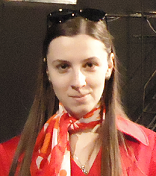
Dr. Onet-Marian Zsuzsanna is a Lecturer in the Department of Computer Science at Babes-Bolyai University in Cluj-Napoca, Romania. Her research focuses on applying machine learning techniques to software engineering challenges, particularly software defect prediction and restructuring. Academic Rank: Lecturer Affiliation: Babes-Bolyai University Department: Computer Science Email: zsuzsanna.onet@ubbcluj.ro Research Interests : Dr. Marian specializes in developing machine learning models (clustering, association rules, reinforcement learning) for software defect detection, package-level restructuring, and test order optimization. She also explores applications of Formal Concept Analysis in text summarization and music pattern discovery. Recent Publications highlight her work in source-code embeddings, unsupervised learning for software analysis, and comparative studies of online/traditional learning environments. Her methods often integrate domain-specific metrics and AI-driven optimization. Contact : zsuzsanna.onet@ubbcluj.ro | Office: Teodor Mihaly street, Room 440
Jennifer Doty serves as Associate Professor and Family and Human Services Program Director in the Department of Counseling Psychology and Human Services at the University of Oregon's College of Education. She also holds affiliate faculty status with the Prevention Science Institute, where she leads culturally adapted digital intervention research for Latinx families. Education PhD in Family Social Science, University of Minnesota MS in Applied Family and Child Studies, Northern Illinois University Research Focus Dr. Doty's work centers on leveraging parent-child relationships and technology to improve adolescent health through parent-based prevention, cultural adaptation of digital interventions, and cyberbullying prevention. Her research emphasizes evidence-based parenting strategies, adolescent digital media use, and mental health promotion, with specialized focus on culturally adapting interventions like Family Check-Up Online for Latinx communities. She employs mixed-methods approaches including longitudinal studies, RCTs, and community-based participatory research. Publication Trends Her 2023-2025 publications reveal strong thematic continuity in adolescent mental health, cyberbullying prevention, and digital intervention efficacy. Key trends include cross-cultural cyberbullying measurement (India/US), longitudinal analysis of media parenting effects, dietary impacts on mental health, and resilience frameworks after bullying victimization. Over 70% of recent work involves culturally adapted or Latinx-focused interventions, demonstrating her commitment to health equity. Scientific Recognition NIH R34 grant for Latinx-focused Family Check-Up Online adaptation (2024) NIMH CHIPS Fellow (2022) Society for Prevention Research Early Career Training Program (2020) NIH Training Award in Behavioral Intervention Optimization (2018) Mentorship and Funding As primary advisor for five PhD and three master's students, Dr. Doty actively supports first-generation and diverse scholars through scholarship identification and research opportunities. Her current NIH R34-funded project culturally adapts digital parenting interventions for Latinx families, building on prior NIMH and NIH training awards focused on adolescent health interventions and behavioral optimization. Research Collaborations She leads the Family Check-Up Online adaptation project through the Prevention Science Institute, collaborating with community organizations to develop culturally responsive digital tools. Her work integrates clinical psychology, public health, and human-computer interaction to create accessible prevention resources for underserved populations.
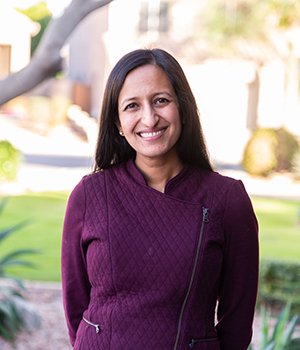
Rucheeta Kulkarni, PhD , serves as an Adjunct Professor at the University of San Diego (USD), where she contributes to the university’s online Master of Education (MEd) program. Her role centers on advancing the program’s commitment to equity, social justice, and practitioner-oriented research. Research Focus: Educational Equity – investigating systemic barriers and inclusive practices that ensure fair access to learning for all students. Multicultural Education – exploring culturally responsive pedagogies that honor diverse learners’ backgrounds. Action Research – mentoring in-service teachers to conduct classroom-based inquiry that simultaneously improves student outcomes and teacher professional growth. Her scholarship and teaching emphasize translating theory into practice, empowering educators to become reflective researchers within their own classrooms. Teaching & Mentoring: Within USD’s fully online MEd program, Dr. Kulkarni leverages synchronous and asynchronous modalities to build strong faculty–student relationships, encouraging candidates to connect via phone or video when deeper dialogue is needed.
Dr. Dominique Skye McDaniel is an Assistant Professor of English Education in the Department of English at Kennesaw State University’s College of Humanities and Social Sciences. She teaches and researches at the intersection of literacy, digital media, and social justice, centering the voices of Black and Brown adolescents in online spaces. Education Ph.D. in Educational Studies (Teacher Education concentration, Literacy & English Education cognates), University of North Carolina at Greensboro, 2022 North Carolina teaching licensure: Elementary Education, Middle Grades Language Arts, High School English, Reading Research Interests Dr. McDaniel’s scholarship interrogates how adolescents leverage social media for civic engagement and activism. She develops Culturally Digitized Pedagogy , a framework that marries culturally sustaining teaching with critical digital literacies. Her work explores how justice-oriented teacher education can amplify youth voice, particularly for Black and Brown teens whose digital practices resist systemic inequities. Her recent publications trace patterns across case studies of teen activists, demonstrating how multimodal composition on platforms such as TikTok, Twitter, and Instagram becomes a conduit for civic participation. Collectively, her articles argue that educators must reimagine curricula to honor students’ out-of-school literacies and position youth as co-researchers in the struggle for educational justice. Awards & Honors 2023 James Berlin Memorial Outstanding Dissertation Award, NCTE-CCC 2024 Richard A. Meade Award for Research in English Education, ELATE/NCTE Grants & Funding #OnlineLiteraciesMatter: Take Two – KSU Radow College Seed Grant, $7,500 (PI, 2024) Project CULTURE Phase II – KSU Radow College Project Development Grant, $2,300 (PI, 2023) Project CULTURE Phase I – KSU Radow College Extramural Funding Seed Grant, $7,500 (PI, 2022) Mentoring Culturally and Linguistically Diverse Preservice English Teachers – KSU Division of Organizational Effectiveness & Inclusive Excellence Grant, $8,000 (PI, 2023) Labs & Collaborations Dr. McDaniel directs Project CULTURE, a multi-phase professional learning community that mentors BIPOC preservice English teachers. She currently co-leads the #BlackBookTok study with Dr. Sarah Jerasa (Clemson University), examining how Black youth curate literary cultures on TikTok to resist dominant narratives. These collaborative projects position her at the forefront of justice-oriented English teacher preparation in the digital age.
Dr. Kai Lehikoinen is a University Researcher at Uniarts Helsinki's Research Institute. With a PhD in Dance Studies (University of Surrey, 2003), his work bridges dance pedagogy, socially engaged arts, and cultural well-being research. His academic career spans leadership roles including Vice Director of ArtsEqual (2015–2021) and Director of CERADA (2015–2021). Research focuses on arts-health intersections and future-oriented pedagogy Developed arts-based futures workshop model for European higher education Pioneered dance ambassador programs in elderly care settings His recent publications include Creativity, Society, and the Role of Socially Engaged Art in Higher Arts Education (Routledge, 2025) and Socially Engaged Arts (SEA) Practices: Key Skills and Capabilities (2023). Current projects Embodying Futures and Cultural Well-being Materialization explore embodiment theory and interdisciplinary well-being frameworks. Dr. Lehikoinen contributes to policy-making through the WHO Regional Office for Europe collaboration and serves on editorial boards including Critical Studies in Dance Leadership and Frontiers in Psychology . He advocates for ethical leadership models and appreciative dialogue in arts education reform.
François Pottier is a senior researcher at Inria in Paris, France, where he leads the Cambium research team. He is affiliated with the Gallium research group and has maintained an active research profile spanning several decades in programming languages and formal methods. His research focuses on programming languages , particularly functional programming and OCaml, type systems design and implementation, program verification using separation logic, and compiler construction . His work bridges theoretical foundations with practical implementation, evidenced by numerous open-source software tools he has developed. Pottier's publication record shows consistent contributions to top programming languages conferences (POPL, ICFP, ESOP) with recent work emphasizing separation logic frameworks, resource analysis, and formal verification of OCaml systems. His research demonstrates a clear trajectory from foundational type theory toward practical verification techniques for real-world programming languages. He has advised numerous PhD students including Remy Seassau, Tiago Soares, Clément Allain, and Alexandre Moine, among others, many of whom have gone on to research positions at institutions like New York University, Imperial College London, and Inria itself. Pottier maintains active service roles in the programming languages community as a member of IFIP Working Group 2.8 on Functional Programming and IFIP Working Group 2.16 on Language Design, and serves on program committees for major conferences including upcoming roles for JFLA 2026 and ITP 2026. He leads the Cambium research team at Inria, which focuses on programming language theory and implementation, particularly around OCaml and formal verification. The team develops both theoretical frameworks and practical tools that have influenced the broader programming languages ecosystem.
Fiona Barlow is a Professor at the University of Queensland's School of Psychology, where she leads research in social psychology and intergroup relations. She holds a Bachelor of Arts, Bachelor of Arts (Honours), and Doctor of Philosophy from the University of Queensland. Affiliated with research centers including the Social Identity and Groups Network (SIGN), Centre for Research in Social Psychology (CRiSP), and Centre for Psychology and Evolution, her work examines prejudice dynamics across diverse contexts. Her research program investigates prejudice reduction, body image, minority stress, and intergroup contact effects. Current projects explore how moral reasoning shapes health behaviors during crises, representations in media affect self-perception, and genetic beliefs vary cross-culturally. She maintains particular expertise in how group identities influence political attitudes and health outcomes across the lifespan. Barlow's publications demonstrate consistent focus on prejudice mechanisms across three domains: 1) Health contexts (vaccine attitudes, blood donation, weight stigma), 2) Identity dynamics (racial attitudes, sexual orientation, gender perceptions), and 3) Methodological innovation in cross-cultural survey research. Her longitudinal work tracks how social attitudes evolve during societal crises. She has secured competitive funding including an ARC Discovery Project (2022-2025) on minority experiences of interracial contact and an ARC Future Fellowship (2016-2022) examining racism and extremism. As an active supervisor, she mentors graduate students investigating prejudice reduction, body image, and LGBTQ+ health disparities. Her research group employs diverse methods including national panel surveys, experimental designs, and cross-cultural comparisons.
Dr. Arjen van Klink serves as a lecturer in Next Strategy at Rotterdam University of Applied Sciences and directs the Business Innovation Knowledge Center. He has been affiliated with the university since 2016, contributing significantly to both education and research focused on strategic management for small and medium enterprises (SMEs). Dr. van Klink earned his PhD from Erasmus University Rotterdam in 1995, where he researched port networks, urban development, and logistics management. Prior to his academic career, he worked at Rabobank in roles spanning sector development, strategy, and innovation, advising companies and mentoring innovative startups. His research centers on strategic capacity in SMEs - the organization's ability to engage with the future through signaling developments, anticipating change, experimenting, learning, and adapting. He developed the Next Strategy Scan, a practical assessment tool that measures strategic capacity by examining aspects like discussion space within companies, strategy implementation monitoring, and innovation resources. Dr. van Klink emphasizes that strategic capacity is not about creating strategic plans but establishing a collective learning process throughout the organization. Analysis of his recent publications reveals a consistent focus on practical strategic management solutions for SMEs. His work spans digital transformation, scenario planning, leadership development, and business model innovation, with particular attention to helping SMEs navigate complex economic and societal changes. He challenges the traditional view of strategy as mere planning, advocating instead for an integrated approach where dreaming, thinking, and doing work together to build organizational resilience. Member of the River Board (public-private platform for economic development) Former chair of the Supervisory Board of the Rotterdam Library (2013-2020) Former treasurer of the Rotterdam Housing Association Guest lecturer in the Master's program in Maritime Economics & Logistics at Erasmus University Rotterdam Dr. van Klink actively engages students through the Business Booster program, where third-year business students help SMEs develop innovative business models. He also contributes to the Leadership minor and supervises multidisciplinary projects investigating value creation in urban development. His work bridges academic research with practical application, ensuring findings translate into actionable insights for SMEs facing operational and strategic challenges.
Dr. Nadia Benakli is a Professor of Mathematics at New York City College of Technology (City Tech), part of the City University of New York system, within the School of Arts & Sciences. She coordinates the Computer Science and Applied Mathematics internship programs, bridging academic theory with industry practice. Her career spans decades of contributions to both pure mathematics and educational innovation. Her educational foundation includes a Ph.D. in Mathematics from Paris-Sud University, France. Research interests center on Geometric Group Theory (hyperbolic groups, Coxeter groups, polygonal complexes), Graph Theory , and Mathematics Education innovations. She integrates computational tools like R and Maple into calculus and data analysis instruction, emphasizing visualization and hands-on projects to enhance student comprehension in foundational mathematics courses. Publication trends reveal an evolution from theoretical work (1991-2002) on geometric structures to applied educational research (2011-2017). Early papers established frameworks for hyperbolic geometry and group boundaries, while recent work focuses on computational thinking, faculty mentoring models, and internship program design—demonstrating her commitment to translating abstract mathematics into practical educational strategies. As internship coordinator, she mentors students through industry placements and co-developed SIAM News-published frameworks for applied mathematics internships. Her teaching portfolio spans foundational courses (MAT065, MAT1175) to advanced topics (MAT440, MAT4901), reflecting deep engagement with curriculum development across all undergraduate levels.
Dr. Kimia Witte is a Lecturer in Biomedical Engineering at the University of Strathclyde, UK, actively accepting PhD students. Her research focuses on innovative biomedical engineering approaches including stem cell manipulation using physical stimuli, biomaterial development for tissue regeneration, and diagnostic tool design. She specializes in creating bioinstructive environments for controlling cell behavior and developing novel biomaterial platforms. Research Focus Witte's core research integrates: Stem cell engineering using acoustic/physical stimulation Development of smart biomaterials for tissue regeneration Microfluidic platforms for diagnostic applications Mechanobiology approaches for clinical diagnostics Her work bridges fundamental biomaterial science with clinical applications in regenerative medicine and diagnostic technologies. Research Trends Analysis of her 12 most recent publications reveals: Strong focus on stem cell-microenvironment interactions Increasing emphasis on translationally-oriented research Development of novel diagnostic platforms Interdisciplinary approaches combining engineering, biology and materials science Progressive refinement of biomaterial systems Awards and Recognition Witte has received recognition for her scientific contributions including 1 prize (specific award unnamed in available data). Her publications show significant impact with multiple articles receiving 20+ citations. Academic Activities Maintains active research program with 18 projects and 3 datasets. Contributes to academic community through peer-reviewed publications and conference presentations. Collaborates with researchers across materials science, cell biology and clinical medicine disciplines.
Dr. Todd Donavan is an Associate Professor in the Department of Marketing at Colorado State University's College of Business. His research focuses on customer orientation and identification, exploring how personality traits and environmental factors influence employee and customer behavior. Customer Orientation: Investigates traits predicting CO disposition and its benefits for organizational commitment and satisfaction. Identification: Analyzes drivers of customer and employee identification with firms, including personality and situational factors. Todd teaches principles of marketing and a sports marketing seminar, collaborating with the Denver Nuggets to provide students practical industry experience and contribute to a marketing scholarship. His recent publications examine service recovery, brand endorsement dynamics, and statistical methodologies. Notable trends in his research include the interplay between employee traits and customer satisfaction, social identification in sports marketing, and methodological advancements in factor analysis. He has also developed software tools for statistical research.
Professor Vinh Lu (Lữ Nhật Vinh) is Director of the Research School of Management at the Australian National University (ANU)’s College of Business and Economics. Leading a team of 60 academic and professional staff, he oversees research and education initiatives across disciplines like Marketing, International Business, and Project Management. Previously, he held roles including Associate Dean (Advancement & Engagement) and Director of Employability at the College. Ph.D in Marketing (University of Adelaide) B.Commerce (Hons), B.Commerce (Marketing & International Business) Cert III Government and Dip. Market Research His research focuses on service delivery, relationship management, and career development, with recent trends exploring AI in service sectors, cultural intelligence during study abroad programs, and crisis management in branding. His work bridges Marketing, Organizational Behavior, and International Business. Vinh’s accolades include the 2025 Vice-Chancellor's Award for Educational Excellence, 2024 ACT NAIDOC Award, and 2024 Asia-Pacific Triple E Award. He also chairs the 2025 Vice-Chancellor's Education Awards. He has led university-wide initiatives in employability, global mobility, and externally engaged learning. His grants include funding from Wine Australia and SEARMS Community Housing Aboriginal Corporation. Vinh contributes to journals like the Australasian Marketing Journal and Journal of Service Theory and Practice .
Lilith G. Rüschenpöhler serves as Associate Professor for Chemistry Education at the Norwegian University of Science and Technology (NTNU) since 2023. Prior to this, she held a Margarete von Wrangell fellowship at Ludwigsburg University of Education (2021-2023) and worked as a part-time secondary school teacher in Germany (2021-2022). Research Interests: Decolonizing science education in European contexts Multilingual science learning strategies Science capital theory and application Generative AI integration in science instruction Philosophical foundations of science education Her recent publications focus on cultural comparisons in chemistry education (Germany/China), equity-focused teaching approaches, and vocational orientation tools. She has developed card games for science career exploration and conducted extensive research on self-concept formation in chemistry students. Scientific Awards: Margarete von Wrangell fellowship (2021-2023) As a trained secondary school teacher with expertise in chemistry and French as a foreign language, she has taught in four languages and developed innovative teaching materials including international science capital metrics and planetary boundaries lesson plans.
Professor André Schneider serves as Professor for Corporate Sustainability Management, with a specialization in Sports Management, at Mittweida University of Applied Sciences. He holds multiple leadership roles including Vice Dean of Studies for Business Administration since 2018 and Representative of the Rectorate for Research and Teaching in Sports. His academic home is within the Faculty of Industrial Engineering, where he contributes significantly to business education with a focus on sustainability and sports management. Dr. Schneider's research interests span Sports Management, Corporate Sustainability, Digital Education, and Event Management. His work particularly focuses on the intersection of sports and higher education, examining how digital learning environments can facilitate dual careers for elite athletes. He has pioneered research in eSports, exploring its psychological dimensions, educational applications, and potential as a tool for sustainable development education. His innovative approaches include using SimCity as a digital experience space for competence development in sustainability education and investigating psychological ownership concepts in educational resource development. His publication record shows a strong trend toward digital transformation in education, with particular emphasis on service learning, competence development, and the application of gaming environments for educational purposes. Many of his recent works examine how digital platforms can create experiential learning spaces, particularly in the context of sustainable development. His research increasingly integrates eSports and gaming concepts as tools for competence development across various educational contexts. Professor Schneider has led numerous significant research projects funded by SMWK (Saxon State Ministry for Science and Art) and HSMW (Mittweida University of Applied Sciences), with a focus on dual careers for student-athletes, digital learning resources, and sustainable business practices. His projects often involve interdisciplinary teams and address practical challenges in higher education and sports management. He has established the Digital Service Learning Lab, which focuses on creating digital teaching-learning environments for competence development through service-learning projects at Saxon universities. His work also includes coordinating the top sports program at Mittweida University of Applied Sciences, where he has served as top sports coordinator since 2015, making significant contributions to enabling dual careers for student-athletes.
David C. Gosselin is a Professor in the Environmental Studies department within the School of Natural Resources at the University of Nebraska-Lincoln. He serves as Director of the Nebraska Earth Systems Education Network (NESEN), which has grown to over 530 members across multiple states and international locations. His work focuses on developing online professional development for K-12 educators through the Laboratory Earth series of courses funded by NASA, emphasizing Earth system science education. Gosselin's research centers on integrating cognitive and metacognitive skills in Earth science education. His work explores how content mastery activities (CMAs) can enhance learning by allowing students to develop planning, monitoring, and evaluation skills. He advocates for learner-centered, knowledge-centered, assessment-centered, and community-centered learning environments that transition effectively from face-to-face to online delivery. His approach emphasizes systems thinking, where "everything is connected to everything else" in Earth's subsystems, and employs multiple learning strategies including narrated presentations, field activities, simulations, and interactive visualizations. His publication record shows significant contributions to geoscience education between 2000-2003, with research focusing on university-school collaborations, teacher professional development workshops, and curriculum implementation. While the available texts don't list recent publications, his work has been supported by major funding agencies including NASA, NSF, DOE, and the National Drought Mitigation Center. His educational philosophy emphasizes intrinsic motivation over grades, allowing students to resubmit work until they achieve content mastery. Gosselin has contributed to multiple collaborative projects including the Integrated Research and Education Project (NSF-funded), Process-oriented Environmental Change Education Workshops, and Earth System Science in the Community (EarthComm) professional development. He has trained approximately 110 teachers through these initiatives, potentially impacting over 7,000 students annually. His work addresses the challenges of interdisciplinary curriculum development, the importance of collaborative planning time, and creating flexible learning environments for educators. Within the Environmental Studies program at UNL, Gosselin has helped develop a holistic, systems-based approach emphasizing sustainability. The program prepares students to work across disciplines on environmental challenges, developing 21st century skills including collaboration, critical thinking, ethics, and creativity. Despite program growth from 70 to nearly 600 student credit hours between 2008-2011, the program faces challenges with limited staffing consisting of one part-time faculty director and a full-time academic coordinator serving approximately 110 students.