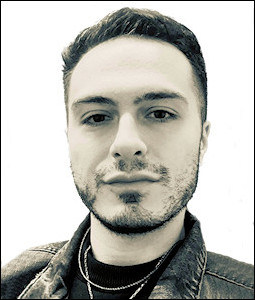
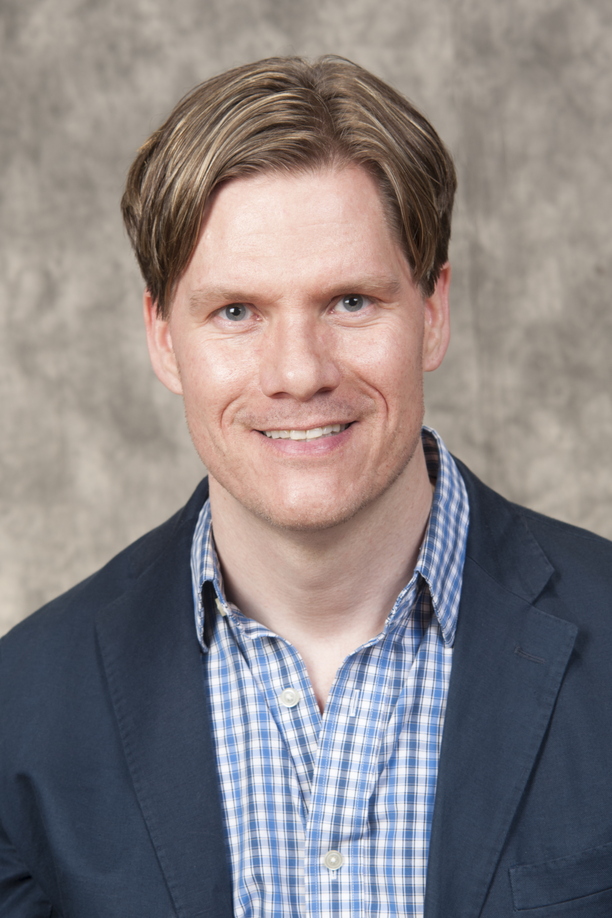
Lewis Esposito is an Assistant Professor in the Department of English Language and Literature at the University of South Carolina, affiliated with the McCausland College of Arts and Sciences. His research bridges sociolinguistics, phonetics, and sociocultural analysis. PhD in Linguistics, Stanford University, 2024 BA in Linguistics, Swarthmore College, 2016 Esposito specializes in sociolinguistics, focusing on language variation and change, sociophonetics, and intersections of language, gender, and sexuality. His work explores prosodic patterns, stylistic shifts, and embodied ideologies in speech. Recent publications highlight prosody, Mandarin syntax, and gendered affective markers. His research integrates experimental and corpus-based methodologies. Stanford Humanities Center Dissertation Prize (2022-2023) Gilliland Award, Phi Beta Kappa (2021) Pigott Scholars Fellowship (2020-2021) LSA Linguistic Institute Fellowship (2019) Hindi-Urdu Startalk Language Fellowship (2014) Esposito has secured grants including the Linguistics Department Research Grant at Stanford (2021, 2019) and NSF REU Grant (2015). He mentors graduate students and contributes to sociolinguistic discourse.
Abbas Ratansi serves as a Lecturer Practitioner at Anglia Ruskin University (ARU) within the School of Allied Health and Social Care, Faculty of Health, Medicine and Social Care. A graduate of ARU himself, he combines nearly two decades of clinical experience as a Senior Operating Department Practitioner with his academic role, maintaining active clinical practice to ensure teaching relevance and currency in perioperative care. His educational foundation includes a Diploma of Higher Education in Operating Department Practice. Registered with the Health & Care Professions Council, Ratansi possesses extensive hands-on expertise across trauma/orthopaedics, ENT, gastrointestinal surgery, and obstetrics for both adult and paediatric patients. His clinical specialization spans all three phases of operating department practice—anaesthesia, surgery, and recovery—with particular focus on difficult airway management and preoperative cardiopulmonary exercise testing (CPET/CPEX) for complex surgical cases. Ratansi's research trajectory centers on innovative educational methodologies including holographic simulation for healthcare training and 3D-printed medical equipment, alongside critical examinations of student learning styles, healthcare access disparities, and global perioperative best practices. Currently completing a Postgraduate Certificate in Medical and Healthcare Education, he actively develops these research streams while teaching the BSc (Hons) Operating Department Practice program. His scholarly output includes a notable 2015 presentation at the World Airway Management Meeting addressing interdisciplinary airway training approaches. Professional affiliations reflect his commitment to field standards through membership in the Difficult Airway Society (affiliate), Royal College of Anaesthetists, Health & Care Professions Council, The Royal Institution, and Association for Perioperative Practice.
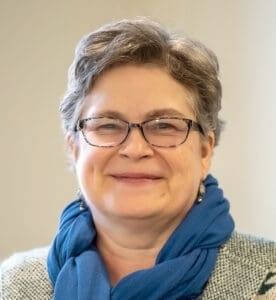
Laura Walther serves as Assistant Professor of Chemistry at Asbury University since 2000, holding dual administrative roles as Stockroom Supervisor and Chemistry Safety Officer in the Walt and Rowena Shaw Collaborative Learning Center (CLC Room 243). Her educational credentials include: Ph.D. in Analytical Chemistry from University of Kentucky M.S. in Analytical Chemistry from Eastern Kentucky University B.A. in Chemistry from Asbury College (1991) Dr. Walther specializes in analytical chemistry methodology with applications in environmental and forensic contexts. She actively extends departmental outreach through on-campus chemistry labs for homeschooled students, drawing from her own homeschooling experience. Her teaching philosophy emphasizes catalyzing student 'aha!' moments through hands-on laboratory experiences in Analytical Chemistry, General Chemistry, and Forensic Science courses. Scholarly output centers on her 2001 Master's thesis developing SPE and GC-MS methods for pyrethrin quantitation in consumer products, representing contributions to analytical method development and environmental contaminant analysis. No scientific awards were documented in available materials. As an educator, she maintains close mentorship relationships with students—several affectionately calling her 'mom'—while prioritizing laboratory safety compliance through continuous regulation monitoring. Her advising approach integrates academic guidance with personal development, reflecting her self-described 'innately maternal' teaching style. Dr. Walther oversees all chemistry stockroom operations and enforces safety protocols across departmental laboratories, maintaining her office in CLC Room 243 where she conducts homeschool chemistry programs.
Dr. Sara Namvar is an Associate Professor in Biomedical Science at the University of Salford, School of Science, Engineering & Environment. She joined the University in 2018 after seven years of postdoctoral research at the University of Manchester and currently serves as Directorate Head of Student Experience while leading the Biomedical Science programme. Her dual expertise spans respiratory biology and biomedical education, making significant contributions to both scientific research and pedagogical innovation. Education: Postgraduate Certificate in Academic Practice (PGCAP), University of Salford (2019-2020) PhD in Neuroscience, University of Manchester (2007-2011) Bachelor's Degree in Neuroscience (2003-2006) Dr. Namvar's research program bridges fundamental science and educational practice. In respiratory biology, she investigates asthma mechanisms, particularly focusing on Aspergillus fumigatus and its role in airway inflammation and remodeling in fungal-sensitized individuals. Her educational research centers on graduate capital development, student employability, and innovative teaching methods that enhance engagement. She has pioneered authentic learning experiences including pathology specimen reception simulations and TED-style talks that develop professional skills. Her work with diverse student populations, many from underprivileged backgrounds, informs her inclusive educational approaches. Analysis of her publication trends reveals increasing integration between her scientific and educational research domains. Recent publications demonstrate how understanding disease mechanisms directly informs better training for future healthcare professionals, with growing emphasis on employability and authentic learning experiences alongside continued contributions to respiratory biology. Scientific Awards and Recognitions: IBMS Educational Institute of the Year (2024) Times Higher Most Innovative Teacher of the Year (Shortlist) (2021) Times Higher Most Innovative Teacher of the Year (Nomination) (2022) Renal Tract conference, best oral presentation (2018) Trevor Cook Award for best oral presentation (2017) University of Salford Merit Award (2022) Dr. Namvar has secured multiple research grants including the KidsCan Student Placement Grant (£2,000, 2019), 'Investigating the role of Endothelin-1 in A. fumigatus driven airway remodelling' (2019-2020), and 'Inorganic chaperons fused fungal derived chemotherapies for neuroblastoma' (PhD studentship, 2019-2022). She has organized significant events including the Human and Natural Sciences Careers festival (2021-2024), Future Health Conference (2020), and 'Current Challenges, Innovative Practice and Student Experience in Physiology Education' (2024). As Academic Editor for the Bioscientist magazine, she has co-created an initiative resulting in over 100 peer-reviewed articles by Salford students. Dr. Namvar serves in multiple leadership roles including Elected Member of University Senate (2021-2024, 2024-2027), Deputy Chair of the academic bureaucracy review (2024-2025), and membership on the Equity in Learner Outcomes Task and Finish Group (2023-2024). Her work on the 'Current Challenges' physiology education event and special issue on 'A Global Perspective on Current Research in Physiology Education' demonstrates her commitment to advancing teaching practices across the sector.
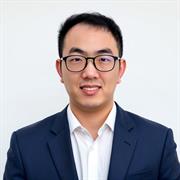
Dr. Zhuang Li is a Lecturer at RMIT University's School of Computing Technologies, specializing in Natural Language Processing (NLP), machine learning, and trustworthy AI. He earned his PhD from Monash University (2023), focusing on semantic parsing in low-resource conditions, and previously worked at Microsoft on Cortana and Bing. His research bridges NLP, computational social science, and cultural alignment of AI systems, emphasizing data-efficient training and LLM safety. Education: PhD in NLP, Monash University (2019–2023) M.Comp in AI, Australian National University (2014–2015) B.Eng in Electrical Engineering, Wuhan University of Science and Technology (2009–2013) Research Interests: Data-efficient learning, culturally-grounded AI, large language models, computational social science, and ethical AI deployment. Collaborations: Active in industry partnerships and academic collaborations with Monash University, TU Darmstadt, Microsoft Research India, and Ant Group. Recent work includes ACL 2025 papers on LLM safety and peer review analysis. Supervision: Open to PhD students in low-resource languages and culturally-aligned LLMs. Collaborates with senior faculty at RMIT and Monash.
Omar Solinger is an Associate Professor in Psychology at the Department of Management and Organisation, Vrije Universiteit Amsterdam (VU Amsterdam). He holds a PhD from Maastricht University (2010) and specializes in organizational behavior, temporal dynamics of commitment, and methodological innovation. His work bridges psychological concepts with organizational theory to enhance societal relevance, emphasizing substantive-methodological synergy. Education: PhD in Psychology (Maastricht University, 2010). Teaching roles include coordinating the Leadership and Change Management (LCM) master program (attracting ~100 students annually) and teaching Theory Development courses at VU Amsterdam, Trinity College Dublin, ESCP Business School, and FAPESP University of São Paulo. Research focuses on organizational change, psychological contracts, and temporal processes. Key themes include commitment dynamics, leadership development, and how strategic interventions (e.g., cost-cutting vs. HR investments) impact employee attitudes over time. His work appears in top journals like Academy of Management Review , Journal of Applied Psychology , and Organization Science . Grants include a VENI Grant (€250,000, 2014–2016) and a NWO grant (€133,000, 2017). Awards include the Best Faculty Paper Award (2014) and Finalist for Best Paper in Academy of Management Review (2020). He serves on editorial boards of Academy of Management Review , Journal of Organizational Behavior , and others. His research highlights include demonstrating how psychological contract breaches affect long-term commitment recovery and identifying taxonomies of onboarding scenarios shaping employee commitment. Current projects explore moral leadership, power dynamics in business ecosystems, and digital transformation’s social impacts.
Anette Forssten Seiser is a Docent and Associate Professor at Karlstad University, Sweden, specializing in educational leadership and school development. She holds a PhD from Karlstad University (2017) and has extensive experience as a teacher and school leader before transitioning to academia. Her work focuses on enhancing pedagogical leadership through action research methodologies, emphasizing evidence-based practices and collaboration between school leaders and researchers. Research Interests: Sustainable development in education (ESD), school improvement frameworks, leadership practices in low socioeconomic status schools, professional learning communities, and the implementation of whole-school approaches to educational reforms. She has pioneered studies on principals' emotional labor and the role of "change agents" in restructuring school organizations to embed sustainability goals. Publications & Projects: Over 30 peer-reviewed articles and book chapters since 2014. Key works include the 2023 Journal of Educational Administration and History paper on decentring pedagogical leadership and the 2022 Environmental Education Research study on ESD implementation guidelines. She co-authored the 2021 book School improvement through actions , exploring collaborations between schools and researchers. Grants & Collaborations: Active in university-municipality partnerships, particularly in the Swedish National Principal Training Programme. Leads research groups focused on ESD institutionalization and principals' professional learning trajectories. Recent projects include the LISA-PLOT study on linking instruction to student achievement through professional observations. Labs/Teams: Member of the Education for Sustainable Development research cluster at Karlstad University. Collaborates with Nordic institutions on comparative studies of leadership practices and emotional labor in education.
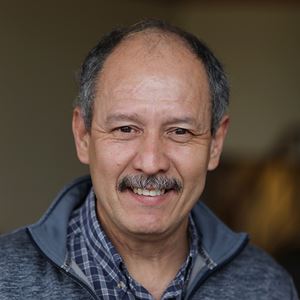
Sergio Inestroza is a Professor in the School of Social Sciences, Communication & Humanities at Endicott College. He joined the institution in 2001 and specializes in teaching Spanish, with a secondary focus on Portuguese. Known for his empathetic teaching style and open-door policy, he frequently leads student groups to Latin America, including Costa Rica, Peru, and Mexico. Education: Doctor of Philosophy in Modern Literature, Universidad Iberoamericana (1998) Inestroza’s work bridges language pedagogy and literary creation. His research interests include Spanish language acquisition, Latin American literary traditions, and cross-cultural narratives. His publications span poetry, nonfiction, and fiction, reflecting his dedication to creative writing and bilingual expression. His scholarly contributions include: Latin Book Awards (2017): Honorific Mention for Los motivos de la memoria . Endicott College Teacher of the Year (2006). NCAA Faculty Athletics Representative (2012–17). Inestroza integrates travel and experiential learning into his pedagogy, fostering immersive cultural and linguistic engagement for students.
Kai Riemer is a Professor of Information Technology and Organisation and Director of Sydney Executive Plus at the University of Sydney. He joined the university in 2009 from Münster University (Germany), where he held an Assistant Professorship and earned his Ph.D. and Habilitation. His expertise spans Artificial Intelligence, Disruption Phenomena, and the Philosophy of Technology, with a focus on emerging technologies' societal impacts. Roles: Professor (University of Sydney), Director of Sydney Executive Plus Education: Diploma in Information Systems (Münster), Ph.D. in Management (Münster), Postdoctoral thesis (Habilitation) Affiliations: Charles Perkins Centre Member, Board Member of Journal of Information Technology and Business and Information Systems Engineering His research employs practice theoretical and non-orthodox approaches, addressing topics like generative AI, algorithmic fairness, and digital disruption. Kai consults for corporate boards and frequently presents on AI ethics, digital transformation, and social media strategies. His work appears in top journals such as MIS Quarterly and Journal of Information Technology . Key research trends include exploring AI’s societal implications, the ethical challenges of algorithmic systems, and the future of work in the digital age. His recent studies highlight the need for human-centered AI development and critical engagement with technology’s role in organizational and societal contexts. Grants & Awards: Extensive industry-funded research and ARC grants. No specific awards listed explicitly in the text. Advising & Students: Supervises research on algorithmic fairness, human-centered AI, and responsible AI management. Current advisees include Stefanie Knippschild, Bey Sheykh Alivand, and Belinda Wang. Labs/Teams: Leads Sydney Executive Plus, fostering executive education and strategic partnerships. Engaged in interdisciplinary collaborations via the Charles Perkins Centre, focusing on health-related technology challenges.
Jason Hockman is a Reader in Music and Sound Design at the School of Digital Arts (SODA) at Manchester Metropolitan University . He is a leading researcher in Music Information Retrieval (MIR) , computational audio analysis, and music production technologies. He is also a professional music producer and performer under the aliases Jason oS and DAAT , and co-founder of Detuned Transmissions , an artist collective and independent record label. Research Interests: Computational analysis and generation of audio for music production Ethnographies of breakbeat-oriented UK dance music Neural audio synthesis and adversarial networks Automatic drum transcription and onset detection Gesture-based music interaction systems Interactive audio for games and multimedia Publications Trends: His recent work focuses on generative audio models , including GAN-based drum synthesis, neural impact sound synthesis, and latent space exploration for audio. He has also contributed extensively to automatic transcription systems for percussion and string instruments, and interactive performance tools that integrate gesture control and real-time audio manipulation. Scientific Contributions: Co-author of the widely cited Review of Automatic Drum Transcription (2018) Developer of interactive systems like MyoSpat for gesture-based control Pioneer in combining ethnographic research with computational music analysis Teaching & Supervision: Jason integrates his research and music production experience into undergraduate and postgraduate teaching. He supervises students in music technology, sound design, and MIR, and emphasizes a holistic approach that bridges creative practice and academic inquiry. Creative Practice: Through Detuned Transmissions , he releases and distributes electronic music internationally, maintaining an active presence in both academic and artistic communities.
Randy Caspersen is an Associate Professor in the Department of Communication at Northern Illinois University, serving as Program Coordinator for both the Digital Media Production Certificate and Film and TV Studies Undergraduate Certificate. He teaches studio production, field production, post-production, and scriptwriting courses including COMS 357, 358, 427, 436, 463, and 466. His educational background includes an M.F.A. from Columbia College Chicago. Caspersen's creative research centers on film and video production with strong emphasis on LGBTQ+ representation, disability inclusion, and gender studies. His work bridges documentary and narrative filmmaking through community-based storytelling and experimental techniques, often collaborating with university centers like NIU's Center for the Study of Women, Gender and Sexuality. He explores social justice themes through both creative practice and academic inquiry. His filmography reveals consistent engagement with marginalized communities, particularly through disability representation in "Go Penguins!" and LGBTQ+ narratives across multiple shorts. The work demonstrates technical mastery in production while maintaining activist-oriented storytelling that has achieved international festival circulation. Notable awards include: Best Feature Documentary at the Los Angeles Diversity Film Festival for "Go Penguins!" 2015 CINDY Award for "Altered Barbie Workshop" Best Experimental Film (Second Place) at the 2010 Columbus International Film + Video Festival for "Toward the Blue" 2008 Best Men’s Short Film at Q Cinema Film Festival and Best Gay Short Film from the Great Lakes Film Festival for "Dolls" Caspersen secured the Illinois Humanities Council Production Grant and NIU Division of Research and Innovation Partnership Opportunity and Completion Grants for "Go Penguins!". He actively involves undergraduate students in productions like "The Pin", which was crewed by Department of Communication students and collaborated with Theatre and Dance, providing hands-on experiential learning in professional filmmaking contexts.
Dr. Didier Roche serves as an Associate Professor at Excelia Business School in La Rochelle, France, where he has been a Teacher-Researcher since 2012. With 28 years of teaching experience and 10 years in distribution/sales industries, he specializes in bridging academic research with practical business applications. His institutional roles include Academic Manager for the Bachelor Business Development & Negotiation program and ERASMUS Inter-campus Coordinator. His educational credentials feature: Doctorate in Management Sciences (Marketing), University of Poitiers (2005) DEA in Management Sciences, University of Poitiers (1998) Roche's research centers on the critical intersection of sales force performance and business ethics, with particular emphasis on generational dynamics (Y and Z generations) in sales environments. His industrial tourism studies examine how corporate visits function as strategic marketing tools, analyzing visitor psychology through unconventional lenses like boat naming patterns at marinas. His methodology combines empirical field studies in automotive and real estate sectors with innovative approaches such as serious games for sales training. His publication trajectory reveals intensifying focus on generational workforce challenges since 2015, alongside sustained exploration of ethical-performance linkages. Recent works analyze Gen Z sales expectations and leadership styles, while maintaining strong output in industrial tourism applications. His research consistently targets practical solutions for sales management optimization across diverse sectors. No scientific awards were documented in the source material. Roche demonstrates active engagement in pedagogical development through 15+ case studies published with The Case Center and HEC Montréal, though specific student mentorship details remain unreported. His grant activity and research team leadership appear undocumented in available materials. His work extends to creating scientific films and practical business manuals, reflecting commitment to translating research into actionable industry tools.
Bart Soenens is a Professor at Ghent University, Faculty of Psychology and Educational Sciences, specializing in developmental psychology, parenting dynamics, and self-determination theory. His work bridges theoretical frameworks with practical applications in adolescence, motivation, and educational settings. Research Interests: Dr. Soenens explores how autonomy-supportive versus controlling environments affect psychological outcomes, particularly in adolescents. His studies span topics such as psychological control in parenting identity formation motivational profiles in education social media's impact on youth parental burnout prevention perfectionism and mental health. PhD Supervision: He has supervised numerous doctoral candidates, including Daphne van den Bogaard (2024), Branko Vermote (2023), and Charlotte Schrooyen (2023), focusing on developmental and educational psychology. Recent Publications: His 2025 work examines prosody's role in social pressure and collaboration, while 2024 studies analyze interventions for student well-being, social media dynamics, and coaching environments in elite sports.
Andreas Stylianides is Professor of Mathematics Education at the University of Cambridge's Faculty of Education, where he serves as Chair of the Faculty Board. He is also a Fellow of Hughes Hall College and an Honorary Research Fellow at the University of Oxford's Department of Education. Previously, he held a 5-year appointment as Visiting Professor at the Norwegian University of Science and Technology (NTNU), an academic fellowship at the University of Oxford, and a postdoctoral fellowship at UC Berkeley. Stylianides chairs the Mathematics Education Research Group and has dedicated his career to understanding and improving classroom practice in mathematics education. As a Fulbright scholar with advanced degrees from the University of Michigan, his research focuses on mathematical reasoning, proving, and problem solving/posing across educational levels. His work involves designing theory-based classroom interventions to address students' difficulties with essential mathematical practices, working with participants from 5-year-olds to university students while addressing topics including teachers' mathematical knowledge, early algebraic ideas, and task design. His scholarly output demonstrates consistent focus on proof and reasoning in mathematics education, with recent work exploring the impact of generative AI on mathematical competencies. His research employs various methodologies, particularly design experiment methodology, to develop both practical solutions and theoretical understanding of classroom processes. The publications show progression from foundational work on proof in elementary mathematics to current investigations of AI's role in mathematical reasoning. Vice President of the European Society for Research in Mathematics Education Member of the Governance Group of Cambridge Mathematics Advisory Board member of the International GeoGebra Institute Editorial Board member of Research in Mathematics Education, Science & Education, and International Journal of Science and Mathematics Education Stylianides has supervised numerous doctoral students whose research explores mathematical reasoning, problem solving, and teacher development across various cultural contexts including China, Norway, Egypt, and Taiwan. His grant-funded research projects have addressed supporting secondary mathematics teachers, enhancing students' proof competencies, and developing virtual classroom environments for teacher learning, with funding from organizations including the UK's Economic and Social Research Council and the Spencer Foundation.
Professor Olga Epitropaki is the Deputy Executive Dean (Research) at Durham University Business School. She holds a PhD from Cardiff University (2000) and has held academic roles at institutions like ALBA Graduate Business School and Aston University. Her research focuses on leadership dynamics, including implicit leadership theories, leader-member exchange (LMX), creative leadership, and identity processes. She has authored/co-authored influential books such as The SAGE Handbook of Leadership and Creative Leadership: Contexts and Prospects . Epitropaki’s work bridges theory and practice, with contributions to journals like the Academy of Management Annals and Journal of Applied Psychology . Her research highlights the socio-cognitive foundations of leadership, exploring how identity and context shape leadership effectiveness. She has also served as an associate editor for journals such as the Leadership Quarterly and British Journal of Management . Her awards include the 2001 Jepson School Award for her doctoral thesis and a Newman Best Dissertation Award final placement (2000). Beyond academia, she has extensive consulting experience with global firms like AstraZeneca, Vodafone, and Boeing, applying leadership insights to organizational challenges. Recent research trends include exploring leader identity development, psychological distance in remote work, and the impact of economic inequality on civic leadership. Her studies on ethical leadership and follower forgiveness underscore the ethical dimensions of workplace relationships. She advises numerous PhD students and collaborates internationally on projects like the Global Identity Leadership Development Project. Key Research Themes: Leadership identity, creative leadership, LMX dynamics, organizational behavior. Notable Awards: 2001 Jepson Award, Newman Dissertation Finalist (2000). Professional Engagements: Editorial roles, leadership training for multinational corporations.