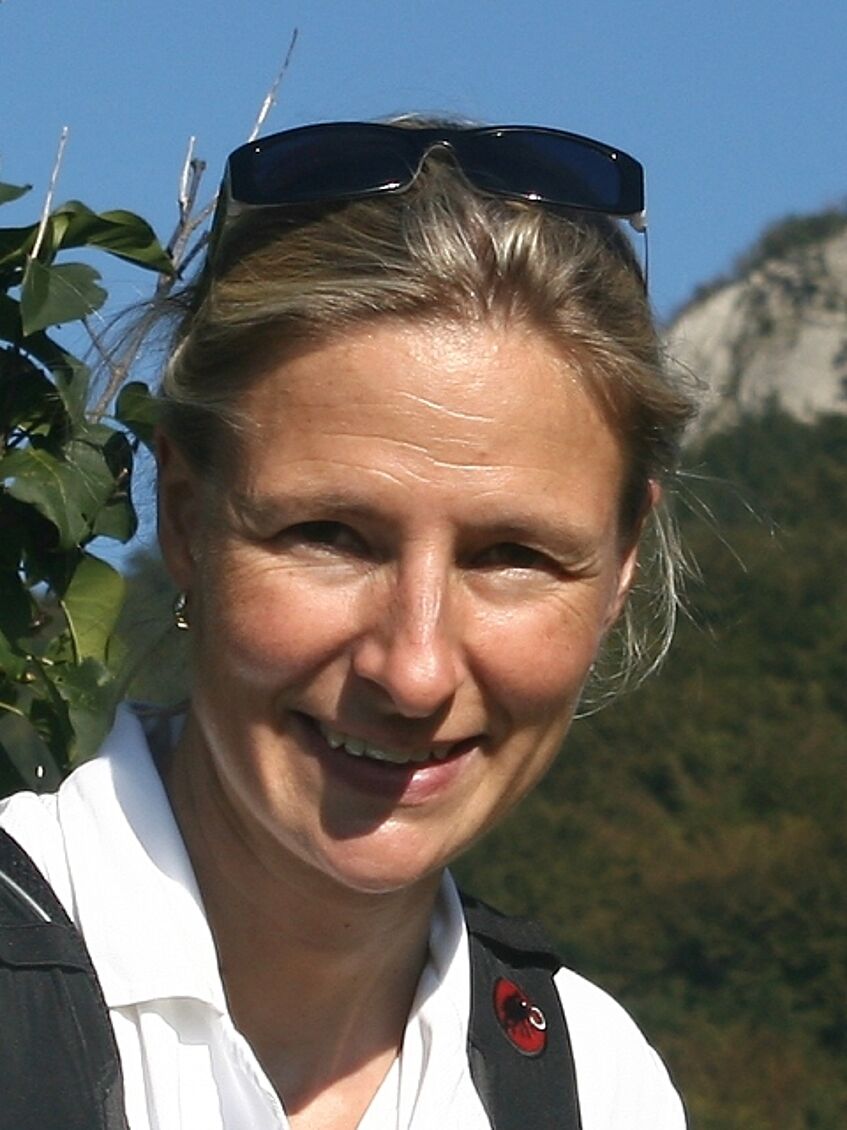
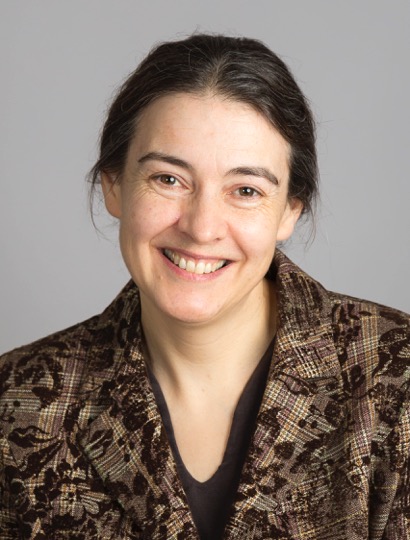
Sabine Glasl-Tazreiter is a Lecturer at the University of Vienna's Faculty of Life Sciences , specifically within the Department of Pharmaceutical Sciences and its Division of Pharmacognosy . Her office is located in room 2E 412 on the 4th floor at Josef-Holaubek-Platz 2, Vienna, Austria (1090). Contact details include telephone number +43-1-4277-55207 and email sabine.glasl@univie.ac.at . Principal research focus: Phytochemistry & Biodiscovery Specialization: Secondary metabolites from ethnomedicinally used plants across Europe, Mongolia, and Latin America Key techniques: Isolation of bioactive compounds, structural elucidation, pharmacological evaluation Quality control expertise: Macroscopic/microscopic identification, chemical analytics Recent publications highlight her work in: 2024 - Development of the VOLKSMED Database for Austrian folk medicine wound healing plants 2025 - Advanced mucociliary clearance research in respiratory systems 2023 - Innovations in optoacoustic imaging technology 2019 - Structure-function analysis of phycobiliproteins for medical imaging 2017 - Phytochemical characterization of Latin American antidiabetic plants
Houtan Jebelli is an Assistant Professor in Civil and Environmental Engineering at the University of Illinois. His research focuses on construction robotics, human-robot collaboration, and wearable sensing technologies for worker health and safety monitoring. He directs research on exoskeleton applications, fall risk detection, and AI-enabled monitoring systems for construction environments. Research interests include: Human-robot collaboration in construction sites Physiological monitoring using wearable sensors Exoskeleton technology and ergonomic assessment AI-enabled safety management systems Robotic inspection and defect detection Jebelli's recent work demonstrates strong interest in bridging robotics with occupational health, particularly studying cognitive and physiological impacts of wearable robotics. His publications frequently address real-time monitoring systems and human factors in construction technology adoption.
Bin Nan serves as Chancellor's Professor in the Department of Statistics at the University of California, Irvine, where he develops statistical and machine learning methodologies to advance biomedical research and improve human health outcomes through rigorous data analysis. His educational credentials demonstrate a strong quantitative foundation: Ph.D. in Biostatistics, University of Washington (2001) M.S. in Biostatistics, University of Washington (1999) M.S. in Statistics, Virginia Commonwealth University (1997) M.S. in Aerospace Engineering, Beijing University of Aeronautics & Astronautics (1987) B.S. in Aerospace Engineering, Beijing University of Aeronautics & Astronautics (1984) Nan's research program focuses on developing cutting-edge statistical methods for survival analysis, longitudinal data, high-dimensional inference, and machine learning, with direct applications to epidemiology, bioinformatics, and brain imaging. His work addresses critical challenges in biomedical data such as temporal dependence in neuroimaging sequences, estimation of large correlation matrices, and analysis of disease onset with terminal events, all aimed at identifying biomarkers for earlier disease diagnosis. Analysis of his recent publications (2015-2023) reveals a consistent trajectory toward methodological innovation in handling complex biomedical data structures, particularly through de-biased lasso techniques for survival models, neural network applications to censored data, and specialized approaches for longitudinal data with terminal events. These advances predominantly support Alzheimer's disease research and transplant outcome studies. No specific scientific awards were documented in the source material. His research program maintains continuous funding through National Science Foundation and National Institutes of Health grants, including a recent $1.8 million award for Alzheimer's disease methodology development. Nan actively collaborates with the UCI Alzheimer's Disease Research Center and UCI Center for the Neurobiology of Learning and Memory, though student advising details were not provided. His teaching portfolio includes advanced graduate courses in probability theory, survival analysis, and high-dimensional inference. Nan operates within interdisciplinary biomedical research teams focused on translating statistical innovation into clinical applications, particularly through brain imaging analysis and biomarker identification for neurodegenerative diseases.
Prof. Dr. Gaia Tavosanis is a faculty member at RWTH Aachen University , affiliated with the Department of Developmental Biology . Her research focuses on the cellular and molecular mechanisms underlying neuronal resilience and dynamics in Drosophila , particularly during development and adult life. Research Interests Her work investigates dendritic structural remodeling, lipid metabolism in neuronal health, and the role of the Drosophila mushroom body in sensory processing and memory formation. These studies integrate genetic models, advanced imaging techniques, and functional analyses to uncover conserved biological principles. Publications Trends Recent publications highlight her expertise in neurodevelopmental mechanisms, lipid metabolism in neurons, and computational ethology using Drosophila . Key themes include dendritic plasticity, disease modeling, and neural circuitry optimization. Contact Email: gaia@devbiol.rwth-aachen.de Phone: +49 241 80 20870 Address: Worringerweg 3, 52074 Aachen, Germany
David S. Matteson is a Professor and Associate Department Chair in the Department of Statistics and Data Science at Cornell University. He holds affiliations with the Bowers College of Computing and Information Science, the ILR School, the Center for Applied Mathematics, and the Program in Financial Engineering. His research focuses on developing statistical and machine learning methodologies for complex systems, with applications in finance, environmental science, healthcare, and nanotechnology. He received his PhD in Statistics from the University of Chicago and a BSB in Finance, Mathematics, and Statistics from the University of Minnesota. His awards include the NSF CAREER Award (2015), SUNY Chancellor’s Award (2022), and Fellowships from the Institute of Mathematical Statistics and American Statistical Association (2024). Research interests span theoretical methods like changepoint analysis, high-dimensional time series, and functional data, alongside applied domains such as systemic risk, climate change, and medical imaging. He leads major NSF-funded initiatives including the PRISM Institute for Trans-domain Systemic Risk and the TRIPODS Greater Data Science Cooperative Institute (GDSC). Editorial Roles: Founding Editor-in-Chief of Data Science in Science , Associate Editor for Journal of Econometrics , and former editor for multiple statistical journals. Leadership: Chair of the ASA’s Business and Economic Statistics Section (2024), Director of the National Institute of Statistical Sciences (NISS). Grants: PI/Co-PI on NSF and USAID projects addressing systemic risk, energy systems, and poverty estimation.
Dr. Neashan Mathavan is a Lecturer in the Department of Health Sciences and Technology at ETH Zürich, affiliated with the Institut für Biomechanik . His research focuses on musculoskeletal biomechanics, aging-related bone deterioration, and spatial omics approaches to study fracture healing and mechanoregulation. He has pioneered work on mouse models of premature aging (e.g., PolgA mice) to investigate sex-specific mechanisms of bone regeneration and frailty. Key areas include spatial transcriptomics, osteocyte function, and the role of mechanical loading in musculoskeletal repair. Dr. Mathavan’s research integrates advanced imaging techniques (e.g., spatial μProBe, super-resolution spatial transcriptomics) with biomechanical testing to elucidate molecular and structural changes in aging bones. His recent studies emphasize the interplay between mechanical signals and molecular pathways in bone regeneration, particularly in contexts like osteoporosis and osteoarthritis. He has also developed novel osteochondral explant models to study cartilage-bone crosstalk in osteoarthritis. His publications span 2009–2025, with a focus on translational studies linking mechanobiology to clinical outcomes. Notable contributions include investigating the efficacy of BMP-7 and zoledronate therapies in bone regeneration, as well as the role of IL-1β in osteochondral tissues. His work has implications for personalized therapies targeting musculoskeletal aging and degenerative diseases. Dr. Mathavan supervises PhD students like Riyin Tay, who explored palliative care for advanced dementia patients. He collaborates on grants involving biomechanical modeling, spatial omics, and transgenic mouse models. His laboratory at ETH Zürich’s Institut für Biomechanik is equipped for advanced imaging, mechanical testing, and molecular biology.
Professor Yanghua Wang is a leading academic in Geophysics at Imperial College London's Faculty of Engineering. He serves as Principal of the Resource Geophysics Academy and Director of the Centre for Reservoir Geophysics. His career spans over four decades, with roles including Research Manager at Robertson Research and a PhD from Imperial College London (1995–1997). He holds prestigious awards such as Fellow of the Royal Academy of Engineering (2021) and membership in the Chinese Academy of Engineering (2023). Education highlights include a BSc (1983) and MSc (1994) in Geophysics, followed by a PhD in Geophysics (1997). His research focuses on seismic inversion, reservoir geophysics, and time-frequency analysis, with notable monographs on seismic inversion and signal processing. He leads interdisciplinary projects combining machine learning with geophysical modeling, addressing challenges in reservoir characterization and seismic data processing. Research interests emphasize geophysical inversion techniques, anisotropic media analysis, and applications in energy exploration. He has pioneered methods like the W transform for seismic signal analysis and contributed to advancements in physics-informed neural networks. His work bridges theoretical geophysics with practical reservoir engineering solutions. Prof. Wang’s lab, the Resource Geophysics Academy, focuses on innovative geophysical methodologies for subsurface characterization. His recent projects include AI-driven data assimilation for large-scale systems and high-resolution seismic imaging techniques. Collaborations span academia and industry, addressing global energy and resource challenges.
Andrea Falini is a Full Professor of Neuroradiology at the Vita-Salute San Raffaele University (School of Medicine). He holds leadership roles including Head of the Neuroradiology Department at the Scientific Institute S. Raffaele Hospital and Head of the Advanced Diagnostic in Neuro-oncology Unit. His career spans clinical, academic, and administrative roles since 1991, with extensive experience in neuroradiology, neuro-oncology, and neuroimaging research. Education: MD (1986, University of Milan), PhD in Neurological Sciences (1989), and specialized training in Neurology and Radiology at leading institutions, including a visiting scholar position at UCSF (1996). Research interests focus on advanced MRI techniques, neuro-oncology, neurodegenerative diseases, and cognitive neuroscience. His work emphasizes functional MRI, diffusion tensor imaging, and clinical applications in glioma management and neurodegenerative disorders. Awarded the 1989 'De Visart' Prize and grants supporting his international collaborations. He has authored 218+ peer-reviewed articles, with an H-index of 40+, and actively contributes to academic committees and international conferences. Leadership roles include Vice-Director of the Neuroscience Division (2014–present) and coordination of the BraiMap Research Program. His academic teaching spans neuroradiology, biomedical engineering, and cognitive neuroscience courses.
Roya Nasimi, Ph.D., is an Assistant Professor in the Department of Engineering at California State University, East Bay, where she joined in Fall 2023. Her expertise spans structural engineering, computer vision, and artificial intelligence, with a focus on developing innovative solutions for infrastructure monitoring and safety. Dr. Nasimi's educational background includes: Ph.D. with distinction in Structural Engineering from the University of New Mexico Master’s degree in Structural Engineering from the University of Tabriz Bachelor’s degree in Civil Engineering from the University of Tabriz Her research focuses on structural health monitoring using advanced technologies. She integrates computer vision , artificial intelligence , and machine learning to develop systems for monitoring aging infrastructure, particularly bridges. Her work includes designing low-cost and high-end sensor systems, conducting full-scale bridge experiments, and collaborating on interdisciplinary projects to enhance infrastructure safety and resilience. Her recent publications (2021-2025) demonstrate a strong emphasis on non-contact monitoring techniques using drones, lasers, and computer vision. Key trends include the application of deep learning for displacement measurement, digital twinning for infrastructure, and rockfall prevention through machine learning. Her work bridges civil engineering with cutting-edge technology to address critical infrastructure challenges. Dr. Nasimi's research is supported by multiple grants: U.S. Army Corps of Engineers Transportation Research Board (TRB) Transportation Consortium of South-Central States (Tran-SET) New Mexico Consortium She serves on two TRB standing committees and mentors students in structural health monitoring and infrastructure technology. Dr. Nasimi leads interdisciplinary research teams focused on infrastructure monitoring, utilizing drones, lasers, and computer vision systems. Her work involves field experiments on bridges and rail systems, often in collaboration with government agencies and research consortia.
Matthew J. Cracknell is a Senior Lecturer in Geodata Analytics at the University of Tasmania's School of Natural Sciences, specializing in Earth Sciences. He holds a PhD in Computational Geophysics (2014) and BSc (Hons) in Geophysics (2009), both from the University of Tasmania. His research integrates geoscience with machine learning to address challenges in mineral exploration, environmental remediation, and sustainable resource management. Key focuses include automated detection of geological features in drillcore imagery, decarbonization of energy systems via ore deposit discovery, and legacy mine waste characterization. Cracknell leads the CODES Research Program 6 (Geophysics and Computational Geosciences) and Module 2 of the AMIRA P1249 project. He has secured significant industry and government funding, including projects with Boliden AB, Anglo American, and the Tasmanian Government. His work emphasizes collaboration with mining partners and agencies like Geoscience Australia and Mineral Resources Tasmania. Teaching roles include developing courses on the mining value chain, climate resilience, and geodata analytics. As Graduate Research Coordinator, he promotes HDR student well-being and supervises over 20 doctoral and masters students. Awards include the 2019 Oz Minerals Explorer Challenge Prize. Key affiliations include the International Association for Mathematical Geosciences, Australian Society of Exploration Geophysicists (Tasmanian Branch Secretary), and Geological Society of Australia.
Sina Sareh is a robotics researcher at the Royal College of Art (RCA), where he leads the RCA Robotics Laboratory within the School of Design. He has established himself as an expert in soft robotics and multimodal sensing, developing innovative solutions for human safety and access problems in industrial operations. Dr. Sareh's educational background includes: PhD in Robotics from the University of Bristol, where he worked on monolithic design of flexible actuators for operation in confined liquid environments MSc in Control Systems from the University of Sheffield BSc in Electrical Engineering from Amirkabir University of Technology, Tehran Dr. Sareh's research focuses on soft robotics, multi-modal mobility, manipulation and attachment, and multimodal sensing. His work bridges the gap between robotics engineering and practical applications, particularly in medical and industrial settings. He has developed novel approaches to robotic attachment inspired by octopus biology, created haptic interfaces that mimic the feeling of touching human internal organs, and designed soft robotic technologies to help articulate pain symptoms. His research consistently demonstrates innovation in creating adaptable robotic systems that can operate effectively in complex, unstructured environments where traditional rigid robots face limitations. His publication record demonstrates a strong trajectory in robotics research, with emphasis on soft robotics, medical applications, and novel sensing techniques. The research shows progression from fundamental soft actuator design to practical applications in surgery, industrial operations, and human-robot interaction, with a consistent focus on solving real-world problems through biologically inspired approaches. Dr. Sareh has successfully secured multiple research grants, including EPSRC funding for 'Getting a Grip' and 'Multi-vendor Interoperability in Robotics,' as well as InnoHK funding for 'Intelligent Medicine Warehousing.' He has also served as an impact assessor for the Research Excellence Framework (REF) 2021 in Engineering and is a member of the editorial board at IET Cyber-physical Systems and Robotics Journal. Currently, Dr. Sareh advises research students including Filippo Sanzeni, and maintains active collaborations with industry and academic partners through the RCA Robotics Laboratory, which serves as a hub for interdisciplinary robotics research at the intersection of design, engineering, and human-centered applications. His work on projects like 'Topographies of Pain' and 'Reminisys' demonstrates a commitment to applying robotics technology to improve healthcare outcomes and quality of life.
Nabil Bassim is an Associate Professor in the Department of Materials Science and Engineering at McMaster University and serves as Scientific Director of the Canadian Centre for Electron Microscopy (CCEM). His research focuses on advanced electron microscopy techniques, ion microscopy, nanofabrication, and beam-sample interactions, applied to nanomaterials, 2D materials, and structural materials like concrete and alloys. He holds a B.S. in Mechanical Engineering from the University of South Florida, and M.Sc. and Ph.D. degrees from the University of Florida. Research interests include: Development of novel electron/ion microscopy techniques Nanomaterial synthesis and characterization Beam-induced damage and doping mechanisms Structural materials analysis Machine learning optimization for microscale processes Recent publications demonstrate strong focus on semiconductor characterization, nanomaterials synthesis, and advanced microscopy techniques. Article trends highlight innovative approaches to nanoscale analysis, materials for energy applications, and correlative microscopy methods. As Faculty Lead for McMaster Engineering's Aerospace and Defense Initiative, Dr. Bassim coordinates interdisciplinary research. He co-founded the FIB-SEM User Meeting and teaches graduate courses in electron/ion microscopy characterization techniques.
Jung Yun Bae serves as Assistant Professor in Mechanical and Aerospace Engineering at Michigan Technological University with a secondary appointment in Applied Computing within the College of Computing, joining MTU in 2019 after five years as Research Professor at Korea University's Intelligent Systems and Robotics Laboratory. Her academic credentials include: PhD in Mechanical Engineering from Texas A&M University MS in Mechanical Engineering from Hongik University BS in Mechanical Engineering from Hongik University Dr. Bae's research program centers on Robotics with emphasis on Multi-robot systems, particularly Coordination of Heterogeneous Robot Teams and Vehicle Routing Problems. Her work develops operational strategies for multi-agent autonomous vehicle systems through Multi-robot System Control and Optimization techniques, extending to Autonomous Navigation and Operational Research applications. Current investigations focus on underwater robotics coordination and neuroevolution approaches for connected vehicle systems. Analysis of her recent publications reveals consistent focus on workload-balanced task allocation for heterogeneous robot teams across challenging environments. Her underwater robotics research addresses tether management and entanglement avoidance, while neuroevolution applications target autonomous vehicle control at uncontrolled intersections and hybrid powertrain optimization, bridging robotics with operations research and artificial intelligence. Prior to MTU, Dr. Bae maintained affiliation with Korea University's Intelligent Systems and Robotics Laboratory. Her current work at MTU connects with the Great Lakes Research Center context, though specific laboratory details aren't provided in available materials.
Grey Clare is a Professor of Materials Chemistry at the University of Cambridge and holds an adjunct professorship at the State University of New York (SUNY) at Stony Brook. She is a Fellow of Pembroke College, Cambridge, and has led major research initiatives, including the Materials Research Interest Group at Cambridge (2010–2015) and the Northeastern Chemical Energy Storage Center (2009–2015). Her research focuses on NMR spectroscopy, energy storage materials, batteries, supercapacitors, and carbon capture technologies. Key contributions include pioneering work on lithium-ion battery electrodes, structural analysis of energy materials via NMR, and advancements in fuel cell and supercapacitor technologies. Clare has held leadership roles in academic and industrial collaborations, including directorships of DOE-funded energy storage centers. Her honors include the Davy Medal (2014), Fellowship of the Royal Society (2011), and multiple international awards for battery research and mentoring. Research Highlights: Development of advanced battery materials, in situ NMR techniques for energy systems, and structural insights into electrochemical interfaces. Awards: Over 20 prestigious awards, including the Royal Society Kavli Medal, Laukien Award, and multiple honorary PhDs. Leadership: Directed interdisciplinary energy storage initiatives, mentored numerous researchers, and contributed to global energy technology advancements.
Ulrich B. Wiesner is the Spencer T. Olin Professor of Engineering at Cornell University since 2008, with a career spanning over two decades in polymer-inorganic hybrid nanomaterials. His work bridges materials science, chemistry, and biomedical engineering, focusing on block copolymer self-assembly for multifunctional materials. Education: Diploma in Chemistry (University of Mainz, 1988), Ph.D. in Physical Chemistry (University of Mainz & MPI-P, 1991) Research Interests center on combining soft polymeric materials with inorganic/solid-state chemistry to create hierarchical hybrid materials. Key areas include: Energy conversion and storage via mesoporous oxides/non-oxides Clean water technologies through advanced materials Nanomedicine applications in cancer therapy and bioimaging Development of C-dots: ultrasmall fluorescent silica nanoparticles Structure-directing agents from dendron architectures His article trends reveal a focus on asymmetric porous structures (2024-2025), 3D-printed quantum materials (2024), and biomedical applications of C-dots for super-resolution microscopy and targeted drug delivery (2023-2025). Scientific Awards include: National Academy of Inventors Fellow (2024) "Ambassadeur pour la Chimie Française" (2019) Arthur K. Doolittle Award (2016) ACS PMSE Fellow (2015) NSF Creativity Award (2008) Cornell Teaching Excellence Award (2005) IBM Faculty Partnership Award (2001) Carl Duisberg Memorial Award (1999) As co-director of the MSKCC-Cornell Center for Translation of Cancer Nanomedicine (2015-present), he leads interdisciplinary teams developing clinical nanoparticle probes. His work has produced >250 peer-reviewed publications and numerous patents, with recent breakthroughs in antibody fragment-nanoparticle therapeutics for gastric cancer eradication.