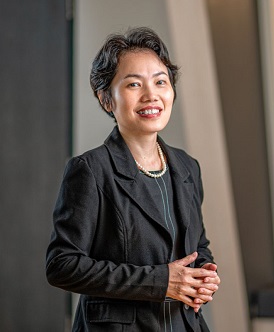
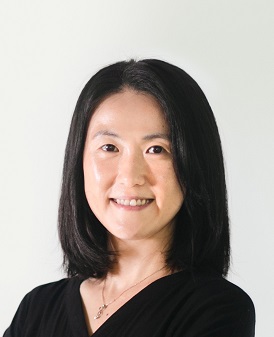
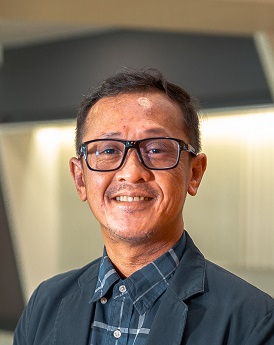
Dr. Joan Tan is a Senior Lecturer in the Department of Econometrics & Business Statistics at Monash University. Her research spans econometrics, sustainable development, and chemical engineering applications, with a focus on data literacy, energy economics, and innovative material science solutions. Her work contributes to the UN Sustainable Development Goals through advancements in: Nanocellulose-based sustainable packaging Chemical process digitalization Food safety monitoring systems Technoeconomic assessments for green manufacturing Key research themes include: Statistical modeling of economic-environmental interactions Development of bio-based materials with tunable properties Integration of digital technologies in engineering education Resource recovery from industrial waste streams Her interdisciplinary approach combines econometric analysis with chemical engineering challenges, particularly in sustainability contexts. Recent publications demonstrate her expertise in cellulose nanotechnology, process optimization, and data-driven decision making across multiple sectors.
Cara Edina Miller serves as an Adjunct Lecturer at the University of New England within the School of Science and Technology, which operates under the Faculty of Science, Ag, Business and Law. Her research profile indicates active scholarly engagement with 25 publications spanning 2010-2024, demonstrating sustained academic contribution to environmental science. Dr. Miller's research focuses on critical environmental issues in Australian ecosystems, particularly aquatic ecology and river systems. Her work examines thermal biology of fish species, gully erosion processes, and the ecological dynamics of the Barwon-Darling River system. This research portfolio reflects a strong commitment to addressing practical environmental management challenges through scientific investigation. Analysis of her recent publications reveals a consistent focus on climate change impacts on freshwater ecosystems, with particular attention to thermal tolerance thresholds in native fish species. Her work bridges laboratory-based physiological studies with field investigations of river systems, creating a comprehensive approach to understanding ecosystem responses to environmental stressors. Dr. Miller has collaborated with researchers including Nigel R Andrew, Samuel A Bawa, Peter C Gregg, and Alice P Del Socorro, indicating participation in interdisciplinary research teams addressing complex environmental challenges.
Dr. Justtina John serves as Lecturer and Diploma Program Leader in the Department of Computing, School of Engineering, Computing and Built Environment at University of Wollongong Malaysia KDU Penang University College. With over 14 years at the institution since 2011 and 20+ years total in Malaysian private higher education, she teaches core courses including Object Oriented System Analysis and Design, Business Information Systems, and Strategic Systems Management across diploma and bachelor programs. Her educational credentials feature a Doctorate of Business Administration (2018), MSc in Information Technology (2003), and Bachelor in Information Technology (2001), all from Universiti Utara Malaysia. The doctoral research employed PLS-SEM methodology to investigate workload pressure, person-job fit, and innovation trust effects on educator creativity in Malaysian private universities. Dr. John's research program bridges educational psychology and computing applications, with dual streams examining higher education dynamics and information systems development. Her scholarly output since 2015 demonstrates consistent publication in both educational research (focusing on faculty creativity metrics) and applied computing (including route optimization systems and environmental data visualization tools), reflecting an interdisciplinary approach to academic challenges. As Diploma Program Leader, she oversees operational management for Diploma in Information Technology and Diploma in Digital Animation programs, handling curriculum revisions, student coordination, and academic quality assurance. Her international collaboration with Gorondutse, A.H. at the 2017 Asian Academy of Management Conference indicates active engagement with global academic networks, while her quantitative research expertise provides methodological rigor to institutional improvement initiatives.
Su Sueh Ing is a full-time Senior Lecturer in Accounting at Swinburne University of Technology Sarawak Campus, serving within the Faculty of Business, Design and Arts. With over 20 years of teaching experience across Malaysian higher education institutions, she specializes in Accounting, Cost and Management Accounting for diploma through professional qualification levels (AAT, LCCI, CPA). Her educational background includes: MBA (Accounting) from University of Southern Queensland (USQ) BBus (Accounting) from Queensland University of Technology (QUT) Fellow Member of CPA Australia Dr. Su's research critically examines Social and Environmental Responsibilities , Accounting education , and Education Leadership through lenses of sustainability reporting, emotional intelligence in digital learning, and socioeconomic inclusion. Her work bridges theoretical frameworks with community impact, particularly through STEAM/STREAM education initiatives targeting rural communities and digital literacy programs for seniors. Recent publications reveal strong trends in post-pandemic educational adaptation (2023), sustainability reporting evolution (2024), and qualitative investigations into sustainable work practices (2025). Her scholarly output spans business intelligence applications, organizational development, and inclusive assessment design across diverse contexts from oil palm plantations to Malaysian civil service. Her scientific recognition includes: Vice-Chancellor’s 2024 Future Focused Award (Highly Commended) Gold Award at InTEX 2022 for Digital Technologies Seniors Program Top 3 finalist for Sarawak's Digital Inclusivity Award (2023) Fellow Member status with CPA Australia Dr. Su maintains active grant leadership including MEITD-funded STREAM workshops (2023-2025) and Swinburne Micro Fund projects on design thinking and digital game-based learning. She supervises Master's students as an Associate Supervisor and mentors through the Swinburne Accounting Club, which won 'Most Active Club' (2014) under her guidance. Her supervision philosophy emphasizes compassionate advising and real-world application through competitions like CIMA Global Business Challenge. Current initiatives focus on the STREAM project (Sarawak Ministry-funded), Digital Technologies Seniors Program, and Hult Prize social entrepreneurship challenges aligned with UN Sustainable Development Goals. These projects integrate student teams, industry partners, and community stakeholders to address digital inclusion and sustainable development in Sarawak.
Chung Ping Ping serves as Lecturer and Head of Department of Chemical Engineering within the Faculty of Engineering, Computing and Science at Swinburne University of Technology Sarawak Campus. She holds a PhD in Materials Engineering from Swinburne University of Technology, Australia, complemented by an MSc from Loughborough University (UK) and BEng from University of Technology Malaysia. Her research program centers on sustainable materials innovation, specifically converting agricultural waste into functional materials through three interconnected thrusts: (1) Developing corrosion-resistant coatings using biomass-derived additives, (2) Engineering self-cleaning surfaces for solar energy applications, and (3) Creating biocomposites from sago, durian, and pineapple waste streams. This work integrates advanced characterization techniques including neutron scattering (via ANSTO partnerships) and electrochemical analysis to solve industrial challenges in oil/gas, renewable energy, and manufacturing sectors. Dr. Chung's research trajectory demonstrates consistent growth with 40% of her 10 publications appearing in 2023-2025, shifting from fundamental electrodeposition studies toward applied sustainable materials. Her current publications focus on nanocellulose extraction from agricultural waste and advanced coating characterization, reflecting strong alignment with circular economy principles and industrial decarbonization needs. Her significant recognition includes: Consecutive Research Success Awards (2023-2025) 2024 Excellence Oral Presentation at ICEIM Conference 2023 Sustainability Challenge Gold Medal (UKM) 2022 Vice-Chancellor's SDG Week Award 2019 Marshall Fordham Best Research Paper Award She actively secures competitive funding with six active grants totaling MYR 184,200, including Swinburne Research Supervision Grants, Sarawak Research Development Centre funding, and industry partnerships with Sarawak Energy. Dr. Chung maintains strong industry links through professional memberships in Materials Australia, IOM³, and Board of Engineers Malaysia, while welcoming PhD/Master's candidates for fully funded projects in sustainable electrochemical deposition and solar coating technologies.
Dr. Almon Chai Wei-Yen serves as Senior Lecturer and Coordinator of the Robotics & Mechatronics Program at Swinburne University of Technology Sarawak Campus's Faculty of Engineering, Computing and Science. Holding a PhD from Malaysia (2007) and prior industrial experience in ceramics manufacturing, he bridges academic research with practical engineering solutions. His professional affiliations include the Society of Automotive Engineers (SAE), Association for Computing Machinery (ACM), and Institution of Engineering and Technology (IET). Education BEng (Hons) from United Kingdom MSc from United Kingdom PhD from Malaysia (2007) Dr. Chai's research centers on computational simulations for drying technologies and renewable energy systems, with expanding work in human factors engineering and mechatronics applications. Recent publications demonstrate significant interdisciplinary innovation, particularly in biomedical signal processing for movement classification and computer vision for text interpretation in natural scenes. His work consistently applies simulation-based optimization to solve real-world engineering challenges. Analysis of his 2020-2022 publications reveals two dominant research thrusts: biomedical engineering (focusing on EMG signal classification for prosthetic control) and computer vision (specializing in vertical text detection). These areas reflect his core expertise in simulation and optimization now applied to human-centric technologies, showing strong collaboration patterns and targeting high-impact venues like IEEE Access. Scientific Awards Silver Medal Award for 'Window Cleaning and Climbing Robot' at Malaysia Invention & Innovation Awards 2010 (MTE2010) Research Leadership Dr. Chai actively supervises research higher degree candidates and currently leads two Sarawak Research and Development Council (SRDC) Grant 2020 projects: 'Instant Count on Tuberculosis' (Project Member) 'Tidal Stream Power Assessment and Design of Tidal Current Turbine for Pulau Triso' in collaboration with Universiti Malaysia Sarawak (Project Member) Research Environment As Robotics & Mechatronics Program Coordinator, Dr. Chai directs academic initiatives while pursuing cross-disciplinary projects in simulation-based optimization, renewable energy conversion, and human-robot interaction. His research group leverages university facilities and industry partnerships to develop practical engineering solutions, particularly in energy conservation and assistive technologies.
Marian-Andrei Rizoiu is an Associate Professor leading the Behavioral Data Science lab at the University of Technology Sydney's Data Science Institute, Faculty of Engineering and Information Technology. He holds concurrent appointments as an Honorary Lecturer at Australian National University and Honorary Research Scientist at Data61. Previously, he has held visiting professor positions at Imperial College London, Jean Monnet University, and Max Planck Institute for Software Systems. Associate Professor in Behavioral Data Science, UTS Data Science Institute (Jan 2024 - present) Senior Lecturer in Behavioral Data Science, UTS Data Science Institute (Jul 2021 - Jan 2024) Lecturer in Computer Science, UTS Faculty of Engineering and Information Technology (Feb 2019 - Jul 2021) Dr. Rizoiu's research focuses on interdisciplinary work crossing computer and social sciences, blending psycholinguistics, digital communication, and stochastic modeling to understand human attention dynamics online, the emergence of influence, and opinion polarization. His key contributions include developing theoretical models for online information diffusion that can account for complex social phenomena, and building skill-based real-time occupation transition recommender systems that link social media-predicted personality profiles with occupation skill requirements. His research outputs reveal strong trends in misinformation detection, social influence measurement, and online radicalization pathways. Recent publications demonstrate sophisticated modeling approaches including state space models for early misinformation prediction, multivariate Hawkes processes for analyzing partially interval-censored data, and ideology detection pipelines. His work spans computational social science, machine learning, and practical applications for countering harmful online content. Excellence Award and Academic of the Year at the 2023 Australian Defence Industry Awards ADMA'22 Best Application Paper Dr. Rizoiu has successfully secured over $2.9 million in research funding from selective funders including Meta Research, Defence Science and Technology Group, Department of Home Affairs, and Defence Innovation Network. He has supervised 3 PhD students to completion and more than 10 Honours students, most achieving High Distinction. His research has been applied in real-world contexts including serving as an expert for NSW government's Defamation Law Reform and providing evidence for Australian Federal Senate inquiry into media diversity. He leads the Behavioral Data Science lab which focuses on modeling human behavior in online environments, with particular emphasis on mis- and disinformation detection and labor market analysis. The lab has developed tools like TRACK, UTS OPEN's software for recommending personalized learning pathways, used by over 750 students and professionals.
Associate Professor Biplob Ray serves as Head of Course for Postgraduate ICT Courses at the School of Engineering and Technology, Central Queensland University. With over 15 years of academic experience, he has progressed from ICT Lecturer (2015-2019) to Senior Lecturer (2020-2022) and currently holds the position of Associate Professor (2023-Present). His research is centered at the Centre for Intelligent Systems within the Institute for Future Farming Systems, where he leads multidisciplinary projects with significant industry and government funding. Dr. Ray holds a PhD from Deakin University (2015), Master of Information Technology from University of Ballarat (2008), and Graduate Certificate in Education Tertiary Teaching (2013). His academic journey began with a BSEng in Computer Engineering, followed by professional experience as Analyst Programmer at Telstra and Systems Programmer in the Philippines. His research focuses on the intersection of Artificial Intelligence, Internet of Things, and Cybersecurity, with practical applications spanning smart farming, environmental monitoring, and energy systems. His multidisciplinary approach has secured over $3 million in research funding from Australian federal government and industry sources since 2016, including significant projects like the $1.28 million 'Intelligent, Adaptable, and User-Friendly Weed Management system' and the $513,268 'AI-SSPCAS' project with CSIRO Data61. Dr. Ray's publication record shows consistent high-quality output with approximately 15-20 papers annually, primarily in IEEE and Elsevier journals. His work demonstrates strong translational impact, with multiple projects featured in media outlets including ABC News, Channel 7, and Australian Tree Crop magazine. His research has directly contributed to practical implementations such as smart irrigation systems for Cairns Regional Council and cybersecurity solutions for small businesses. 2025 Australian Awards for University Teaching (AAUT) 2024 Vice-Chancellor's Award of Commendation for Outstanding Researcher (Mid-Career) 2023 Vice-Chancellor's Award for Exemplary Practice in Learning and Teaching 2021 Vice-Chancellor's Award for Exemplary Practice in Learning and Teaching (Tier 1) 2019 Vice-Chancellor's Award for Exemplary Practice in Learning and Teaching 2016 'RISING STAR of 2016' award from CQUniversity Dr. Ray currently supervises fifteen research students across PhD and Master's programs, with active grants supporting multiple research positions. His leadership extends to professional service as Vice-Chair of IEEE Victorian Section (2024-2025), former Chair of IEEE Victoria IoT Community, and member of the Engineering Institute of Technology Course Advisory Committee. The Centre for Intelligent Systems fosters interdisciplinary collaboration with regular seminars, industry partnerships, and international research connections, providing students with rich opportunities for professional development.
Associate Professor Mathew Chylinski is a faculty member at the UNSW Business School within the School of Marketing, where he leads an innovative research program focused on Augmented Reality with recognized methodological expertise in experimental design. His scholarly work has secured ARC research funding and appears in top-tier marketing journals including Marketing Science, Journal of Academy of Marketing Science, and Journal of Retailing. Chylinski co-founded the Augmented Research Group with colleagues from the Netherlands and England to provide thought leadership on technology-enabled consumer behavior. Chylinski has held multiple leadership roles including Honour Coordinator, Advanced Marketing Stream Coordinator, Research Subject Pool Coordinator, Ethics Representative, and Director of the BizLab research laboratory. He was instrumental in establishing BizLab, a behavioral research facility at UNSW Business School, and created the Student Subject Research Pool at the School of Marketing. His organizational contributions include the Marketing Analytics Symposium - Sydney, which brings together academics and industry professionals to foster collaboration. His teaching expertise spans undergraduate, postgraduate, and research-level courses with emphasis on customer-centric innovation, marketing strategy, experimental design, and consumer behavior. He has pioneered teaching innovations for large (100+) university classes, supported by UNSW Learning and Teaching Innovation Grants, and holds a Graduate Certificate in Higher Education along with teaching development courses from NIDA. Chylinski's research portfolio reveals a consistent trajectory in technology-enhanced consumer experiences, with particular focus on augmented reality applications across marketing and retail contexts. His publications demonstrate interdisciplinary collaboration and methodological rigor, examining psychological mechanisms, consumer decision processes, and practical applications of emerging technologies in commercial settings. His research has been supported by significant funding including: Australia Research Council (ARC) grant ($60,000): 'Investigating the Impact of Augmented Reality on Consumer Decision Making and Marketing Systems' (2013-2015) UNSW Learning and Teaching Innovation Grant ($20,000): 'Content Co-Creation in Large Classes: Leveraging the Box and Moodle for Enhanced Student Engagement' (2015-2017) Marketing Science Institute Research Grant ($4,000): 'Experience Infusion: How to improve customer experience with incidental activities' (2016-2018) As an active scholar with publications through 2025, Chylinski continues to advance understanding of how augmented reality transforms consumer experiences, marketing practices, and educational approaches, maintaining strong connections between academic research and industry applications.
Professor Craig Gonsalvez serves as Professor in Clinical Psychology at Western Sydney University's Translational Health Research Institute (THRI), with extensive prior roles including Director of Clinical Psychology Training at the University of Wollongong (1997-1998, 2001-2004, 2008-2010) and senior clinical positions at Westmead Hospital (Senior Clinical Psychologist and Director of Anxiety Disorders Clinic). An experienced clinician-researcher, he specializes in bridging clinical practice with training innovations. His educational foundation includes: PhD in Clinical Psychology, National Institute for Mental Health & Neuro Sciences (NIMHANS), University of Bangalore MA, University of Baroda MA, Bangalore University BA, University of Baroda Gonsalvez's research centers on clinical supervision methodologies, psychology training systems, and anxiety disorder mechanisms using psychophysiological measures. His work examines therapist beliefs about evidence-based treatments, mindfulness applications for trainees, and impostorism phenomena. Methodologically, he integrates quantitative psychophysiology (ERP, skin conductance) with qualitative supervision analysis to address real-world clinical training challenges. Analysis of his 2021-2025 publications reveals consistent focus on competency assessment innovations, supervisor-trainee dynamics, and implementation barriers for evidence-based therapies like exposure treatment. The research demonstrates strong Australian context with multi-site collaborations addressing national training needs. His scientific recognition includes: APS College of Clinical Psychologists Award of Distinction (2009) Citation for Teaching Excellence, Australian Awards for University Teaching (2016) Teaching Excellence Award, Australian Awards for University Teaching (2017) Gonsalvez has secured funding for major initiatives including the Vignette Matching Assessment Tool development and national supervisor training programs. His supervision approach emphasizes reflective dialogue, video feedback, and competency-based assessment, informed by his role as National Chair of Course Approvals for the APS Clinical College (2005-2010). He has developed Australia's accredited supervisor training framework through the APS Institute. Within THRI's Mental Health and Wellbeing research stream, he leads a collaborative team focused on improving clinical training systems through evidence-based supervision practices and assessment innovations, directly impacting Australian psychology training standards.
Dr. Negin Amini is a Lecturer in Environmental Engineering at Deakin University's School of Engineering, which is part of the Faculty of Science Engineering and Built Environment. She is based at the Melbourne Burwood Campus and serves as an Associate Investigator in the ARC Centre of Excellence for Enabling Eco-Efficient Beneficiation of Minerals. Her educational background includes a PhD from Monash University (2019), with a thesis on energy efficient pre-treatment of lignocellulose biomass, and a Master of Engineering from the University of Melbourne. Dr. Amini's research focuses on creating circularity in industrial processes to reduce emissions and resource consumption. Her work spans multiple interconnected fields including circular economy principles, sustainability in engineering, minerals processing, biomass conversion technologies, particle technology, and additive manufacturing applications. She investigates how engineering solutions can transform waste streams into valuable resources while minimizing environmental impact across various industrial sectors. Her publication record demonstrates a strong trajectory in environmental and chemical engineering with increasing emphasis on sustainable materials processing. Recent work shows particular focus on dewatering technologies for mineral processing, bioinspired reagents for clay separation, and circular economy applications in 3D printing. Her research integrates experimental work with modeling approaches to address practical challenges in resource recovery and industrial sustainability. Dr. Amini has secured multiple research grants including: Development of a real-time immunosensor for airborne allergen detection (ARC Analog Program) Revealing the risks: Exploring the social implications of technology for recognizing viral threats Zero Waste 3D Printing project She currently supervises two doctoral students working on microbial-induced calcite precipitation for environmental remediation and novel polymer-based reagents for mineral separation. Her teaching portfolio includes courses in environmental systems, environmental health engineering, and engineering project management. Dr. Amini's research integrates laboratory experimentation with practical applications in industrial settings, focusing on creating sustainable solutions for resource-intensive industries.