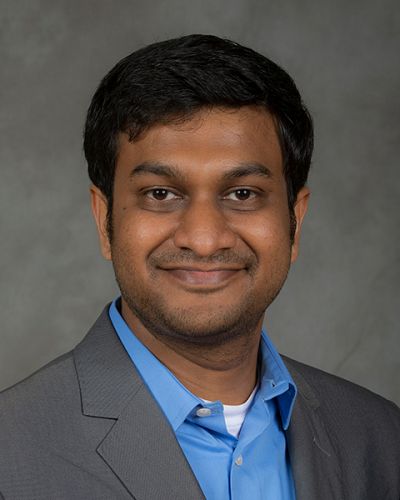
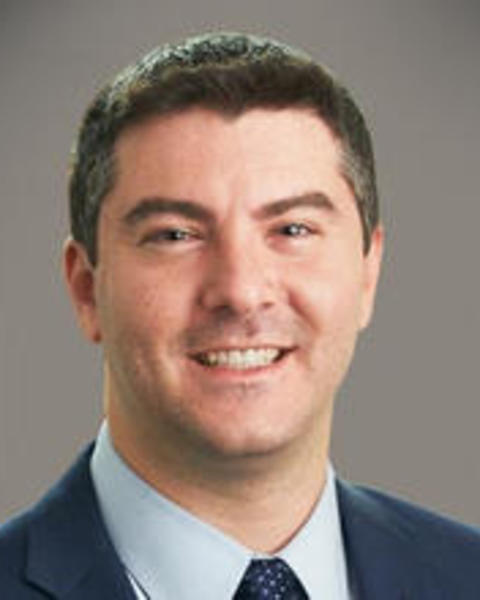
Ryszard Szynowski is a researcher affiliated with WSB University , focusing on Security Studies and Safety Engineering (50% each). His work spans national defense, military administration, and crisis management, with extensive contributions to academic literature and Polish security policy development. He has supervised 33 promoted theses, indicating a strong mentorship role in shaping defense and security research. Affiliation: WSB University Research Interests: Security Studies, Safety Engineering, National Defense, Military Administration, Crisis Management His research explores historical evolution of military administration, comparative analysis of defense systems in Poland, Czech Republic, and Slovakia, and security challenges in educational institutions. He has contributed to conceptual frameworks for territorial defense forces and Polish-Ukrainian cross-border security collaboration. While his publications emphasize practical applications of security science and administrative integration, the absence of explicit scientific awards or a detailed educational background in the provided data limits further categorization. His work often bridges legal frameworks with operational needs in defense and emergency contexts.
Spartaco Greppi is a Professor of Social Security and Welfare Systems at the Department of Business Economics, Health and Social Care (DEASS) of the University of Applied Sciences and Arts of Southern Switzerland (SUPSI), where he has served as a full professor since 2013 and previously as a lecturer-researcher from 2001-2012. He is affiliated with the Labor, Welfare and Society Center (CLWS) and has held significant roles including membership on the Board of Directors of the Swiss Society of Social Work since 2013 and the MOSAICH 2.0 Scientific Commission since 2017. Greppi holds a Master's degree in Political Economy and a PhD in Economic Analysis from the University of Fribourg, Switzerland. His academic journey includes serving as a scientific collaborator at the Federal Statistical Office (1995-2001) and as a lecturer for the Master's Degree in Social Work at HES-SO since 2009. His research focuses on the critical intersection of welfare state transformations, social security systems, and evolving labor market dynamics. Greppi examines how contemporary work arrangements impact social integration, with particular attention to marginalized populations including single mothers, people with addiction issues, and those in the complementary labor market. His work bridges theoretical analysis with practical policy evaluation, consistently addressing the tension between social support and work requirements. Greppi's publication record reveals a sustained scholarly trajectory examining how media representations shape discourse around social assistance, with particular focus on the evolving narrative from moralization of 'deviant' behavior (1960s-1980s) to work incentives (1980s-1990s) and contemporary individualized performance expectations. His research increasingly addresses emerging phenomena like 'free work' (unpaid or low-paid labor) and platform economy impacts on social protection systems. Member of Board of Directors, Swiss Society of Social Work (2013-present) Expert for Social Security module in FIAS exams (2012-present) Member of MOSAICH 2.0 Scientific Commission (2017-present) Greppi leads multiple research initiatives including the Platform Labour in Urban Spaces (PLUS) project analyzing digital platforms' impact across seven European cities, and studies on secondary labor markets focused on developing comprehensive evaluation models that measure both employment outcomes and multidimensional well-being. His work consistently emphasizes the need for welfare systems to adapt to contemporary labor market transformations while maintaining social cohesion.
Daniel Oto Peralias is a Professor in the Department of Economics, Quantitative Methods and Economic History at Universidad Pablo de Olavide (UPO), specializing in Fundamentals of Economic Analysis. He actively contributes to the Macroeconomics, Labor and Public Economics (MLPE) research group within the Social and Legal Sciences area, focusing on interdisciplinary economic research spanning historical and contemporary contexts. Dr. Peralias earned his doctorate from UPO in 2014 with the thesis Essays on colonialism, institutions and legal traditions , supervised by Dr. Diego Romero de Ávila Torrijos. His academic foundation combines rigorous quantitative methods with deep historical analysis. His research integrates Economic History , Institutional Economics , and Gender Economics to examine how historical events like colonialism and warfare shape modern economic geography, inequality, and social capital. Recent work investigates gender representation through urban street naming practices across Europe and the US, while earlier studies analyze land concentration in renewable energy projects and the spatial distribution of population in Spain. His methodology consistently employs spatial and historical data to reveal institutional legacies in contemporary policy outcomes. Analysis of his 15 most recent publications reveals a clear trajectory: 2022-2024 works center on urban gender studies and commemorative policies, with street naming as a cultural indicator. Pre-2020 research focuses on historical frontiers , colonialism, and legal traditions, demonstrating how medieval conquests and institutional frameworks influence current economic disparities. A unifying thread is the use of municipal-level data to trace persistent effects of historical shocks on social capital and regional development. No scientific awards were documented in the source materials. As a professor at UPO, Dr. Peralias engages in academic advising and research supervision, though specific student names are not provided in available records. His work within the MLPE group generates policy-relevant insights without explicit mention of external grant funding in the current documentation. Dr. Peralias is an integral member of the Macroeconomics, Labor and Public Economics (MLPE) research group, where he collaborates on projects examining labor market dynamics, public finance mechanisms, and long-term economic development patterns through historical and spatial lenses.
Victor Chernozhukov is a Professor at the Department of Economics and Center for Statistics at the Massachusetts Institute of Technology (MIT) . He also holds international fellowships at the University College London's CEMMAP and is a Professor by Courtesy at the New Economic School in Russia. His research spans econometrics, high-dimensional statistics, quantile regression, and causal inference. Education: Ph.D. in Economics from Stanford University (2000), M.S. in Statistics from University of Illinois at Urbana-Champaign (1997) His work focuses on developing statistical methods for high-dimensional data, including central limit theorems , post-selection inference , and quantile regression . He has contributed to partial identification , Bayesian inference , and extreme value analysis , with applications to economic policy evaluation. Recent publications emphasize high-dimensional causal inference , adaptive confidence bands , and set estimation . His research has been supported by the National Science Foundation and recognized with the Alfred P. Sloan Research Fellowship . Scientific Awards: Alfred P. Sloan Research Fellowship (2005-2007) Castle-Krob Career Development Chair (2004-2007) Grants include long-term support from the National Science Foundation since 2001 and software development collaborations for Stata and MATLAB implementations.
Katja Lindskov Jacobsen is an Associate Professor at the Department of Political Science, University of Copenhagen (Faculty of Social Sciences). Her work focuses on security and intervention with regional emphasis on Africa , particularly through the lens of maritime security , UN peace operations , and critical security studies . Education: Ph.D. in International Relations, Lancaster University MSc in Global Politics, London School of Economics and Political Science Her research interrogates how humanitarian technologies and capacity-building interventions shape global security/insecurity dynamics. Recent publications analyze the Wagner Group's influence in Africa and gender dimensions of piracy . She combines Michel Foucault's theories with Science & Technology Studies to critique security practices. She serves as an Associate Expert for the Moroccan Center for Strategic Studies and engages in policy consultancy for maritime security initiatives. Media contributions address emerging piracy trends and military-technological dilemmas in global security.
Martin Magnusson is a Professor at the Department of Natural Sciences and Technology, Örebro University, leading the Center for Applied Autonomous Sensor Systems (AASS) and the Robot Navigation and Perception Lab . His research focuses on robotics and artificial intelligence , particularly 3D mapping, localization, radar-based navigation, and human-robot interaction . Email: martin.magnusson@oru.se Phone: +46 19 303870 Location: Room T1222 His work addresses fundamental challenges in achieving robust autonomy through innovations like the 3D Normal Distributions Transform (3D-NDT) and methods for scan registration in dynamic environments. Recent research extends to radar-based navigation and heterogeneous map data integration , with ethical implications regarding military applications of autonomous systems. Key research themes include: Autonomous Perception: Radar and lidar sensor fusion for localization Dynamic Mapping: Flow-aware and quality-assessed environmental models Human-Aware Robotics: Predictive modeling for safe shared-space navigation Professor Magnusson teaches Computer Graphics , connecting academic principles (e.g., ray tracing, light scattering) to applied research in radar simulation models and neural rendering . His research projects span DARKO (agile production robots), NiCE (changing environment navigation), and Radarize (underground autonomous vehicles).
Srikanth Parameswaran serves as an Assistant Professor in the Management Information Systems area at Binghamton University's School of Management, where he conducts behavioral research at the intersection of information technology and human interaction. His work bridges theoretical frameworks with practical applications in digital innovation and health informatics. His academic credentials include: BS from Anna University MS and PhD in Management Science and Systems from the State University of New York at Buffalo Parameswaran's research program investigates how digital platforms shape human behavior, with particular emphasis on IT innovation diffusion, social media dynamics, and health technology outcomes. He pioneers methodological approaches combining meta-analytic structural equation modeling with advanced text mining techniques to analyze user-generated content across online platforms. His studies on gamification mechanisms and anonymity effects in employer review systems have established new paradigms for understanding technology-mediated social interactions. Analysis of his recent publications reveals three dominant research trajectories: (1) computational analysis of social media and review systems using NLP/machine learning, (2) health IT applications focusing on chronic disease management and online support communities, and (3) theoretical advancements in IT innovation diffusion models. His work consistently demonstrates methodological rigor while addressing pressing societal challenges in digital health and organizational behavior. His scholarly contributions have been recognized through: Poets & Quants Top 50 Best Undergraduate Business School Professor (2021) Best Paper Award 1st Runner Up at AMCIS (2017) Doctoral Consortium Fellowship at ICIS (2016) While his teaching portfolio spans web mining, social network analysis, and advanced statistics, the available documentation provides no details regarding doctoral student mentorship, research grants, laboratory facilities, or collaborative research teams.
Professor Douglas Easton serves as Director of the Centre for Cancer Genetic Epidemiology within the Department of Public Health and Primary Care at the University of Cambridge. He holds the position of Professor of Genetic Epidemiology and leads one of the world's foremost research groups in cancer genetics with an extraordinary publication record exceeding 219,000 citations and an h-index of 218. His educational background includes: Mathematical and Statistics studies at the University of Cambridge PhD in Genetic Epidemiology at the University of London (1992) Professor Easton's research program has revolutionized our understanding of genetic factors in cancer risk, particularly for breast and ovarian cancers. He established the Cancer Research UK Genetic Epidemiology Unit in 1995 and was awarded his professorship in 2003. His work spans the identification of cancer susceptibility genes (including BRCA1/2, ATM, CHEK2, PALB2), development of statistical methods for genetic epidemiology, and creation of risk prediction models like BOADICEA that are now used clinically worldwide. His research integrates population and family-based studies to characterize genetic variants associated with cancer risk. His most recent publications through 2025 demonstrate continued leadership in adapting risk models for diverse populations, integrating polygenic risk scores into clinical practice, and addressing implementation challenges in personalized cancer prevention. The work shows increasing focus on practical application of risk models in healthcare settings and understanding of risk communication impacts. Notable scientific achievements: Elected Fellow of the Royal Society (2022) CRUK Principal Research Fellow (2001-2011) Development of the widely used BOADICEA risk prediction model Leadership of major international consortia including BCAC, EMBRACE, EMBED, and BRIDGES As an educator, Professor Easton has mentored numerous PhD students and lectured in the MPhil in Epidemiology program. His research is supported by substantial funding that enables coordination of large-scale international studies involving hundreds of institutions worldwide. He continues to actively shape the field of cancer genetic epidemiology through both methodological innovation and practical implementation of risk assessment tools.
Dr. Dominic Pollard is a British Academy Postdoctoral Fellow at the McDonald Institute for Archaeological Research , University of Cambridge. His work bridges computational methods, environmental archaeology, and social theory to explore the Late Bronze Age and Early Iron Age Mediterranean, particularly Crete. He combines intensive survey data, GIS modeling, and spatial statistics to analyze settlement patterning, mortuary practices, and agricultural systems. Research Expertise : Archaeological Theory, Computational and Quantitative Archaeology, Environmental Archaeology, Geoarchaeology, Landscape studies. His projects emphasize multi-scalar analysis of human-landscape interactions, focusing on how communities shape and are shaped by their environments. Recent Publications : These include a 2023 Journal of Greek Archaeology synthesis of island-wide settlement changes (15th–6th centuries BCE), a 2023 Journal of Mediterranean Archaeology study using legacy survey data and GIS to model agricultural landscapes, and a 2021 Journal of Anthropological Archaeology quantitative analysis of Knossos cemeteries. All datasets and code are openly available via GitHub and Figshare, reflecting his commitment to reproducibility. Scientific Awards : British Academy Postdoctoral Fellowship
Dr. Lauren Forrest is an Assistant Professor in the Psychology Department within the College of Arts and Sciences at the University of Oregon. She leads The Forrest Lab , dedicated to determining how suicide and eating disorders can be effectively predicted, treated, and prevented. Her research focuses on understanding the complex interplay of factors contributing to these devastating conditions, with particular attention to minoritized groups experiencing disproportionate burdens. Dr. Forrest's work operates at the intersection of clinical science, advanced quantitative methods, and health equity. Dr. Forrest earned her PhD in Clinical Psychology from Miami University in 2020, completed her Predoctoral Clinical Internship at Yale School of Medicine in 2020, and received her Bachelor of Science in Psychology from the University of Utah in 2012. Her academic trajectory reflects a strong commitment to both clinical training and advanced methodological sophistication. Dr. Forrest's research program addresses critical questions in clinical psychology through four interconnected content areas. Her work on network models statistically examines how symptoms inter-relate and potentially cause one another in eating disorders. In machine learning and data-driven models , she applies advanced quantitative methods to predict difficult-to-predict outcomes like eating disorder severity and suicide. Her research on inequities and disparities focuses on risk processes across levels of influence, particularly through an intersectionality lens. Most significantly, her lab is dedicated to studying suicidal thoughts and behaviors and eating disorders within the LGBTQIA+ community , where these conditions disproportionately impact individuals but research representation is severely lacking. Dr. Forrest's publication record demonstrates a strong trajectory of impactful research with increasing focus on intersectionality. A notable trend across her publications is the application of sophisticated methodologies including network analysis, machine learning, and advanced statistical modeling to address complex questions about the structure, prediction, and treatment of mental health conditions. Her work increasingly examines how gender, sexual orientation, race/ethnicity, and rurality interact to create unique risk profiles for suicide and eating disorders. Dr. Forrest actively mentors doctoral students and research coordinators in her lab at the University of Oregon. Her current team includes PhD students Haley Henriksen, Griffin Kreit, Devon Peterkin, and research coordinator Cassidy Martens. She maintains connections with alumni affiliates including Ayla Gioia, PhD. Dr. Forrest seeks students with strong research experience, statistical sophistication, and commitment to addressing health inequities, though she is not accepting new clinical psychology PhD students for Fall 2026. Dr. Forrest's lab is currently engaged in several major projects including research on acute, person-specific suicide risk processes in rural sexual minority adults; momentary suicide risk processes in trans people; a systematic review of short-term predictors of suicidal thoughts and behaviors; and advanced quantitative methods applied to eating disorder research. Her lab maintains a strong commitment to diversity, equity, and inclusion, recognizing that diverse perspectives benefit psychological science and that the field must do better to train individuals from historically excluded groups.
Dejan Movrin is an Associate Professor at the Chair of Forming Technologies and Surface Engineering within the Faculty of Technical Sciences, University of Novi Sad. His career progression includes prior roles as Assistant Professor (2018-2023), Professional Associate-Laboratory (2017), and Teaching Associate (2009-2011) at the same institution. He holds a PhD in Mechanical Engineering (2017), a Master's (2013), and a Bachelor's (2005), all from the Faculty of Technical Sciences. His research focuses on additive manufacturing (FDM, binder jetting), metal forming (cold extrusion, forging, upsetting), and biomaterial processing . Key areas include optimizing 3D printing parameters, deformation analysis in metalworking, and applications in biomedical scaffolds. His work integrates experimental validation with computational modeling. Recent publications emphasize advanced manufacturing techniques , with trends in biopolymer characterization, insole biomechanics, membrane technology, and textile electronics. Articles frequently explore process-structure-property relationships in additive manufacturing and sustainable material design. He collaborates extensively within the Chair of Forming Technologies and Surface Engineering, contributing to projects on severe plastic deformation, tool design, and precision manufacturing. No awards or supervised students are documented.
Sergios Dimitriadis serves as Professor in the Department of Marketing and Communication at Athens University of Economics and Business (AUEB), where he has taught since 2000 following ten years of academic and consulting experience in France. His instructional portfolio includes Digital and Omni-channel Marketing, Customer Experience Management, and Digital Content courses. His educational credentials feature a foundational degree from Athens University of Economics and Business and a doctoral degree from France's University of Aix-Marseille. Professor Dimitriadis specializes in digital consumer behavior with emphases on social media brand dynamics, 3D virtual retail environments, and relational value frameworks. His research investigates how technological interfaces shape consumer-brand interactions, particularly examining perceived value constructs in Facebook ecosystems and spatial navigation in immersive online stores. Analysis of his 15 most recent publications reveals consistent focus on relational benefit-cost dynamics across digital contexts, with methodological strengths in experimental design and multivariate analysis. Key thematic trajectories include green brand relationship metrics (2018-2019), social media brand page typologies (2018), and trust-based segmentation in financial technology (2011). No scientific awards were documented in source materials. As scientific director of AUEB's Center for Training and Lifelong Learning educational programs, he bridges academic and professional spheres through European/national research program consultancy and organizational training initiatives, demonstrating commitment to applied knowledge transfer despite absence of specific grant details.
Hillel J. Bavli serves as Associate Professor of Law at Southern Methodist University's Dedman School of Law and maintains affiliation with the Institute for Quantitative Social Science. His academic focus bridges legal theory and quantitative methodology, specializing in evidence law, torts, complex litigation, and empirical legal studies with particular emphasis on statistical applications in judicial contexts. His educational trajectory includes a B.A. in Economics from Boston University, J.D. from Fordham University School of Law, LL.M. and A.M. in Statistics from Harvard University, and Ph.D. in Statistics in Law and Government from Harvard. Additional distinctions include a Fulbright Fellowship for game theory research in Jerusalem, clerkships at the Supreme Courts of India and Rwanda, and fellowships at Harvard's Institute for Quantitative Social Science and Yale Law School's Center for Private Law. Professor Bavli's research program centers on redefining evidence law through statistical frameworks, notably developing the "Incongruence Principle of Evidence" and "Aggregation Theory of Character Evidence." His scholarship critically examines how implicit bias permeates character evidence usage while advancing methodological rigor in legal statistics. Current work includes a Cambridge University Press book contract on character evidence and empirical studies challenging traditional evidence rules. Analysis of his 15 most recent publications reveals consistent thematic evolution: early work established statistical foundations for damages assessment (2015-2017), mid-career research expanded into causation theory and antidiscrimination law (2018-2021), and recent scholarship pioneers character evidence reform through behavioral insights and rule reinterpretation (2022-2025). The interdisciplinary nature spans evidence law, torts, civil procedure, and statistical methodology with increasing focus on bias mitigation. Scientific recognition includes: Fulbright Fellowship for game theory research Harvard Institute for Quantitative Social Science fellowship Yale Law School Center for Private Law visiting fellowship Numerous teaching awards for Harvard's economic analysis of law seminar Professor Bavli actively shapes legal practice through committee leadership on the American Statistical Association's Forensic Science Advisory Committee and AALS Evidence Section Executive Committee. His government consultation for DNA testimony standards reform demonstrates real-world impact. As an experienced litigator at Akin Gump and Boies Schiller Flexner, he brings practical insights to classroom instruction in evidence, torts, and law/statistics. Though specific advisees aren't documented, his role inherently involves mentoring law students in empirical research methods and evidence theory. His academic ecosystem includes collaboration with statistical associations, government forensic science initiatives, and interdisciplinary research teams advancing evidence-based legal reforms. Current projects focus on character evidence modernization and empirical validation of judicial procedures through randomized controlled trials.
Sam Trejo is an Assistant Professor of Sociology and Charles H. Mcllwain University Preceptor at Princeton University's School of Social Science, Department of Sociology. His research focuses on the intersection of social and biological factors in human development across the lifespan, employing sophisticated quantitative methods to address complex questions in social genomics and inequality research. Dr. Trejo received his Ph.D. in Sociology & Education, Economics & Education from Stanford University, establishing a strong foundation for his interdisciplinary approach that bridges sociology, genetics, epidemiology, and public policy. His methodological expertise includes quasi-experimental, computational, and biosocial quantitative methods, with extensive experience analyzing large administrative datasets and longitudinal studies containing molecular genetic data. His research program spans two interconnected domains: First, he investigates polygenic scores and their relationship with social environments, examining how social contexts mediate, moderate, and confound associations between genetic predispositions and various outcomes. Second, he leverages field and natural experiments to explore educational and health inequality, with particular emphasis on the reciprocal relationship between education and health. His empirical work has examined childhood lead exposure, fatal school shootings, and economic segregation, generating findings with significant policy implications. Dr. Trejo has published in premier journals including Science Advances, Social Forces, and Proceedings of the National Academy of Sciences. His paper 'Exploring the Fetal Origins Hypothesis Using Genetic Data' received the 2025 Best Paper Award from the American Sociological Association's Biology & Society Section. His research has been featured in major media outlets such as The Washington Post, Los Angeles Times, and Harvard Public Health Magazine. Currently, he is co-authoring a book titled 'What We Inherit: How New Technologies and Old Myths Are Shaping Our Genomic Future' with bioethicist Daphne Martschenko, scheduled for publication by Princeton University Press in early 2026. This work addresses critical social, ethical, and policy issues emerging from advances in genomic technologies. Beyond his scholarly contributions, Dr. Trejo has engaged with public discourse through an editorial on the misappropriation of genomics research by white supremacists and a personal essay about his experience donating a kidney to a stranger. His work exemplifies rigorous scholarship with meaningful real-world impact.
Alexander Migdal serves as a Research Professor of Physics within the Faculty of Arts and Science at New York University, where his work bridges theoretical physics and fluid dynamics through innovative applications of statistical field theory to turbulence. His research establishes deep connections between classical turbulence phenomena and quantum field theory frameworks, challenging conventional paradigms in fluid mechanics. Migdal earned his Ph.D. from the Landau Institute, a foundation that shaped his approach to complex theoretical problems. His educational background in rigorous theoretical physics provides the basis for his unconventional methodologies in turbulence research. His primary research interests focus on turbulence as statistical field theory, with significant contributions to duality methods that map classical fluid dynamics to quantum mechanical systems. Migdal has pioneered exact solutions for decaying turbulence and passive scalar transport, revealing profound links between turbulence statistics and quantum chromodynamics. His work demonstrates how vortex dynamics, confinement phenomena, and string theory concepts provide new mathematical tools for solving intractable problems in fluid mechanics, particularly through the lens of Navier-Stokes equation analysis and energy cascade mechanisms. Analysis of Migdal's 2023-2025 publications reveals a concentrated research program on dual theories of decaying turbulence, featuring systematic development of exact solutions through fermionic representations, matrix ensembles, and dimensional reduction techniques. His work consistently applies quantum field theory methods to classical turbulence problems, establishing connections to Yang-Mills theory and magnetohydrodynamics while demonstrating the absence of finite-time singularities in Navier-Stokes dynamics. The recurring themes across his publications include duality transformations, statistical mechanics approaches to vortex sheets, and the application of large N expansions to fluid systems. No scientific awards were documented in the provided source material. The available information does not specify graduate students under Migdal's supervision or details of research grants supporting his work, though his extensive publication record suggests sustained research activity. His theoretical focus appears to operate without dependency on specific laboratory facilities or large experimental teams. Migdal maintains an active research program without indication of institutional laboratory affiliations; his work appears predominantly theoretical and computational, leveraging mathematical physics techniques rather than experimental apparatus. His recent publications suggest ongoing collaboration with computational physicists through numerical simulation components of dual turbulence theories.