معرفی
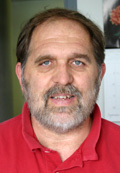
Alexander Migdal serves as a Research Professor of Physics within the Faculty of Arts and Science at New York University, where his work bridges theoretical physics and fluid dynamics through innovative applications of statistical field theory to turbulence. His research establishes deep connections between classical turbulence phenomena and quantum field theory frameworks, challenging conventional paradigms in fluid mechanics.
Migdal earned his Ph.D. from the Landau Institute, a foundation that shaped his approach to complex theoretical problems. His educational background in rigorous theoretical physics provides the basis for his unconventional methodologies in turbulence research.
His primary research interests focus on turbulence as statistical field theory, with significant contributions to duality methods that map classical fluid dynamics to quantum mechanical systems. Migdal has pioneered exact solutions for decaying turbulence and passive scalar transport, revealing profound links between turbulence statistics and quantum chromodynamics. His work demonstrates how vortex dynamics, confinement phenomena, and string theory concepts provide new mathematical tools for solving intractable problems in fluid mechanics, particularly through the lens of Navier-Stokes equation analysis and energy cascade mechanisms.
Analysis of Migdal's 2023-2025 publications reveals a concentrated research program on dual theories of decaying turbulence, featuring systematic development of exact solutions through fermionic representations, matrix ensembles, and dimensional reduction techniques. His work consistently applies quantum field theory methods to classical turbulence problems, establishing connections to Yang-Mills theory and magnetohydrodynamics while demonstrating the absence of finite-time singularities in Navier-Stokes dynamics. The recurring themes across his publications include duality transformations, statistical mechanics approaches to vortex sheets, and the application of large N expansions to fluid systems.
No scientific awards were documented in the provided source material.
The available information does not specify graduate students under Migdal's supervision or details of research grants supporting his work, though his extensive publication record suggests sustained research activity. His theoretical focus appears to operate without dependency on specific laboratory facilities or large experimental teams.
Migdal maintains an active research program without indication of institutional laboratory affiliations; his work appears predominantly theoretical and computational, leveraging mathematical physics techniques rather than experimental apparatus. His recent publications suggest ongoing collaboration with computational physicists through numerical simulation components of dual turbulence theories.