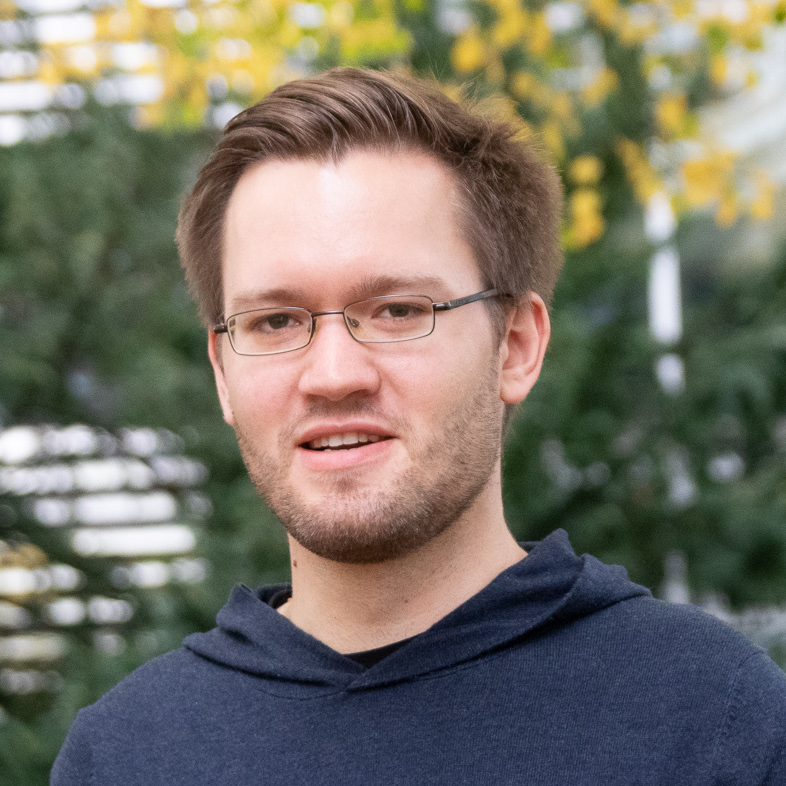
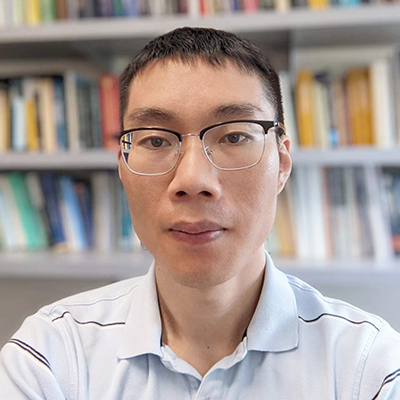
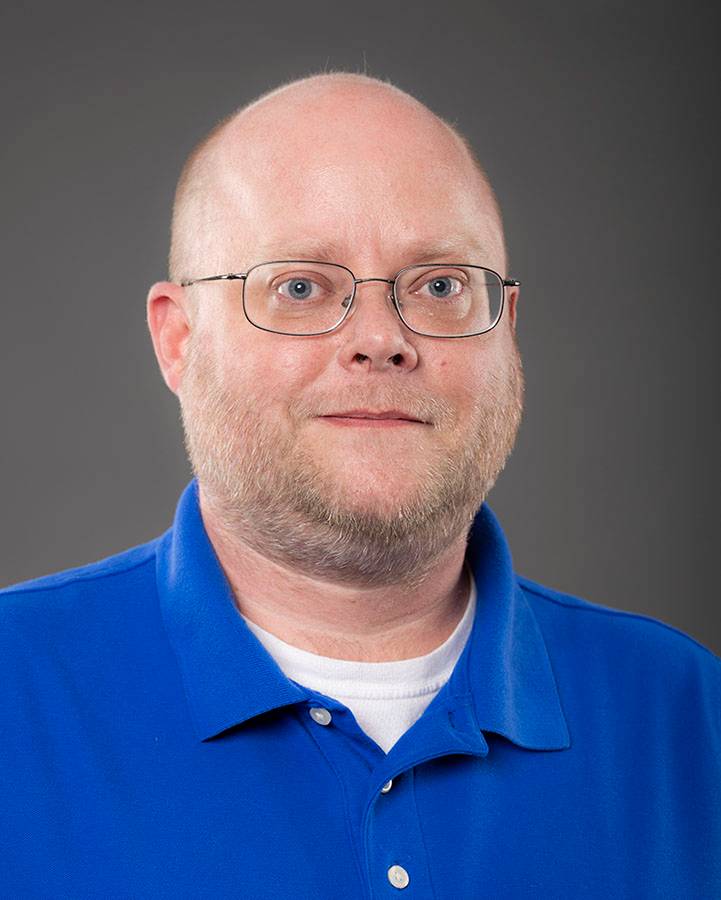
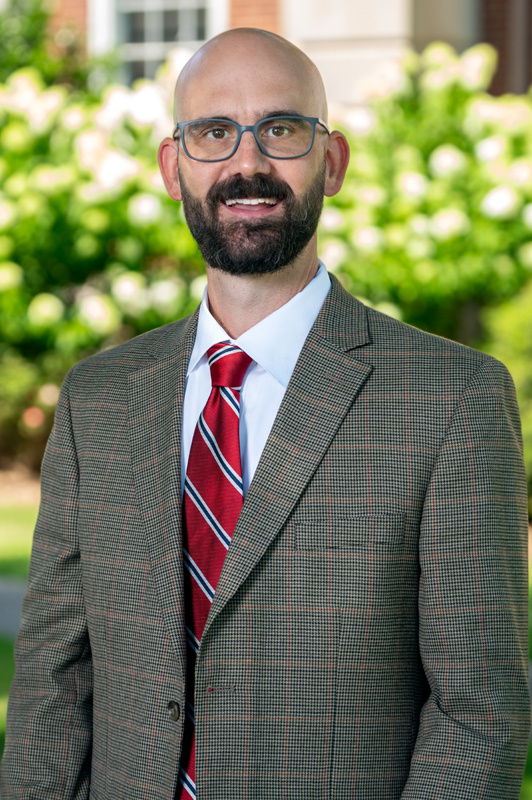
Matthias Volk is an Assistant Professor in the Formal System Analysis group at Eindhoven University of Technology (TU/e). His research focuses on improving the safety and reliability of complex systems through formal methods, particularly probabilistic model checking. He develops automated techniques for system modeling and analysis, with a focus on industrial applications. He is a core developer of the Storm model checker. Academic Background: B.Sc. and M.Sc. in Computer Science from RWTH Aachen University Ph.D. from RWTH Aachen University, supervised by Joost-Pieter Katoen Postdoctoral researcher at the University of Twente Joined TU/e as an Assistant Professor in 2023 Research Interests: Probabilistic model checking Safety-critical systems Automated verification tools Industrial collaborations for formal methods Grants and Funding: NWO grant NWA.1160.18.238 (PrimaVera) ERC Consolidator Grant 864075 (CAESAR) EU Horizon 2020 project MISSION (101008233) Labs/Teams: Part of the Formal System Analysis group and Algorithms and Logics for Verification group at TU/e.
Giovanni Maizza is a Full Professor at the Department of Applied Science and Technology (DISAT) at Politecnico di Torino, Italy. He leads research in advanced materials processing, multiphysics modeling, and additive manufacturing, with applications in aerospace, automotive, and industrial tooling. He has held leadership roles in EU and Italy-Japan collaborative projects and serves on international standards committees. Full Professor, DISAT, Politecnico di Torino Scientific Director of multiple national and commercial research projects Coordinator, Italy-Japan Network of Excellence on Nanomaterials Member, ISO/TC 164 and UNIMET standards committees Guest Editor, MATERIALS (2020–2022) Research Interests: Giovanni Maizza specializes in the development of multiphysics and multiscale methodologies for designing and optimizing materials and manufacturing processes. His work emphasizes reducing experimental burden through advanced simulation and modeling. Key areas include additive manufacturing (especially EBM of Ti6Al4V), spark plasma sintering, laser-based deposition and repair, powder metallurgy, and the processing of nanostructured and superhard materials. His research is highly interdisciplinary, combining computational modeling with experimental validation. Publication Trends: His recent publications focus on spark plasma sintering of ceramics and composites, microstructure modeling in aluminum alloys, and the development of transparent or superhard materials. There is a strong emphasis on process-structure-property relationships, with frequent use of finite element and particle-based simulations to understand thermal, mechanical, and microstructural evolution during processing. Scientific Awards and Recognitions: Fellow, UNIMET (2021–present) Fellow, ISO/TC 164 – Mechanical Testing of Metals (2021–present) Permanent Member, UNI/CT 026/GL 03 – Mechanical Testing of Metallic Materials Guest Editor, MATERIALS journal (2020–2022) Advising and Grants: While specific student names are not listed, Maizza has supervised numerous research projects funded by industry and public grants. He has served as Scientific Director for projects funded by Danieli SpA, KEMEX Ltd, AVIO GE SPA, and Punch Torino SPA. His work includes EU-funded initiatives and collaborations with Japanese laboratories (NIMS, AIST). He has developed custom simulation codes and utilized commercial software for industrial clients. Labs and Research Teams: He is affiliated with the Center of Modelling and Design of Materials and Processes (DISAT), where he leads research integrating computational modeling, experimental testing, and industrial application. His team works on developing self-consistent multiphysics codes using Fortran, MATLAB, and C++, and applies tools like ANSYS, COMSOL, and LS-DYNA.
Eneko Agirre is a Professor in the Department of Computer Science and Artificial Intelligence at the Faculty of Informatics, University of the Basque Country. He is a leading researcher in Natural Language Processing with a strong focus on multilingual systems, particularly for the Basque language, and has published extensively in top NLP conferences including ACL, EMNLP, and NAACL. His research spans multiple areas of computational linguistics including word sense disambiguation, machine translation, cross-lingual learning, and information extraction. Agirre has pioneered work on zero-shot learning approaches, data contamination issues in LLM evaluation, and low-resource language processing. His recent work includes developing the Latxa family of Basque language models and creating novel methods like WiCkeD for more challenging benchmarks and GUIDEX for zero-shot information extraction. Analysis of his recent publications reveals a strong trend toward addressing fundamental challenges in large language model adaptation, evaluation reliability, and cross-lingual transfer learning. His work often combines theoretical insights with practical applications, particularly for under-resourced languages like Basque. His research demonstrates how linguistic typology impacts cross-lingual performance and how to overcome data limitations through innovative methodology. Agirre has mentored numerous researchers who have become active contributors to the NLP field, including Oscar Sainz, Jon Ander Campos, and Iker García-Ferrero. His collaborative work spans institutions across Spain and internationally, reflecting his standing in the global NLP community.
Nikolaos Diaggelakis serves as an Assistant Professor in the Department of Process Development, Analysis & Design (II) at the School of Chemical Engineering, Technical University of Crete, where his work bridges theoretical optimization and industrial process applications. Education: Ph.D. in Chemical Engineering, Imperial College London, 2017 M.Sc. in Chemical Engineering, Imperial College London, 2012 Diploma in Chemical Engineering, National Technical University of Athens, 2011 Visiting Doctoral Researcher, Texas A&M Energy Institute, 2017 His research pioneers process systems engineering through mathematical optimization with moving time horizons, simultaneous design-control integration, and multi-parametric programming frameworks. Key applications span chemical process intensification, energy-efficient microgrids, and environmental systems, emphasizing worst-case and nonlinear optimization robustness. His theoretical contributions directly enable industrial implementations in energy systems and manufacturing. Publications from 2015-2022 reveal a concentrated evolution toward real-time optimization and decentralized control architectures , with increasing focus on data-driven surrogate models and robust explicit MPC strategies. The work consistently bridges fundamental algorithm development (e.g., multi-parametric quadratic programming solutions) with tangible industrial applications like air separation units and combined heat-power systems. Scientific Awards: Excellence Award for Outstanding PhD Thesis in Computer Aided Process Engineering (CAPE), Third Place, 2017 Invited Speaker, Distinguished Young Researchers Seminar Series, Northwestern University, 2016 Best Poster Award, CPSE Autumn Industrial Consortium Meeting, Imperial College London, 2014 Dr. Diaggelakis actively secures competitive funding, including U.S. Department of Energy grants (2018-2020) for smart manufacturing in chemical processing and National Science Foundation projects (2015-2016) on integrated process design-control frameworks. His leadership in the PAROC research group drives software development (POP toolbox) and industry collaborations through consortia like CPSE. Current projects emphasize uncertainty-aware scheduling for process industries and energy-efficient microgrid operation. He co-develops the industry-standard PAROC framework and POP toolbox, enabling multi-parametric optimization for complex process systems, and maintains active partnerships with Texas A&M and Imperial College London through ongoing research consortia.
Adam Torok is a Professor and Vice-Dean of the Faculty of Transport Sciences at Budapest University of Technology and Economics (BME), Department of Transport Technology and Economics. He is also affiliated with the KTI – Institute for Transport Sciences in Budapest, where he serves as Professor in Transport Management. His research is centered on sustainable transport systems, energy and emissions modeling, and transport policy in Central Europe. Education: DSc in Transport Sciences, PhD in Business and Management, both from BME. Current Position: Vice-Dean of Faculty, BME; Professor, KTI Institute for Transport Sciences. Laboratory: Laboratory for Sustainable Road Transport, BME. Adam Torok's research interests span sustainable transport, transport economics, energy engineering, environmental impact assessment, urban planning, and climate change mitigation in the transport sector. His work emphasizes the economic and environmental sustainability of public and road transport, with a strong focus on alternative propulsion technologies, autonomous vehicles, and policy analysis. He investigates emissions drivers using decomposition models like Kaya and LMDI, and evaluates the impacts of road pricing, congestion, and mobility transitions. His recent publications reveal a strong trend toward modeling future transport scenarios, particularly concerning energy consumption, emissions, and the adoption of battery electric and autonomous vehicles (AVs) in the EU and Hungary. He frequently employs predictive modeling, scenario analysis, and macroeconomic frameworks. His research integrates economics, engineering, and environmental science to address sustainability challenges in urban and regional mobility. Doctor of Hungarian Academy of Sciences (2021) National Excellence Program Scholarship (2018) Bólyai János Scholarship of Hungarian Academy of Sciences (2016) Bólyai János Scholarship of Hungarian Academy of Sciences (2011) Adam Torok actively collaborates with a wide network of researchers, including Mohammad Maghrour Zefreh, Anas Alatawneh, and Dávid Baranyai. He has contributed to numerous studies on transport performance, public transport accessibility, and the integration of new technologies like AVs and UAVs. He is involved in policy-relevant research, including cost-benefit analysis of transport interventions and the economic implications of public transport support. His work supports evidence-based decision-making in transport planning and sustainability. He leads and contributes to research within the Laboratory for Sustainable Road Transport at BME, focusing on empirical and theoretical analysis of transport systems, emissions, and innovative mobility solutions. His team utilizes advanced modeling techniques, data analysis, and simulation tools to assess the sustainability and efficiency of current and future transport systems.
Dr. Katharina Prüßmann serves as an Academic Councillor and Postdoctoral Researcher in the Department of Pharmacy at the Faculty of Chemistry and Pharmacy, Ludwig Maximilian University of Munich (LMU). She leads research initiatives within Prof. Olivia Merkel's group since April 2024, following prior postdoctoral work in Prof. Winter's laboratory at LMU (2021-2024). 2006-2010: Pharmacy School, Eberhard Karls University Tübingen 2010-2011: Pharmacy Residency (Retail Pharmacy, Reutlingen-Betzingen) 2011: Board License as Pharmacist & Hospital Pharmacy Residency (University Hospital Tübingen) 2012-2015: Pharmacist in Retail Pharmacy (Hannover) 2015-2021: PhD in Pharmaceutical Technology, University of Greifswald Her research centers on pharmaceutical technology with emphasis on dissolution testing methodologies, drug delivery system optimization, and in vitro performance assessment. She investigates critical parameters affecting drug release from complex formulations including coated medical devices, contributing to standardized testing protocols that bridge laboratory results with clinical outcomes. Current work in Merkel's group expands into advanced nucleic acid delivery systems. Analysis of her publications reveals consistent focus on dissolution science, particularly vessel geometry impacts and medium composition effects on drug release profiles. Her contributions to USP workshops demonstrate leadership in establishing industry standards for in vitro performance testing, with applications spanning cardiovascular implants to novel drug formulations. Dr. Prüßmann actively contributes to Prof. Olivia Merkel's research ecosystem at LMU, collaborating on ERC-funded projects in drug delivery while mentoring junior researchers. Her work integrates pharmaceutical technology with regulatory science to address real-world drug product challenges.
Tiago Manuel Duarte Marques Barreiro is an Assistant Professor at Universidade Lusófona, specializing in Theoretical Physics and Cosmology. He holds a PhD in Physics from the University of Sussex (1998) and a Licenciatura in Engenharia Física Tecnológica from Universidade de Lisboa (1993). His research focuses on dark energy, modified gravity, and interactions between dark matter and cosmological structures. Education: PhD in Physics (University of Sussex, 1998); Licenciatura in Engenharia Física Tecnológica (Universidade de Lisboa, 1993) Barreiro's work spans theoretical cosmology, including models like f(Q) gravity, coupled quintessence, and dark energy dynamics. He has published 31 journal articles and contributed to major projects like LISA (Laser Interferometer Space Antenna). His research often addresses cosmological tensions (e.g., sigma8) and explores non-canonical fields for dark energy. Recent publications highlight his contributions to gravitational wave cosmology, precision constraints on varying fundamental constants, and forecasting methods for modified gravity theories. His work integrates analytical modeling with observational data from instruments like ESPRESSO and LISA. Scientific Awards: None explicitly mentioned Barreiro has co-supervised 1 PhD thesis and 1 MSc dissertation, contributing to the training of future cosmologists. His affiliations include collaborations with international missions and institutions, reflecting his impact on theoretical cosmology.
Prof. Dr. Stefan Glunz holds the W3 Chair for Photovoltaic Energy Conversion at the Albert Ludwigs University Freiburg and serves as Head of Division Solar Cells at the Fraunhofer-Institute for Solar Energy Systems (ISE). With over 25 years of experience, his research focuses on high-efficiency silicon solar cells, perovskite solar cells, and tandem solar cell structures. He has driven breakthroughs in silicon surface passivation and tunnel oxide contacts (TOPCon). Albert Ludwigs University Freiburg: 2015–present Fraunhofer ISE: 1999–present Research Interests: Silicon-Based Tandem Solar Cells Perovskite Solar Cell Development Semiconductor Defect Physics Advanced Process Simulation Photovoltaics Efficiency Optimization Scientific Awards: 2014: Becquerel Prize 2008: Eni Award 2004: 20% Efficiency Milestone 2015: 25% Efficiency in Dual-Contact Cells His 15 most recent publications (2025–2024) demonstrate expertise in perovskite-silicon tandem engineering, TOPCon technology, and photovoltaic measurement methodologies. Contact: stefan.glunz@inatech.uni-freiburg.de
Dr. Carlos Molina Hutt is an Associate Professor in the Department of Civil Engineering at the University of British Columbia (UBC), specializing in Structural & Earthquake Engineering. He leads the Engineering for Seismic Resilience Laboratory (ESR Lab), focusing on assessing seismic risk in buildings and translating this knowledge into tools for engineers, planners, and policymakers. His work emphasizes societal and economic impacts of earthquake resilience in urban environments. Carlos holds a PhD in Earthquake Engineering from University College London (UCL), an MSc from Stanford University, and a BSc from Villanova University. He is a registered Professional Engineer (PE) in California, a Chartered Engineer (CEng) in the UK, and has extensive industry experience with firms like Arup and consulting for the UN and EU. His research is funded by NSERC, NSF, and international organizations. Research interests include seismic resilience, performance-based design, risk analysis, and high-rise building systems. He teaches courses on structural design and seismic engineering at UBC. Notable awards include the EERI Shah Family Innovation Prize (2019) and UCL’s Global Engagement Award (2015). His collaborations span academia, industry, and cities like San Francisco and Vancouver. Recent work examines seismic risk in sedimentary basins, collapse risk of tall buildings, and post-earthquake recovery modeling. The ESR Lab develops tools to bridge engineering science and policy for resilient urban systems. Key achievements include deploying as a technical expert post-earthquakes in Ecuador (2016) and Mexico (2017), and publishing over 50 peer-reviewed articles. Current projects focus on machine learning for seismic risk assessments and integrating basin amplification factors into hazard models.
Sabina Rebeggiani is a Senior Lecturer at the School of Business, Innovation and Sustainability at Halmstad University. Her research focuses on surface metrology, tool steel polishing, and quality assurance in manufacturing processes. She holds a doctoral degree in engineering from Halmstad University (2013) and a licentiate thesis (2009) on polishability of tool steels. Her work emphasizes optimizing surface finishes for industrial applications, particularly in injection molding, automotive components, and sustainable material surfaces. Key contributions include developing methods for in-line surface measurements, defect detection in paint systems, and empirical evaluations of polishing processes. Her research spans over 20 years, with publications in conferences such as ASPE and journals focusing on manufacturing engineering and materials science. She has collaborated on projects exploring robotic-assisted polishing equipment and traceology-based process control. Her recent work (2023-2025) addresses sustainable surface communication in supply chains and objective classification of extruded aluminum surfaces. Dr. Rebeggiani’s contact details include sabina.rebeggiani@hh.se and mobile number 072-977 36 50. She is affiliated with Halmstad University’s innovation-focused research programs and has contributed to industry partnerships in surface characterization and quality assurance.
Karina Wilgan is a Researcher at the German Research Centre for Geosciences (GFZ) in Potsdam, Germany, working within the Department of Geodesy. Her research spans multiple departments at GFZ, specifically focusing on Space Geodetic Techniques (Department 1.1), Space Physics and Space Weather (Department 1.5), and Hydrology (Department 4.4). Dr. Wilgan's research interests center on the application of Global Navigation Satellite Systems (GNSS) for meteorological purposes, particularly in monitoring tropospheric parameters and water vapor content. Her work bridges geodesy, meteorology, and hydrology, with a strong emphasis on practical applications for weather forecasting and flood monitoring. She has made significant contributions to understanding the severe flooding events that occurred in Germany in July 2021 through advanced multi-GNSS tomography techniques. Her publication record from 2021-2024 demonstrates a consistent research trajectory focused on improving atmospheric monitoring through innovative GNSS applications. The articles collectively show a strong emphasis on operational meteorology, climate research applications, and disaster monitoring, with particular attention to extreme weather events and their atmospheric precursors. Dr. Wilgan collaborates extensively with colleagues at GFZ, particularly with researchers G. Dick, J. Wickert, and F. Zus, forming a core team in GNSS meteorology research. Her work contributes to the Helmholtz Research Program 'Changing Earth – Sustaining our Future,' specifically addressing atmospheric changes in global context.
Yuwen Gu is an Assistant Professor in the Department of Statistics at the University of Connecticut. Their research focuses on high-dimensional statistics, variable selection, model combination, nonparametric methods, causal inference, and optimization techniques. Their recent publications highlight advancements in quantile regression, sparse modeling, and high-dimensional data analysis. Notable trends include applications of kernel methods, distributed computing for large-scale statistics, and regularization techniques for insurance and multi-source data. Yuwen Gu's work also explores interdisciplinary domains, such as bioacoustic signal processing in ecological studies, though their primary contributions remain in statistical methodology and computational efficiency.
Professor Nora Brambilla holds the Chair of Theoretical Physics - Computational Field Theory, Nuclear and Hadron Many-Body Systems at the Technical University of Munich's Department of Physics within the TUM School of Natural Sciences. Her research program at T30f focuses on developing and applying effective quantum field theories to understand the dynamics of the strong interaction in both high-energy particle physics and low-energy nuclear physics contexts. Her research interests center on Effective Field Theories (EFTs) and Renormalization Techniques with applications across multiple domains of physics. She develops non-relativistic effective field theories for heavy-quark processes, quarkonium and exotics XYZ physics at major accelerator experiments including those at CERN's Large Hadron Collider, the B factory in Japan, and the tau-charm factory in China. Her work also encompasses EFTs for strong interactions at finite temperature and density with applications to heavy-ion experiments at RHIC in the USA and LHC at CERN, as well as cosmological environments. She conducts high-order perturbative calculations in QCD for precision determination of Standard Model parameters and explores non-perturbative methods with applications to confinement mechanisms. A current focus involves matching traditional QCD lattice calculations with quantum computing to obtain observables of strongly correlated systems in and out of equilibrium. Her recent publications reveal a strong trend toward applying effective field theory techniques to dark matter physics, quarkonium suppression in heavy-ion collisions, and the interface between quantum computing and strong interaction physics. The research demonstrates increasing interdisciplinary connections between particle physics, nuclear physics, cosmology, and quantum information science. Elected Fellow of the American Physical Society (2012) Vice-President Marie Curie Association (2002-2005) Humboldt Fellowship for Long Term Cooperation (2002-2003) Marie Curie Fellowship (1998-1999) Alexander Von Humboldt Fellowship (1997) Professor Brambilla is a founding member of the International Quarkonium Working Group (2002) and the Quark Confinement and the Hadron Spectrum conference series (1994). She serves on the Theory Advisory Committee of the Panda Experiment at GSI-Darmstadt (since 2009). Her teaching portfolio includes advanced courses in quantum mechanics, effective field theories, and seminars on the physics of strong interactions for both winter and summer semesters through 2025.
Dr. Chris Dockery is a Professor of Chemistry at Kennesaw State University's Department of Chemistry and Biochemistry within the College of Science and Mathematics. Since 2022, he has served as Faculty Director of General Education and previously held leadership roles including Interim Chair (2022-2024) and Assistant Department Chair (2011-2022). His research focuses on forensic chemistry with emphasis on gunshot residue analysis using laser-induced breakdown spectroscopy (LIBS) , chemometrics, and environmental applications. His work addresses critical needs in Rapid forensic methodologies Chemical fingerprinting Error rate characterization for legal admissibility Student training in analytical chemistry Notable collaborations include research with Dr. G.E. Potts (e-cigarette analysis) Dr. M.B. Rosenberg (LIBS applications) Dr. S.L. Morgan (forensic dye analysis) His educational background includes a Ph.D. in Analytical Chemistry (University of South Carolina, 2005) B.S. in Chemistry (Berry College, 2001)
Dr. John Linhoss is an Assistant Professor in the Department of Biosystems Engineering at Auburn University, where he joined in 2021. Previously, he spent 8 years at Mississippi State University as an Extension Associate and Assistant Extension Professor. His research focuses on precision animal management, poultry housing design, environmental control systems, and spatial statistics. He leads a $298,000 USDA-funded grant evaluating natural vs. artificial lighting impacts on broiler welfare and environmental outcomes. Education: Ph.D. in Engineering Technology, Mississippi State University M.S. in Soil & Water Science, University of Florida B.S. in Biology, Birmingham-Southern College Research Interests: Optimization of lighting conditions in poultry houses Development of biochar-based litter amendments Sensors and instrumentation for precision farming Spatial modeling for environmental control systems Animal welfare through environmental design LCA (Life Cycle Assessment) frameworks for sustainable poultry production His recent work emphasizes interdisciplinary collaboration with Poultry Science departments, the National Poultry Technology Center (NPTC), and USDA ARS to address industry challenges. He actively seeks graduate students with hands-on experience in precision livestock farming, sensors, or animal housing management. Grants and Advising: $298K USDA grant on broiler lighting strategies (2023–present) Advised Chris Marty and Matt Rowland (MS graduates, 2021) and currently collaborates with post-doctoral researcher Maryam Mohammadi-Aragh Focuses on applied research with industry partnerships Labs/Teams: Collaborates with Auburn University’s National Poultry Technology Center (NPTC), Poultry Science Department, and USDA ARS Poultry Research Unit on environmental and engineering solutions for poultry production systems.