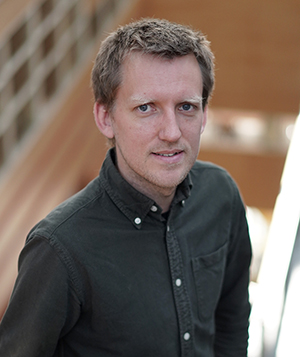
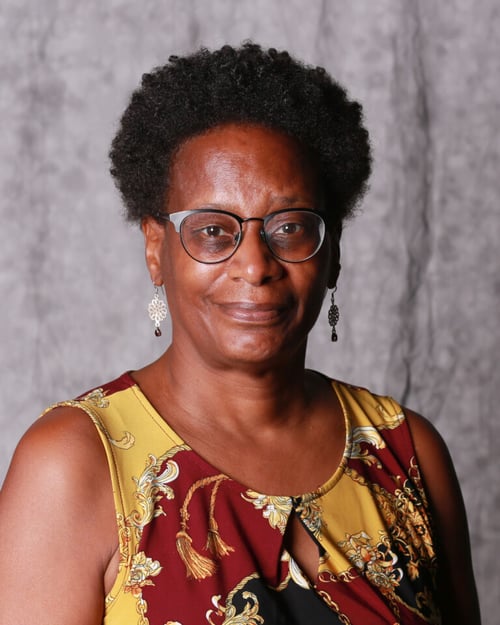
Evan McKenzie is a Professor and Department Head in the Department of Political Science at the University of Illinois at Chicago (UIC). His research focuses on urban politics, public law, and American politics, with an emphasis on privatization of residential governance, condominium associations, and municipal policy challenges. He holds a PhD from the University of Southern California (1989) and a JD from UCLA Law School (1975). McKenzie has held notable roles, including a 1996-97 Faculty Fellowship at UIC’s Great Cities Institute and former membership in the UIC Council for Excellence in Teaching and Learning. His work explores the intersection of private residential governance and public policy, particularly in contexts like Chicago’s urban governance and condominium deconversion trends. Recent research examines the financial sustainability of private residential governments and the erosion of local democratic structures. His 2021 book Private Metropolis critiques the decline of municipal authority in urban areas. Key themes in his work include urban polarization, enclave formation, and the legal frameworks governing common interest developments. McKenzie has received the American Political Science Association’s Best Book Award in Urban Politics for his 1994 work Privatopia . His scholarship spans decades, addressing topics like suburban desegregation, gated communities, and municipal policy conflicts. Current projects include studies on special districts as alternatives to municipalities and the privatization of public infrastructure.
Kaleb Germinaro, PhD, is an Assistant Professor in the Department of Curriculum & Instruction at the University of Illinois at Chicago's College of Education. His work focuses on spatial justice, disability studies, and Black youth empowerment through community-based design and learning environments. He holds a PhD in Learning Sciences & Human Development from the University of Washington, an MS in Human Development from the University of Pennsylvania, and a BA in Philosophy, Politics & Economics with Urban Studies focus from the same institution. His research explores intersections of race, disability, and environmental justice through spatial orientations. Notable contributions include studies on youth engagement in community design, Black spatial storytelling, and healing through geography. He co-leads the Estelita's Library social justice initiative and advises Sawhorse Revolution's youth-driven space-building projects. Key honors include the 2023 AAG Dissertation Award and the University of Washington's Gatzert Fellowship. Germinaro's grants include City of Seattle Equitable Development Initiative stewardship and a Donaghue Foundation co-PI role. His work emphasizes spatial belonging, mental well-being, and participatory methodologies. Professional memberships span the Association of American Geographers and Black in Design.
Sveta Angelopoulos is a Lecturer in the Economics Finance & Marketing department at RMIT University. Her research focuses on urban and cultural economics, emphasizing regional resilience, spatial dynamics, and policy impacts. She has over 20 years of teaching experience, specializing in applied economics, urban planning, and cultural industries. Her work bridges academic research with policy relevance, addressing challenges such as pandemic economic recovery, housing markets, and creative industries development. She has collaborated on significant projects like the '20-minute neighbourhoods' study and Tasmanian creative industries analysis. Angelopoulos holds an ORCID identifier (0000-0002-2671-7187) and actively contributes to policy discussions on regional growth. Research Interests: Urban and regional planning, human geography, housing policy, cultural and creative industries, and policy evaluation. She explores how spatial dynamics and cultural capital influence economic resilience and regional competitiveness. Her recent articles analyze pandemic policy effects on regional economies, place-based nowcasting methodologies, and the economic benefits of urban planning initiatives. These contributions highlight her expertise in linking micro and macroeconomic factors with spatial policy outcomes. Angelopoulos has supervised research projects including a study on cross-cultural mentoring and student adaptability. She emphasizes integrating real-world issues into teaching, fostering critical thinking and problem-solving skills among students.
Helga Tawil-Souri is an Associate Professor in the Department of Media, Culture, and Communication and the Department of Middle East and Islamic Studies at New York University's Steinhardt School. She specializes in the intersections of technology, media, and political geography in the Middle East, with a focus on Palestine. Her research explores digital borders, surveillance, infrastructure, and cultural production in contexts of conflict and colonialism. She has published widely on topics including Palestinian media, checkpoint politics, and the materiality of ID systems. Recent works include co-editing Producing Palestine (2024) and authoring articles in Social Text , Public Culture , and Environment and Planning D . Tawil-Souri teaches courses on borders, Arab media, and the cultural geography of commodities, including a distinctive 'coffee class' analyzing commodity networks. Her work bridges critical theory and ethnography, addressing how media and technology shape territorial control and resistance. She serves on editorial boards for Social Text and Public Culture , and her creative projects include the Internet Pigeon Network , exploring alternative communication systems.
Dr Erez Hatna is Clinical Associate Professor of Epidemiology at NYU's School of Global Public Health, where he develops computational models for urban and epidemiological systems. His research integrates geospatial analysis, agent-based modeling, and complex systems theory to study urban residential patterns, infectious disease spread, and scaling laws in metropolitan systems. As part of NYU's Agent-based Modeling Lab, he creates large-scale epidemic models incorporating behavioral dynamics. His investigations on residential segregation employ computational simulations of household relocation patterns, while urban studies examine how boundary definitions affect scaling relationships. Current projects focus on: COVID-19 transmission modeling Opioid epidemic interventions Statistical regularities in urban systems Ethnic clustering dynamics
Dr. Panayiota Pyla is a Professor of Architecture at the University of Cyprus where she also serves as Vice-Dean of the School of Engineering and Vice-Dean of the Graduate School. She directs Mesarch, a research laboratory focused on the history and theory of modern architecture in the Eastern Mediterranean. With academic appointments at prestigious institutions including MIT, Harvard, and the University of Illinois, Dr. Pyla has established herself as a leading scholar in architectural history and theory. Her educational background includes a PhD in History and Theory of Architecture from MIT (2002), a Master of Science in Architectural Studies from MIT (1994), and a dual Bachelor of Architecture and Building Science from Rensselaer Polytechnic Institute (1991). During her academic journey, she received numerous honors including the American Institute of Architects School Medal and the Outstanding Graduating Student Award for best Master's thesis. Dr. Pyla's research is interdisciplinary, focusing on the theory and history of modern architecture and urbanism in the Eastern Mediterranean, and examining architecture's relationship to socio-political dimensions of development and environmentalism. Her work spans across Egypt, Greece, Syria, Turkey, and Switzerland, with particular attention to Cyprus's architectural heritage, modernization discourses, and tourism development. She has pioneered research on the politics of leisure landscapes, hotel architecture, and the environmental implications of tourism infrastructure in the Mediterranean context. Her extensive publication record includes influential articles in top journals like the Journal of Architectural Education (for which she received the JAE Best Article Award), Journal of Planning History, and Architectural Histories, as well as edited volumes including 'Landscapes of Development' (Harvard University, 2013) and 'Coastal Architectures and Politics of Tourism: Leisurescapes in the Global Sunbelt' (Routledge, 2022). Her recent work examines climate change impacts on heritage sites, shared architectural heritage in conflict zones, and water politics in tourism development. JAE Best Article Award for 'Hassan Fathy Revisited' Peck Prize for best design thesis American Institute of Architects School Medal & Certificate of Merit Outstanding Graduating Student Award for best Master Thesis As an educator and mentor, Dr. Pyla has advised numerous PhD students whose work addresses critical issues in Cypriot and Mediterranean architecture, including water politics, social housing, architectural heritage, and tourism infrastructure. Her research has been generously supported by prestigious organizations including the Research and Innovation Foundation of Cyprus, the Leventis Foundation, the Hersus Erasmus+ Program, and the Hellenic Foundation for Research and Innovation. She leads significant ongoing projects including 'Uneasy Leisure: Modern Hotels and Shared Heritage on a Divided Island' and 'The Leisurescape Project,' which investigate the complex relationships between architecture, tourism, and political conflict in Cyprus. Through Mesarch Lab, her research group at the University of Cyprus, Dr. Pyla continues to advance critical perspectives on modern architecture in the Eastern Mediterranean, with particular focus on how leisure landscapes embody complex histories of development, conflict, and environmental change.
Katrin B. Anacker is a Professor at the Schar School of Policy and Government, George Mason University, where she conducts research and teaching in public policy with a focus on housing and urban affairs. Her institutional affiliation and scholarly output position her as a leading scholar in urban and housing policy. Her research interests include housing policy, urban policy, real estate markets, economic demographics, and both qualitative and quantitative research methods. She emphasizes policy-relevant scholarship and research writing, contributing significantly to academic and public understanding of housing systems in the United States. The recent publications highlight a consistent focus on housing and suburban transformation, with an emphasis on equity, policy analysis, and urban change. Her editorial leadership in major handbooks and journals underscores her influence in shaping discourse in urban and housing studies. Editorial and Research Leadership: Senior Associate Editor, Journal of Urban Affairs Former Editor, Housing and Society Co-editor and Lead Editor of multiple academic volumes Her research has been funded by prestigious organizations including the National Science Foundation, U.S. Department of Housing and Urban Development, Lincoln Institute of Land Policy, Urban Land Institute, and others, reflecting the national significance of her work. She has also contributed to interdisciplinary teams and research centers across multiple universities.
Moa Tunström is a Senior Lecturer in Human Geography at Karlstad University. Her work focuses on urban planning, social sustainability, and policy analysis with an emphasis on Nordic urban contexts. She has contributed to understanding segregation, affordable housing challenges, and evolving urban ideals through interdisciplinary research. Her research interests include the interplay between urban policy and societal outcomes, with particular attention to equity, spatial justice, and participatory governance. Notable themes in her work are the transformation of urban ideals over time, barriers to social inclusion, and the role of dialogue in planning processes. Tunström's publications analyze Nordic urban issues, such as housing affordability, segregation patterns, and the repackaging of welfare state models into urban policies. She critiques postpolitical discourse in Swedish urban planning and explores how planning education shapes future professionals' identities. Her work often integrates historical perspectives with contemporary challenges, offering frameworks for evaluating policy efficacy and fostering socially sustainable cities. She collaborates with researchers across disciplines and Nordic countries, contributing to policy-oriented research initiatives.
Brady Horn is a Professor in the Department of Economics at the University of New Mexico (UNM). His research focuses on public policy impacts, particularly in environmental and natural resource economics, international development, health-focused public economics, and New Mexico-centric issues. He is affiliated with several institutes including the Science Impact Laboratory for Policy and Economics (SILPE), the Center for Social Policy, and the Water Resources Program. Key research themes include the economic effects of social policies (e.g., paid sick leave, SNAP access), substance abuse treatment costs, and the intersection of healthcare and criminal justice systems. His work frequently addresses marginalized populations and evaluates policy outcomes on health, crime, and community development. Recent publications analyze topics such as opioid prescribing in HIV care, jail-based methadone treatment impacts, and the economic implications of redlining on housing values. His interdisciplinary approach combines quantitative analysis with real-world policy evaluation. No scientific awards are explicitly mentioned in the provided text. Advising and grant activities are not detailed here, though his affiliations suggest involvement in collaborative research initiatives. Horn collaborates with the SILPE lab and other centers to advance evidence-based policy solutions for issues ranging from substance abuse to environmental sustainability.
Edna Ely-Ledesma is an Assistant Professor in the Department of Planning and Landscape Architecture at the University of Wisconsin-Madison. She directs the Kaufman Lab for the Study and Design of Food Systems and Marketplaces, focusing on Latinx community agency in urban planning. Her work bridges community needs and city governance through smart, green, and equitable city design. PhD in Urban and Regional Science, Texas A&M University Master of Architecture and Urban Design, University of Texas at Austin Bachelor of Environmental Design, Texas A&M University Her research examines immigrant populations' cultural landscapes, micro-economies, and design methodologies in 21st-century cities. Key themes include food systems, telehealth access, farmers markets, and hybrid public spaces. Recent publications analyze marketplace fiscalization, borderland urbanism, and community-driven planning frameworks. 2023–2026: USDA Principal Investigator for farmers market metrics adoption 2022–2027: USDA Co-PI for climate-smart commodities and carbon sequestration 2021–2024: Multiple USDA Co-PI roles for farmers market equity and outreach She advises on grants exceeding $25 million, including USDA-funded projects and internal research awards. Her work emphasizes interdisciplinary collaboration, community engagement, and policy innovation.
Deniz Yonucu is a scholar specializing in urban anthropology, political sociology, and critical legal studies. She holds a Ph.D. in Anthropology from Cornell University (2014) and has served as a Lecturer at Freie Universität Berlin (Summer 2017). Her research explores youth violence, spatial segregation, and sovereignty in Turkey's urban contexts. Education: Ph.D., Anthropology, Cornell University (2014) Visiting Fellow, Anthropology, Columbia University (2009) MA, Social Sciences, University of Chicago (2006) MA, Sociology, Boğaziçi University (2005) BA, Sociology, Istanbul Bilgi University (2002) Her work interrogates neoliberal governance, police violence, and sectarian polarization in Istanbul's working-class Alevi neighborhoods. She has published on topics including anti-terror law, urban marginalization, and counter-violence practices. Yonucu has received prestigious awards such as the Alexander von Humboldt Post-Doctoral Fellowship and the Salt Research Award. She has presented at international conferences and workshops on urban conflict, human rights, and political transformations. Scientific Awards: Georg Foster Post-Doctoral Fellowship (2015-2018) Salt Research Award (2014) British Council Researcher Links Travel Grant (2015) Wenner-Gren Dissertation Grant (2010-2011)
Paola Emperatriz Mera is an Associate Professor in the Department of Microbiology at the University of Illinois at Urbana-Champaign. She leads the Mera Lab, which investigates bacterial cell cycle coordination using Caulobacter crescentus and Helicobacter pylori as model organisms. Her research combines bacterial genetics, biochemistry, and high-resolution imaging to examine molecular choreography of bacterial growth. Education B.S. in Chemistry and Biochemistry from University of Colorado-Denver Ph.D. in Microbiology from University of Wisconsin-Madison Postdoctoral training in Microbiology at Stanford University Research Focus Dr. Mera's work centers on three primary areas: 1) Coordination mechanisms between chromosome replication and segregation in bacteria, 2) Environmental adaptation responses to nutrients and antibiotics, and 3) Bacterial survival strategies against self-produced antibiotics. Her lab aims to build comprehensive models of bacterial cell cycle progression with applications in antibiotic development. Her recent publications (2022-2024) demonstrate consistent focus on chromosome dynamics, protein functions in DNA segregation, and molecular mechanisms of antibiotic resistance. Collaborative work includes structural analyses of resistance proteins with Dr. Chu Young Kim (UTEP). Outreach The Mera Lab conducts STEM outreach programs including 'Fostering STEM in Las Cruces', which engages foster children in science activities to promote STEM education.
Nicolai Topstad Borgen is an Associate Professor at the Department of Special Needs Education, University of Oslo, and a member of the Center for Research on Equality in Education (CREATE). His research focuses on social inequality, causal inference, and educational outcomes, emphasizing neighborhood, school, and peer effects. Current projects include the ERC-StG-funded 'Segregation of Opportunities' and collaboration on the ERC-CoG EQOP study. Key research areas: Gene-environment interactions, poverty consequences, quantile regression models, and educational policy evaluation. Recent publications analyze maternal education impacts, ethnic minority disparities, and reproducibility challenges in social science. Articles highlight heterogeneous neighborhood effects and methodological innovations in statistical visualization. He holds a Ph.D. in Sociology from the University of Oslo and has worked at institutions like Oslo Metropolitan University and the Ragnar Frisch Centre for Economic Research.
Dr. Cynthia M. Hewitt serves as the Avalon Professor of Sociology and Director of the International Comparative Labor Studies Program at Morehouse College within the Division of Africa, Humanities, Social Sciences, Media, and Arts. She holds concurrent faculty appointments in the African American Studies Program and sustainability minor, and founded the Morehouse Pan-African Global Experience (MPAGE) study abroad initiative. Her academic credentials include: Bachelor of Arts in History from Brown University (1978) Master of Arts in Sociology from Howard University (1982) Doctor of Philosophy in Sociology from Emory University (1997) Dr. Hewitt's research centers on political economy of the world-system , race/class/gender inequality , and environmental sociology , with groundbreaking work on Pan-African unification as solutions to systemic marginalization of African heritage people. Her scholarship uniquely integrates brain circulation theory and reparations frameworks for slavery. Current projects examine matriarchal/patriarchal authority structures, worker organizing for collective bargaining, employee ownership models, and digital education strategies for secondary education access in Africa. Her 15 most recent publications (2000-2022) reveal evolving focus from Atlanta's demographic trends and job segregation analyses toward contemporary labor justice in Georgia's public sector and Pan-African digital education initiatives under the U.N. Decade for People of African Descent. As an educator, Dr. Hewitt teaches HSOC 105: Organizing for Social Justice, HSOC 406: Sustainability and Development, and HSOC 360: Pan-Africanism as Cross-Cultural Dialogue. Her leadership in the International Comparative Labor Studies Program and MPAGE demonstrates commitment to student development through international civic engagement and transnational solidarity projects. Dr. Hewitt directs collaborative teams with Africana unionists and global institutions focused on labor justice, digital education infrastructure, and Pan-African solutions to systemic inequality, particularly through the U.N. Decade for People of African Descent framework.
Dorota Czeszczewik is a Professor at the Institute of Biology , Faculty of Natural Sciences, University of Siedlce. Her work focuses on the ecology and behavior of birds in primeval forest ecosystems, particularly the Białowieża Forest. Research spans 45+ years of bird community dynamics Key areas: woodpecker foraging, flycatcher interactions, and biodiversity conservation Specializes in niche segregation and habitat utilization by avian species Research Trends : Analyzes long-term impacts of forest management, climate change, and dead wood resources on bird populations. Her recent publications (2023–2025) emphasize functional diversity, tree usage patterns, and resilience of primeval forests. Projects : Leads team (151/23/B) studying forest biodiversity and bird ecology in the Białowieża Forest.