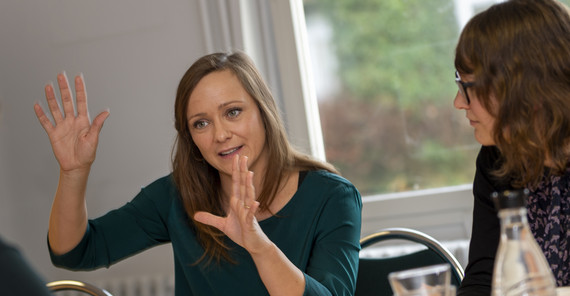
Marine Lunvenمشاهده پروفایل
مدرس ارشد
- Neuropsychology
- Spatial Cognition
- Visual Neglect
- +۷ مورد دیگر
Marine Lunven is a Senior Lecturer in Intervenional Neuropsychology at École Normale Supérieure (ENS), Paris, where she conducts research at the Laboratory of Interventional Neuropsychology. Her work focuses on spatial cognition, visual neglect, and neurodegenerative disorders, particularly Huntington’s and Parkinson’s diseases. She is actively involved in developing and validating digital cognitive tools for remote monitoring and assessment. Her research interests span neuropsychology , spatial cognition , prism adaptation therapy , cognitive decline in neurodegeneration , and digital phenotyping . She employs advanced neuroimaging, behavioral testing, and computational methods to understand the neural basis of attention and time perception, especially in patients with right hemisphere damage or basal ganglia disorders. Recent publications (2020–2024) highlight her focus on digitized cognitive assessments (e.g., SelfCog, DAT), speech-based biomarkers in Huntington’s disease, and the anatomical underpinnings of rehabilitation efficacy. Her work shows a strong trend toward integrating clinical neuroscience with digital health technologies for early detection and monitoring of cognitive decline. Scientific Contributions: Developed and validated digital cognitive tests for Huntington’s and Parkinson’s diseases. Investigated the role of the striatum in time perception using neurodegenerative models. Explored the efficacy and neural predictors of prism adaptation therapy in neglect patients. Used graph-based methods and speech analysis to detect spatial and cognitive impairments. She supervises master’s level internships, indicating active mentorship. Collaborators include Paule Bartolomeo, Charlotte Jacquemot, and Anne-Catherine Bachoud-Levi. While no formal awards or grants are listed, her publication record in high-impact journals reflects significant scientific contributions. Her laboratory focuses on interventional neuropsychology, combining behavioral interventions with neurocognitive assessment to improve outcomes in brain-damaged and neurodegenerative patients. The lab appears to emphasize translational research, bridging clinical observation with digital innovation.