معرفی
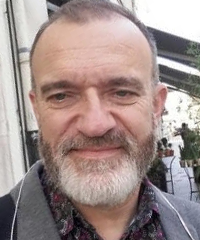
Simon Edelblutte is a Professor of Geography at the University of Lorraine in Nancy, France, where he has been teaching since 1994. He lectures across all levels of higher education, from Bachelor’s to Master’s degrees, in both general geography and specialized research areas.
His research centers on industrial landscapes and territories, examining their genesis, evolution, decline, and reconversion, particularly in regions marked by strong industrial legacies such as Lorraine. He investigates the complex relationships between industry and urban development, territorial identities, heritage, and urban renewal through a landscape-focused methodology, integrating quantitative data, field surveys, interviews, and comparative analysis. He supervises multiple PhD students and collaborates within international research networks across the Greater Region (Lorraine, Luxembourg, Rhineland-Palatinate, Saarland, Wallonia) to cross-reference experiences of industrial reconversion and heritage valorization.
The most recent articles highlight a consistent focus on industrial urban forms—such as factory towns and company towns—and their transformation in post-industrial contexts. His work spans theoretical reflections and empirical case studies across France, the UK, and Europe, with recurring themes of heritage recognition, landscape memory, and territorial resilience. His publications appear in prominent French geography journals and edited volumes, demonstrating sustained scholarly engagement.
He has actively participated in major academic forums, including the TICCIH congresses (2006, 2015), and regularly presents at international symposia and conferences on industrial heritage and landscape studies.
There are no listed scientific awards or fellowships in the provided text. However, his extensive publication record and conference involvement indicate significant academic contributions. He advises PhD students on industrial landscape themes and engages in collaborative research, though specific grants or funding sources are not mentioned.
He is involved in research teams and networks focused on industrial heritage and landscape evolution, particularly within transnational collaborations in Western Europe. His work emphasizes interdisciplinary and cross-border dialogue to understand industrial reconversion processes.