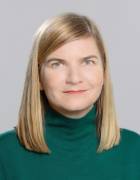
Prof. Dr. Katja Thoring is a Full Professor of Integrated Product Design at the Technical University of Munich (TUM School of Engineering and Design). She holds a doctorate in Design Research from Delft University of Technology and has previously served as Professor of Integrated Design at Anhalt University of Applied Sciences in Dessau from 2009–2022. Her research bridges product design, architectural space, and technology, focusing on how physical environments stimulate creativity and design processes across functional, emotional, and cognitive dimensions. Key areas include generative AI applications in design, innovative research methodologies, and creative workspace design. She developed methods like the 'Delphi Design Sprint' and contributed to frameworks such as the FOD (Future-Oriented Design) model. Thoring is a member of prominent design societies (DGTF, Design Society, DRS) and a founding member of the Academy of Design Innovation Management (ADIM). Notable awards include the 'Best Paper Award' at ADIM Conference (2017) and recognition as a top early-career researcher (2019). Her work integrates design education innovation, with studies on pedagogical spaces and cross-cultural design thinking. She has published extensively on design knowledge models, creative environments, and future-oriented design strategies.
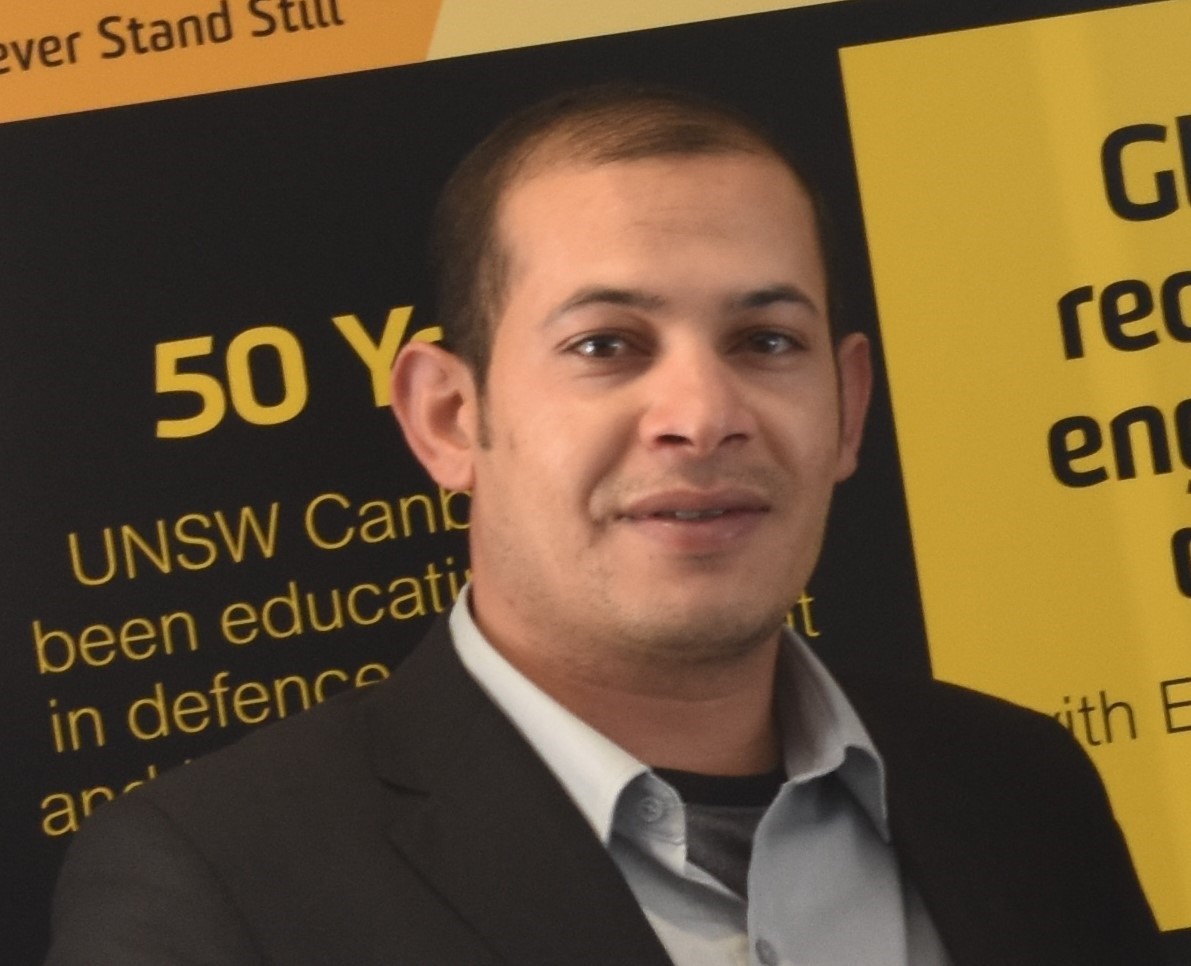
Dr. Nour Moustafa is an Associate Professor and ARC DECRA Fellow at the School of Systems & Computing (SysCom) , University of New South Wales (UNSW) Canberra , Australia. He leads the Intelligent Security Group and focuses on developing AI/ML-driven cybersecurity frameworks for smart systems. Educated at Helwan University (BSc/MSc in Information Systems) and UNSW (PhD in Cybersecurity). Research Interests include intrusion detection, threat intelligence, privacy preservation, digital forensics, and cyber resilience, with methodologies spanning statistical analysis , machine learning , and deep learning applied to IoT , Edge/Cloud , and Industrial IoT environments. His work emphasizes federated learning for privacy preservation, blockchain for secure AI, and digital twins for network self-healing. Notable contributions include the TON-IoT , Bot-IoT , and UNSW-NB15 datasets for cybersecurity evaluation. Scientific Awards : 2020 Spitfire Memorial Defence Fellowship ACM Distinguished Speaker IEEE Senior Member He has served as guest associate editor for IEEE Transactions journals and held leadership roles in conferences like IEEE TrustCom . His research bridges academia and industry, with over 75 publications in top-tier venues.
Dulce Wilkinson Westberg is an Assistant Professor in the Department of Psychology at the University of California, Davis. Her research lies at the intersection of personality, identity, and social structures, with a focus on racially and ethnically diverse populations. She employs both qualitative and quantitative methodologies to explore how systems of power and oppression influence life narratives and psychosocial adjustment. PhD in Social and Personality Psychology, University of California, Riverside (2022) BS in Psychology, University of California, Riverside (2017) Dr. Westberg's research centers on life narratives as internal constructions of identity, examining how race, ethnicity, gender, and social class shape personal meaning-making. She investigates how marginalized individuals navigate structural barriers and how such experiences influence personality development. Her work emphasizes intersectionality and the cultural contexts of identity formation. Her recent publications (2020–2024) reflect a strong focus on narrative identity, ethnic-racial life scripts, identity shifting, and the integration of intersectionality into personality psychology. These works span journals in personality, developmental, and social psychology, highlighting interdisciplinary engagement and methodological diversity. Association for Research in Personality (ARP) – Programming Committee Member (2023) Association for Research in Personality (ARP) – Diversity and Inclusion Committee Member (2020–present) Society for Personality and Social Psychology (SPSP) – Member International Society for Research on Identity (ISRI) – Member Society for Research on Child Development (SRCD) – Member Society for the Study of Emerging Adulthood (SSEA) – Member Dr. Westberg is actively mentoring and building her research program. She is recruiting undergraduate students for qualitative data analysis and accepting applications from prospective graduate students for the 2024–2025 cycle. While no specific grants are mentioned, her active publication record and lab recruitment suggest ongoing research funding and academic momentum. She leads a research lab focused on narrative and identity processes in diverse young adults.
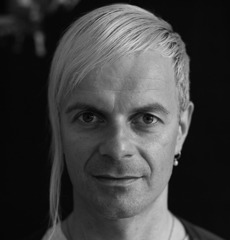
Wolfgang Mayer is a Professor for Performative Practice at the State Academy of Fine Arts Stuttgart , teaching collaborative artistic processes. He co-founded the art group Discoteca Flaming Star (DFS) in 1998 with Cristina Gómez Barrio, focusing on performative works that challenge memory and institutional frameworks. 1990–1995: Studied at Academy of Fine Arts Munich 1996–1997: DAAD scholarship at School of Visual Arts NYC 2005–2006: Whitney ISP participant Mayer’s research integrates performative practice , body theory , and collaborative art . His works interrogate memory , feminist narratives , and public space dynamics through sculptures , performances , and experimental music . Recent projects like Momentum:synthesize.r (2024) and Love Any Out of (90 Seconds) End (2023) explore temporal structures and emotional labor . Scientific honors include: 2013 Fundacion Estrenos Grant 2006–2007 Pollock-Krasner Scholarship 1993 Salzburg Summer Academy scholarship He emphasizes non-formalized artistic development through Sound & Body modules, public space interventions , and critical response protocols . Mayer’s DFS collective has shown globally at institutions like The Kitchen , Whitney Museum , and Tate Modern , often collaborating with figures like Rita McBride and Jeremiah Day.
Dr. Matteo Montecchi is a Senior Lecturer (Associate Professor) in Marketing at King’s Business School, King’s College London, where he also serves as Theme Lead for Sustainable Consumption at the Centre for Sustainable Business and Programme Director for the Strategic Marketing (Open Executive) programme. He teaches core modules such as Consumer Behaviour, Digital Marketing, and Research Methods, and leads executive education initiatives. Previously, he was a Senior Lecturer at the London College of Fashion, University of the Arts London, and has held visiting positions at Milan Politecnico, Università Cattolica del Sacro Cuore, and Università Federico II. Montecchi earned his PhD in Marketing from King’s College London, an MRes in Marketing from Birkbeck College, an Executive Master in Marketing and Sales from SDA Bocconi and ESADE, and a Bachelor’s in Business Economics from the University of Modena and Reggio Emilia. He also holds a PgCert in Academic Practice and is a Fellow of the Higher Education Academy (FHEA). His research focuses on the digital transformation of marketing, particularly the role of artificial intelligence and blockchain in enhancing transparency and trust. He investigates ethical engagement with diverse consumer groups, inclusion, and corporate responsibility, with a special interest in marginalized communities. His work integrates consumer behavior, digital interactions, and decision-making with technological innovation, offering actionable insights for sustainable and responsible business strategies. The most recent 15 publications reflect a strong trend in AI in retail, brand transparency, consumer trust, ethical data use, voice technologies, and social sustainability. His research spans journals in marketing, psychology, interactive marketing, and business ethics, demonstrating interdisciplinary impact. Scientific Awards: KingsCAT: Capture and Analysis Tool for Social Media Research at King’s College London (2024) – Recognized as part of a collaborative team for advancing digital research infrastructure and media analysis. Montecchi is actively involved in PhD supervision and is accepting new students. He has led research projects using social media analytics (KingsCAT) and has contributed to strategic debates on grand challenges in marketing. His work connects academic research with real-world managerial applications, particularly in digital strategy and ethical innovation. He is a key contributor to interdisciplinary research through tools like KingsCAT, which supports collaborative social media analysis, and his publications often involve co-authorship with experts in data science, psychology, and organizational behavior.
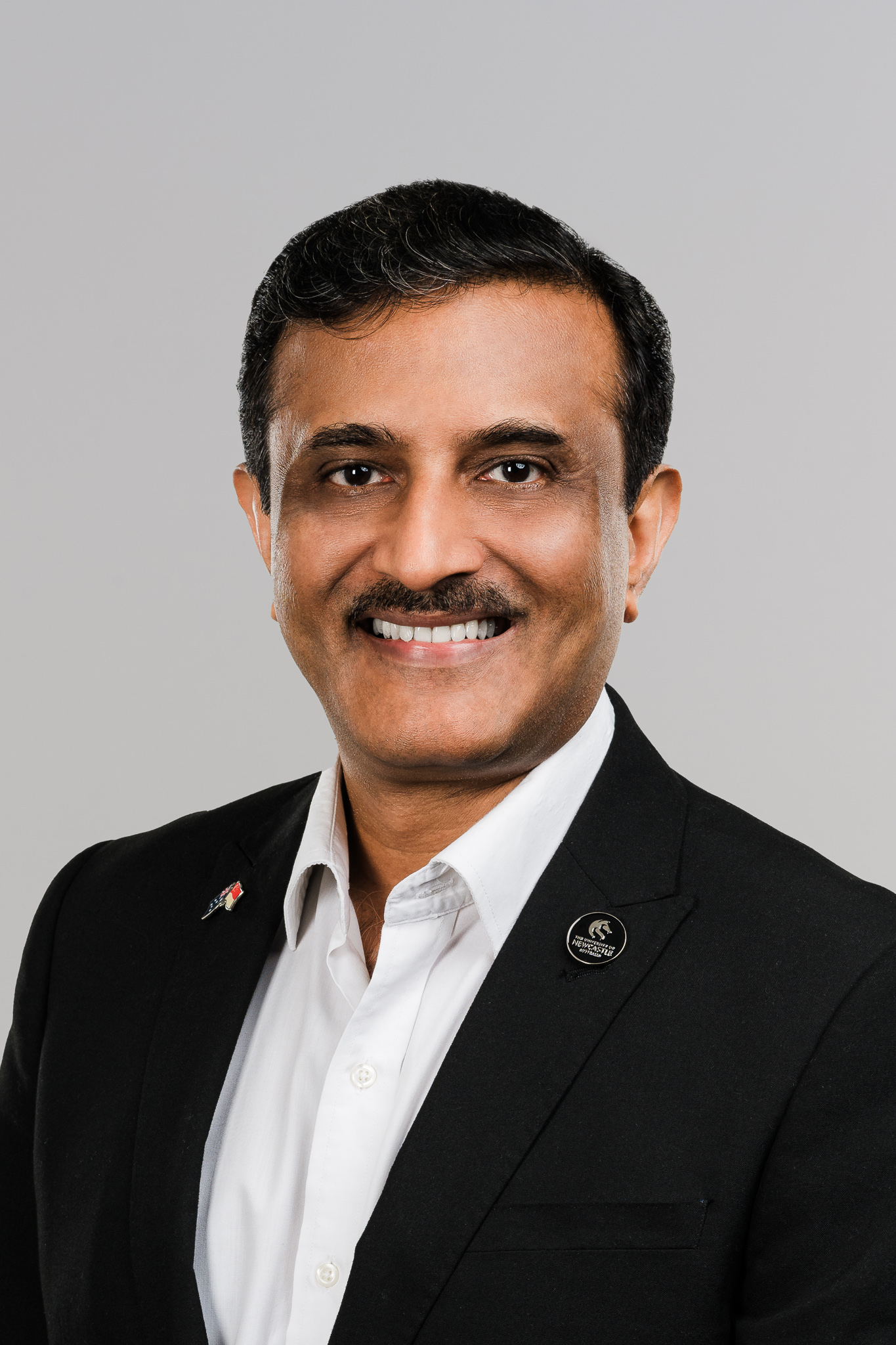
Professor Abhishek Singh Bhati is the Pro Vice-Chancellor and CEO at the Newcastle Australia Institute of Higher Education. He is a distinguished academic and administrator with a focus on tourism management and scholarship of learning and teaching. His research explores technology-driven tourism transformations, low-carbon tourism, and the alignment of tourism with United Nations Sustainable Development Goals (SDGs). Bhati’s work also emphasizes tourist behavior, resilience planning, and vandalism management in tourism settings. PhD (Tourism Management), James Cook University, Australia MBA (Marketing Management), Maastricht School of Management, Netherlands Bachelor of Arts (Economics), Bombay University, India Diploma in Adult and Continuous Education, Institute of Adult Learning, Singapore Graduate Certificate in Education (Tertiary Teaching), James Cook University, Singapore His research spans technology’s role in tourism, sustainable development, and educational innovation. Recent publications address energy-economic synergies, AI in tourism, and post-pandemic travel behavior. Bhati has secured grants from organizations like the World Wide Fund for Nature (WWF) and the Australian Government’s Office of Learning and Teaching (OLT). Scientific Honors: Fellow of the Higher Education Academy (FHEA)
Miriam Stock is Professor of Cultural Studies at the Institute of Humanities at Pädagogische Hochschule Schwäbisch Gmünd, where she also serves as Director of the Cultural Studies Department and Spokesperson for the Master's program 'Interkultur und Integration.' She is a founding member of the Center for Migration and Integration Studies 'Migration – Society – School.' Dr. Stock holds a PhD in Geography from Europa-Universität Viadrina Frankfurt (Oder) and completed her diploma in Geography at Ludwig-Maximilians-Universität München. Her academic journey includes research fellowships, organizational roles in international projects, and advisory work with refugee communities. Her research focuses on migration geographies, cultural theories, postcolonial approaches, urban development from post-migrant perspectives, and qualitative research methodologies. She examines migration and flight between the Arab region and Europe, urban development and consumption, rural perspectives on migration society, anti-discrimination in schools, critical masculinity and family studies, and theoretical-practical approaches. Dr. Stock's recent publications reveal a strong emphasis on transnational migration experiences, particularly Syrian refugee families, with attention to emotional dimensions, gender dynamics, and educational contexts. Her work frequently bridges theoretical frameworks with practical applications through projects like Erasmus Mundus Joint Master Program 'Education, Migration, and Diversity' (2024-2030). Success Story 2020 award for the Enable project As an advisor, Dr. Stock has supervised PhD candidates like Sara Mazzei (University of Calabria/PH Schwäbisch Gmünd) working on Arab-Islamic education systems in migrant experiences. Her grant portfolio includes significant Erasmus+ projects such as Enable (Self-learning for Arab refugee children) and PARENTable (Communicating with parents of newly migrated children), alongside research funded by the Werner-Zeller Foundation. Dr. Stock leads the Institute for Humanities and directs Cultural Studies department activities, including organizing lecture series on topics like 'Right Established - How the New Right Changes Education and Society,' 'Migration and Body,' and 'Emotions in Migration Society.'
Dr. Chathura Bandutunga is a Research Fellow at the Centre for Gravitational Astrophysics within the Research School of Physics at the Australian National University (ANU). His research focuses on advanced optical techniques for precision measurement, with significant contributions to gravitational wave detection technology, molecular spectroscopy, and space exploration instrumentation. Dr. Bandutunga's research expertise spans digital interferometry, fiber optic sensors, and precision optical measurement systems. His work has pioneered digitally enhanced interferometric techniques that have enabled new capabilities in molecular dispersion spectroscopy, gravitational wave detection, and optical frequency referencing. He has developed innovative methods for phase noise suppression, common-mode noise rejection, and thermal-noise-limited optical measurements that operate at the boundaries of physical possibility. His publication record demonstrates consistent innovation in optical measurement technology, with recent work advancing fiber optic gyroscopes, frequency comb technology, and applications for interstellar propulsion systems like the Breakthrough Starshot program. His research bridges fundamental optical physics with practical applications in both terrestrial scientific instrumentation and space-based technologies. Dr. Bandutunga is actively involved in the Centre for Gravitational Astrophysics at ANU, contributing to Australia's participation in international gravitational wave research collaborations. His technical leadership in precision optical measurement systems directly supports next-generation gravitational wave detectors and related technologies requiring unprecedented measurement stability.
Associate Professor Lizzie Muller serves as Director of Research in the School of Art & Design at the University of New South Wales. An accomplished curator and researcher, she specializes in audience experience and interdisciplinary collaboration, with a particular focus on the future of museums as sites of knowledge production. Her research bridges curatorial practice with theories and methods from participatory design and interaction design, developing audience-centered curatorial methodologies and innovative approaches to audience research. Her work extends to preservation and archiving, particularly experiential documentation and oral histories of media art. Co-author of Curating Lively Objects: Exhibitions Beyond Disciplines (Routledge Museum Studies Series, 2022) Elected Councillor of the Sydney Culture Network Co-founder of the bi-monthly Sydney Culture Data Salon with Keir Winesmith Muller's research output demonstrates a consistent trajectory exploring the intersection of art, science, and technology through major international exhibitions including Human Non Human (Powerhouse Museum, 2018/19) and A Working Model of the World (staged across UNSW Galleries, Parsons School of Design, and University of Dundee). Her recent work focuses on art-science collaborations, deep time history through the ARC Centre for Excellence in Australian Biodiversity and Heritage, and the development of audience-centered curatorial frameworks. Scientific Awards: 2024 ADA Deans Award for Excellence in Higher Degree Supervision Muller leads significant research initiatives as Chief Investigator on multiple ARC-funded projects including the ARC Linkage project Curating Third Space: The Value of ArtScience Collaboration and SSHRC-funded research on The Living Effect and Curating Lively Objects . She has supervised numerous PhD and MFA candidates, with a special focus on curatorial practice-based research, and currently serves as Program Director of the Master of Curating and Cultural Leadership at UNSW Art & Design.
Lisa Wills serves as Assistant Professor of Computer Science at Duke University's Trinity College of Arts & Sciences and holds a joint appointment in Electrical and Computer Engineering at the Pratt School of Engineering since 2019. Her research bridges computer architecture and domain-specific applications, with a focus on hardware acceleration for computationally intensive fields. Dr. Wills earned her Ph.D. from Columbia University in 2014. Her academic journey reflects a deep commitment to advancing hardware-software co-design methodologies for real-world computational challenges. Her research centers on developing efficient hardware accelerators for big data analytics, particularly in genomics, graph processing, and database systems. She pioneers frameworks that simplify accelerator deployment while tackling critical bottlenecks in genomic data analysis, protein structure prediction, and privacy-preserving computing. Current work focuses on hardware-aware machine learning systems and energy-efficient architectures for emerging AI applications. Analysis of her publication record reveals a clear trajectory: from foundational work in database processing units (2014-2016) to specialized genomic accelerators (2019-2021), then evolving toward ML-enhanced design automation (2022-2023) and cutting-edge architectural abstractions (2024-2025). Her research consistently targets the intersection of hardware efficiency and domain-specific computational demands, with increasing emphasis on AI/ML workloads. Google ML and Systems Junior Faculty Award (2025) Dr. Wills actively mentors doctoral students including Chris Kjellqvist (lead architect of Beethoven accelerator framework), Mason Ma (PyTFHE FHE framework), and Mansi Choudhary (COCOSSim accelerator simulator). Her research is supported by significant grants including the NSF AI Institute: Athena ($20M, 2021-2027), Meta-funded ProSE accelerator project (2023-2026), and NSF CAREER award (2021-2026), totaling over $25M in active funding. She directs the APEX Lab (Application-driven Programmable Efficient Accelerated Systems), which develops open-source frameworks like Beethoven for FPGA/ASIC accelerator deployment and focuses on lowering barriers for non-hardware researchers to leverage custom acceleration in genomics, AI, and big data applications.
Dr. Hooman Foroughmand Araabi is a Senior Lecturer in Urban Planning and Design at the University of the West of England (UWE) , affiliated with the Faculty of Environment and Technology and the Department of Architecture and the Built Environment . His work bridges critical theory and creative urban design, focusing on the alignment of criticality and creativity to enhance public spaces. Research Interests: Urban design theory, inclusivity in the built environment, decolonising urbanism, beauty in urban design, and governance of design. He also explores urbanism in Iran and the Middle East, emphasizing sociopolitical frameworks and localized design knowledge. Publication Trends: His 15 most recent articles (2011–2025) highlight themes like urban design theory, critical methodologies, participatory design, and regional urbanism. Notably, he develops a Deleuzoguattarian approach for urban design and examines the ethics of beauty in public spaces.
Jeff Zhang is an Assistant Professor in the School of Electrical, Computer and Energy Engineering at Arizona State University. He joined ASU in January 2023 after completing a postdoctoral fellowship at Harvard University. His research spans deep learning, computer architecture, embedded systems, and EDA, with particular emphasis on energy-efficient and fault-tolerant design for AI/ML systems and hardware accelerators. Education: Ph.D., New York University M.Eng., B.Eng., Hunan University Dr. Zhang's research bridges theoretical machine learning with practical hardware implementation, developing novel architectures that optimize performance, power consumption, and reliability. He has pioneered approaches for hardware acceleration of large language models, efficient sparse matrix operations, and novel memory technologies for AI workloads. His work has received multiple awards including IEEE Top Picks in Test and Reliability (2023) and IEEE Micro Best Paper Award (2022). His recent publications demonstrate a strong trend toward heterogeneous computing, with significant work in chiplet-based AI accelerators, photonic computing for AI, and 2.5D/3D integration techniques. The research spans from high-level compiler frameworks to circuit-level innovations, with a consistent theme of co-designing algorithms and hardware for optimal AI performance. His work on the SODA toolchain has been particularly influential in bridging Python to silicon. Scientific Awards: IEEE Top Picks in Test and Reliability, IEEE ITC, 2023 Best Paper Award, IEEE Micro, 2022 Best Paper Award Candidate, IEEE DATE, 2022 Best Presentation Award Nomination, ACM SIGDA DATE PhD Forum, 2020 Best Paper Award Nomination, IEEE VLSI Test Symposium, 2018 Ernst Weber Ph.D. Fellowship, New York University, 2015, 2016 Dr. Zhang actively mentors a diverse group of graduate and undergraduate students, with several alumni now working at leading technology companies including Apple, TSMC, and Ansys. His research is supported by prestigious grants from NSF, Sandia National Labs, and industry partners. He serves on technical program committees of numerous top conferences and has organized special sessions on emerging topics like Gen AI for Chip Design and LLM-Aided Design. Dr. Zhang leads a vibrant research group that collaborates extensively with industry partners and national laboratories. Current projects focus on next-generation AI hardware, including chiplet-based systems, photonic accelerators, and novel memory technologies for large language models. His group has developed several open-source tools and frameworks, including the SODA toolchain for bridging Python to silicon.
Daromir Rudnyckyj is a Professor of Anthropology at the University of Victoria within the Faculty of Social Sciences. He directs the Counter Currency Laboratory and leads the Futures of Money project, focusing on the evolution of monetary systems and their societal implications. Rudnyckyj is a graduate advisor and actively accepts new students, engaging in interdisciplinary research that spans finance, religion, and globalization. University: University of Victoria School: Faculty of Social Sciences Department: Anthropology Rank: Professor Email: daromir@uvic.ca His research examines the intersections of capitalism, religion, and financial systems, particularly through ethnographic studies of Islamic finance, cryptocurrency, and alternative exchange mechanisms. He investigates how monetary innovations—such as state-issued digital currencies and local trading systems—challenge traditional notions of state governance and social relations. Current projects, like the Futures of Money and the Counter Currency Laboratory, analyze the historical and contemporary dynamics of monetary systems. His teaching includes courses on economic anthropology, Southeast Asian studies, and anthropological theory, reflecting his expertise in global financial trends and cultural economy.
Rob Patro is an Associate Professor in the Department of Computer Science at the University of Maryland, with an appointment at the University of Maryland Institute for Advanced Computer Studies. His work bridges computational biology and computer science, focusing on algorithm design and data structures for genomics applications. Education: Ph.D. in Computer Science, University of Maryland, College Park (2012) B.S. in Computer Science, University of Maryland, College Park (2006) with academic and departmental honors Patro’s research centers on developing computational methods for analyzing high-throughput genomics data, combining algorithmic innovation with statistical inference. His work extends to programming languages, parallel computing, and machine learning applications in biology. His publications at ISMB, RECOMB, and in journals like Nature Methods and Cell Systems highlight advancements in RNA-seq quantification, metagenomic analysis, and compressed genomic representations. These contributions emphasize efficiency and scalability in genomic data processing.
Geertje Slingerland is an Assistant Professor of Urban Studies at the Faculty of Architecture and the Built Environment, Delft University of Technology (TU Delft). Her work focuses on developing and studying participatory and co-design methods in urban contexts, with a mission to increase awareness of excluded groups in participation processes and develop methods to involve overlooked residents. Dr. Slingerland obtained her PhD entitled 'Together we make places: Designing connections in urban spaces' at the Technology, Policy and Management Faculty of TU Delft. Prior to rejoining TU Delft as an assistant professor, she worked at Rotterdam University of Applied Sciences as a senior researcher. She was also part of TU Delft's Participatory Systems initiative. Her research interests span participatory design, community-driven research, human-computer interaction, citizen participation, and urban studies. With a background in Interaction Design, she investigates how design can contribute to positive behavioral change in people and ultimately systemic change in society. Her expertise includes co-design, participatory design, urban communities, qualitative research, research-through-design, and citizen empowerment and engagement. She focuses on the smart and social city, using participatory approaches to work with residents and local organizations to address neighborhood and city challenges through playful, creative, and digital methods. Dr. Slingerland's recent publications demonstrate a strong focus on participatory urban design, with particular attention to digital engagement, climate action, and inclusive city-making. Her work bridges urban studies, human-computer interaction, and community engagement, often examining how technology can facilitate more inclusive participation in urban planning processes. She has conducted case studies in Rotterdam, The Hague, and Cork (Ireland), developing frameworks for participatory placemaking that connect citizens with each other and their environments. Scientific Awards: Best Student Paper Award (2022) Dr. Slingerland actively engages with the public through media contributions on urban design topics, particularly focusing on gender-inclusive urban spaces. Her recent media appearances have addressed designing public spaces with women, unsafe places for women, urban safety for young women, and how streets and public spaces are typically designed according to men's preferences. She has participated in significant academic events including serving as Chair of the Programme Committee for the 182nd Dies Natalis & Delta Week in 2024, and has been involved in projects related to citizen voices in climate action.