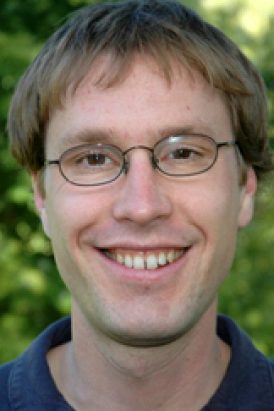
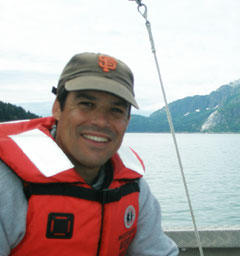
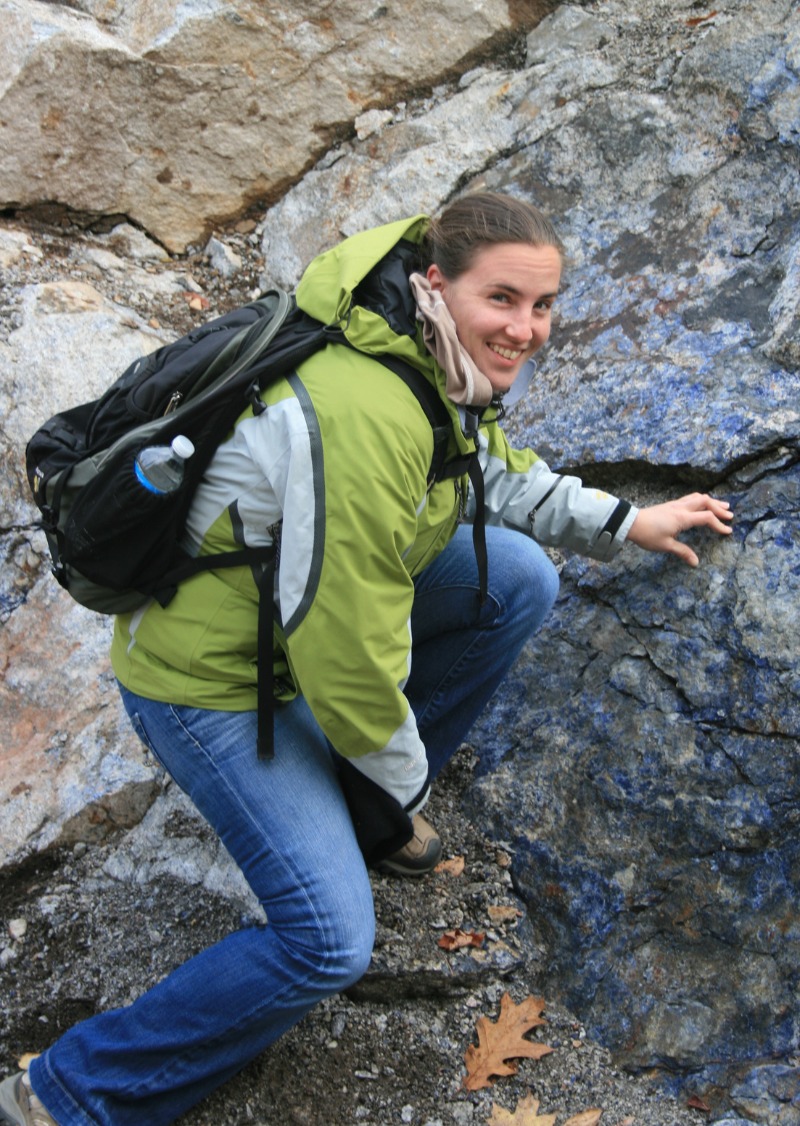
Mark Flanner is Professor of Climate and Space Sciences and Engineering at the University of Michigan's College of Engineering, with a joint appointment in Earth and Environmental Sciences. His research focuses on cryospheric processes, radiative transfer modeling, and climate system feedbacks, particularly involving snow and ice albedo. He holds a PhD in Earth System Science from UC Irvine and a BS in Biomedical Engineering from the University of Wisconsin. His work develops and refines physical representations of cryospheric processes in climate models including the Community Land Model and Energy Exascale Earth System Model. Research explores the impact of light-absorbing particles on snow/ice, machine learning applications for cryospheric remote sensing, and improving albedo parameterizations. Recent publications focus on Greenland ice sheet albedo, sea ice radiative effects, and novel detection methods for melting layers and biological impurities.
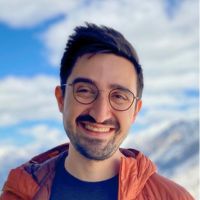
Zev Woodstock is an Assistant Professor in the Department of Mathematics & Statistics at James Madison University (JMU). His research focuses on nonsmooth optimization, splitting algorithms, machine learning, and monotone operator theory, with applications in data science, signal/image/audio processing, and large-scale optimization. He holds a PhD in Mathematics (2021) and MS in Applied Mathematics (2018) from North Carolina State University, and a BS in Mathematics (2016) from JMU. Previously, he was a postdoctoral researcher at the Interactive Optimization and Learning Lab at TU Berlin and Zuse Institute Berlin. Education PhD in Mathematics, North Carolina State University, 2021 MS in Applied Mathematics, North Carolina State University, 2018 BS in Mathematics, James Madison University, 2016 Research Interests Dr. Woodstock’s work spans optimization theory and applications, including convex/nonconvex optimization, fixed point algorithms, and signal recovery. He develops methods for solving nonlinear inverse problems using firmly nonexpansive operators, with contributions to variational inequality models, projection-based techniques, and block-iterative schemes. His applied work includes audio signal restoration, large-scale optimization, and machine learning infrastructure. Key Research Trends Recent publications emphasize efficient algorithms for linear minimization, asynchronous optimization frameworks, and robust signal recovery from inconsistent nonlinear data. His work bridges theoretical operator theory with practical applications in imaging, audio processing, and distributed computing. Awards and Grants Recipient of National Science Foundation Grants DGE-1746939 and CCF-1715671 for collaborative research in approximation theory and optimization. Labs and Collaborations Current affiliations include the Department of Mathematics & Statistics at JMU. Previously, he collaborated with the Interactive Optimization and Learning Lab at TU Berlin, focusing on convex optimization and algorithmic design.
Viridiane Fay is a researcher in the Institute of Modern Languages and Romance Studies at the University of Würzburg , specializing in French language practice and applied computational methods. During lecture periods, she holds office hours every Tuesday from 1 p.m. to 2 p.m., with appointments available during semester breaks. Role: French Editor, Language Practice Location: Am Hubland, 97074 Würzburg Contact: viridiane.fay@uni-wuerzburg.de Her research spans two distinct domains: French language pedagogy and computer vision/AI . While her institutional affiliation focuses on Romance Studies, her publication record reveals expertise in: Medical and underwater image processing Transformer-based architectures Federated learning and network optimization Watermarking and security algorithms Multi-modal AI applications Neuroscience signal analysis Recent work includes lightweight segmentation models (e.g., ContextFormer), drone/aerial imagery detection frameworks (CH-YOLO-Lite), and privacy-preserving AI systems (Find). Despite limited biographical details in the scrape, her 30+ publications since 2017 suggest significant technical contributions.
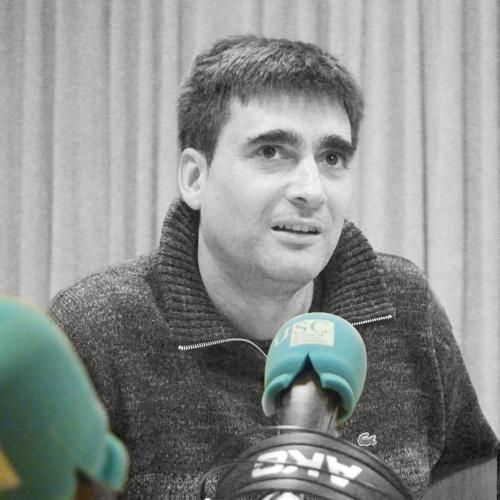
Jose Ramon Rios Viñuela is a Professor at the Department of Electronics and Computing, University of Santiago de Compostela, affiliated with the Higher Technical School of Engineering. He holds a PhD from the University of A Coruña (2003) for his thesis on spatio-temporal data management. His research focuses on spatial databases, environmental data integration, smart city technologies, geographic information systems (GIS), and spatio-temporal data modeling. Key projects include TRAFAIR (traffic-air quality analysis), COGRADE research group (computer graphics and data engineering), and GeoHbbTV frameworks for geospatial interactive media. He leads efforts in distributed spatial data processing, semantic interoperability, and sensor network integration for environmental monitoring. Notable contributions include frameworks like TAQE (traffic-air quality modeling), GeoSPARQL query systems, and MeteoSIX meteorological platforms. His work bridges earth sciences with public accessibility through smart environmental infrastructures, emphasizing citizen engagement and open data dissemination. Current research trends explore big data analytics for geospatial applications, federated environmental data systems, and low-cost sensor networks for urban sustainability. He collaborates on projects involving air quality forecasting (GRAL model), spatial join optimization in large data lakes, and semantic mediation of environmental observation systems. His academic contributions span over 60 peer-reviewed publications across GIS, database systems, and environmental informatics.
Prof. Filippo Santucci De Magistris is a Full Professor at the Department of Biosciences and Territory, University of Molise. His research focuses on geotechnical engineering, seismic vulnerability assessment, and soil-structure interaction, with emphasis on liquefaction mitigation, pipeline stability, and seismic site response analysis. His work integrates numerical modeling, experimental testing, and field investigations in complex geotechnical systems. Key research areas include: Constitutive modeling of geomaterials under dynamic loads Liquefaction risk assessment in urban and industrial contexts Seismic safety of critical infrastructure (pipelines, healthcare networks) Advances in site response analysis methodologies His publications (2021-2025) increasingly emphasize probabilistic frameworks for infrastructure resilience, innovative bounding surface models for advanced geotechnical simulations, and interdisciplinary approaches to disaster risk reduction. He leads the StregaDynaLab research group (www.stregadynalab.tk), focusing on dynamic geotechnical analysis and mitigation strategies for seismic hazards. Notable contributions include field reconnaissance after major earthquakes (2016 Central Italy, 2015 Nepal), validation of constitutive models in OpenSees, and development of empirical fragility functions for infrastructure components.
Adam Siade is an Adjunct Senior Research Fellow at the School of Earth and Oceans, The University of Western Australia. He holds a Ph.D. in Civil and Environmental Engineering from UCLA (2012), an M.Sc. from UCLA (2007), and a B.S. in Environmental Resources Engineering from Humboldt State University (2006). His research focuses on groundwater modelling, predictive uncertainty, and hydrogeological systems management. He leads the 'Securing the Future of our Groundwater Resources' project, collaborating with UWA, the Department of Water and Environmental Regulation, and CSIRO to improve groundwater management through advanced modelling techniques. Education: Ph.D., Civil and Environmental Engineering, UCLA (2012) M.Sc., Civil and Environmental Engineering, UCLA (2007) B.S., Environmental Resources Engineering, Humboldt State University (2006) Awards: Thomas William Warnock Outstanding ERE Graduate (2006) His research emphasizes model reduction, inverse modelling, and experimental design, with applications in Southern California and Western Australia. He has contributed to projects addressing aquifer recharge, reactive transport, and fault displacement effects on groundwater flow. He coordinates the GEOS5501 Groundwater Flow Modelling course and has secured grants totaling over AUD 10 million.
Joel D. Simon is a Researcher in the Global Geophysics group at Princeton University, specializing in developing software and methodologies to analyze seismic signals from ocean-based autonomous robots called MERMAID floats. He collaborates closely with Frederik J. Simons and contributes to the EarthScope-Oceans initiative, focusing on hydroacoustic data processing for global seismic tomography. His work integrates geophysical instrumentation, signal processing, and robotics to study Earth's interior through underwater earthquake observations. Education: Ph.D. in Geophysics (2020, institution unspecified in sources). Research interests include: Seismic tomography of the Earth's mantle using oceanic data Development of autonomous oceanic float systems (MERMAID) Hydroacoustic signal analysis and error modeling Key contributions include advancing MERMAID float technology for earthquake detection and improving methods for locating seismic events in oceanic environments. Labs/Teams: Active contributor to the EarthScope-Oceans project, maintaining open-source software repositories such as 'omnia' for time series analysis and 'automaid' for MERMAID data conversion.
Paula do Vale Pereira is an Assistant Professor of Aerospace Engineering at the University of Central Florida’s College of Engineering. She leads research in deep space exploration technologies, focusing on small spacecraft and probes for ocean worlds like Europa and Enceladus. Her work includes cryobot development for subsurface ice exploration and CubeSat mission design. Education: She holds a Ph.D. and M.S. in Aerospace Engineering from MIT, an M.S. in Thermal Sciences from MIT, B.S. degrees in Mechanical Engineering and Business/Management. Prior roles include Assistant Professor at Florida Institute of Technology, Visiting Researcher at NASA JPL, and internships at Facebook Connectivity Labs and Stone Aerospace. Research Interests: Her studies bridge planetary science and engineering, emphasizing thermal systems for extreme environments, CubeSat applications, and mission architecture for ocean worlds. She collaborates with NASA’s Outer Planets Assessment Group and chairs AIAA Small Satellite Technical Committee’s Technical Affairs Subcommittee. Publications & Awards: Over 30 papers, 600+ citations, 2 book chapters, and patents. Recognitions include the AAS Molly Macauley Award, TVML Fellowship, and Amelia Earhart Fellowship. Her work spans NASA-funded projects and industry partnerships. Professional Activities: Leads the Ocean Worlds Working Group’s Technology Subgroup, participates in AIAA committees, and advises on CubeSat missions. Her research team develops open-source tools for CubeSat control systems and thermal modeling frameworks.
Tarek Elgohary is an Associate Professor in the Department of Mechanical and Aerospace Engineering at the University of Central Florida (UCF). He serves as Director of the Astrodynamics and Space Robotics Laboratory, focusing on space systems research. Prior to joining UCF, he held postdoctoral and visiting scholar positions at Texas A&M University and the University of California, Irvine. His research spans astrodynamics, optimal control, robotics, and space situational awareness. Ph.D. in Aerospace Engineering – Texas A&M University M.S. in Aerospace Engineering – Texas A&M University B.S. in Mechanical Engineering – American University in Cairo Elgohary's research employs advanced computational methods including radial basis functions, machine learning, and analytical perturbation techniques. His work addresses space navigation, uncertainty propagation, and robotic systems for spacecraft motion emulation, with recent focus on cislunar orbit modeling and space debris tracking. His publications demonstrate trends in machine learning applications for orbital mechanics, uncertainty quantification , and space situational awareness . Key methodologies include physics-informed neural networks, octree-based coverage algorithms, and adaptive variational iteration techniques. Heep Fellowship (2013-14) Aerospace Engineering Graduate Fellowship (2012-13) Regents Fellowship (2008-09) Elgohary's laboratory develops algorithms for space exploration missions, including lunar dust mitigation strategies and autonomous spacecraft control systems. His team works on hardware-in-the-loop testing for flight validation and parallel computing architectures for space domain awareness.
David Tallmon is an Associate Professor & Department Chair in the Natural Sciences Department at the University of Alaska Southeast. He also serves as a Research Scientist at the Institute of Arctic Biology, University of Alaska Fairbanks. His research focuses on evolutionary and ecological dynamics of natural populations using genetic, demographic, and field data, with a particular emphasis on phenotypic plasticity and climate change impacts on salmon populations. Education: Ph.D. in Ecology, University of Montana (2001) M.S. in Ecology, University of Montana (1995) B.A. in Biology, University of California, Santa Cruz (1992) Research Interests: Evolutionary ecology, conservation genetics, population genomics, and climate change effects on salmon migration timing. Current projects include studying color variation in sculpins, monitoring effective population size, and analyzing climate-driven shifts in salmon life histories. Research Contributions: Pioneered methods for estimating effective population size (e.g., ONeSAMP software) and explored genetic rescue strategies. His work integrates genetic data with ecological observations to address conservation challenges in fisheries and Arctic ecosystems. Affiliations: Active in interdisciplinary collaborations, including the Institute of Arctic Biology and the University of Alaska Southeast’s Biology & Marine Biology Program.
Jonathan Fram is an Associate Professor (Senior Research) at Oregon State University's College of Earth, Ocean, and Atmospheric Sciences (CEOAS), serving as Project Manager for the Ocean Observatories Initiative (OOI) Endurance Array. His research focuses on environmental fluid mechanics and the physical processes influencing nutrient dynamics in marine ecosystems. He holds an M.S. and Ph.D. in Civil & Environmental Engineering from UC Berkeley, followed by postdoctoral work at UC Santa Barbara and the University of Hawaii. His career includes roles as a systems engineer for OOI (2011-2018) and contributions to the Kilo Nalu Cabled Observatory. Fram’s work emphasizes cross-national collaboration and innovative data practices for ocean observation systems. Education: Ph.D. in Civil & Environmental Engineering, UC Berkeley M.S. in Civil & Environmental Engineering, UC Berkeley Research Interests: Environmental fluid mechanics Coastal and ocean dynamics Biogeochemical process interactions Instrumentation and data best practices Marine heatwaves and hypoxia events His research combines field observations with advanced sensor technology to study coastal-ocean interactions and climate impacts. Key Projects: OOI Endurance Array management Development of biogeochemical sensor protocols Cross-networked observations for marine heatwaves Grants & Advising: Co-PI for OOI Endurance Array Experience in systems engineering and observatory design Labs & Facilities: OOI Endurance Array operations Regional Class Research Vessel (RCRV) coordination
Sarah Brownlee is an Associate Professor in the Department of Environmental Science and Geology at Wayne State University's College of Liberal Arts and Sciences. Her research focuses on understanding the elastic properties of crustal materials and their seismic anisotropy, linking mineralogy and microstructure to geophysical observations. Education: A.B., Princeton University (2003) Ph.D., University of California, Berkeley (2009) Research Interests: Seismic anisotropy in continental crust Crystal preferred orientation (CPO) in rocks Integration of mineral physics and tectonic processes Development of visualization tools for elasticity tensors Scientific Awards: 2018 CLAS Award for Excellence in Undergraduate Mentoring 2018 University Career Development Chair Award Courses Taught: Mineralogy (ESG2130) Petrology (ESG3160) Geology: The Science of the Earth (ESG1010) Seminar: Environmental Science and Geology (ESG6100) Notable Contributions: Development of the TVGuide web tool for 3D tensor visualization Collaborative research on gneiss dome exhumation mechanisms Studies on radon emanation from zircon and its geological implications
Dr. David Melon Fuksman is a researcher at the Planet and Star Formation Department of the Max Planck Institute for Astronomy in Heidelberg, Germany. His work focuses on protoplanetary disks , radiative transfer , planet formation , and numerical fluid dynamics . Contact: +49 6221 528-403, Room 308/2 Research Interests include the study of protoplanetary disk dynamics, radiation hydrodynamics, and numerical simulations of planet formation processes. He also investigates high-energy astrophysical phenomena such as gamma-ray bursts and neutrino production in extreme environments. Publication Trends (15 most recent) span computational astrophysics, radiation hydrodynamics, and multiwavelength analysis of protoplanetary disks. His recent work (2025-2024) emphasizes three-temperature models , spiral structures , and implicit solvers for disk-planet interactions, while earlier studies (2023-2013) explore neutrino astrophysics , binary-driven hypernovae , and observational data analysis . Projects and Tools: Development of the PyPLUTO software package and the MATRICS solver, enabling advanced simulations of astrophysical systems.
Omayma Alqatawneh is a Lecturer in Graphic Design at the Cambridge School of Art, Anglia Ruskin University. She joined in 2021 and specializes in teaching design software, user experience (UX), and speculative design. Her research focuses on design fiction, autonomous vehicles, and educative gaming for social issues like child sexual abuse and gender-based violence. Education: PhD in Design (2021), University of Huddersfield MSc in Computer Animation & Visual Effects (University of Bradford) BA in Graphic Design (Al Yarmouk University) Research Interests: Her work combines UX/UI design with speculative approaches, exploring how design fiction can address future technologies and societal challenges. She investigates serious games for behavioral change and persuasive technologies for social impact. Recent projects include developing prosocial games targeting gender-based violence and child sexual abuse prevention. Awards & Recognition: 1st Place Best Poster Award at MMU PGR Conference (2019) 2nd Place Best Poster Award at Huddersfield PGR Conference (2019) Teaching & Supervision: Teaches modules like Graphic Design Specialism, Web Design, and Final Year Portfolio. Supervises PhD candidates in design innovation, speculative design, and UX research. Advocates integrating emerging technologies into pedagogy and industry collaboration. Key Contributions: Presents at global conferences including MIT's Sustainable UX Symposium and ARCOM Doctoral Workshop. Her research bridges design theory with practical applications in healthcare, education, and future technology adoption.
Dr. Donna Therese Gronn is a researcher at the School of Education, Faculty of Education and Arts, Australian Catholic University. Her work focuses on educational technology integration across diverse learning environments, particularly examining technology use in early childhood education and teacher training contexts. Research areas include: Digital technology's role in home-school connectivity ICT implementation in mathematics instruction Remote teacher mentoring through video conferencing Reverse mentoring dynamics between students and teachers Her publications span socio-ecological analyses of digital disparities, pedagogical applications of web conferencing, and innovative uses of video technology for teacher professional development. Collaborative research projects with colleagues like Romeo, Scott, and Henderson highlight her team-based approach to educational technology challenges.