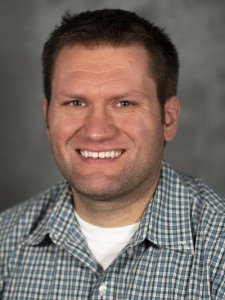
Paul Grogan is an Associate Professor at Arizona State University (ASU) within the School of Computing and Augmented Intelligence, part of the Fulton Schools of Engineering. He has held previous academic positions at Stevens Institute of Technology and completed postdoctoral research at MIT. His expertise spans strategic engineering, collaborative systems design, and Earth-observing space missions. Grogan leads research on distributed and decentralized systems, focusing on applications in space exploration, terrestrial infrastructure, and resource management. His work integrates design science, economics, and information science to improve cross-organizational collaboration in engineering design. Education: Ph.D. Engineering Systems, Massachusetts Institute of Technology (2014) S.M. Aeronautics and Astronautics, MIT (2010) B.S. Engineering Mechanics, University of Wisconsin-Madison (2008) Research Interests: Grogan’s research emphasizes design theory , collaborative engineering , and modeling/simulation . His team develops frameworks for analyzing distributed systems, such as satellite constellations and infrastructure networks. Key areas include: Game-theoretic approaches to resource allocation Strategic decision-making in multi-stakeholder environments Simulation tools for space logistics and Earth science missions Awards: National Science Foundation CAREER Award (2020) NDSEG Fellowship (2010) Robert C. Byrd Honors Scholarship (2003) Advising & Grants: Grogan oversees research grants totaling over $5M, including NASA-funded projects on new observing strategies and Earth science missions. He advises graduate students and collaborates with organizations like SpaceNet and the Institute for Data, Systems, and Society . His lab (CODE Lab) develops tools like the Tradespace Analysis Tool for Constellations (TAT-C) . Labs & Teams: He directs the CODE Lab , focusing on collaborative design experiments, digital twins, and space system architecture. Ongoing projects include the New Observing Strategies Testbed (NOS-T) for Earth science mission simulation.
Mary R. Albert is a Professor of Engineering at Dartmouth College's Thayer School of Engineering and serves as Executive Director of the US Ice Drilling Program. She holds a BS in Mathematics from Pennsylvania State University (1975), BE and MS in Engineering Sciences from Dartmouth (1983), and a PhD in Applied Mechanics from UC San Diego (1991). Her research focuses on snow/firn physics, ice core analysis, climate adaptation, and polar engineering. She has pioneered innovations in ice drilling technologies and led major Antarctic and Greenland expeditions. Dr. Albert has received prestigious awards including the National Research Council's Lifetime National Associate designation and the IEEE Best Journal Paper Award. Her work bridges engineering and climate science, addressing challenges like energy transitions in Arctic communities and climate adaptation strategies for coastal regions. She chairs key committees such as the US National Committee for the International Polar Year and serves on the National Science Foundation's Polar Programs Advisory Committee. Notable projects include the Norwegian-US Antarctic Traverse and the WAIS Divide Ice Core Project. Dr. Albert's contributions extend to education and policy, co-leading the Joint Science Education Project and developing decision-making tools for federal climate adaptation initiatives. She actively collaborates across disciplines, integrating technical innovation with environmental stewardship in polar regions.
James France is a Senior Research Fellow in the Department of Earth Sciences at Royal Holloway University of London and collaborates with the Environmental Defense Fund. His work focuses on greenhouse gas emission quantification, atmospheric methane dynamics, and method development for source attribution. He holds a PhD in snowpack photochemistry from University of London and a 1st Class MSci in Geosciences. PhD Thesis: Chemical Oxidation in Snowpack (2008) MSci: Geosciences (1st Class Honours, 2004) Research interests include mobile methane measurement systems, Arctic/Subantarctic methane dynamics, and planetary ice habitability studies. He has led projects such as the MOMENTUM initiative and contributed to the UNEP IMEO framework. Over 60 peer-reviewed publications and an h-index of ~28 reflect his impactful work. Recent projects involve methane monitoring campaigns in North Sea oil installations, Bolivian wetlands, and Central Africa, using mobile platforms. He also supervises MSc projects and lectures at the university. Prizes: Kirsty Brown Award (2006), Poster Prize (2006) Grants include NERC-funded initiatives like EMPreSS and MOMENTUM. His work contributes to UN SDGs related to climate action and sustainable development.
Prof. Dr. Christoph Schneider is a Professor of Climate Geography at Humboldt University of Berlin and currently serves as Vice President for Research (since August 2021). He holds positions in the Faculty of Mathematics and Natural Sciences, leading research in glaciology, climate dynamics, and urban climate modeling. His work spans field studies in Patagonia, the Himalayas, and Antarctica, focusing on glacier mass balance, atmospheric interactions, and climate change impacts. Schneider has contributed to developing open-source models like COSIPY and OSARIS for cryospheric and urban environmental studies. Research interests include climate change effects on glaciers, urban air quality, and interdisciplinary approaches linking geoscience with socio-environmental systems. He has led international projects, such as the German [UC]² urban climate initiative, and serves on editorial boards for journals like Journal of Glaciology and Meteorologische Zeitschrift . His recent work explores glacial lake hazards in High Mountain Asia and urban development impacts on thermal comfort. Academic roles include former Dean of Studies at Humboldt University’s Geographical Institute and leadership in collaborative research on climate adaptation. Grants and collaborations span climate modeling, sensor networks, and interdisciplinary urban studies.
Dr. Paul Mann is an Associate Professor in the Geography and Environmental Sciences Department at Northumbria University. His research focuses on Arctic biogeochemistry, permafrost dynamics, and environmental monitoring. He holds a PhD in Marine Biogeochemistry (2010) from an unspecified institution, an MSc in Oceanography (2004), and a BSc in Marine Biology (2000). Key research interests include: Permafrost carbon cycling and greenhouse gas emissions Arctic river and coastal processes Climate change impacts on polar ecosystems Community-based environmental monitoring Recent work emphasizes: Collaborative partnerships with Indigenous communities Lateral carbon dynamics in Siberian permafrost regions Modeling snowpack-carbon interactions in Arctic environments He has participated in major conferences like Goldschmidt 2021 and multiple EGU General Assemblies. His research projects include the CACOON initiative studying Arctic coastal dynamics.
Mark Serreze is a Distinguished Professor of Geography at the University of Colorado Boulder, serving as the Director of the National Snow and Ice Data Center (NSIDC) and a Fellow of the Cooperative Institute for Research in Environmental Sciences (CIRES). He has been at the forefront of Arctic climate research for decades, with his work increasingly focused on documenting and understanding the rapid environmental transformations occurring in the polar regions. As Director of NSIDC, he oversees a team of approximately 70 programmers, data specialists, and scientists who provide critical analysis of Arctic sea ice conditions and other cryospheric data. His research and leadership position him as a key figure in translating complex climate science for both scientific and public audiences. Education Ph.D. in Geography, University of Colorado at Boulder (1989) Research Interests Dr. Serreze's research spans multiple aspects of Arctic climate science, with particular expertise in atmosphere-sea ice interactions, synoptic climatology, boundary layer problems, and climate change . His field work has taken him to the Canadian Arctic to study sea ice and icecaps, as well as the Alaskan tundra. Over the past decade, his research has increasingly focused on understanding the rapid environmental changes being observed across the Arctic region. He currently leads the Arctic Rain on Snow Study (AROSS) , a project within the National Science Foundation's Navigating the New Arctic (NNA) initiative, which investigates the distribution, severity, and changing frequency of rain-on-snow and melt-refreeze events in the Arctic and their wide-ranging impacts. His work demonstrates how these rain-on-snow events can have catastrophic consequences for Arctic ecosystems, creating ice layers that prevent caribou and reindeer from accessing food, leading to population crashes that subsequently affect predators and Indigenous communities dependent on these animals. This research exemplifies his approach of connecting fundamental climate processes to their broader environmental and societal implications. Research Trends Analysis of Dr. Serreze's recent publications reveals a clear trajectory from studying fundamental Arctic climate processes to examining the cascading effects of climate change across interconnected systems. His work increasingly integrates observational data with climate modeling to understand and predict Arctic changes. A dominant theme is the accelerating transformation of the Arctic environment , with sea ice extent declining by approximately 50% since the 1980s and precipitation patterns shifting toward more rain and less snow. This research demonstrates how changes once considered theoretical are now being observed in real-time, with profound implications not just for the Arctic but for global climate systems. His publications show particular attention to how these changes affect Indigenous communities and traditional ways of life, reflecting a growing emphasis on the human dimensions of Arctic climate change. Scientific Recognition Dr. Serreze's contributions to climate science have been widely recognized through numerous prestigious awards: 2019: Named a University of Colorado Distinguished Professor by the Board of Regents 2017: Named Professor of Distinction, University of Colorado, Boulder 2014-2017: Thompson Reuters Highly Cited Researcher Award (ranking among top 1% of researchers in his field) 2014: Elected Fellow of the American Meteorological Society 2015: American Meteorological Sigma-XI Distinguished Lecturer 2018: Author of "Brave New Arctic, the Untold Story of the Melting North" Mentorship and Research Leadership Dr. Serreze has advised multiple graduate students including Ethan Carr, Zaria Cast, and Jonathon Cavitt. He has consistently taught courses at CU Boulder such as "Arctic Environment," "Our Changing Planet: Climate and Vegetation," and "The Arctic Climate System." His current research extends beyond traditional academic boundaries, with significant emphasis on science communication and public engagement . As Director of NSIDC, his team provides year-round analysis of Arctic sea ice conditions, with near real-time updates that inform both scientific research and public understanding of climate change. His leadership of the Arctic Rain on Snow Study exemplifies his approach to addressing complex climate challenges through interdisciplinary collaboration, bringing together atmospheric scientists, ecologists, and social scientists to understand the full implications of changing precipitation patterns in the Arctic. Research Infrastructure As Director of the National Snow and Ice Data Center, Dr. Serreze oversees one of the world's premier facilities for cryospheric data. NSIDC processes and analyzes satellite data to provide near real-time monitoring of Arctic sea ice extent, with regular scientific analysis of evolving conditions. The center plays a critical role in maintaining long-term climate records and developing tools for researchers worldwide. Under Serreze's leadership, NSIDC has expanded its focus to include not just data archiving but active interpretation and communication of climate trends, making complex scientific information accessible to policymakers and the public.
Philippe Huybrechts is a Professor of glaciology and climatology at the Vrije Universiteit Brussel (VUB), affiliated with the Department of Geography. He concurrently holds a part-time guest professorship at KU Leuven. His research focuses on numerical modeling of ice-climate interactions, emphasizing the dynamics of Antarctic and Greenland ice sheets, sea-level rise, and glacier evolution. He directs field programs on glaciers in Switzerland (Morteratsch), the Caucasus, and Tien Shan. Research interests span ice sheet modeling , paleoclimatology , and glacier mass balance , with applications to understanding past and future climate impacts. His work integrates field data with 3-D thermomechanical models to project ice-sheet responses to anthropogenic warming. Recent articles reveal a strong focus on IPCC climate scenarios (CMIP5/CMIP6), ice-sheet contributions to sea-level rise, and glacier dynamics in Central Asia. Trends include high-resolution modeling of glacial systems, UAV-based mass balance measurements, and paleoclimate reconstructions. He actively contributes to major scientific assessments as a Lead Author for IPCC reports (AR5, AR6) and holds leadership roles including President of the Belgian National Committee for Geodesy and Geophysics. He leads field campaigns and collaborates on international projects like ISMIP6. No specific grants or student advisees are detailed in the source text.
Marc Rubin is an Assistant Professor of Computer Science in the Math & Computer Science Department at Western Colorado University, where he combines teaching and interdisciplinary research. He holds a PhD from Colorado School of Mines (2014), an MS in Computer Science from University of Tennessee (2009), and an MS in Cybersecurity from Georgia Institute of Technology (2023). His academic career spans research in avalanche forecasting, wireless sensor networks, and machine learning applications in geosystems. Education: PhD, Colorado School of Mines, Computer Science (2014) MS, University of Tennessee, Computer Science (2009) MS, Georgia Institute of Technology, Cybersecurity (2023) BA, Colorado College, Psychology (2005) Rubin's research focuses on using computational methods to solve complex environmental challenges. His work includes: Developing wireless seismic sensor systems for avalanche detection Applying machine learning algorithms to analyze snowpack weaknesses Creating "smart probe" technology for snowpack analysis Exploring interdisciplinary collaborations in geophysics and engineering His expertise spans machine learning, software engineering, and embedded systems. Notable publications include: 2016 IEEE paper on seismic data compression 2015 ICNC presentation on intelligent geosystems 2014 Avalanche Review paper on AvySenseNet Scientific honors include: NSF IGERT Fellowship American Avalanche Association Graduate Student Research Grant At Western Colorado University, Rubin teaches courses ranging from introductory computer science to advanced topics like: Machine Learning (CS 303) Software Engineering (CS 412) Internet of Things (CS 380) Web Application Development (CS 250/350)
Gabriele Baroni is a Postdoctoral Researcher in the Department of Computational Hydrosystems at the Helmholtz Centre for Environmental Research - UFZ in Leipzig, Germany, with guest affiliation at the University of Potsdam. His research focuses on hydrological modeling, soil moisture dynamics, and innovative measurement techniques using cosmic-ray neutron sensing. His research interests include: Hydrological models and scaling effects Soil moisture and local controls Cosmic-Ray neutron sensing Sensitivity analysis Data assimilation Agricultural water management and irrigation systems Dr. Baroni's publication record demonstrates expertise in applying cosmic-ray neutron sensing to hydrological problems, with focus on soil moisture monitoring, snowpack dynamics, and agricultural water management. His work often involves sophisticated sensitivity and uncertainty analysis approaches to improve hydrological modeling across different spatial scales. He has advised numerous Master's and Bachelor's students on topics related to soil moisture monitoring, irrigation systems, and hydrological modeling. His teaching experience includes courses on agricultural hydrology, uncertainty analysis, and water transport in porous media at both the University of Potsdam and the University of Milan.
David Lutz is an Assistant Professor at Colby-Sawyer College's School of Arts & Sciences since 2023. Previously, he served as a Research Assistant Professor at Dartmouth College. He holds a Ph.D. and M.S. in Environmental Sciences from the University of Virginia and a B.S. in Biology from Wake Forest University. His research focuses on remote sensing of the environment , forest ecology , and ecosystem services , with field applications in tropical, temperate, and boreal forests. He employs satellite imagery , wireless sensor networks , and machine learning to study environmental change. Dr. Lutz has published over 30 peer-reviewed manuscripts in journals including Nature , Proceedings of the National Academy of Sciences , and Environmental Research Letters . His work has been funded by NASA , the U.S. Forest Service , and the National Science Foundation . He has served as a peer reviewer for 20+ journals and presented at international conferences. He teaches environmental science , GIS and remote sensing , and environmental chemistry courses. His interdisciplinary approach combines ecological modeling , climate policy , and freshwater ecosystem analysis .
Joseph Shea is an Associate Professor in the Department of Geography, Earth and Environmental Sciences at the University of Northern British Columbia (UNBC), where he leads the Mountain Snow Hydrology (MOSH) Lab. He is affiliated with the NRES Graduate Program and teaches courses in geospatial analysis, earth observation, and mountain systems. Currently on sabbatical, he remains actively engaged in research and graduate supervision. PhD, University of British Columbia (2010) MSc, University of Calgary (2004) BSc, McMaster University (2001) His research focuses on snow, glaciers, and hydrology in mountain regions under climate change, using remote sensing, UAVs, and field measurements. He investigates snow water equivalent, glacier mass balance, and hydrological responses in the Himalayas, Canadian Rockies, and British Columbia. His work integrates geospatial technologies with environmental modeling to understand cryospheric changes. Recent publications highlight trends in UAV-based glacier mapping, debris-covered glacier dynamics, snowmelt timing from satellite data, and interdisciplinary studies on equity in science. His work spans glaciology, hydrology, climate change, and environmental geomatics, with increasing emphasis on open data and collaborative science. Scientific Awards: No awards listed in the provided text. Dr. Shea supervises MSc and PhD students in the NRES program and has advised multiple theses on snow, glaciers, and hydrology. He leads field projects in Nepal and Canada and collaborates on large-scale assessments such as The Canadian Mountain Assessment . His lab, MOSH Lab, emphasizes open-source tools and field-based research. Current projects include snowpack monitoring in the Robson Valley, glacier studies in Langtang, and UAV applications in cold regions.
Erika Zavaleta is a Professor of Ecology and Evolutionary Biology at the University of California, Santa Cruz (UCSC), affiliated with the College of Biological Sciences. She leads the Conservation Science & Stewardship Lab, focusing on global change ecology, biodiversity conservation, and equitable conservation practices. Her work bridges ecological theory with applied conservation, emphasizing climate adaptation, ecosystem resilience, and social-ecological justice. Education: BA/MA in Anthropology and PhD in Biological Sciences from Stanford University (1995–2001). Roles: Director of the Doris Duke Conservation Scholars Program, Founder of CAMINO (Center to Advance Mentored, Inquiry-Based Opportunities), and member of the California Fish and Game Commission. Recognized as an HHMI Professor and ESA Fellow. Research: Studies climate impacts on alpine species (e.g., Rosy-Finches), biodiversity loss, and conservation strategies. Recent work addresses inequities in coastal restoration and Indigenous land management practices. Collaborates with NGOs, agencies, and communities to integrate science into policy. Awards: ESA Excellence in Ecology Scholar (2021), Commitment to Human Diversity in Ecology Award (2021), MacArthur Chair (2021), and Howard Hughes Medical Institute Professorship (2017). Education Initiatives: Champions inclusive field education, mentorship programs, and anti-racist reforms in STEM. CAMINO supports underrepresented students through research internships and peer networks. Key Projects: UC Center for Climate-Adaptive Biodiversity Conservation, cultural burning partnerships with Indigenous communities, and evaluations of climate adaptation policies.
Dr. Wolfgang Gurgiser is a prominent researcher at the University of Innsbruck, serving as Scientific Coordinator and communicator for mountain region studies. He specializes in glaciology, climate change impacts, and hydrological processes in mountainous regions. His work spans both academic research and public engagement, organizing events like the International Mountain Conference series and contributing to projects such as the Innsbruck Network on Weather and Climate Research (IWCR). He actively communicates scientific findings through media appearances, public lectures, and interdisciplinary collaborations. Key research focuses include glacier dynamics at high resolution, water availability in the Peruvian Andes (AgroClim project), and climatic changes affecting mountain ecosystems. Recent studies address Carpathian forest developments, bibliometric trends in mountain research, and the socio-ecological implications of precipitation changes in tropical regions. His collaborative work involves institutions across Europe and South America. Gurgiser has authored over 20 peer-reviewed articles since 2013, with contributions to journals like Earth System Dynamics , The Cryosphere , and PLoS One . He advises on climate policy and engages the public through lectures on topics like glacier retreat, climate adaptation, and sustainable alpine development.
Oliver Frauenfeld is a Professor and Director of Undergraduate Programs at the College of Arts and Sciences, Texas A&M University. His research focuses on climate change impacts on permafrost dynamics, land use/cover changes, and cryosphere-atmosphere interactions in the Northern Hemisphere and Tibetan Plateau regions. He leads the Water Program at Texas A&M, emphasizing interdisciplinary approaches to environmental challenges. Key research areas include permafrost degradation, Arctic freshwater dynamics, and the biogeophysical effects of land cover changes. His work integrates climate modeling, remote sensing, and field observations to assess environmental changes and their socio-economic implications. Publications highlight trends in permafrost-area shrinkage, thermokarst lake evolution, and infrastructure vulnerability due to thawing permafrost. His studies utilize large Earth System Model ensembles to disentangle natural vs. anthropogenic climate forcings. While no formal awards are listed, his extensive publication record reflects significant contributions to cryospheric sciences. Advising/mentoring and grant activities are not explicitly detailed in available texts, though his role as program director suggests active academic leadership. Laboratory and fieldwork affiliations include the Water Program and collaborations in the Qilian Mountains and Tibetan Plateau, focusing on mountain permafrost systems and hydrological monitoring.
Colin Zarzycki is an Associate Professor in the Department of Meteorology and Atmospheric Science at Pennsylvania State University, affiliated with the College of Earth and Mineral Sciences. His research focuses on simulating extreme atmospheric phenomena, bridging weather and climate scales through high-resolution modeling techniques. Key areas include tropical cyclone dynamics, regional climate prediction, dynamical core development, and software engineering for petascale computing. He has contributed to advancing climate models like the Community Earth System Model (CESM) and HighResMIP2 framework, with a focus on improving detection of weather extremes in big climate data. Recent work emphasizes tropical cyclone characteristics, atmospheric river impacts, and rain-on-snow flood event analysis. His research integrates machine learning (e.g., LSTM networks) and feature tracking methods to enhance predictive accuracy. Collaborations span institutions globally, addressing challenges in climate model validation and parameterization schemes for turbulence and surface fluxes. Zarzycki’s work has been featured in prominent journals like Geoscientific Model Development and Journal of Climate . He actively engages in public discourse on climate change impacts, including media contributions on hurricane activity and regional snowpack changes. His interdisciplinary approach combines computational innovation with observational data integration, positioning him at the forefront of climate modeling advancements.