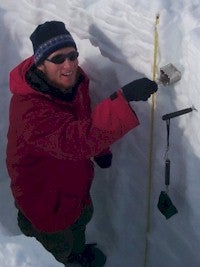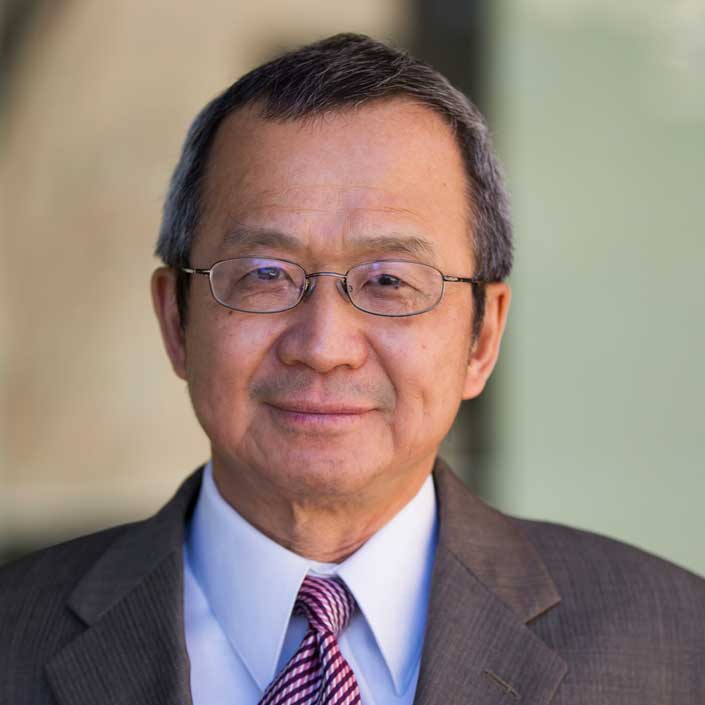
Leung Tsang is a Professor of Electrical Engineering and Computer Science at the University of Michigan, Ann Arbor, holding the Robert J. Hiller Professorship of Engineering. He received his SB, SM, EE, and Ph.D. from MIT. His academic career includes positions at Texas A&M University (1980-1983), University of Washington (1983-2014) as Professor and Department Chair (2006-2011), and a visiting Professorship at City University of Hong Kong (2001-2004). He has served as Editor-in-Chief of IEEE Transactions on Geoscience and Remote Sensing and President of the Electromagnetics Academy and IEEE Geoscience and Remote Sensing Society. His research focuses on microwave remote sensing , multiple scattering theory , electromagnetic wave propagation in random media , photonic crystals , and signal integrity . His work spans theoretical advancements (e.g., radiative transfer theory, UV multi-level methods) and practical applications (e.g., snow parameter retrieval, ocean foam modeling, via coupling analysis). Key trends include Development of computational techniques for large-scale scattering problems Integration of neural networks for inversion in remote sensing Investigation of backscattering enhancement and polarimetric signatures Notable awards include Fellow of IEEE and Optical Society of America William T Pecora Award (2012) Van De Hulst Light Scattering Award (2018) Membership in the National Academy of Engineering (2020) His group utilizes high-performance computing resources, including the Flux HPC cluster at the University of Michigan and XSEDE allocations, with specialized nodes for electromagnetic modeling. Current students include Ruoxing Gao (electromagnetic theory), Firoz Borah (snow remote sensing), Jongwoo Jeong (forest scattering), and Zhenming Huang (snow modeling).