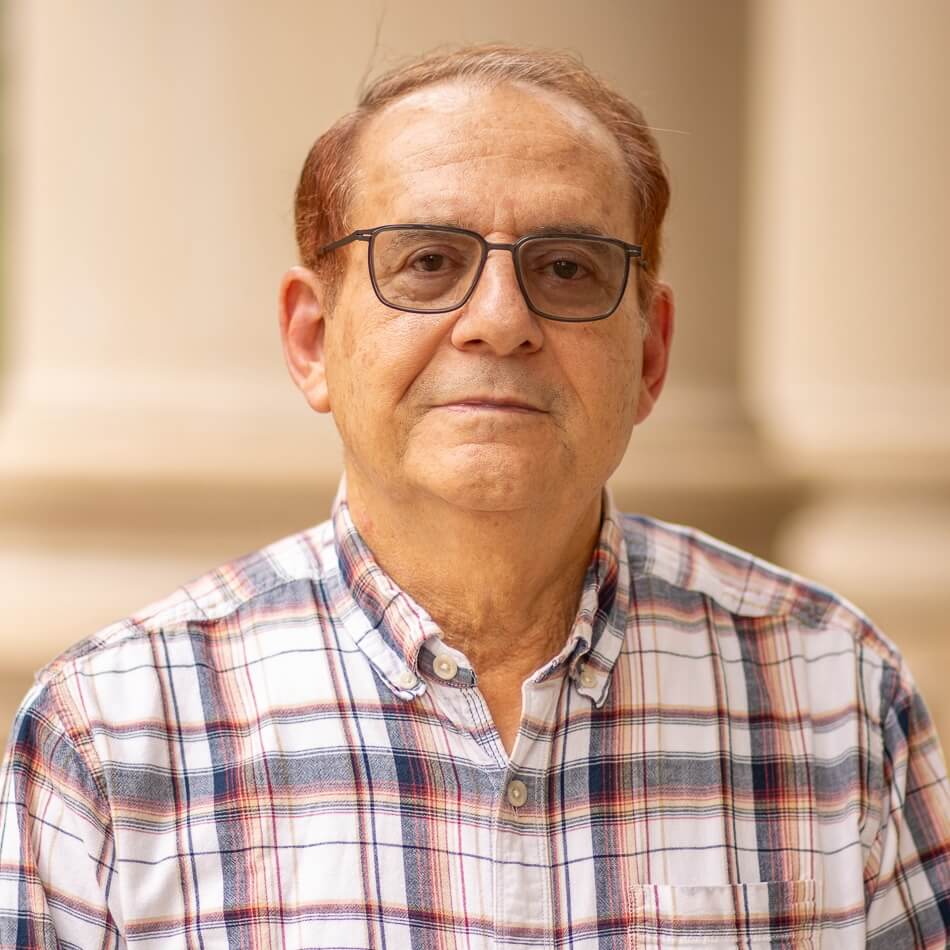
Professor Stacy Marsella is a Cognitive Neuroimaging researcher at the University of Glasgow with a distinguished career in computational modeling of human cognition, emotion, and social behavior. Her work bridges computer science, cognitive psychology, and artificial intelligence to create sophisticated virtual human systems. Her research interests focus on computational modeling of cognition, emotion and social behavior, with particular emphasis on the interplay between emotion and cognition, Theory of Mind (modeling beliefs about others' mental processes), and the role of nonverbal behavior in face-to-face interaction. She has pioneered applications in virtual human design, where software entities interact with humans using spoken dialogue in virtual environments, and large-scale social behavior simulation. Analysis of her 15 most recent publications reveals a consistent focus on virtual human technologies, social interaction modeling, and decision-making processes. Her work spans multiple disciplines including affective computing, human-computer interaction, cognitive science, and artificial intelligence, with particular strength in gesture generation, social virtual reality, and computational models of human behavior under stress. Recent work shows increasing application to real-world problems like hurricane evacuation decisions, supply chain management, and public speaking training. Professor Marsella has supervised postgraduate students including Marion Roth and Tobias Thejll-Madsen, and has worked with research assistants Stephanie Cheng, Amol Deshmukh, and Alessandro Vinciarelli. Her significant research is supported by multiple major grants including from EPSRC and DARPA. She leads research funded by three major grants: 'From data and theory to computational models of more effective virtual human gestures' (EPSRC, 2020-2022), 'AGENTS with Theory of Mind for Intelligent Collaboration (ATOMIC)' (DARPA, 2019-2023), and 'Graphical Encoding of First Principles for Agent-Based Social Simulation (GEFPABSS)' (DARPA, 2018-2020). These projects reflect her leadership in developing advanced computational models of social cognition and virtual human technologies.