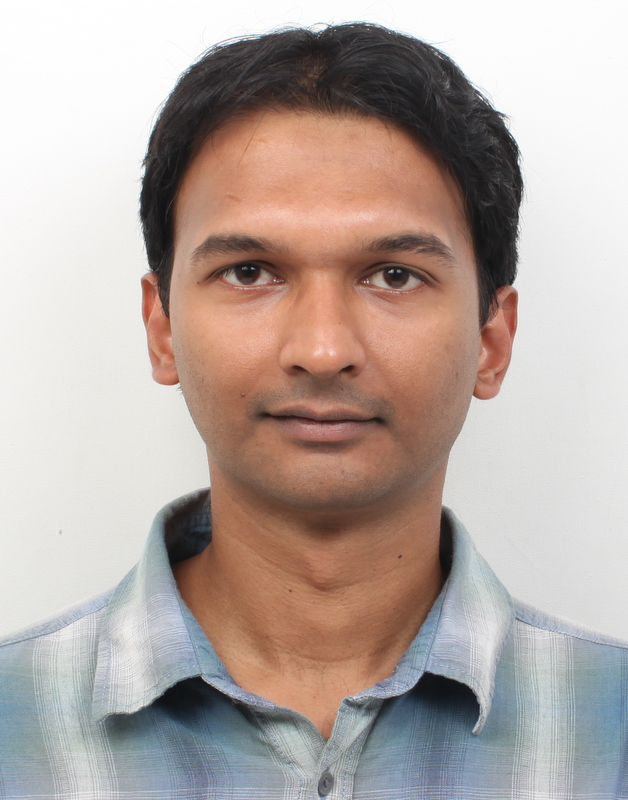
Shivaram Kalyanakrishnan is an Associate Professor at the Department of Computer Science and Engineering , Indian Institute of Technology Bombay , specialising in Artificial Intelligence and Machine Learning . His research spans sequential decision making , multiagent learning , multi-armed bandits , and humanoid robotics , with applications in robot soccer , computer games , and online advertising . He teaches advanced courses like CS 747: Foundations of Intelligent and Learning Agents and CS 748: Advances in Intelligent and Learning Agents , focusing on end-to-end system design and theoretical analysis. His scientific awards include the Best Student Paper Award at RoboCup International Symposium 2006 and nomination for Best Student Paper Award at AAMAS 2007 . His work on reinforcement learning and policy iteration has been published in leading venues such as IJCAI , ICML , and COLT , with recent contributions to railway scheduling and bandit algorithms. While no explicit list of advisees is provided, his research projects and publications suggest mentorship of students in collaborative efforts. Contact : shivaram@cse.iitb.ac.in .
Manik Varma is a Distinguished Scientist and Vice President at Microsoft Research India, and an Adjunct Professor at the Indian Institute of Technology Delhi. He is a Fellow of the Indian Academies of Science (IASc, INSA, NASI), the Indian National Academy of Engineering (INAE), and the Association for Computing Machinery (ACM). He has received prestigious awards such as the Shanti Swarup Bhatnagar Prize and Microsoft Gold Star Award. Education : BSc in Physics from St. Stephen's College (David Raja Ram Prize) BA in Theoretical Physics from the University of Oxford (Rhodes Scholar) DPhil in Computer Vision and Machine Learning from the University of Oxford (University Scholar) Post-doctoral Fellow at the Mathematical Sciences Research Institute (MSRI), Berkeley Visiting Miller Professor at UC Berkeley His research focuses on Machine Learning (Extreme Classification, Resource-efficient ML, Supervised Learning), Information Retrieval (Computational Advertising, Dense Retrieval, Recommender Systems), and Computer Vision (Image Search, Object Recognition). Recent work includes graph-regularized encoders, label variance reduction, and multimodal classification frameworks. His publications span extreme classification algorithms like NGAME , SiameseXML , and DECAF , with applications in IoT, web search, and recommendation systems. He leads a research group at Microsoft Research India and advises PhD students at IIT Delhi. Scientific Awards : Shanti Swarup Bhatnagar Prize (Government of India) Microsoft Gold Star and Achievement Awards WSDM 2019 Best Paper Prize BuildSys 2019 Best Paper Runner-up Fellow of ACM, IASc, INSA, NASI, INAE He has supervised numerous PhD students, including Sonu Mehta and Suchith Prabhu, and collaborates with institutions like Microsoft Research India, IIT Delhi, and UC Berkeley. His research has led to scalable solutions for billion-label classification and resource-constrained IoT applications.
Ming-Syan Chen is a distinguished academic holding dual roles as a Distinguished Research Fellow and Director of the Research Center for Information Technology Innovation (CITI) at Academia Sinica, Taiwan, and a Distinguished Professor jointly appointed across multiple departments at National Taiwan University (NTU), including Electrical Engineering (EE), Computer Science and Information Engineering (CSIE), and the Graduate Institute of Communication Engineering (GICE). His career spans academia and industry, with prior roles as a research staff member at IBM Watson Research Center and leadership positions in Taiwan's technology sector. Education: He earned a B.S. in Electrical Engineering from National Taiwan University, followed by M.S. and Ph.D. degrees in Computer, Information, and Control Engineering from the University of Michigan, Ann Arbor. Research Interests: Chen's work focuses on databases, data mining, machine learning, multimedia networking, and cloud computing. He has authored over 350 papers and holds numerous patents, contributing to foundational advancements in query processing, data management, and networked systems. Award Highlights: Recipient of ACM and IEEE Fellowships, National Chair Professorship (lifetime honor), Teco Award, Pan Wen Yuan Distinguished Research Award, and IBM's Outstanding Innovation Award. His contributions span research, teaching, and technology commercialization. Leadership & Service: Former Dean of NTU's College of Electrical Engineering and Computer Science, CEO of Taiwan's Networked Communication Program, and Editor-in-Chief of the International Journal of Electrical Engineering. He has chaired international conferences and served on editorial boards of journals like IEEE TKDE and VLDB. Labs & Teams: Leads the Network Database Laboratory and collaborates on national initiatives in information and communication technologies. His research groups focus on data science, distributed systems, and social network analysis.
David Martens is a Professor of Data Science at the University of Antwerp , where he directs the Applied Data Mining Research Group within the Faculty of Business and Economics . He also serves as Chair of the Department of Engineering Management and Director of the Antwerp Center on Responsible AI . His academic work spans data mining , interpretable machine learning , and the societal impact of AI . PhD in Applied Economic Sciences (KU Leuven, 2008) Director, Antwerp Center on Responsible AI Chair, Department of Engineering Management Martens' research focuses on responsible AI and data ethics , with applications in finance, public policy, and behavioral analysis. His recent publications emphasize counterfactual explanations , LLM interpretability , and privacy implications in AI systems. His articles reveal trends in Explainable AI (XAI) , including narrative-driven explanations , graph neural networks , and ethical challenges like monetization risks and algorithmic bias. Keywords span Computer Science , Artificial Intelligence , and Behavioral Data . Martens is a leading voice in data science ethics , authoring the book Data Science Ethics: Concepts, Techniques, and Cautionary Tales (Oxford University Press, 2022). He combines academic rigor with industry experience, having consulted for banks, telecom firms, and startups in fraud detection and digital advertising .
Martin Pesendorfer is a Professor of Economics at the Department of Economics, London School of Economics and Political Science (LSE). He specializes in Industrial Organization, Auctions, and Information Economics, with significant contributions to applied microeconomics. His research focuses on dynamic games, auction mechanisms, and strategic interactions in markets. He holds a PhD in Economics from Northwestern University and teaches advanced courses such as EC313 Industrial Economics and EC536 Economics of Industry for Research Students. Key research areas include the design of auctions, consumer demand modeling, and equilibrium analysis in dynamic settings. His work has been published in top journals like the American Economic Journal: Microeconomics, Econometrica, and the Review of Economic Studies. He has also contributed to practical applications such as analyzing mergers, procurement auctions, and retail pricing strategies. Pesendorfer’s teaching covers topics from industrial economics fundamentals to advanced microeconomic theory. His research spans theoretical and empirical methods, with recent emphasis on equilibrium multiplicity in dynamic games and omitted variable biases in demand models. He maintains an active presence in academic circles, contributing to research centers like STICERD's Economics of Industry Programme.
Associate Professor Steven Lu is a faculty member at the University of Sydney Business School, serving as Deputy Head of Discipline (Education). He holds a PhD in Marketing from the University of Toronto, an MA in Economics from York University, and a BA from Nankai University. His research focuses on quantitative modeling, machine learning, and big data analytics applied to digital economy challenges such as digital retailing, search advertising, and blockchain. He co-directs the Consumer Insights Research Group and is affiliated with the Sydney Institute of Agriculture. Dr. Lu has published in top journals including Marketing Science , Production and Operations Management , and Journal of Retailing . His awards include the CNS Vithala Rao Award, ANZMAC Best Paper Awards (2022-2024), and the 2021 Vice Chancellor's Teaching Award. He teaches courses on machine learning in marketing, marketing research, and new product development. He leads research grants such as 'The Era of Mobile Payment' (2021) and 'Digital Transformation of Food Sensory Quality' (2017). His advising focuses on topics like neural recommender systems, e-coupon effectiveness, and heterogeneous treatment effects analysis.
Krishna Gummadi is a Scientific Director and Professor at the Max Planck Institute for Software Systems (MPI-SWS) in Germany, where he leads the Networked Systems Research Group. He also holds a professorship at the University of Saarland, demonstrating his dual commitment to research and academic instruction in computer science. His educational background includes: Ph.D. in Computer Science and Engineering from the University of Washington (2005) B.Tech. in Computer Science and Engineering from the Indian Institute of Technology, Madras (2000) Gummadi's research spans networked and distributed computer systems with a current focus on social computing systems. His work addresses critical challenges in algorithmic fairness, privacy in social media, trustworthiness of online identities, and information dissemination in social networks. He approaches these problems through interdisciplinary methods combining user-centric studies, data-centric analysis, and systems-centric design to create practical solutions that enhance fairness, transparency, and user control in online platforms. His methodology integrates large-scale observational studies, computational modeling, and system implementation to tackle complex human-computer interaction challenges at societal scale. His recent publications reveal a strong emphasis on fairness in algorithmic decision making, with significant contributions to quantifying and addressing discrimination in machine learning systems. His work bridges computer science, social science, and ethics, creating frameworks for fair classification, understanding media bias, and developing privacy-preserving techniques that maintain functionality while protecting user data. The research demonstrates a progression from technical system design to addressing societal implications of computing systems. Among his notable scientific achievements: ERC Advanced Grant in 2017 for 'Foundations for Fair Social Computing' Test of Time Awards at ACM SIGCOMM and AAAI ICWSM Casper Bowden Privacy Enhancing Technologies (PET) and CNIL-INRIA Privacy Runners-Up Awards IW3C2 WWW Best Paper Honorable Mention Multiple Best Paper awards across prestigious conferences Gummadi has advised numerous PhD students and postdoctoral researchers who have gone on to prominent positions in academia and industry. His ERC Advanced Grant has supported extensive research into fair social computing, while his leadership in major conferences (including serving as General Chair for ICWSM 2016 and Program Chair for WWW 2015) has shaped research directions in the field. His teaching portfolio includes courses on Distributed Systems, Human-Centered Machine Learning, and Social Media Analysis. He leads the Networked Systems Research Group at MPI-SWS, which has developed several publicly available systems including tools for fair classification, privacy risk assessment, trust evaluation in social media, and information diet management. The group's work bridges theoretical advances with practical implementations that address real-world challenges in social computing, with numerous software releases and datasets made available to the research community.
Yang Wang is a Professor of Information Science and Computer Science (courtesy) at the University of Illinois at Urbana-Champaign (UIUC), where he co-directs the SALT lab and is part of the Interactive Computing group and Security and Privacy Research at Illinois (SPR@I). He holds affiliations with the Institute of Software Research (ISR) at UC Irvine and advises Conviva. His research spans AI governance, privacy, security, and inclusive technologies, focusing on marginalized populations such as people with disabilities and non-Western communities. Education: Ph.D. from the University of California, Irvine (UCI), under advisors Dr. Alfred Kobsa, Dr. André van der Hoek, and Dr. Gene Tsudik. Previous roles include Assistant Professor at Syracuse University and Research Scientist at Carnegie Mellon University’s CyLab. He has collaborated with institutions like Alcatel-Lucent Bell Labs, Intel Research, and Tsinghua University. Research interests include AI safety for children (aisafety4kids.org), inclusive privacy mechanisms, accessible authentication for visually impaired users, and policy implications of AI. Notable projects include Inclusive.AI (funded by OpenAI), privacy in smart homes, and drone privacy studies. Awards and grants include NSF SaTC awards, NSF CAREER, and industry partnerships with Meta/Facebook, Google, and OpenAI. His work has been featured in outlets like the New York Times and Wall Street Journal. Current PhD advisees include Smirity Kaushik and Yaman Yu, with notable alumni such as Dr. Yaxing Yao (now at Johns Hopkins) and Dr. Tanusree Sharma (Penn State). Labs/Teams: Co-director of the SALT lab, part of SPR@I and the Interactive Computing group at UIUC. Collaborates with industry and policy bodies, including the FTC.
Kartik Hosanagar is the John C. Hower Professor of Technology and Digital Business and a Professor of Marketing at The Wharton School, University of Pennsylvania. He is also the Co-Director of the Wharton Human-AI Initiative. His work spans the Department of Operations, Information and Decisions, focusing on the intersection of technology, business, and society. Education: PhD in Management Science and Information Systems, Carnegie Mellon University MPhil in Management Science, Carnegie Mellon University Masters in Information Systems, Birla Institute of Technology and Sciences (BITS, Pilani), India Bachelors in Electronics Engineering, Birla Institute of Technology and Sciences (BITS, Pilani), India Research Interests: Kartik’s research focuses on the digital economy, particularly the impact of AI, algorithms, and analytics on consumers, businesses, and society. His work explores internet marketing, e-commerce, digital media, information diffusion, platform economics, and the ethical implications of AI. He investigates how technology transforms business models and consumer behavior in online environments. Publication Trends: His recent research combines machine learning, causal inference, and behavioral modeling to study digital platforms, user behavior, and AI applications in marketing and operations. The articles reflect a strong focus on empirical analysis of social media, search engines, and platform design, with applications in advertising, content sharing, and product adoption. Scientific Awards: Best Information Systems paper published in Management Science, 2013-2016 Finalist for Best Information Systems paper in Management Science (2012-2015) Recognized as one of the world’s top 40 business professors under 40 Eleven-time recipient of teaching excellence awards at Wharton MBA Excellence in Teaching Award, 2007 “Goes above and beyond the call of duty” award (multiple years) Advising and Grants: While no formal PhD students are listed, Kartik has supervised independent studies and mentored numerous students through research projects. His entrepreneurial ventures, such as Yodle and Jumpcut Media, reflect real-world applications of his research. He has also secured significant industry engagement through consulting and executive education with major firms like Google, American Express, and Citi. His work is supported by academic recognition, editorial roles, and media outreach. Labs and Teams: Kartik co-directs the Wharton Human-AI Initiative, a research hub exploring the integration of human and artificial intelligence in business. He also leads research groups focused on digital platforms and AI ethics, collaborating with scholars across disciplines to advance understanding of algorithmic decision-making and its societal impact.
Brooke Erin Duffy is an Associate Professor in the Department of Communication at Cornell University, with affiliations in the College of Agriculture and Life Sciences (CALS), the Graduate Field of Feminist, Gender, and Sexuality Studies, and Media Studies. Her research investigates digital and social media industries, gender and identity dynamics, the gig economy’s impact on creative labor, and algorithmic governance in cultural production. She is a prominent voice in feminist media studies, blending academic rigor with public engagement through outlets like The Atlantic , Vox , and The New York Times . Education : Ph.D. in Communication (University of Pennsylvania, 2011), M.A. (University of Pennsylvania, 2008), B.A. in Communications (Penn State University, 2002) Her work highlights the gendered politics of digital labor , focusing on social media influencers, platform precarity, and the tension between authenticity and visibility. Recent research examines algorithmic systems, platform paternalism, and the visibility bind in creator economies. Duffy’s academic contributions include leadership in organizations like the American Influencer Council and Content Creator Scholar Network. She received multiple honors, including the 2021 Top Student-Led Paper award and the 2014 Lillian Lodge Kopenhaver Outstanding Woman Junior Scholar Award. Teaching : Courses on New Media & Society , Gender and Media , and Platform Labor and Precarity Public Impact : Regular commentary in global media and a 2024 contributor role at Forbes
Dr. Patrick Scholten is Professor of Economics at Bentley University, researching industrial organization, e-commerce economics, and applied game theory. His work analyzes firm behaviors in online markets using econometric methods. Education includes: PhD in Economics, Indiana State University MS in Student Affairs and Higher Education, Indiana State University Research examines price dispersion, network effects, ID verification impacts, and corporate social responsibility expectations. Recent publications focus on geo-cultural FDI determinants and business sustainability pressures.
Prof. Dr. Bernd Skiera is a leading Marketing Professor at Goethe University Frankfurt since 1999 and a member of the managing board of the efl - The Data Science Institute. His work bridges information systems and marketing, with a focus on data-driven decision making and digital transformation.
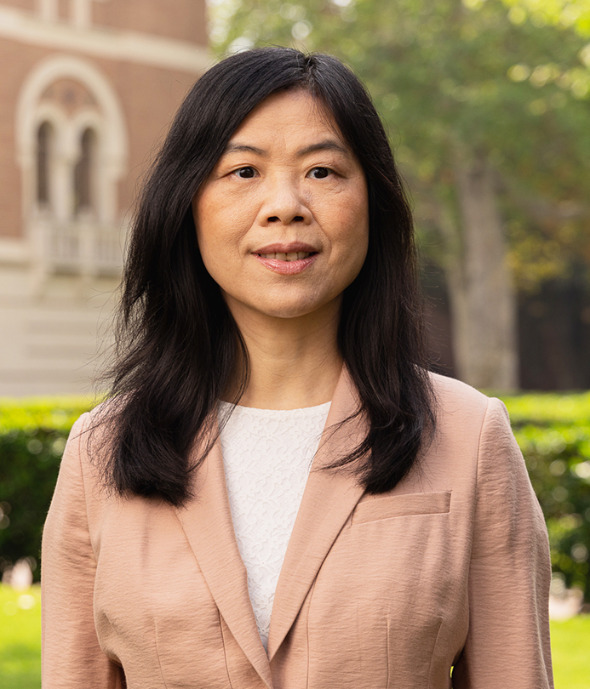
Sha Yang serves as the Ernest Hahn Professor of Marketing at the Marshall School of Business, University of Southern California, where she has held full-time faculty positions since 2017 after progressing from Assistant to Associate Professor roles at New York University and UC-Riverside. Her research examines interdependencies in consumer preferences, social influences on decision-making, and competitive dynamics in advertising, pricing, and platform growth. Her educational background includes a PhD in Marketing (2000) and MA in Statistics (1998) from Ohio State University, complemented by an MA in Economics (1995) and BA in International Economics (1994) from Renmin University of China. Her methodological expertise spans Bayesian methods, structural modeling, and data analytics applied to consumer behavior. Yang's research portfolio reveals consistent focus on digital marketing phenomena, with recent work analyzing cross-category spillovers in advertising, review impacts under negotiated pricing, and psychological pricing effects in luxury markets. Her publications in Journal of Marketing , Management Science , and Marketing Science demonstrate interdisciplinary approaches bridging econometrics and behavioral insights. Among her recognitions is the Marketing Science Institute Young Scholar award. She has served as Associate Editor for Journal of Marketing (2017-present) and Marketing Science (2017-2024), reflecting her scholarly impact. Marketing Science Institute Young Scholar Associate Editor, Journal of Marketing (2017-present) Associate Editor, Marketing Science (2017-2024) VP, INFORMS Society for Marketing Science Administratively, Yang served as Vice Dean and Senior Vice Dean for Faculty and Academic Affairs at Marshall School of Business (2020-2023), overseeing faculty development and academic strategy. Her current research integrates causal inference methods with media and entertainment industry applications, supported by grants from marketing research institutions.
Thomas Jaeger is a Professor of European Law at the University of Vienna’s Faculty of Law, specializing in the Internal Market and Competition within European Commercial Law. He leads the Institute for European, International and Comparative Law and serves as President of the Austrian Society for European Law (ÖGER), a member of FIDE, advocating for Austrian perspectives in EU legal developments. His research spans European Commercial Law, State Aid Law, Media Regulation , and Intellectual Property , with notable publications addressing EU legal frameworks for transport, digital markets, and gambling concessions. Recent lectures focus on state aid challenges, constitutional identity conflicts , and merger control . Jaeger supervises dissertations requiring significant scientific contribution and has organized events like the European Law Roundtable with CJEU and State Aid Law Day . He has held visiting roles at Hannover and Munich universities and previously worked at the Max Planck Institute and UNHCHR .
Florian Zettelmeyer is the Nancy L. Ertle Professor of Marketing at Northwestern University's Kellogg School of Management and Faculty Director of the Program on Data Analytics at Kellogg. He also serves as a senior science leader at Amazon, leading the Advertising Economics organization. His research focuses on marketing analytics, digital advertising, and the economic implications of artificial intelligence in business. PhD in Management Science from MIT (1996) Vordiplom in Business Engineering from University of Karlsruhe (1992) MS in Economics from University of Warwick (1991) Professor Zettelmeyer specializes in analyzing how analytics and AI transform firms, with notable work on advertising measurement, pricing strategies, and consumer decision-making in automotive markets. His publications span journals like Marketing Science, Management Science, and American Economic Review, emphasizing empirical validation through field experiments. He has received prestigious awards including the John D.C. Little Award (twice), Sales SIG Excellence in Research Award, and multiple teaching honors such as the Sidney J. Levy Teaching Award and L. G. Lavengood Outstanding Professor of the Year Award. His research frequently appears in top-tier journals and working paper series.