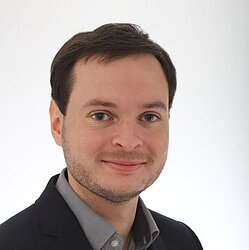
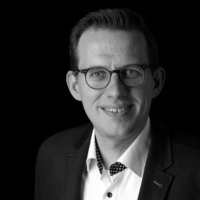
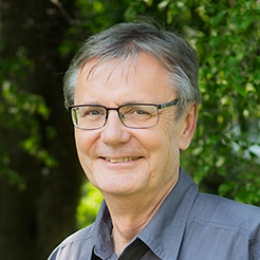
Prof. Dr. Beate Ego is a Professor of Old Testament Exegesis and Theology at the Faculty of Protestant Theology, Ruhr University Bochum. Her research focuses on exegetical, theological, and religious-historical aspects of Old Testament literature and Second Temple period texts, particularly issues of cosmology, temple theology, angelology, and anthropological concepts like learning and identity. She has authored/co-authored over 100 scholarly works, including monographs, commentaries, and articles on Tobit, Esther, Dead Sea Scrolls, and midrashic literature. Key publications include critical editions of biblical texts, studies on angelological theology, and analyses of diaspora Judaism's textual traditions. Ego is co-editor of major reference works like the Calwer Bibellexikon and contributes to interdisciplinary dialogues on early Jewish and Christian thought.
Professor Jutta Jokiranta is a leading scholar in Hebrew Bible/Old Testament studies and Qumran (Dead Sea Scrolls) research at the University of Helsinki's Faculty of Theology. She serves as Vice-Dean for Research Affairs (2022–2025) and holds roles such as co-editor of Brill's Studies on the Texts of the Desert of Judah series and President of the International Organization of Qumran Studies. Her expertise spans Second Temple Judaism, ritual studies, cognitive science of religion, and social identity frameworks applied to ancient religious movements. Educational Background: PhD in Theology, University of Helsinki (2006) Docent in Hebrew Bible/Old Testament Studies (2013) Research Interests: Focuses on Dead Sea Scrolls analysis, social dynamics of early Judaism, ritual practices, cognitive science approaches to religious texts, and material culture of ancient Palestine. Her work bridges archaeology, sociology, and textual criticism. Recent Article Trends: Over the past decade, her publications emphasize ritual theory, sectarian identity formation, and interdisciplinary methods combining cognitive science with biblical studies. Key themes include divine name theology, social memory, and textual evolution in ancient religious communities. Awards & Recognition: Member of European Academy of Sciences and Arts (2022) Member of Finnish Academy of Science and Letters (2021) Recipient of Gunning Lecturer honorarium (2007) Grants & Projects: Leads the ANEE (Ancient Near Eastern Empires) Centre of Excellence and co-leads the FIDSIT project on identity mediation in Abrahamic faiths. Previously directed projects like Ritual and Change in the Qumran Movement (Academy of Finland). Labs/Teams: Active in Helsinki's research networks including the Centre of Excellence in Ancient Near Eastern Empires and the Helsinki Inequality Initiative. Collaborates internationally on projects like the Changes in Sacred Texts and Traditions thematic series.
Dr. Maximilian Häberlein is a Wissenschaftlicher Mitarbeiter (Research Associate/Lecturer) at the Chair of Old Testament and Biblical Languages in the Faculty of Catholic Theology at the University of Würzburg. His research focuses on Septuagint studies, particularly the Old Greek version of Job, Hellenistic Jewish literature, and ancient biblical translation techniques. He holds a Licentiate in Theology (2022) and completed his doctoral dissertation on OG Job in 2023. Key research interests include the textual history of OG Job, socio-cultural contexts of early Jewish literature (e.g., Joseph and Aseneth, 1 Esdras), and theological themes in prophetic texts. He has received notable awards including the John William Wevers Prize (2021) and the University of Würzburg's dissertation prize (2024). Recent academic activities include organizing workshops on biblical translation ethics (EABS 2024) and presenting at international conferences in Leuven, Graz, and Siracusa. He actively participates in the Virtual Seminar 'The Septuagint in Modern Research' and serves on faculty committees regarding academic staff affairs. Häberlein's work bridges textual criticism with cultural history, exploring how ancient translations mediated Jewish identity under Hellenistic influences. His publications analyze topics like Persian kingship in 1 Esdras, bodily theology in Joseph and Aseneth, and the rhetoric of divine sovereignty in Job.
Dr. Mark Francois is an Assistant Professor of Old Testament and Semitic Languages in the School of Theology at the College of Undergraduate Studies. He holds a Ph.D. in Theology specializing in the Old Testament from the University of St. Michael’s College, along with an M.T.S. from Wycliffe College (University of Toronto), an M.Div. from Toronto Baptist Seminary, and a B.T.S. (Hons.) from the same institution. Ph.D., Theology (Old Testament), University of St. Michael’s College M.T.S., Wycliffe College, University of Toronto M.Div., Toronto Baptist Seminary B.T.S. (Hons.), Toronto Baptist Seminary Dr. Francois's research centers on Deuteronomy, Old Testament law, Old Testament theology, textual criticism, and Semitic languages, with a particular focus on Classical Syriac. He is currently writing an introductory grammar of Classical Syriac and has explored the linguistic parallels between the curses in Deuteronomy 28 and the Loyalty Oath of Esarhaddon in his dissertation. His scholarly work bridges ancient Near Eastern studies and biblical exegesis. The recent publications and forthcoming works reflect a strong engagement with Pentateuchal studies, covenant theology, and biblical interpretation. His articles and reviews, published in journals such as Themelios , JETS , and Gospel Witness , demonstrate consistent scholarly output in Old Testament hermeneutics, theological anthropology, and prophetic literature. The breadth of topics indicates a deep commitment to both academic rigor and pastoral application. Dr. Francois has been recognized through publication in reputable theological journals, though no formal scientific awards or fellowships are mentioned in the text. Before joining the faculty, Dr. Francois served twelve years as a pastor in Ontario, Canada, during which he taught at Tyndale Seminary, Toronto Baptist Seminary, and the One Hope Canada School of Discipleship. His teaching experience includes Hebrew Grammar, Hebrew Syntax, and Aramaic. As a mentor, he aims to strengthen students' faith, encourage confidence in Scripture, and cultivate a passion for the Old Testament. There is no mention of grant funding or research teams. There is no indication of lab affiliations or formal research teams; however, his work suggests independent scholarship with potential collaboration through journal publications and academic networks.
Dr. David Kotter is the Dean of the School of Theology and Professor of New Testament Studies at Colorado Christian University. He holds a Ph.D. in New Testament from The Southern Baptist Theological Seminary and advanced theological and business degrees, including an MBA and B.S. in Engineering from the University of Illinois at Urbana-Champaign. His academic leadership is complemented by prior professional experience in finance at Ford Motor Company and pastoral ministry at CrossWay Community Church. Ph.D., New Testament – The Southern Baptist Theological Seminary M.Div., New Testament – Trinity Evangelical Divinity School MBA, Engineering – University of Illinois at Urbana-Champaign M.A., New Testament – Trinity Evangelical Divinity School B.S., Engineering – University of Illinois at Urbana-Champaign Dr. Kotter's research centers on the integration of theology and economics, exploring biblical perspectives on wealth, poverty, work, vocation, and capitalism. He examines how economic systems intersect with Christian ethics and ecclesial mission, particularly through the lens of New Testament teachings. His work engages both ancient texts and contemporary societal challenges, such as universal basic income, crony capitalism, and urban gentrification. His recent publications reveal a consistent focus on moral and theological dimensions of economic life, drawing from disciplines including biblical studies, ethics, philosophy, and public policy. Themes such as self-interest versus greed, the dignity of labor, and the church's role in societal transformation recur across his writings. He frequently contributes to interdisciplinary dialogues, presenting at theological and economic forums across the U.S., Europe, and Asia. Dr. Kotter has received notable recognitions including the Kern Fellow at Acton University, the Kemper Fellowship for Management Studies, and the Edmund James Scholar in Engineering. These awards reflect his dual expertise in engineering, business, and theological scholarship. Kern Fellow at the Acton University Kemper Fellowship for Management Studies Edmund James Scholar in Engineering Dr. Kotter is actively involved in academic and ministry initiatives. He co-founded the Faith and Work Project to equip pastors with economic literacy and serves as a senior research fellow for the Institute for Faith, Work and Economics. He also leads student archaeological expeditions to sites like Tel es-Safi (Gath) and Shiloh, integrating experiential learning with biblical studies. While no formal advisees are listed, his leadership in research, teaching, and program development demonstrates a strong commitment to mentoring future Christian leaders.
Laurence Mellerin serves as a Lecturer in Latin and patristic theology and associate researcher at the Bible, Literature and Ancient Cultures Department of the Catholic University of Lyon (UCLy). Mellerin also holds significant leadership roles including Deputy Director of the Christian Sources collection since 2017, Head of the BIBLINDEX project (funded by ANR 2011-2015, BSN5 2015-2016, AASC and Fondation de Montcheuil 2018-2021, and Equipex Biblissima+ 2021-2028), and Co-coordinator of the JERIHNA project (ANR 2023-2027). Additionally, Mellerin coordinates Cluster 7 of Equipex + Biblissima + focusing on interoperability and text analysis, and serves as Scientific director of the JERLOCH project. Mellerin's research focuses on the intersection of digital humanities and biblical/patristic studies, with particular expertise in: New technologies applied to biblical and patristic corpora, including digital publishing and intertextuality research Monastic texts from the 12th century, especially works by Bernard of Clairvaux and Guillaume de Saint-Thierry Latin patristic exegesis, with special attention to Jerome and Augustine History of Penance and Theology of Sin The scholarly output demonstrates a consistent trajectory toward integrating digital methodologies with traditional patristic scholarship. Recent publications reveal an increasing focus on developing computational approaches to analyze biblical quotations in early Christian literature, particularly through the BiblIndex platform. The research shows strong interdisciplinary connections between theology, linguistics, and computer science, with growing emphasis on creating interoperable digital resources for biblical and patristic studies. Mellerin actively participates in numerous research initiatives and editorial boards: Member of the editorial board of "Digital Humanities and Biblical Studies" (Brill, Leiden, 2015-) Member of the editorial committee of "La Manne des Pères" (Saint-Léger, 2023-) Member of the scientific council for renewing "the Birthplace of Saint Bernard" in Dijon (2024-) Participant in the ANR-DFG PhysioLab project (2025-2027) As an educator, Mellerin teaches bi-monthly medieval Latin courses on the theoenligne platform (LATIN A, B and C) and occasional courses at the Faculty of Philosophy of UCLy. Mellerin also offers the course "Preliminaries to the study of patristic exegesis" at the Faculty of Theology, UCLy (master's level, semester 1), a bi-monthly seminar "Translation of 12th century Latin monastic writings," and the Latin Patristic Theology Seminar every two years (Masters and Doctoral level). The BIBLINDEX project represents Mellerin's most significant collaborative effort, serving as a major research infrastructure for biblical and patristic studies. The project has evolved through multiple funding phases, expanding from a simple index of biblical quotations to a comprehensive portal for textual analysis. The project involves collaboration with numerous international partners and has developed specialized tools for encoding, analyzing, and visualizing intertextual relationships in ancient religious texts.
José Maria Silva Rosa is a Full Professor at the University of Beira Interior (UBI) , Faculty of Arts and Letters, with a career spanning over 25 years. Holding a PhD in Medieval Philosophy (2005) and Habilitation in Medieval Political Philosophy (2020), his work bridges classical thought with contemporary philosophical and theological debates. Education: Bachelor's (1992), Master's (1997), and PhD (2005) from the Catholic University of Portugal (UCP, Lisbon) His research focuses on Medieval Political Philosophy , Phenomenology , and Philosophy of Religion , with particular emphasis on Saint Augustine's theological-political thought. He has contributed to discussions on secularization, religious violence, and the interplay between faith and institutional power. Recent publications reveal a thematic concentration on European political dynamics , theological ethics , and medieval conceptual frameworks applied to modern governance challenges. Collaborations with research centers and scientific associations highlight his interdisciplinary influence. As a former Librarian Professor (2013-2017) and President of UBI's Faculty of Arts and Letters (2017-2021), he has shaped academic infrastructure while maintaining teaching and research commitments.
Luka Marijanović, M.Sc., serves as a Senior Lecturer at the Department of Holy Scripture of the Old Testament, Catholic Theological Faculty in Đakovo, part of Josip Juraj Strossmayer University in Osijek. His academic career spans decades, focusing on biblical exegesis, theological education, and liturgical studies. Born: October 14, 1943, Donji Andrijevci Education: Pontifical Lateran University (Master of Theology, 1970); Pontifical Biblical Institute (Master of Biblical Sciences, 1974) His research interests include Old Testament exegesis , Hebrew language , Christian spirituality , and interdisciplinary theological studies . He has contributed extensively to Psalm interpretation and biblical themes in Croatian religious culture. His recent publications analyze biblical texts through liturgical, cultural, and pedagogical lenses, with recurring themes in Pauline epistles , Eucharistic theology , and Christian family spirituality . 2000: Appointed Chaplain to His Holiness by Pope John Paul II 2004: Canon of Đakovo Cathedral Chapter Prof. Marijanović supervises thesis work on topics like Deuteronomy , Christian martyrdom , and Eucharistic theology . He actively participates in international theological symposia and has led spiritual retreats for clergy.
Vilja Alanko is a Doctoral Researcher at the University of Helsinki's Faculty of Theology, affiliated with the multidisciplinary Doctoral Programme in Gender, Culture, and Society. She has served on the programme's board and participated in academic networks including the Nordic Network for the Study of Judaism, Christianity, and Islam and the international Feminist Readings group. Current project: Lived Scriptures (Academy of Finland funded) Past projects: Embodied Religion (2014-2019), Reason and Religious Recognition (2018-2022) Her research combines feminist theory (particularly Luce Irigaray's maternal genealogy framework) with analysis of early Christian hagiographies, focusing on mother-daughter relationships in texts like the Acts of Thecla, Life of Macrina, and Life of Mary of Egypt. She investigates how gender ambivalence and female agency are represented in Late Antique religious narratives. Recent publications (2019-2023) demonstrate consistent output in feminist theology (6 articles), hagiographic analysis (4 conference contributions), and critical reviews (3 book reviews). Her work intersects theology, gender studies, and philosophical inquiry, with a particular emphasis on Irigaray's sensible transcendental framework applied to scriptural interpretation. Key research themes: gender and religion, asceticism, feminist biblical exegesis Methodological approach: interdisciplinary (theology + gender theory), textual analysis of patristic and hagiographic sources
Ludger Hiepel is an Academic Councillor at the Institute for Biblical Exegesis and Theology , University of Münster , focusing on Old Testament studies with a specialization in Digital Humanities and Ancient Near Eastern Philology . He has taught courses on topics like Antisemitism in History and Present and AI in Theology , and co-edited volumes on subjects including Wüste als locus theologicus and Jewish Life in Münster . Education: Diplom-Theologe (2012), MA in Ancient Eastern Mediterranean Cultures (2014), Dr. phil. in Ancient Near Eastern Philology (2018) Research Interests combine Biblical Exegesis with Digital Humanities , Jewish-Christian Dialogue , and Antisemitism Studies . His recent publications explore AI's theological implications , institutional history of Assyriology , and reception history of the Old Testament . He collaborates on projects like the Digital Documentation of Münster's Jewish Cemetery and the CRS (Center for Religious Studies) . Academic Leadership includes roles in the Faculty Council , Diversity Commission , and Lehrbeirat des Rektorats . He co-founded bildtheologie.de and participates in initiatives like the Digital Humanities Center and Münster School of Ancient Cultures .
Roger Andersson is a Professor at Stockholm University's Department of Swedish Language and Multilingualism, specializing in historical Scandinavian philology and medieval studies. His research focuses on Old Swedish texts, particularly those related to Saint Birgitta, medieval sermons, and the interaction between Latin and vernacular languages in manuscript cultures. Current president of Svenska fornskriftsällskapet (2017–2025) Former general editor of the Sermo book series (2006–2015) Lead critical edition of Old Swedish Birgittine texts His scholarly work examines scribal identification, medieval written culture, and the theological authority of vernacular texts. The Narratives: form and function group explores storytelling across historical periods, while his Scandinavian philology and language history research investigates early Scandinavian languages and literature. Roger's publications show strong focus on Birgittine studies, sermon analysis, and manuscript transmission patterns. His work bridges textual scholarship with broader theological and cultural interpretations of medieval Scandinavian literature.
Dr. Andreas-Christian Heidel is a Postdoctoral Researcher (Habilitation) at the Institute for New Testament Studies, Theological Faculty, University of Bern. He also serves as a Lecturer in New Testament Studies at the Internationale Hochschule Liebenzell (University for Applied Sciences) since 2020 and is a Short Time Fellow at the Center for Advanced Studies 'Beyond Canon,' University of Regensburg.
Ömer Faruk Habergetiren is an Associate Professor at Karabuk University's Faculty of Theology, Department of Basic Islamic Sciences. His academic journey includes a BA in Theology from Selçuk University (1990), an MA (1997), and PhD (2005) in Islamic Law from Harran University. He joined Karabuk University in 2012, ascending to his current role in 2021. His research focuses on Islamic Law , with emphasis on contractual theory, family law, economic jurisprudence, and Ottoman legal history. Recent works explore maslahat (public interest) principles, marriage contracts, and ethical finance, often bridging classical jurisprudence with contemporary issues. He supervises 14+ graduate students, with PhD projects on topics like cybercrime in Islamic penal law and assisted reproductive technologies. As a researcher, he contributes to projects cataloging Ottoman manuscripts and translating classical juristic texts. Awards & Leadership: Certificate of Appreciation, Şanlıurfa Governorship (2010) Monthly Incentive Award, Turkish Ministry of Education (2002) Department Head (2012–present) and editorial board member for multiple Islamic law journals.
Uğur GÖZEL serves as an Assistant Professor at Karabük University's Faculty of Theology, Department of Basic Islamic Sciences, where he has held full-time academic positions since 2020. His institutional roles include serving as Deputy Dean (2020-2022), Faculty Secretary (2015-2020), and current committee memberships in Addiction Prevention and Academic Incentives. PhD in Sufism, Institute of Social Sciences, Ankara University (2013-2019) MSc in Sociology, Karabük University (2011-2013) Bachelor's in Theology, Ankara University (2008-2010) Associate Degree in Theology, Anadolu University (1998-2000) His research centers on Sufism with emphasis on historical and contemporary dimensions. Through courses like Tasavvuf-I/II and Tasavvuf Literature , he explores mystical traditions, ethical frameworks, and spiritual counseling methodologies. His work bridges classical Sufi texts with modern applications in religious education and psychological well-being. Analysis of his publications reveals consistent focus on early Sufi scholars (Kalabazi, Qushayri), contemporary Turkish Sufism, and therapeutic applications of Islamic spirituality. The 2023 monograph on Sheikh Abdullah Siraceddin represents his most comprehensive biographical work, while his 2022 journal article demonstrates rigorous textual analysis of foundational Sufi concepts. As primary thesis advisor for eight master's students, he has supervised research spanning Syrian Sufism, Libyan jurisprudence, and comparative Quranic exegesis. His editorial roles include serving on the review boards of nine national Islamic studies journals since 2020. Professor GÖZEL actively contributes to institutional development through committee leadership in student affairs, academic appointments, and partial-time staffing. His teaching portfolio includes 25 distinct courses across undergraduate, graduate, and doctoral levels, with particular emphasis on Quranic recitation, Islamic ethics, and spiritual counseling.
Lecturer Ömer ALALI has been affiliated with Karabük University since 2013, serving in the Faculty of Islamic Sciences under the Department of Basic Islamic Sciences . He holds a PhD in Tafsir (2018-2023) and a Master's in Islamic Law (2014-2016) from Karabük University, alongside a Bachelor's in Theology from Al-Azhar University (2001-2006). PhD: Tafsir, Karabük University (2018-2023) Master's: Islamic Law, Karabük University (2014-2016) Bachelor's: Theology, Al-Azhar University (2001-2006) His research focuses on Quranic exegesis , Islamic legal theory , and Ottoman religious scholarship . He has published comparative studies on Ibn Taymiyyah and Ibn al-Qayyim's hermeneutics, Ottoman administrative practices in Iraq, and theological interpretations of Quranic proverbs. Collaborations include work with co-author Muhammed Nadir Ali. His publications between 2018-2025 span Quranic hermeneutics , Islamic legal philosophy , and Ottoman religious governance . Key themes include the tension between scriptural literalism and contextual interpretation in Islamic thought. 2025: Comparative Tafsir methodology 2024: Qur'anic symbolic language 2022: Ottoman historical impact