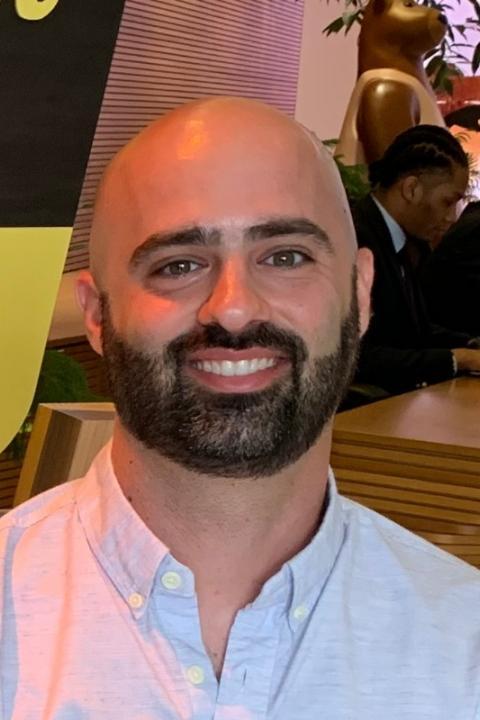
Curtis Coleman is an Associate Professor of Computer Science at Oklahoma Christian University, affiliated with the College of Engineering & Computer Science. His 20-year cybersecurity career includes 15 years leading Seagate’s cybersecurity program and current advisory roles at Oracle, Intel, and Salesforce. Coleman holds certifications as a CISSP and CISM, and is frequently invited to speak at national cybersecurity conferences. M.S. in Computer Science Ph.D. in Computer Science Academically, Coleman focuses on cybersecurity and artificial immune systems, blending industry expertise with research. His contributions to the field include policy implementation, technology development, and thought leadership. ExecRank’s Top 150 Security Executives Rankings (2012–2017) Coleman also applies his leadership skills to community engagement, serving as a certified Team USA Archery Coach Level II, NRA Rifle and Pistol Instructor, and Black Belt in Karate. He mentors a local Venturing Scouts group for 14–20-year-olds. Coleman is married to Catina and has four children: Jeremy, Brianna, Cianna, and Connor.
Belén Bande Vilela is a professor in the Department of Business Organization and Marketing at the Faculty of Economic and Business Sciences, University of Santiago de Compostela. She is also affiliated with the International University of La Rioja. Her research and academic activities are centered on marketing, with a strong emphasis on consumer behavior, corporate social responsibility (CSR), brand engagement, and salesforce management. Her research interests include marketing strategy, consumer behavior, ethical leadership, organizational citizenship in sales teams, emotional influences on brand loyalty, and cross-functional integration in innovation . She has extensively explored how CSR initiatives influence consumer and salesforce attitudes, and how emotional and ethical factors shape brand relationships. The trends in her recent publications show a consistent focus on the psychological and behavioral dimensions of marketing. From 2024 to 2025, her work examines emotions in fair trade consumption and online brand-related activities (COBRAs) , indicating a shift toward digital and emotional consumer engagement. Earlier works delve into salesforce performance, impression management, and interdepartmental dynamics in product development. Doctoral Thesis Supervision: Supervised Sandra Castro González’s thesis on CSR from the salesforce perspective. Collaborative Research: Regular collaborator with Pilar Fernández Ferrín, José Antonio Varela González, and Sandra Castro González. Books Authored: Co-authored works on qualitative research and CSR from a consumer perspective. She has contributed to editorial boards and collaborative academic works, demonstrating leadership in scholarly communication. Her work is published in journals such as European Journal of Management and Business Economics , International Review on Public and Nonprofit Marketing , and Revista Europea de Dirección y Economía de la Empresa , reflecting a strong publication record in Spanish and international outlets.
Wenqiang Xiao is a Professor of Technology, Operations, and Statistics at the Leonard N. Stern School of Business, New York University, where he has been a faculty member since 2006. He currently holds the Toyota Motor Corporation Term Professorship and has previously served as Associate and Assistant Professor. His academic affiliations are deeply rooted in operations, supply chain, and incentive design research. His research focuses on supply chain contracting , platform operations , supply chain finance , and the marketing-operations interface . He investigates incentive conflicts under asymmetric information, particularly within principal-agent frameworks, and has extended this to digital platforms and e-commerce environments. The 15 most recent publications highlight a strong trend toward platform-based operations , financial integration in supply chains , and strategic information use . His work appears in top journals like Management Science , M&SOM , and Operations Research , reflecting a consistent contribution to both theoretical and applied operations management. Wenqiang Xiao has made significant service contributions to the academic community: Associate Editor, Management Science (2018–Present) Senior Editor, Production and Operations Management (2013–Present) He has advised and collaborated with numerous researchers across various institutions, indicating an active mentoring and collaborative role. While specific grant details are not listed, his sustained research output and editorial roles suggest strong funding and institutional support. His work on donor-funded drug distribution and sustainability-linked loans also reflects a growing interest in socially impactful operations research. He is affiliated with the Technology, Operations, and Statistics Department at NYU Stern, contributing to both academic leadership and research excellence in operations management.
Nathan Falvo is an adjunct instructor in the School of Fashion at Kent State University's College of the Arts, where he teaches Computer Applications in Retailing. He is based off-campus in New York City and brings extensive industry experience into his academic role. His educational background includes a degree from the School of Fashion at Kent State University (2007) and an MBA from Montclair State University (2017). Nathan's research and professional interests center on the intersection of technology and fashion retail, particularly in e-commerce, supply chain optimization, and IT business applications. His expertise is deeply rooted in real-world applications across global fashion enterprises. With no published academic articles listed, his contributions are primarily pedagogical and industry-focused. E-Commerce Supply Chain Management IT Business Applications Fashion Retail Technology Nathan has not received any listed scientific awards or honors in the provided text. He advises no students listed in the available information and there is no mention of grants or funded research projects. His professional experience includes strategic roles at Salesforce, Global Brands Group, and Li & Fung Trading, emphasizing enterprise-level B2B e-commerce and operational strategy. Nathan is affiliated with the School of Fashion at Kent State University, contributing to its academic mission through practical, industry-informed instruction. He is part of the NYC Studio initiative, supporting the university’s study away and global engagement programs in fashion.
Dr. Anne Kurzweg Gottfried is a Clinical Assistant Professor in the Department of Marketing at the Naveen Jindal School of Management, The University of Texas at Arlington. She holds a D.B.A. in Marketing from Kennesaw State University and brings over 15 years of experience in higher education and industry. Her academic appointments include prior roles at Loyola University, Tulane University, University of Southern Mississippi, and Louisiana State University of Alexandria. D.B.A., Marketing, Kennesaw State University M.B.A., Southeastern Louisiana University B.S., Marketing, Louisiana State University Dr. Gottfried's research focuses on sales management, sales force motivation, and the ethical design of sales control systems . She investigates how different types of sales controls impact salesperson effectiveness, with additional interests in sales analytics, competitive intelligence, and marketing strategy. Her work bridges theory and practice, often exploring motivational and ethical dimensions within sales organizations. Her recent publications span topics such as audit committee IT expertise, open government data for business intelligence, and intrinsic motivation in sales forces. These reflect a strong trend toward data-driven decision making, ethical sales practices, and performance optimization in modern marketing and sales environments. She has been recognized with multiple awards, including: Best Research Paper in Personal Selling and Sales Management, Society for Marketing Advances (2016) Best Research Paper in Sales Management, Atlantic Marketing Association Conference (2016) Dr. Gottfried actively mentors students through advising the Maverick Sales Club and leading the Challenger Sales Competition. She serves on editorial review boards for journals such as the Journal of Global Scholars of Marketing Science and the Journal of Sustainable Marketing , and has reviewed for top marketing conferences and publications. She is also engaged in curriculum development and quality assurance in online education, holding certifications in QM and as a Certified Online Teacher. She contributes to academic service through committee work in the Sales Program and participates in national and regional marketing associations, including the Atlantic Marketing Association and the Academy of Marketing Science.
Felicia Lassk is a Professor of Marketing at Northeastern University, specializing in sales management and organizational behavior. She holds a PhD in Marketing from the University of South Florida, an MBA in Marketing Research from Southern Illinois University, and a BS in Business Administration from the University of Florida. Her research focuses on emotional intelligence, sales creativity, customer orientation, and salesforce dynamics. Key contributions include studies on team creativity, the role of emotional intelligence in sales settings, and the impact of collaborative cultures in healthcare environments. Dr. Lassk has presented at major conferences such as the World Marketing Congress and the Academy of Marketing Science, addressing topics like cultural intelligence in sales relationships and patient-centric collaboration in emergency departments. She serves on editorial review boards for the Journal of Personal Selling and Sales Management and the Sales Review , and has held leadership roles in organizations like the American Marketing Association. Her work bridges academic research and industry practice, with notable grants including Northeastern University’s Tier 1 funding (2012-2013) and the Direct Selling Education Foundation Grant (2006). Her teaching emphasizes marketing research and professional selling methodologies, incorporating innovative pedagogical approaches like team-based learning in flipped classroom environments.
Nachiketa Sahoo is an Associate Professor in the Information Systems Department at Boston University's Questrom School of Business, where he has been faculty since 2011. His research sits at the intersection of Machine Learning and Information Systems, with particular focus on personalized recommender systems and user preference modeling. Research Focus: Dr. Sahoo's work centers on learning user preferences and decision-making processes from large disaggregate datasets. His primary projects include: Personalization and Matching: Developing systems to match items to users while examining stability and fairness implications Retail Analytics: Analyzing customer activity data to reduce product expiration through salesforce incentive alignment Data-driven Healthcare: Estimating value of genomic tests and physician decision modeling Content Recommendation: Studying multi-category utility models for diversified content consumption His recent publications demonstrate strong trends toward ethical implications of recommender systems, particularly regarding fairness and market stability, while maintaining technical depth in machine learning applications. Scientific Contributions: Developed novel methods for uncovering population response paths using time-series data Created approaches to match donors with philanthropic causes on crowdfunding platforms Designed salesforce compensation schemes reducing $15B+ in annual product waste Pioneered multi-category utility models for content recommendation Academic Leadership: Dr. Sahoo advises PhD students in Information Systems, with graduates securing tenure-track positions at institutions like University of Minnesota and University of South Florida. His teaching portfolio includes advanced machine learning courses and doctoral seminars on ML methods for social science research. He previously served as a Visiting Assistant Professor at Carnegie Mellon's Tepper School of Business. Education: He holds a PhD in Information Systems from Carnegie Mellon University's Heinz College, an MS in Knowledge Discovery and Data Mining from CMU's Machine Learning Department, and a B.Tech in Industrial Engineering from IIT Kharagpur. His industry experience includes software engineering at i2 Technologies (now JDA Software).
Brock Tibert is a Senior Lecturer in the Department of Information Systems at Boston University's Questrom School of Business. He holds an M.S. in Finance and a B.A. in Economics (cum laude) from Clark University. Research & Expertise : With 20 years of experience in data-driven product leadership, he specializes in developing data engineering solutions and deploying machine learning models into production. His work intersects with product strategy in data-centric environments. Certifications : Salesforce Certified AI Specialist (February 2025) AWS Certified Data Engineer – Associate (August 2024) Salesforce Certified AI Associate (August 2024) AWS Certified Solutions Architect – Associate (July 2024) AWS Certified Cloud Practitioner (June 2024) Neo4j Graph Data Science (June 2022) Advising : Outside of Questrom, Brock advises teams at the intersection of data and product development.
Ed Nijssen is a Professor of Technology Marketing at the Eindhoven University of Technology (TU/e) within the Innovation, Technology Entrepreneurship and Marketing (ITEM) group of the School of Industrial Engineering. His research integrates marketing, innovation, and sales strategy, with a focus on servitization and digital transformation in B2B contexts. He has held visiting professorships at Michigan State University, NYU, and Bocconi University. Research interests include: Servitization (solutions-based business models) Marketing/Sales-R&D interface Digital solution selling Brand advocacy in frontline services Product-service systems Scientific contributions span over 143 research outputs, including systematic reviews on B2B branding and effectual entrepreneurial marketing. His awards include multiple Teacher of the Year recognitions and publication prizes. He teaches courses in Entrepreneurial Marketing , Marketing and Innovation , and Validation to Sales , while serving on editorial review boards for Industrial Marketing Management and Journal of Product Innovation Management .
Christoph Csallner is a Professor in the Computer Science and Engineering Department at the University of Texas at Arlington (UTA), where he leads research in software engineering, program analysis, and mobile software development. Prior to joining UTA, he worked at Google and Microsoft Research. He directs the SERC lab (Software Engineering Research Center) and has established himself as a leading researcher in automated bug finding, reverse engineering, and Simulink analysis. University of Texas at Arlington, Professor, Computer Science and Engineering Department SERC Lab Director Former researcher at Google and Microsoft Research Dr. Csallner earned his Diplom-Informatiker degree from Universität Stuttgart, Germany, and both his M.S. and Ph.D. in Computer Science from Georgia Tech. His educational background in both European and American institutions has informed his interdisciplinary research approach that bridges theoretical foundations with practical software engineering challenges. Dr. Csallner's research spans multiple areas of software engineering with particular expertise in program analysis, automated bug finding, and mobile software engineering. His work on reverse engineering mobile application user interfaces with REMAUI has been particularly influential in the field. His recent research focuses on Simulink analysis with projects like SLNET, ScoutSL, and EvoSL, which have created foundational datasets and tools for the model-based development community. His work on PSDoodle and D2S2 has advanced mobile app screen search through innovative sketch-based interfaces. His research consistently bridges theoretical program analysis with practical applications for real-world software development challenges. Dr. Csallner's publications demonstrate a consistent pattern of innovation in software testing, analysis, and reverse engineering. His recent work shows a strong focus on mobile application analysis, Simulink model processing, and the application of machine learning techniques to traditional software engineering problems. He has successfully built bridges between formal methods and practical software development tools. Best Paper Award - IEEE ISSRE 2010 ACM SIGSOFT Distinguished Paper Awards - ISSTA 2006, 2012 Best Paper Award - PPREW 2014 Best Paper Award - ASE 2007 ACM SIGSOFT Distinguished Paper Award - ASE 2015 Distinguished Referee Award - ASE 2019 Distinguished Reviewer Award - TOSEM 2011-2012 Dr. Csallner has successfully advised numerous Ph.D. and Master's students who have gone on to prominent positions at companies including Meta, Google DeepMind, BNSF Railway, Bloomberg, and Salesforce. His research has been supported by significant funding from the National Science Foundation, MathWorks, the Alzheimer's Association, and the Texas National Security Network. His work on fake news detection received media coverage from major outlets including the Dallas Morning News, NBC DFW, and WBAP/KLIF. Dr. Csallner directs the Software Engineering Research Center (SERC) lab at UTA, where his team develops innovative tools for software analysis and testing. Notable projects include JCrasher, Check 'n' Crash, DSD-Crasher, Pex/DySy, Dsc, and REMAUI/Pixel to App. His recent work focuses on PSDoodle, TreeVada, ScoutSL, and EvoSL, demonstrating his lab's continued innovation in software engineering research. The SERC lab maintains strong industry connections, particularly with MathWorks, and has produced numerous open-source tools that have influenced both research and practice in software engineering.
Professor Martin Mocker is a faculty member at Reutlingen University's ESB Business School, specializing in Information Systems, IT Strategy, and Complexity Management. With a strong background spanning both academia and industry, including previous roles at MIT Sloan School of Management and McKinsey & Company, he brings practical insights to his research and teaching in digital transformation. Professor Mocker's educational background includes: Doctorate (Dr. rer. pol.) from the University of Muenster Diploma in Informatics (Dipl. Inform.) from the University of Dortmund Executive Education from Harvard Business School His research focuses on the critical intersection of digital transformation and business complexity management. Professor Mocker investigates how organizations can successfully navigate digital transformation while effectively managing increasing business complexity. His work examines enterprise architecture, IT management strategies, and the realization of business value from digital innovations. Through numerous case studies of companies like Salesforce, Repsol, Kärcher, and Philips, he identifies best practices for managing digital transformation in large organizations. Professor Mocker's publication record shows a consistent focus on digital transformation topics over the past decade, with increasing emphasis on scaling digital innovations and realizing tangible business value. His recent work explores how companies successfully manage the challenges of building platform businesses, scaling digital innovations across the organization, and harnessing IoT products for value creation. His notable contributions include: Research on platform business models, particularly analyzing Salesforce's approach Studies on scaling digital innovations, with case studies of Repsol realizing €800 million in value Investigations into managing business complexity during digital transformation The book 'Designed for Digital: How to Architect Your Business for Sustained Success' (2019) Professor Mocker maintains an active research collaboration with the MIT Center for Information Systems Research (CISR), where he contributes to major research initiatives on complexity management and business architecture. His industry experience informs his practical approach to research, ensuring relevance to real-world business challenges. He teaches courses on Information Systems, IT Management, and Strategic Management in the Digital Age, preparing students to lead digital transformation initiatives in their future careers. His research group focuses on understanding how organizations can successfully implement digital transformation while managing the inevitable increase in business complexity. Through his work with MIT CISR and case studies of leading companies, Professor Mocker continues to advance our understanding of effective digital transformation strategies.
Edward Kreutzer serves as an Adjunct Professor at Menlo College's School of Business, teaching courses in the Master of Science in Information Systems (MSIS) program including INSY 501 (Introduction to Information Systems and Data Literacy), INSY 507 (Data Repositories and Cloud Infrastructure), and INSY 512 (Capstone Project). He concurrently holds an adjunct professor position at the University of San Francisco for over 20 years, where he previously served as MSIS program director developing curriculum aligned with his industry expertise. His educational background includes: MBA Professor Kreutzer's research focuses on Data Engineering and Cloud Computing , with demonstrated expertise in building analytics data warehouses (e.g., for Nickelodeon Games), migrating on-prem systems to AWS cloud infrastructure (at a healthcare data science startup), and developing Python-based object-oriented data pipelines (for Salesforce). His work bridges theoretical information systems with real-world cloud platform implementations. He mentors students through the Capstone Project course, guiding practical applications of data repository design and cloud infrastructure solutions while leveraging his extensive industry experience as a Principal Data Engineer and Data/Database Architect.
Fabiola Vásquez serves as Research Professor and Director of the Master's in Business Analytics at EGADE Business School, Tecnológico de Monterrey, with 17+ years of expertise in strategic consulting, industry leadership, and academic innovation. She chairs the Business School's National Committee on Artificial Intelligence and leads curriculum redesign initiatives focused on data-driven business transformation. Her academic credentials include a Doctorate in Administrative Sciences (Digital Marketing specialization) from Tecnológico de Monterrey, a Master's in Logistics and Supply Chain Management from UPAEP, dual undergraduate degrees in Industrial and Systems Engineering and Nutrition (both from Tecnológico de Monterrey), plus a postdoctoral fellowship in Data Science at the University of Texas at San Antonio and ongoing collaboration with MIT Center for Transportation and Logistics. Research centers on advanced analytics for digital business transformation, retail/supply chain innovation, food sustainability, and consumer well-being strategies. Her work integrates scientific rigor with real-world applications across retail, healthcare, and technology sectors, emphasizing ethical AI adoption and environmental impact reduction through data intelligence. Publications reveal consistent thematic evolution from foundational supply chain optimization (2016) to pandemic-era e-commerce behavior analysis (2020-2022), demonstrating how digital transformation reshapes consumer expectations and business models in Latin American markets through rigorous quantitative frameworks. Major recognitions include: Best Practices Leader in E-commerce by Salesforce México (2022) Mujer Totalmente Palacio for digital innovation leadership (2022) Facultad de Impacto teaching excellence award MIT CTL Appreciation Certificate for institutional contribution (2023) As an educator, she has trained executives and professionals across Mexico and Brazil through courses like Machine Learning for Business and Digital Transformation, while directing the Master's in Business Analytics program to develop data-literate leaders for Latin America. Her MIT CTL collaboration continues to advance sustainable supply chain research. She actively shapes industry discourse through speaking engagements at EGADE Future Forum and Global Business Connect, addressing responsible AI implementation, retail digitalization, and data strategy frameworks for global business ecosystems.