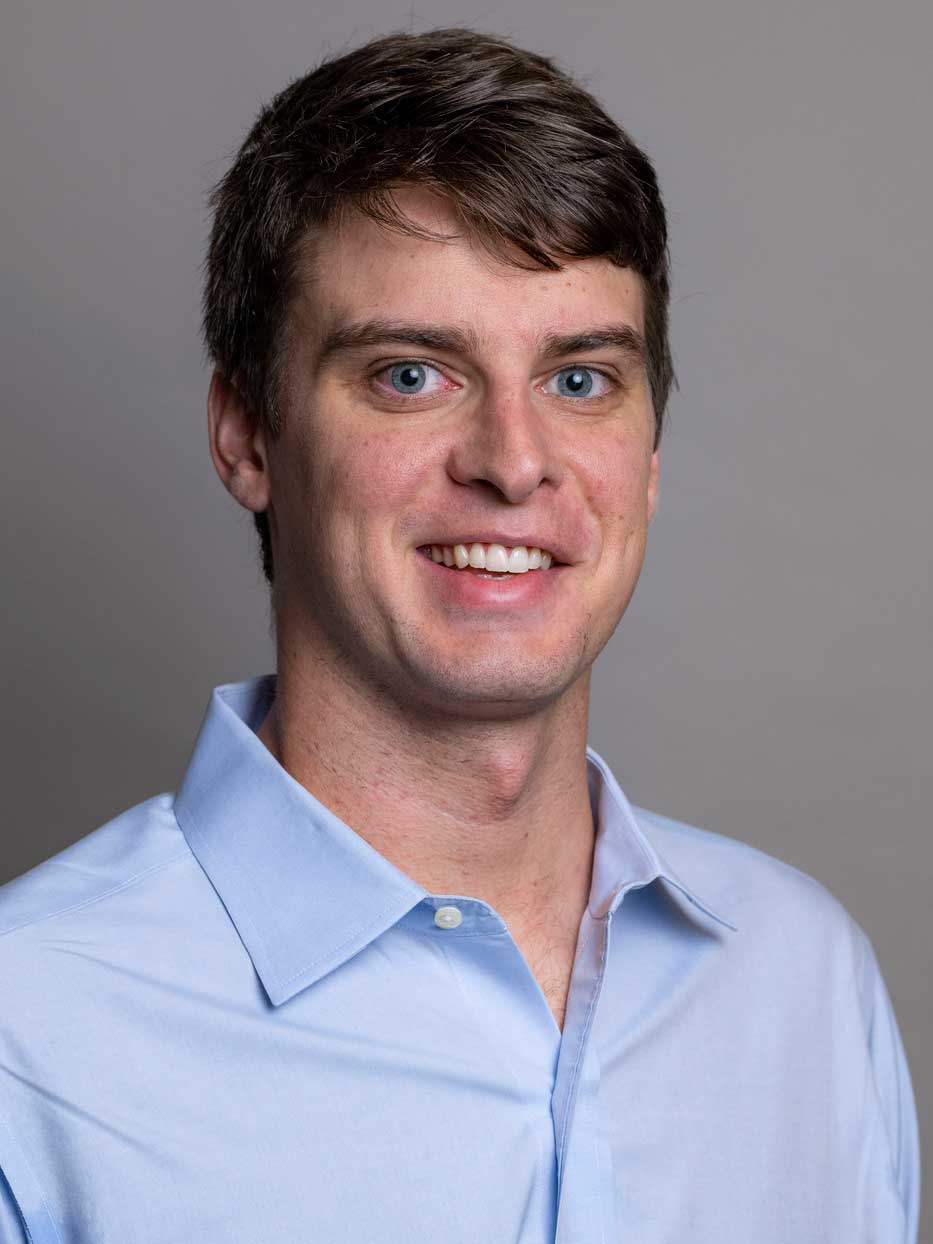
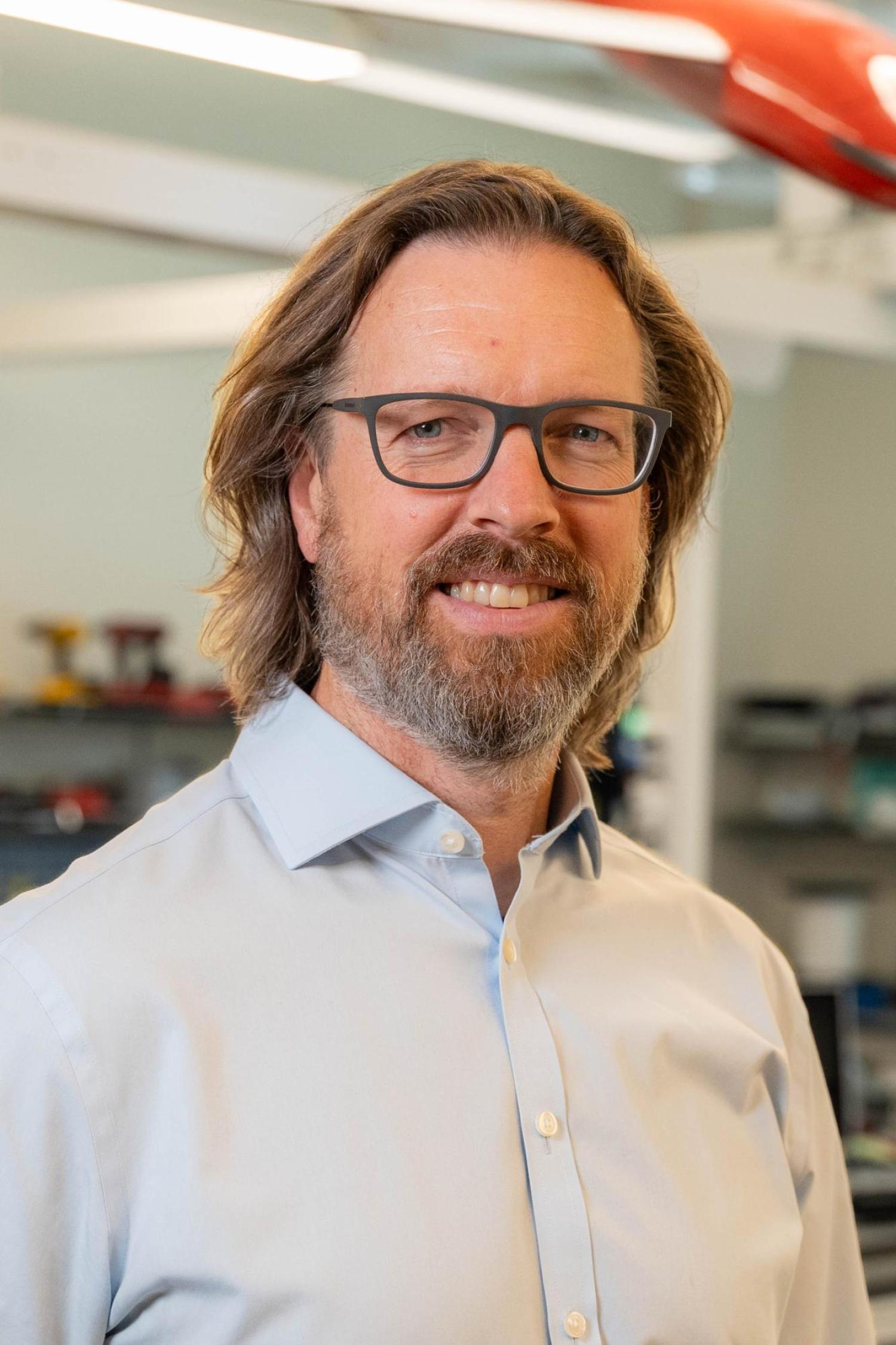
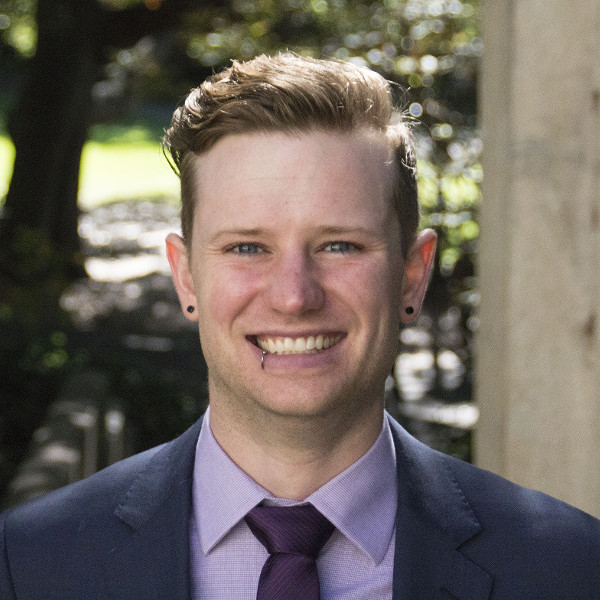
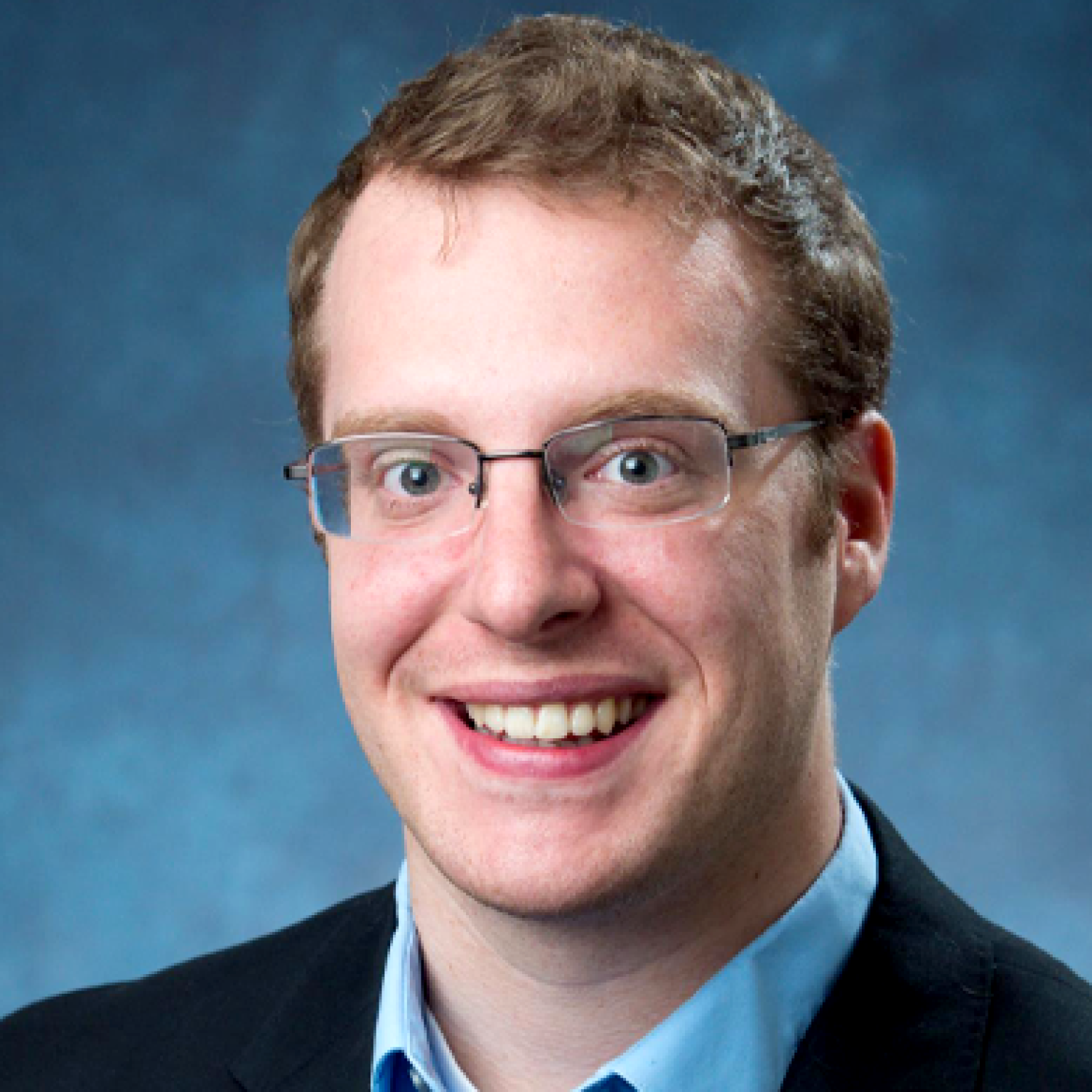
Sebastien Nicolas Gros is a Professor at the Department of Engineering Cybernetics, Norwegian University of Science and Technology (NTNU). His research focuses on safe reinforcement learning (RL) and data-driven model predictive control (MPC), with applications in energy systems, biomedical engineering, and autonomous vehicles. Institution: Norwegian University of Science and Technology Department: Engineering Cybernetics His work emphasizes AI-driven optimization for domestic energy storage, battery integration, and smart building management. Collaborations include Equinor, DNV, Kongsberg, Volvo, and CorPower Ocean. Key themes in his publications include: Control theory for renewable energy systems (wave energy converters, buildings) Biomedical applications (artificial pancreas, glucose monitoring) Transportation systems (electric vehicles, autonomous ships) Machine learning integration with physical models He supervises 6 PhD students and co-supervises projects on multi-rotor wind turbines and industrial PhD collaborations. The articles demonstrate a convergence of RL, MPC, and uncertainty quantification across energy, biomedical, and transportation domains.
Michael Everett is an Assistant Professor at Northeastern University with a joint appointment in the Department of Electrical & Computer Engineering and the Khoury College of Computer Sciences. He directs the Autonomy & Intelligence Laboratory, focusing on certifiable learning machines at the intersection of robotics, deep learning, and control theory. His research emphasizes safety, reliability, and efficiency in robotics applications like off-road navigation and social environments. Education: PhD in Mechanical Engineering, Massachusetts Institute of Technology (2020) SM in Mechanical Engineering, MIT (2017) SB in Mechanical Engineering, MIT (2015) Research Interests: Robotics and motion planning Control theory and neural network verification Reinforcement learning applications Certifiable safety guarantees for autonomous systems Navigation in dynamic/human environments Awards: Runner-Up: Best Paper Award (ICML 2022) Winner: Best Student Paper (IROS 2017/2023) Editors’ Top 5 Published Articles (IEEE Access 2021) Lab & Contributions: The Autonomy & Intelligence Lab develops algorithms for high-speed off-road autonomy, socially aware navigation, and neural feedback verification. His work includes the RAMP planning pipeline and Evora traversability learning framework. He collaborates with Google’s PAIR team on trustworthy AI.
Eric Frew is a Professor in the Department of Aerospace Engineering Sciences at the University of Colorado Boulder. He holds leadership roles including Director of the Autonomous Systems Interdisciplinary Research Theme (ASIRT) and former Director of the Research and Engineering Center for Unmanned Vehicles (RECUV). His research focuses on autonomous systems, heterogeneous unmanned aircraft systems, and optimal distributed sensing. He earned his PhD from Stanford University in 2003, and has been a faculty member at CU Boulder since 2004. Education: PhD, Aeronautics and Astronautics, Stanford University, 2003 MS, Aeronautics and Astronautics, Stanford University, 1996 BS, Mechanical Engineering, Cornell University, 1995 Research Interests: Networked unmanned systems Optimal distributed sensing Controlled mobility in sensor networks Miniature self-deploying systems Guidance and control of unmanned aircraft in complex atmospheric phenomena Notable Awards: Outstanding Mentor Award (2023) AIAA Associate Fellow (2013) NSF CAREER Award (2009) Grants and Labs: Leads the Center for Autonomous Air Mobility and Sensing (CAAMS), and has conducted field campaigns such as TORUS (Targeted Observation by Radars and UAS of Supercells). His work integrates theoretical research with practical deployment of autonomous systems for environmental monitoring and severe weather studies. Labs/Teams: Active in CAAMS and RECUV, collaborating with industry/government on pre-competitive research in autonomous air mobility and sensing.
Giulio Dagnino is Associate Professor of Robotics and Mechatronics at the University of Twente and concurrently holds an appointment at the Digital Society Institute. His research integrates medical robotics, real-time perception and haptics to create MR-compatible platforms for endovascular surgery, earning an h-index of 17 and 971+ citations. Education & Career: PhD (details not specified in source) leading to faculty appointment at University of Twente. Promoted to Associate Professor with cross-appointments in Robotics & Mechatronics and Digital Society Institute. Research Interests: Prof. Dagnino’s core interest is medical robotic systems that can operate safely inside an MRI scanner. His work spans haptic guidance, real-time computer vision, soft robotic actuation, synthetic data generation and surgical simulation. By combining ferrofluid actuation, electromagnetic tracking and deep-learning-based scene understanding, he aims to reduce ionizing radiation exposure, enhance navigation accuracy and shorten procedure times for minimally invasive endovascular interventions. Publications Trend: Across 44 outputs (2010-2025) the portfolio reveals a clear evolution from early vision-based microsurgery and fracture-robot systems (2010-2016) toward holistic endovascular platforms integrating MR guidance, haptics and autonomy. Recent 2024-25 papers cluster around (i) synthetic data & scene understanding for surgical AI, (ii) MR-safe robot design and tracking, and (iii) translational studies bringing CathBot and related platforms closer to clinical use. Scientific Awards: Best Design Award – Hamlyn Symposium 2019 (with team) Best Innovation Award – ICRA 2018 Best Paper Award – CURAC 2019 IEEE ICRA Best Paper Award in Medical Robotics – 2016 Grants & Projects: Although explicit grant numbers are not listed, the continuous outputs, patents, multi-institutional collaborations (UK, Germany, Estonia, Canada) and press releases imply sustained funding from EU, Dutch and UK research councils as well as industrial partnerships. Labs & Teams: He leads activities within the Robotics and Mechatronics group at University of Twente, collaborates closely with the Digital Society Institute, and maintains international partnerships visible in co-authored papers with Imperial College London, University of Leeds, and several European hospitals.
Nader Sadegh is a Professor in the Woodruff School of Mechanical Engineering at the Georgia Institute of Technology's College of Engineering, where he also serves as Associate Director and Education Director of the Robotics Ph.D. Program. His research spans robotics, control theory, and artificial intelligence with applications in industrial automation and public health. Dr. Sadegh's educational background includes: B.S. from University of California, Santa Barbara (1982) M.S. from University of California, Berkeley (1984) Ph.D. from University of California, Berkeley (1987) His research evolved from pioneering work on adaptive learning controllers for robotic manipulators—which enable robots to learn repetitive tasks without precise models—to neural network applications and nonlinear system identification. Current work focuses on barrier state theory for safety-critical control systems, safe trajectory optimization in robotics, and epidemiological modeling for disease transmission control. His methodologies consistently bridge theoretical control frameworks with industrial implementations to enhance system accuracy and autonomy while reducing hardware complexity. Analysis of his recent publications reveals a dominant trend toward safety-critical control architectures using barrier states and functions, with expanding applications in quadrotor navigation, agricultural robotics, and pandemic response systems. The interdisciplinary nature of his work connects control theory with machine learning, epidemiology, and industrial automation. Scientific distinctions include: Associate Editor, Journal of Dynamic Systems, Measurement, and Control (1993-1997) Registered Professional Engineer in Georgia U.S. Patent 5,946,449 for precision apparatus with non-rigid structures Dr. Sadegh has secured significant industry-sponsored research including Xerox Corporation projects on photoreceptor speed regulation, Ford Motor Company collaborations on assembly operations and continuously variable transmissions, and Visteon-funded work on high-precision manufacturing systems. His grants consistently target practical implementations where theoretical control methods solve real-world problems in automotive systems, electro-hydraulic valves, and glass forming processes. Based at the Georgia Tech Manufacturing Institute (GTMI), his lab develops integrated control solutions for complex mechanical systems, with recent emphasis on safety-guaranteed autonomous operations in unstructured environments and data-driven modeling for biological processes.
Andrew Sabelhaus is an Assistant Professor of Mechanical Engineering at Boston University, focusing on control-oriented approaches to soft and flexible robot locomotion. His work integrates modeling, feedback control, and mechanical design to balance autonomous decision-making with embodied intelligence, enabling safe operation in unstructured environments. His research spans soft robotics , actuator design , and feedback systems , with applications in medical devices, underwater locomotion, and autonomous systems. Recent work emphasizes real-time trajectory generation , control barrier functions , and self-sensing actuators . 2025: Soft Robotics for Cardiac Interventions 2025: Thermoelectric Actuators 2025: Differential Flatness in Motion Planning 2024: CAREER Award in Safe Autonomy Key contributions include Dismech , a discrete geometry-based simulator, and advancements in shape memory alloy artificial muscles . He received his Ph.D. from the University of California, Berkeley.
Ming Jin is an Assistant Professor in the Bradley Department of Electrical and Computer Engineering at Virginia Tech. He holds a PhD from UC Berkeley and a B.Eng. from Hong Kong University of Science and Technology. His research focuses on trustworthy AI, CPS security, and energy systems, with affiliations to the Power and Energy Center and Autonomy and Robotics @ VT. Education: PhD in Electrical Engineering and Computer Science (UC Berkeley, 2017), B.Eng. (Honors) in Electronic and Computer Engineering (HKUST, 2012). Postdoc in Industrial Engineering and Operations Research at UC Berkeley. Research interests include safe reinforcement learning, foundation models, cybersecurity, and power systems. Awards include the Siebel Scholarship (2018) and first place in the 2021 CityLearn Challenge. Active in conference organization (e.g., ICML, AAAI) and tutorial development on topics like Safe RL and CPS security. Grants include NSF support for embodied optimization (2025), Amazon-VT Initiative (2023), and Commonwealth Cyber Initiative projects. Involved in labs focused on AI, robotics, and energy systems. Publications span AI safety, RL frameworks, and CPS resilience, with over 50 peer-reviewed articles since 2015.
Bradley Hayes is an Associate Professor in the Department of Computer Science at the University of Colorado Boulder, affiliated with the College of Engineering and Applied Science. He leads the Collaborative AI and Robotics (CAIRO) Lab, focusing on creating autonomous robots that collaborate effectively with humans through advances in explainable AI, machine learning, and human-robot interaction. His prior research includes foundational work at MIT's Interactive Robotics Group and Yale's Social Robotics Lab. Research interests span Explainable AI, Learning from Demonstration, Hierarchical Reinforcement Learning, Computer Vision, Natural Language Processing, and Cognitive Science. His work emphasizes making human-robot teams more efficient and safe through innovations like emotionally expressive robotic motion, socially aware navigation, and AR-based collaboration tools. Key contributions include techniques for robust robotic exploration, generative occupancy mapping, and systems for improving human trust through predictable robot behavior. His work has been applied to teleoperation training, surgical assistance, and space exploration scenarios. Grants and partnerships support development of assistive robotic canes and AR interfaces for collaborative tasks. Lab activities emphasize translating theoretical advancements into practical systems through close collaboration between researchers, engineers, and end-users. Education efforts include developing foundational robotics curricula addressing autonomy, perception, and control systems.
Michael Fisher is the Royal Academy of Engineering Chair in Emerging Technologies and Professor of Computer Science at the University of Manchester. He also holds an Honorary Professorship at the University of Liverpool (2020–2023). His research focuses on autonomous systems, formal verification, robotics ethics, and AI safety. Fisher leads projects such as the Centre for Robotic Autonomy in Demanding Environments (CRADLE) and contributes to IEEE standards for fail-safe autonomous systems. He is a Senior Associate Editor of the Annals of Mathematics and Artificial Intelligence and co-chair of the IEEE Verification of Autonomous Systems committee. His work integrates formal methods with robotics, emphasizing ethical reasoning and assurance in autonomous systems. Key research interests include temporal logic, model checking, and the verification of robotic decision-making. Fisher has received Best Paper Awards in 2018 and 2014, recognizing contributions to human-robot team validation and ethical reasoning frameworks. Fisher’s projects span space robotics, industrial automation, and safety-critical systems. He collaborates with industry partners like Amentum and advises the UK government on AI and robotics policy. His recent work explores neuro-symbolic AI integration and compositional verification for modular robotic systems.
Professor Karen Soldatic is a leading academic in the School of Social Sciences at Western Sydney University, specializing in disability studies, social justice, and intersectional analysis. Her work critically examines the intersections of disability, migration, Indigenous rights, and digital technology within Global South contexts. Her research interests focus on Disability Studies , Social Justice , Artificial Intelligence and Disability , Indigenous Rights , and Migration Studies . Through participatory methodologies, she investigates how digital systems, welfare policies, and social structures create barriers for marginalized communities, particularly women with disabilities in low-income countries and Indigenous populations in Australia. Analysis of her recent publications reveals a strong emphasis on technology-facilitated violence against women with disabilities , digital inclusion frameworks , and intersectional resistance strategies . Her work consistently bridges academic theory with community action, focusing on practical interventions for systemic change. Professor Soldatic has secured significant research funding through projects including Walking my path: NSW Indigenous LGBTIQ+ peoples' experiences & aspirations (2023-2027) and Environmental Stewardship Resurgence in Walbanga Land . Her community engagement includes membership in the Australian Sociological Association and Diversty Arts Australia. Her academic contributions include 181 research outputs, 14 major projects, and active supervision of HDR candidates. She holds a PhD from the University of Western Australia and maintains strong connections with disability advocacy organizations including the Australian Federation of Disability Organisations.
Prof. Angela Schoellig is the Alexander von Humboldt Professor for Robotics and Artificial Intelligence at the Technical University of Munich, where she leads the Learning Systems and Robotics Lab (formerly the Dynamic Systems Lab). She is a member of the Board of Directors at the Munich Institute of Robotics and Machine Intelligence (MIRMI) and serves as Coordinator of the Robotics Institute Germany (RIG). Previously, she was an Associate Professor at the University of Toronto and a Faculty Member of the Vector Institute for AI. Her educational background includes a PhD from ETH Zurich (awarded the ETH Medal and Dimitris N. Chorafas Foundation Award), an M.Sc. in Engineering Cybernetics from the University of Stuttgart, and an M.Sc. in Engineering Science and Mechanics from Georgia Institute of Technology. Prof. Schoellig's research focuses on enhancing robot performance, safety, and autonomy through learning systems that combine a-priori information with operational data. Her work addresses challenges in robots operating in unstructured, uncertain environments over long periods. Key research areas include Safe Robot Learning , Semantic Control for Robotics , Foundations of Robot Learning , Mobile Manipulation , and Mapping and Localization in Changing Environments . Her lab develops novel control and learning algorithms for single and multi-robot systems across aerial and ground applications. Her scientific contributions have been recognized with numerous prestigious awards including the NSERC Arthur B. McDonald Fellowship, RSS Early Career Spotlight Award, Sloan Research Fellowship, and being named to MIT Technology Review's 35 Innovators Under 35. NSERC Arthur B. McDonald Fellowship (2022) Alexander von Humboldt Professor (2020) Four-time winner of North American SAE AutoDrive Challenge (2018-2021) RSS Early Career Spotlight Award (2019) Sloan Research Fellowship (2017) MIT Technology Review's 35 Innovators Under 35 (2017) Prof. Schoellig actively mentors numerous PhD and Master's students, leads the University of Toronto's SAE/GM AutoDrive Challenge team, and serves as Faculty Advisor for the University of Toronto Aerospace Team. Her lab collaborates with various academic, industry, and government partners on real-world robotics applications including mining, self-driving vehicles, and aerial robotics. Current future research directions include Hardware and Software Co-Design, Autonomy through Deployment, and Learning with Contacts.
Professor Alex Kreit is an Associate Professor of Law and Director of the Center on Addiction Law & Policy at Northern Kentucky University's Salmon P. Chase College of Law. He is a leading expert in illegal drug and cannabis law , with a focus on federal-state conflicts, criminal justice reform, and public health approaches to addiction policy. Kreit has authored multiple casebooks and over twenty law review articles, frequently appearing in media outlets like The New York Times and WIRED as a policy commentator. Education : Juris Doctor from University of Pennsylvania, Bachelor of Arts from Hampshire College His research spans drug law , cannabis policy , and criminal justice reform , with particular emphasis on safe injection sites , drug-induced homicide statutes , and pretextual stops in marijuana enforcement. Kreit's work systematically analyzes the legal tensions between state-level legalization efforts and federal prohibition frameworks. As a National Law Journal Trailblazer in Cannabis Law (2019) , Kreit has received grants from the Hayek Fund and Institute for Humane Studies. He serves on Kentucky Governor Andy Beshear's Medical Cannabis Advisory Committee and previously chaired San Diego's Medical Marijuana Task Force . Scientific Awards : National Law Journal Trailblazer in Cannabis Law (2019) Hayek Fund for Scholars Grant (2019) Institute for Humane Studies Faculty Partnership Grant (2015) San Diego Daily Transcript Top Attorneys in Academics (multiple years) San Diego News Network 35 Under 35 Community Leader (2010) Kreit maintains active practice as a court-appointed attorney with Appellate Defenders Inc. in California and has taught as visiting faculty at Boston College and Ohio State University. He has presented research at over 40 academic conferences and symposia globally, including in China, Canada, and the UK.
Claus Bossen is a Professor at the Department of Digital Design and Information Studies within Aarhus University's School of Communication and Culture. His research bridges participatory design, healthcare digitization, and data work. Primary Affiliation: School of Communication and Culture, Department of Digital Design and Information Studies Research Focus: Data-driven healthcare, information infrastructures, and participatory design Email: clausbossen@cc.au.dk Research Interests span critical areas in healthcare digitization, including: Emergence of data work professions Human-AI collaboration in clinical documentation Design of healthcare information systems Infrastructure governance and quality improvement Digitization's impact on non-clinical staff Participatory design scaling mechanisms Recent Publications (2024-2025) show a trajectory toward: Global-local data integration challenges Professional adaptation in data-intensive settings Digitization's soco-technical implications Empowerment through data work practices Emergency healthcare system analysis Human-AI collaboration frameworks Current Projects include: LIVSTEGN: Monitoring technologies for safe dementia care Making Data Work Visible: Professional changes in healthcare Acute healthcare treatment pathways
Thomas M Braun, PhD is a Professor in the Department of Biostatistics at the University of Michigan School of Public Health. He serves as a Member of the Senate Advisory Committee on University Affairs (SACUA) and teaches graduate-level biostatistics courses. Dr. Braun is an internationally recognized expert in Bayesian adaptive clinical trial design, with primary focus on cancer treatment and prevention research. Dr. Braun's educational background includes: PhD in Biostatistics from the University of Washington, Seattle (1999) MS in Biostatistics from the University of Washington, Seattle (1996) BBA from the University of Wisconsin, Madison (1990) His research expertise spans adaptive clinical trials, Bayesian statistical methods, longitudinal data analysis, oncology, rare diseases, dyadic analyses, and mobile health technology. Dr. Braun has developed novel Bayesian clinical trial designs for discovering safe and effective chemotherapy and immunotherapy regimens for cancer treatment. He is also pioneering methods to incorporate patient preferences into randomized clinical trials and sequential multiple assignment randomized trials (SMARTs). Analysis of Dr. Braun's recent publications (2023-2025) reveals a strong concentration on small n sequential multiple assignment randomized trials (snSMARTs), Bayesian methodology for rare disease research, mobile health interventions for cancer patients and caregivers, and innovative approaches to merging electronic health records with clinical trial data. His work consistently bridges theoretical statistical methodology with practical clinical applications in oncology and transplantation medicine. Dr. Braun has secured significant research funding from: The Food and Drug Administration (FDA) for developing Bayesian clinical trial designs for rare diseases The Patient Centered Outcomes Research Institute (PCORI) for developing Bayesian methods incorporating patient preference in SMARTs He actively collaborates on multiple research projects examining cancer treatment disparities, immunotherapy regimens for melanoma and other cancers, and the Roadmap mobile health platform for improving outcomes in stem cell transplant recipients and their caregivers. His work often focuses on dyadic patient-caregiver relationships and developing innovative statistical methodologies for complex clinical trial designs.
Qin Lin is an Assistant Professor in the Department of Engineering Technology at the University of Houston's Cullen College of Engineering. Their research focuses on autonomous systems, control theory, and safety-critical applications. Lin holds a Ph.D. in Computer Science from Delft University of Technology (2015-2019) and completed a postdoctoral fellowship at Carnegie Mellon University's Robotics Institute (2019-2021). Research interests include safe reinforcement learning, fault-tolerant control systems, and cybersecurity for industrial control systems. Lin has published extensively on topics like vehicle autonomy, exoskeleton safety, and disturbance rejection in robotics. Their work emphasizes practical applications of control theory in autonomous driving, robotics, and human-robot interaction. Recent publications highlight advancements in control barrier functions, latency-aware autonomous systems, and data-driven anomaly detection in ICS environments. Lin has been recognized for contributions to curriculum development in engineering technology and maintains active collaborations in automotive and robotics domains.